Countries with the most and least favorable views of the U.S.
Countries with the most and least favorable views of the U.S. in 2017
No matter where you live or what your politics are, there's one thing everyone can agree on: America has changed considerably over the past year. With a new government comes new policies and expectations, as well as social and economic changes that seem to evolve almost daily. Americans may hold differing opinions about how they see themselves, but how is the country perceived beyond its borders?
Every year since 2002, in order to answer this specific question. The Global Attitudes Project has conducted over 500,000 interviews in 64 countries, asking people a range of questions about their own lives, as well as how they see the world, including: "Please tell me if you have a very favorable, somewhat favorable, somewhat unfavorable or very unfavorable opinion of the United States." By combining all respondents who answer "very favorable" or "somewhat favorable," countries are in turn assessed by their general favorability towards the United States.
From this data, Â鶹ԭ´´ ranked countries from the most to least favorable opinions of the US., bringing in revelations around each country's history, recent American collaboration or conflict, and favorability trends over time. The following rankings include all countries for which Pew Research provided 2017 data for and can help tell the story of where America's global standing is at its best and worst.
#38. United States
Percent responding "favorable" (2017): 85%
Americans generally have a positive view of themselves, with favorability rates hovering between 80 and 88% over the past decade. For 2017, the favorability rate increased modestly from last year’s 83%. That said, recent polling shows that public trust in the government to do what is right is at an
#37. Vietnam
Percent responding "favorable" (2017): 84%
In 1995, Vietnam and the U.S. (under President Bill Clinton) repaired ties that had been severed for over 20 years following the Vietnam War. In April 2017, it was reported that President Trump to Vietnamese President Tran Dai Quang, suggesting a reboot of trade and security ties between the two countries.
#36. Israel
Percent responding "favorable" (2017): 81%
Israel is the No. 1 recipient of U.S. foreign aid in the world, and most US Presidents have made a conscious effort to retain a relationship with our allies in the Middle East.
#35. Philippines
Percent responding "favorable" (2017): 78%
Despite historically being one of the U.S.’s oldest Asian partners, in 2016, Philippine President Duterte announced both military and economic separation from the States in order to strengthen ties with China and Russia.
#34. South Korea
Percent responding "favorable" (2017): 75%
The relationship between South Korea and the U.S. has been strong since 1950 when Americans fought on the UN-sponsored South Korean side in the Korean War.
#33. Poland
Percent responding "favorable" (2017): 73%
Polish-American relations have been strong since the end of World War I. Poland is a member of the European Union and NATO. This is a strong statement, as it represents a “collective defense” of European and North American allies against any outside threats.
#32. Nigeria
Percent responding "favorable" (2017): 69%
Nigeria the U.S. to be its most valuable economic and diplomatic partner. In fact, in 2014 (the latest data available) the Department of Commerce reported that U.S. exports to Nigeria supported about 28,000 jobs to the West African country.
#31. Hungary
Percent responding "favorable" (2017): 63%
As Hungary worked to distance itself from Soviet influence after the fall of communism in 1989, the United States . This came in the form of supporting Hungary’s establishment of a democratic system of government and a free-market economy. Hungary formally became an ally of the United States when it joined NATO in 1999.
#30. Italy
Percent responding "favorable" (2017): 61%
Italy is one of the U.S.’s most active and important allies in NATO, hosting over 11,500 military personnel and the NATO Defense College in Rome.
#29. Ghana
Percent responding "favorable" (2017): 59%
The United States sent its first Peace Corps volunteers to Ghana in 1961, and it remains one of the most robust programs in leadership, training and innovation, to the U.S. embassy. Today, there are around 150 volunteers working in the agriculture, health and education sectors.
#27. Japan (Tie)
Percent responding "favorable" (2017): 57%
Japan is a critical ally to the United States in the Asia-Pacific region, rooted in a . As China continues to grow its military and economic influence and North Korea expands its nuclear capabilities, this relationship has received a heightened significance.
#27. Tanzania (Tie)
Percent responding "favorable" (2017): 57%
U.S.-Tanzania relations have improved since the late ‘80s due to mutual interests in financial debt relief, refugee crises, and Tanzania’s growing economy.
#26. Senegal
Percent responding "favorable" (2017): 55%
The small West African country made an in early 2016 that would make Senegal a virtual stronghold during the U.S.’s “war on terror.” Vice reported that this pact was “half military cooperation, half vehicle for exporting the American approach to national security.” Despite this alliance, to Pew, Senegal’s view of the U.S. has dropped over the years, from 80% in 2015 to 55% in 2017.
#25. Kenya
Percent responding "favorable" (2017): 54%
Since Kenya’s independence and transition to a democracy in 2002, the U.S. and Kenya have had decent relations. Under a new president in 2013, however, ties started to sever when Kenya forged a new foreign policy that focused more on allies in the East.
#24. South Africa
Percent responding "favorable" (2017): 53%
The relationship between the U.S. and South Africa has hovered for years around 60%, except for a rise in 2015 to 74%. Tensions were most palpable before South Africa's abolishment of apartheid in 1994.
#20. Colombia (Tie)
Percent responding "favorable" (2017): 51%
Some have that U.S. influences and involvement in Colombia have only exacerbated conflict and expanded the scope and nature of human rights abuses in Colombia.
#20. Peru (Tie)
Percent responding "favorable" (2017): 51%
Peru-U.S. relations dipped the most in 1989, when Peru recalled its ambassador in protest of American military actions in Panama.
#20. Brazil (Tie)
Percent responding "favorable" (2017): 50%
After the revelation that the U.S. conducted major surveillance programs in Brazil, especially on Brazilian President Rousseff, relations between the two countries soured significantly.
#20. United Kingdom (Tie)
Percent responding "favorable" (2017): 50%
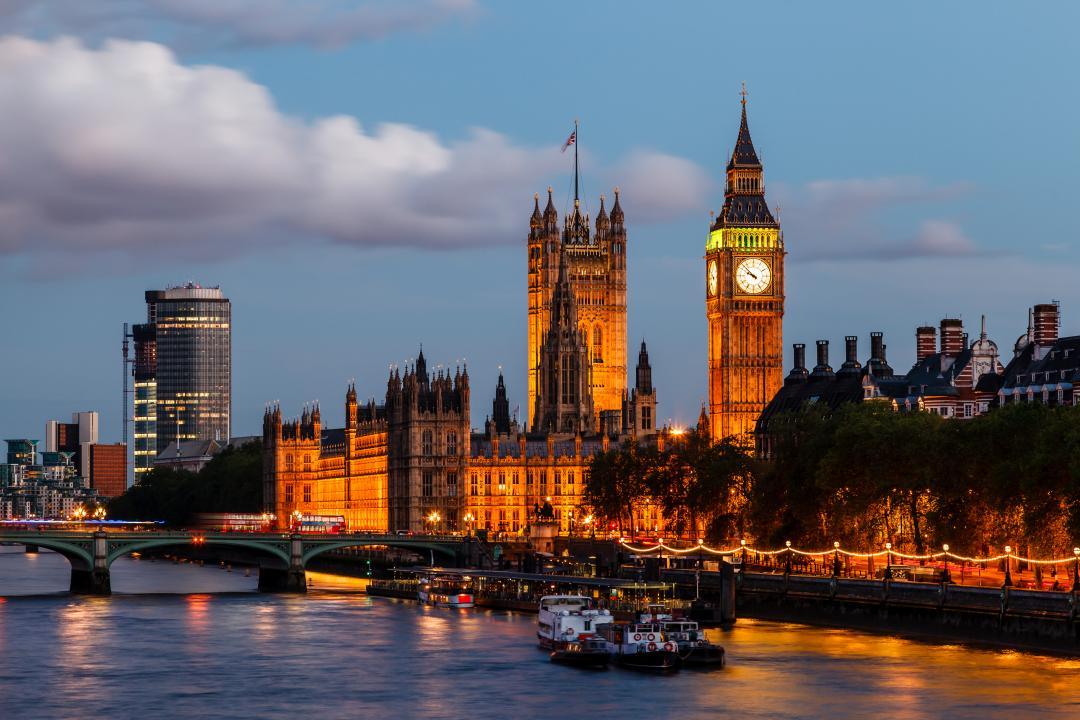
The U.S. has historically considered the United Kingdom as “America’s closest ally,” and as such, Donald Trump and U.K. Prime Minister Theresa May have continued to promote a positive relationship between the two global powers. However, this show of goodwill has due to the American president’s negative remarks towards the U.K, including criticizing the mayor of London for the way he handled the recent terror attacks that occurred on the London Bridge and Borough Market.
#19. India
Percent responding "favorable" (2017): 49%
India and United States signed an agreement in 2016 making India a Major Defense Partner of the United States. More recently, however, the U.S.'s relationship with the country has been by some, as contradicting promises and policies from the U.S. government have left Indians unsure of where they stand. In a show of goodwill, however, U.S. Secretary of State Rex Tillerson lauded India as a "diverse, dynamic, and pluralistic" democracy.
#17. Australia (Tie)
Percent responding "favorable" (2017): 48%
A that Australia’s view of the U.S. has dipped significantly since the election of Donald Trump. According to the survey, though, this negative view slowly but surely seen a decrease well before the 2016 presidential election: according to the survey, trust in the US to “act responsibly in the world” has been cut in half since 2011.
#17. Indonesia (Tie)
Percent responding "favorable" (2017): 48%
The disagreements and tensions between Indonesia and the United States have centered primarily on human rights issues, as well as on differences between the two countries in foreign policy.
#16. Venezuela
Percent responding "favorable" (2017): 47%
Currently, conflicts between the U.S. and Venezuela have reached an all-time high, with coming from both sides.
#15. France
Percent responding "favorable" (2017): 46%
France’s perception of America is around the same low level as it was during the U.S.’s involvement in the Iraq War, which France widely disapproved of.
#14. Sweden
Percent responding "favorable" (2017): 45%
The United States is the , accounting for 7.1% of Swedish trade, valued over $10 billion. The largest investor in the U.S., Sweden FDI of $56 billion has supported more than 300,000 jobs in the U.S.
#12. Canada (Tie)
Percent responding "favorable" (2017): 43%
Canadian Prime Minister Trudeau and President Trump formally met for the first time in Washington D.C. in February 2017. Since then, Trump has said he would renegotiate NAFTA with the Prime Minister.
#12. Greece (Tie)
Percent responding "favorable" (2017): 43%
Over the past decade, Greece has been one of the most beleaguered members of the European Union. Since the start of a drastic debt crisis in 2010, Greece has received coupled with austerity measures aimed at bolstering the country's economic standing. At present, Greek citizens face unemployment rates of nearly 25%, bank closures, and severe ATM withdrawal restrictions, all while the country struggles to handle a massive flow of refugees from the Middle East and Africa.
With the U.S. currently providing nearly one-fifth of IMF funding, President Trump sat down with Greek Prime Minister Alexis Tsipras in October 2017 to .
As hardline in Greece and the greater European Union, the potential for changes prompting a Greece default or 'Grexit' from the EU continues to grow.
#11. Russia
Percent responding "favorable" (2017): 41%
In September, the U.S. in Washington, D.C. and New York City as well as its consulate in San Francisco. This came after the Russian government cut the U.S.’s diplomatic staff in Russia as well, a retaliation that spawned after the U.S. Congress imposed sanctions on the country for .
#10. Chile
Percent responding "favorable" (2017): 39%
Chile is the only South American country that is part of the U.S’s Visa Waiver Program, allowing citizens to travel to the US for up to 90 days without first obtaining a visa.
#9. Netherlands
Percent responding "favorable" (2017): 37%
The Netherlands' favorable perception of the U.S. was nearly cut in half year over year, from 65% in 2016 to 37% in 2017.
#7. Argentina (Tie)
Percent responding "favorable" (2017): 35%
While Argentina’s rating of the U.S. is low this year, it was even lower in 2007 at 16%. The relationship between the two countries is bruising further, however. The Trump Administration’s tough trade policies have , including a “deep cut to foreign assistance, which will .” For a country that is currently , this not welcome news.
#7. Germany (Tie)
Percent responding "favorable" (2017): 35%
Unfavorable opinions of Americans grew in 2013 when it was that Americans conducted secret surveillance of top German officials, including German Chancellor Merkel. Chancellor Merkel has recently pushed for , stating “The times in which we can fully count on others are somewhat over.”
#6. Lebanon
Percent responding "favorable" (2017): 34%
U.S. favorability in Lebanon has steadily decreased year after year since 2009, when it reached its peak at 55%. The instability and war in its neighboring Syria have already caused the U.S. to tread carefully with the country. This paired with increased tightening of anti-Hezbollah sanctions that some have led to increasing tensions.
#5. Spain
Percent responding "favorable" (2017): 31%
Spain’s general favorability rating remained high (near 60%) between 2009 and 2016, but saw a dramatic decrease in 2017. During Spanish President Rajoy’s visit to the White House in September 2017, he and President Trump issued a press conference, in which Trump opposed Catalonia’s wish to become an independent state.
#4. Mexico
Percent responding "favorable" (2017): 30%
Amid immigration conflicts and racially charged remarks by President Trump, Mexico's opinion of the United States has never been lower.
#3. Tunisia
Percent responding "favorable" (2017): 27%
Since Tunisia was last polled from in 2014, its favorable view of the U.S. has dropped to 27%. From 2012–2014, it was rather stagnant at 42%. Though the Trump administration hasn’t actively displayed any ill-will towards Tunisia, Sarah Feuer, Soref fellow at the Washington Institute for Near East Policy, believes that the anti-Muslim and Arab sentiment it fosters could . “But there is concern that a Trump presidency could bring a wave of protests or even violence, similar to 2012, when the US Embassy in Tunis was attacked,” Feuer said.
#2. Turkey
Percent responding "favorable" (2017): 18%
Poor U.S.-Turkey relations have been attributed to conflicts over American support of Kurdish fighters in the Syrian Civil War, as Turkey has openly fought against them.
#1. Jordan
Percent responding "favorable" (2017): 15%
Jordan has historically had a very low percentage of people who see Americans favorably. Though 15% is the lowest rating of all countries surveyed, in 2003, only 1% of Jordanians had a positive view of the U.S.