25 holidays not celebrated in America
Let's face it鈥攚e all love an excuse to throw a party and celebrate a time-honored tradition. And while we've got our fair share of holidays in the United States, there's always room for another nationally recognized day off work. While the U.S. gets to celebrate grassroots holidays such as Thanksgiving and the Fourth of July, we're still missing out on some exciting and eclectic celebrations around the world. Whether it's dousing strangers in cold water, racing down the slopes of a volcano, or connecting with ancestors in the afterlife, there's a fair share of holidays that don't make the traditional American calendar.
So in recognition of Boxing Day, a worker's holiday celebrated the day after Christmas in parts of Europe, the team at 麻豆原创 decided to research holidays honored across the globe not observed in the U.S. We found 26 unique celebrations of cultural history on almost every Continent (sorry Antarctica), each with a festive component that embraced travelers, regardless of creed, political beliefs, or language, to partake in the celebrations. Check out our list of holidays not officially celebrated in the U.S. and some of the wacky traditions that accompany them, you may just find yourself with a taste for something a little different!
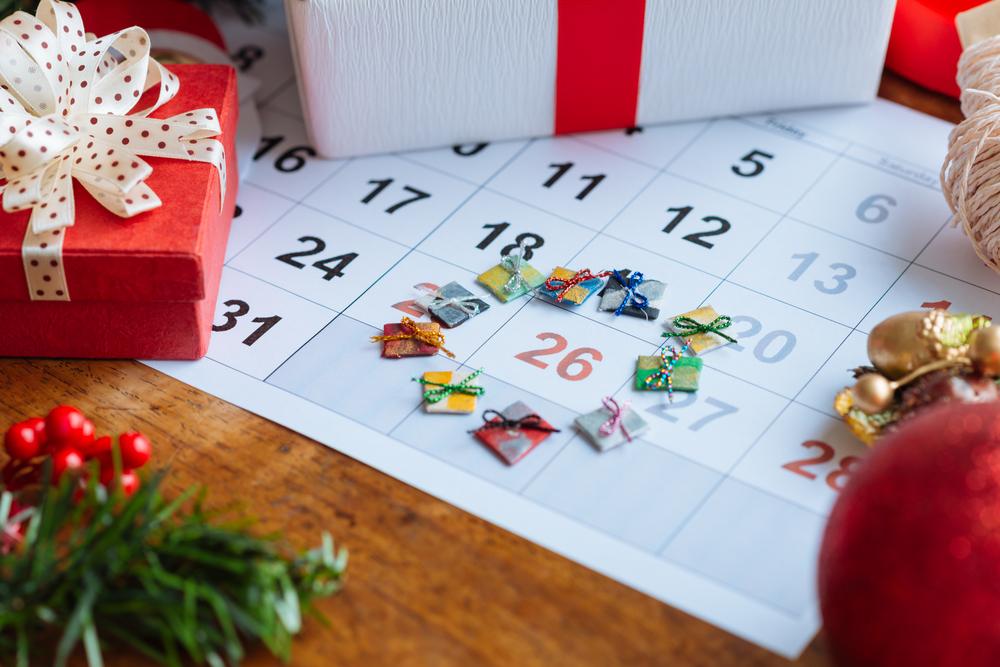
Boxing Day (United Kingdom and countries formerly part of the British Empire)
Though now recognized as a great time for discount shopping, Boxing Day has centuries of traditions that commemorate the day following Christmas. An official public holiday in the UK and Ireland, Boxing Day was originally designed to ensure household servants had a time off to celebrate with their families when . In addition to providing a day off from their duties, wealthy employers would often aid in the festivities and box up leftovers, presents, and other treats that their servants could carry home with them.
Vardavar (Armenia)
If you鈥檙e in Yerevan in July, you might want to wear a swimsuit. On the traditional Armenian holiday of Vardavar, children douse people with buckets of cold water. Though the Armenian Church calls it the Feast of Transfiguration and has incorporated the holiday into its traditions, Vardavar鈥檚 roots stretch back to a celebration of the ancient traditions of Astghik, the pagan goddess of love and fertility.
Yu Lan (China)
Sometimes called the Chinese Halloween, Yu Lan or Hungry Ghost Festival, lasts for an entire month, usually around August or September. The festival marks the birthday of the Taoist god who passes judgment on living people鈥檚 actions. Adherents of the faith ask for forgiveness through various festival rituals. One ritual of the holiday is burning offerings, including food, paper phones, and clothing, as a way to provide for . Make sure to check out displays in Hong Kong and Singapore, but watch out for the superstitions associated with angry spirits, such as taking pictures at night or disturbing someone else鈥檚 offering.
Hogmanay (Scotland)
If your New Year鈥檚 celebrations have been a little tame, then you might want to book a flight to Scotland to check out Hogmanay. For several centuries, Christmas was seen as too Catholic in Protestant-dominated Scotland, and celebrations of it were either small or nonexistent. In its place, Hogmanay grew from traditional Viking ways of celebrating the winter solstice. A fiery parade of torches (and not the flashlight kind) light up Edinburgh each year, with similar blazes raging in towns from the . A hefty dose of alcohol helps you wash down the traditional haggis, cock-a-leekie soup and shortbread.
Tapati Festival (Easter Island)
Looking to celebrate Polynesian culture with more than just a visit to the famed moai of Rapa Nui? The island's annual Tapati Festival, held in February is the . Don't miss the Haka Pei, a race where participants slide down a steep incline on a sled made of tree-trunks鈥攁ll while wearing a rather small loincloth. At the festival, which first started about 40 years ago, there are also displays of ancient dances and a competition for the queen of the two-week event.
Chuseok (South Korea)
Known as Korean Thanksgiving, Chuseok features a solemn remembrance of ancestors but also boisterous wrestling competitions and . Take a bite out of the fall holiday with a songpyeon, a rice cake filled with red beans, chestnuts, or other fillings and then infused with pine needles. Celebrate in Seoul at any number of cultural sites, including Korean Folk Village and Namsangol Hanok Village.
Inti Raymi (Peru)
This June festival of the sun goes all the way back to the time of the . Animal lovers may want to skip the sacrifice of the llama and head straight for the ceremony re-enacting the way the Inca would forecast their fate for the year by reading a coca leaf. If you鈥檙e feeling hot after a day in the sun, try some chicha morada, a local drink made from purple corn.
Bon Om Touk (Cambodia)
Cambodians connect with nature during this November festival celebrating the annual reversal of water flow between Tonle Sap lake and the Mekong River at the end of the . The annual flooding keeps fields fertile for agriculture. Eat ambok, a flattened rice dish with banana and coconut, as you watch the evening parade of brightly-lit boats or the boat races during the day.
Surva Festival (Bulgaria)
Pernik is one of the larger cities in Bulgaria, and it boasts a unique tradition. Since 1966, every January locals host a . Thousands of participants or 鈥渒ukeri鈥� gather, wearing ritual masks and belts made of bells to represent the various regions of the country. The idea is to chase away evil spirits at the start of the new year.
脱濒补惫蝉酶办补 (Faroe Islands)
The Faroe Islands might seem a little isolated halfway between Iceland and Norway, but that doesn't stop them from throwing a party. commemorates the death of King Olaf nearly 1,000 years ago and includes Faroese chain dancing, group singing at midnight in T贸rshavn, and a popular boat race. The holiday, at the end of July, also marks the opening day of the country's parliament.
Enkutatash (Ethiopia)
Celebrated on either September 11 or 12, Enkutatash is an Ethiopian New Year celebration. Marked by the yellow daisies that cover the country following its rainy season, the holiday鈥檚 name translates to 鈥済ift of jewels鈥� and stretches back to a tale involving the Queen of Sheba and King Solomon. Join in the fun with a celebratory bonfire, traditional songs, and bouquets of those daisies, called adey abeba.
Puck Fair (Ireland)
It鈥檚 not every day that a wild goat becomes royalty. No, it鈥檚 not a nature-based version of the Prince and the Pauper-- it鈥檚 the . Local lore pins the fair鈥檚 origins on a goat who, freaked out during the approach of Oliver Cromwell鈥檚 army, inadvertently warned the town鈥檚 residents in time to defend themselves. In this animal鈥檚 honor, each August Killorglin residents capture a wild goat and install him on a pedestal for three days. During that time you can enjoy a variety of musical performances and even see his new highness in a parade. Don鈥檛 worry-- at the end of the fair, the goat gets to go back to the countryside.
Carpet of Flowers (Belgium)
Big fan of the Rose Parade? Try the Brussels version鈥攖he. The festival got its start in 1971, as a way to commemorate Belgium, the world鈥檚 largest producer of these flowers and cultivator of approximately 60 million bulbs each year. Assembled in the city鈥檚 Grand-Place, the carpet features more than 600,000 flowers and spans 79 by 246 feet. It鈥檚 only celebrated in even years, and the theme changes each time. Make sure you bring your allergy meds!
Festival du Voyager (Canada)
This Winnipeg festival brings together two key parts of Canadian culture鈥攊ts French roots and its celebration of all things winter. You might think the country鈥檚 French history is limited to francophone-Quebec in the east, but organizers created this festival in 1970 specifically to celebrate the French culture of Manitoba, a province of the . Instead of just shivering this February, peek in on this party, which features a beard-growing contest where participants all shave 10 weeks prior to the even, then let their follicles do the talking. If that鈥檚 not your speed, they also have workshops featuring frontier craftsmanship, a snow sculpture competition, and plenty of poutine.
Holi (India)
A Hindu holiday celebrated in February or March each year, Holi pays a colorful tribute to youth and vitality. A variety of folk tales try to explain its tradition of , much like a color run. Don't wear your Sunday best, because the hues from this two-day festival might be permanent.
F锚te du Citron (France)
Perhaps no one loves lemons more than the people of Menton in southeastern France. There鈥檚 a good reason for that-- until the 1930s, this sunny Provence town was the . Giant artistic displays of lemons, oranges, and grapefruit dominate the view during February鈥檚 F锚te du Citron. The sweet tang of lemon tarts may make you pucker, but you鈥檒l be smiling once the parade of citrus floats comes your way.
Abare Festival (Japan)
The fervent dancing at the Abare Festival in Ushitsu makes sense when you translate . And who wouldn鈥檛 dance to celebrate the miraculous end of a highly contagious disease that swept the region more than four centuries ago? Matching the energy of the dances is a chorus of flutes, drums, and gongs leading up to a giant bonfire. Just make sure you can keep up the pace.
Toonik Tyme (Canada)
This April cultural fair remembers the Tuniit, who preceded the Inuit as residents of the eastern part of Canada鈥檚 arctic regions. Head to Iqaluit, a four-hour flight north of Montreal, to experience pastimes such as kite skiing and ice fishing. If you鈥檙e feeling the chill, try to warm up with a bite of whale blubber or caribou stew.
Boun Bang Fai (Laos)
Remember the time you built a rocket in science class? Supersize that, and you鈥檝e got Boun Bang Fai in Laos, where locals launch bamboo, glass, and metal rockets to ensure their harvest isn鈥檛 damaged by natural disasters. Vaudeville performances abound in an attempt to anger the rain gods into showering down water to nourish the crops. Be careful鈥攊f your rocket doesn鈥檛 launch, you might have to drink muddy water as penance.
Rose Festival (Morocco)
Where else can you combine tons of sweet-smelling roses with traditional Berber food and music but in El Kela芒 M'Gouna, Morocco? Their annual rose festival celebrates the region's harvest, much of which goes to the. Young women compete to be the queen who leads the scented parade during the festival, honoring a crop that's been vital to this area for centuries.
Walpurgis Night (Sweden, Germany and other European countries)
Although this April holiday bears the name of an 8th-century saint, its roots are in the pagan folklore of Sweden and its neighbors. The idea behind is to light bonfires to scare away witches, demons, and other creatures you wouldn鈥檛 want to find lurking under your bed. If you鈥檙e in Uppsala, watch for university students racing homemade rafts down the Fyris River.
F锚te Des Masques (Burkina Faso and Mali)
Many cultural festivals celebrate departed ancestors or harvest times, but the West African F锚te Des Masques does both at once. Performers retell stories of the . Other masked performances include musical interludes featuring drums, where dancers embody different spirits.
Nauryz Festival (Mongolia and Kazakhstan)
Celebrate the new year in March, the way of the Kazakh people with a spring equinox. Start with kozhe, a thick soup with ingredients that symbolize virtues such as joy and agility. Embrace the festive atmosphere by visiting yurts in various city centers. Top it all off with a ride on an altybakan, a traditional Kazkh swing.
Ab茅n茅 Festival (Senegal)
While the main attraction at the Ab茅n茅 Festival is the drumming and related competitions, there鈥檚 everything from the arts to athletics celebrated at this famed festival. The holiday is a demonstration of cooperation among the country鈥檚 Casamance region, which had often been marred by violent unrest. Attendees can watch wrestlers take to the ring in traditional Senegalese garb, and if you want to be an active participant in the festivities you can match moves with the locals at the late night disco.
Fire Sculptures Festival (Lithuania)
Embrace the fall equinox the Lithuanian way鈥攚ith . Each year, organizers pick a theme from symbols seen in traditional Lithuanian costumes. Originally meant to protect the wearer from evil, these symbols burst into bright flames in Vilnius each fall. Artists also share the meaning behind some of the country's ancient stories and traditions. The holiday is meant to celebrate Gediminas, a 14th-century Lithuanian duke who supported pagan religions.
Thimphu Tsechu (Bhutan)
Dating back to 1867, celebrations of Thimphu Tsechu have changed over the years, from more solemn to more festive. Moving to the sounds of cymbals and drums, dancers perform for Buddhist spiritual fulfillment, to teach life lessons and entertain the crowds. Make sure you watch out for the humorous antics of the Atsara dancers.