Literary history from the year you were born
Literary history from the year you were born
Lawrence Ferlinghetti, a poet, painter, activist, and co-founder of City Lights Booksellers & Publishers, died on Feb. 22 in San Francisco. He was 101 years old. Throughout his life, Ferlinghetti mentored up-and-coming writers and poets and was a leader of the Beat generation. Of his many noteworthy contributions to American literary history, one of the most iconic was when he was arrested for his 1956 publishing of The arrest led to a precedent-setting First Amendment trial Ferlinghetti won, paving the way for future works such as Henry Miller's "Tropic of Cancer."
For tens of thousands of years, humans have told stories. We relied on ancient carvings and oral storytelling, eventually evolving more intricate and advanced ways to share our experiences. The earliest literary works date , and the is often thought to be the oldest fictional story, a sophisticated mythic poem focusing on the eponymous Sumerian King.
As time moved forward, so to have our methods of telling stories. We have moved from cave walls and clay tablets to quill and ink, typewriters, word processors, and now digital ebooks. Yet we continue to use stories to entertain, inform, and connect people from every corner of the earth, because ours is a history steeped in literary tradition.
Using literary journals and a variety of news, publishing, and entertainment sources including The New York Times, The Guardian, Time, Literary Hub, and NPR, Â鶹ԭ´´ dives into literary history from the year you were born. We review the greatest moments in the history of literature, exploring romance, betrayal, censorship, feuds, hoaxes—even arson—and everything in between. Do you remember the magazine that featured some of the greatest serialized fiction? Can you name the first African American female writer to read at the presidential inauguration? Perhaps you were born the year that the first book was written on a word processor. Whether you are here for the literary firsts or the awards and scandals, this list has something to appeal to even the most knowledgeable bibliophiles.
Keep reading to discover nine decades of stories, milestones, and the magnificent and enthralling literary facts from the year you were born.
1931: A gang of thieves steals rare books from the New York Public Library
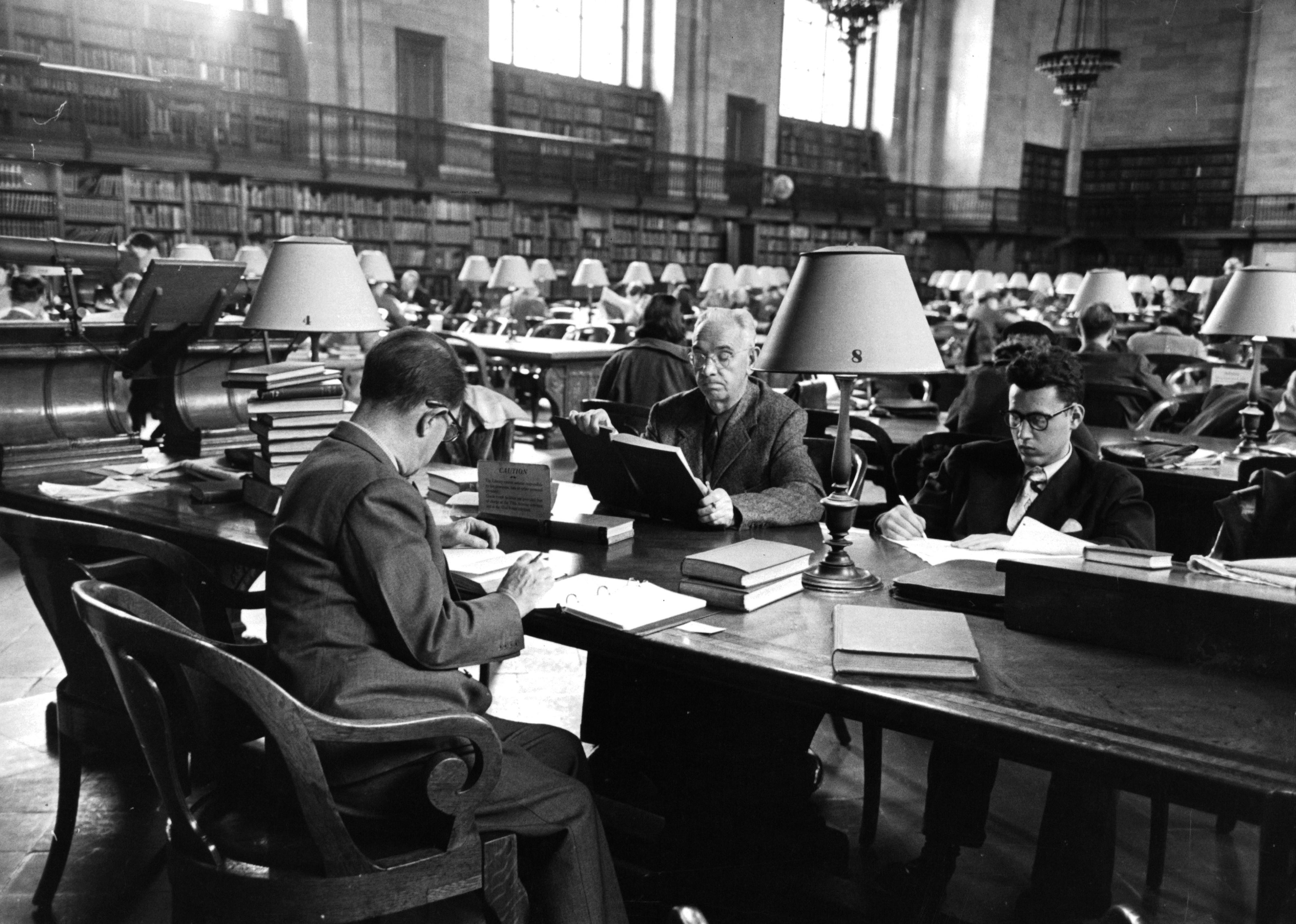
A group known as the Romm Gang stole several books during a library heist, including first editions of Herman Melville’s “Moby-Dick” and Nathaniel Hawthorne’s “The Scarlet Letter,” as well as a rare Edgar Allan Poe collection, “Al Aaraaf, Tamerlane and Minor Poems.” Travis McDade “Thieves of Book Row: New York's Most Notorious Rare Book Ring and the Man Who Stopped It.”
1932: The Folger Shakespeare Library opens
A gift from to the American public, the library houses the world’s largest Shakespeare collection. The library is located on Capitol Hill in Washington D.C. and is .
1933: University students burn books in Germany
On May 10 in Berlin’s Opera Square, students to align the arts and culture of Germany with Nazi ideals. Over 25,000 books were burned in bonfires throughout Germany, including author Helen Keller’s work on the rights of people with disabilities and Jack London’s “The Call of the Wild.”
1934: ‘Murder on the Orient Express’ is published
On the first day of the year, Agatha Christie’s novel was published by the Collins Crime Club in the United Kingdom. Though the book was not released in the United States until Feb. 28, 1934, its first publication came as in the Saturday Evening Post under the title “Murder in the Calais Coach.”
[Pictured: Author of Murder on the Orient Express, Dame Agatha Christie, at work on a typewriter her home in Devonshire.]
1935: Penguin Books is founded
The was founded in 1935 by Allen Lane, who wanted attractive and affordable books for the masses. Four years later, the company opened a U.S. office called Penguin Books Ltd.
1936: ‘Gone with the Wind’ is published
Ten years earlier, Margaret Mitchell left her job at the Atlanta Journal to recover from a serious ankle injury, which is part of the reason in the small apartment she kept with her husband. In 1937, “Gone with the Wind” won the Pulitzer Prize and became .
1937: ‘Of Mice and Men’ is published
John Steinbeck’s tragic tale of ranch hands Lennie and George was based in part as a laborer. Not only is it one of the most read books in schools, but it is also one of , with people attempting to ban it, according to the American Library Association.
1938: The first American woman wins the Nobel Prize in Literature
Pearl Buck’s 1931 book “The Good Earth” won the Pulitzer Prize and remained on Publisher Weekly’s for two years. She was only the fourth woman at the time to win the Nobel Prize in Literature, and as of 2020, have won the award. As the daughter of missionaries, spent much of her childhood in China and had published over 70 books by the time she died in 1973.
1939: The Kenyon Review is founded
Founded at Kenyon College in Gambier, Ohio, the literary journal was edited by poet and critic John Crowe Ransom. Writers Flannery O’Connor and Robert Lowell have been published in its pages, and though it has , the journal continues to thrive today.
[Pictured: Ransom Hall of Kenyon College, constructed in 1912.]
1940: P.G. Wodehouse is arrested and jailed
The Germans in Le Touquet, France, during World War II. The Nazis sent Wodehouse and his wife to an internment camp in Silesia, Poland, which was formerly an insane asylum. On June 26, 1941, he was released from the camp, eventually emigrating to the United States and becoming a citizen in 1956, but not before weathering some controversy over his lighthearted depictions of the camp.
1941: ‘Mildred Pierce’ is published
The novel by James M. Cain featured a divorced woman during the Depression attempting to raise her daughters in California. In 1945, the novel would be adapted into a film starring Joan Crawford in . Cain also wrote “The Postman Always Rings Twice” and “Double Indemnity.”
1942: Anne Frank receives a diary for her birthday
On June 12, 1942, Anne Frank turned 13 years old, and her parents allowed her to as her birthday gift. Frank used the diary to record what happened during her time from the Nazis during World War II, and this became, along with other writings, the basis of “The Diary of Anne Frank,” published by her father, Otto. Anne died in the Bergen-Belsen concentration camp in 1945.
1943: The FBI begins surveillance on Black novelist Richard Wright
The FBI African American writers in part for alleged ties to Communism. Richard Wright, the award-winning novelist who wrote “Native Son,” was at one time a member of the Communist party. The FBI, under J. Edgar Hoover, on him and other Black writers between 1919 and 1972.
1944: Three great American novelists are born
Alice Walker, Richard Ford, and Armistead Maupin were born on Feb. 9, Feb. 16, and May 13, respectively. Walker would go on to pen “The Color Purple,” for which she won a National Book Award and a Pulitzer Prize. Ford would become known for his novel “The Sportswriter” and also won a Pulitzer, while Maupin created the popular “Tales of the City” series.
1945: George Orwell's 'Animal Farm' is published
The dystopian novel was published on Aug. 17 by the small press Secker and Warburg. The book, who rebel against farm owner Mr. Jones, was an allegorical satire against Stalinism.
1946: ‘The Iceman Cometh’ premieres on Broadway
Eugene O'Neill's play focuses on a group of people facing their dreams in a New York City bar circa 1912. While O’Neill wrote the play in 1939, on Oct. 9, 1946, at the Martin Beck Theatre.
1947: ‘The Plague’ by Albert Camus is published
In , Stephen Spender wrote of the novel about a French city hit with an epidemic, “To criticize it by standards which apply to most fiction would be to risk condemning it for moralizing, which is exactly where it is strongest. ‘The Plague’ stands or falls by its message.” French novelist Albert Camus went on to win the Nobel Prize in 1957 before in 1960.
1948: Shirley Jackson’s ‘The Lottery’ is published
Shirley Jackson’s short story was published on June 26, 1948, in The New Yorker. The backlash was instant, with the magazine receiving a flurry of letters, including one from a who wrote, “I frankly confess to being completely baffled by Shirley Jackson’s ‘The Lottery.’ Will you please send us a brief explanation before my husband and I scratch right through our scalps trying to fathom it?” The story about a village that holds an annual lottery that determines which of its residents will be stoned to death caused many of the magazine's subscribers to cancel their subscriptions.
1949: Publishing house Weidenfeld & Nicolson is founded
Weidenfeld & Nicolson, a British publisher, was founded by Lord Weidenfeld and Nigel Nicolson. The literary and international publisher with a roster of authors including Gillian Flynn, Julie Andrews, and Malala Yousafzai.
1950: 'Strangers on a Train' is published
Patricia Highsmith's psychological thriller inspired a 1951 of the same name. Highsmith would go on to write "The Talented Mr. Ripley," another novel that would more than once .
1951: ‘The Catcher in the Rye’ is published
J.D. Salinger’s book, narrated by angst-ridden teen Holden Caulfield, was published on July 16 by Little, Brown, and Company. Not only was the book a hit, but it remains one of the quintessential coming-of-age novels. It took Salinger, who was 31 when he finished writing it, .
1952: Poet e.e. cummings receives a Harvard-appointed professorship
at Harvard was for 1952-1953. Cummings proved that a poem's visual appearance could mean just as much as the words in it.
1953: Georgia creates the nation’s first censorship board
On Feb. 19, in a unanimous vote, the Georgia State Assembly approved , which established the Georgia Literature Commission—the first literature censorship board. The committee’s chairman, James P. Wesberry, developed that determined which literature was obscene.
1954: The first Bloomsday is celebrated in Ireland
Bloomsday is celebrated on June 16, 1904—the specific day that provides the setting for James Joyce’s epic novel “Ulysses.” is named for Leopold Bloom, one of the novel's central characters. The first Bloomsday held in Ireland was celebrated on June 16, 1954, when writers Patrick Kavanagh and Flann O’Brien went to various spots and read parts of “Ulysses.”
1955: The Six Gallery reading takes places in San Francisco
A new breed of poets came together to read on Oct. 7 at the . The event featured Michael McClure's first poetry reading and the first public reading of Allen Ginsberg's controversial poem "Howl." Jack Kerouac attended, while Philip Whalen, Philip Lamantia, and Gary Snyder read as well.
1956: A literary power couple meets
On Feb. 25, poets Ted Hughes and Sylvia Plath at Cambridge and were married less than four months later. Though they remained married, they were estranged for months when Plath took her own life at the age of 30 in 1963. Hughes' next partner, Assia Wevill, also .
1957: Allen Ginsberg’s controversial book of poems leads to an obscenity trial
Allen Ginsberg’s “Howl and Other Poems,” with its references to drugs, sex, and death, was seized by customs officials. In the 1957 obscenity trial that followed, of the book, declaring that it was not obscene. In doing so, he cleared Lawrence Ferlinghetti, in San Francisco, of all charges based on his decision to publish and sell the book at his store.
1958: Poet Ezra Pound is released from St. Elizabeth’s Hospital
After being to stand trial for a treason charge stemming from the poet’s wartime broadcasts, Ezra Pound was sent to St. Elizabeth’s Hospital in Washington D.C. Poet Robert Frost and other notable literary figures fought for his release. After he left the hospital, Pound moved to Italy, where he remained until his death in 1972.
1959: William S. Burroughs’ ‘Naked Lunch’ is published
The tale of heroin addiction and paranoia was first published as “The Naked Lunch” in Paris by Olympia Press. Beat writer Burroughs based much of it on his own experiences with addiction, and the controversial novel wouldn’t be published in the U.S. until 1962. Burroughs claimed that friend and fellow writer Jack Kerouac .
1960: Writer Norman Mailer stabs his wife
The novelist and the mother of their two girls, on Nov. 20 at a party in their New York City apartment. Adele nearly died from the two stab wounds from a penknife in her abdomen and back. On that night, the author was attempting to kick off his New York mayoral campaign.
1961: Ernest Hemingway dies
American novelist Ernest Hemingway died on July 2 in Ketchum, Idaho. His wife insisted that the hard-living author, who won both the Pulitzer and Nobel prizes, while cleaning his firearm. Hemingway’s father, Dr. Clarence E. Hemingway, died by suicide at the age of 57, and in the decades following the author’s death, suicide was determined to be as well.
1962: ‘The Golden Notebook’ is published
One of Doris Lessing’s most famous novels is the story of Anna Wulf, who recounts her life in four golden notebooks and then tries to tie them together in a fifth. The book was Lessing’s sixth and is frequently .
1963: Sylvia Plath’s ‘The Bell Jar’ is published
On Jan. 14, Sylvia Plath’s only novel was . It was only released under Plath’s name posthumously, as only a month after publication, the writer died by suicide at the age of 30.
1964: The U.S. Supreme Court finds the novel ‘Tropic of Cancer’ is not obscene
The by Henry Miller was first released in 1934 and was defended in 60 court cases in its first year of publication. Though the court found the book to involve graphic sexual details, it as it relates to the U.S. Constitution. The book was also found to have literary value.
1965: The first ever Nebula Awards are given
has become one of the most prestigious Science Fiction/Fantasy writing awards. The included "Dune" by Frank Herbert for Best Novel and "'Repent, Harlequin!' Said the Ticktockman" by Harlan Ellison. Full members of the Science Fiction and Fantasy Writers of America vote on and present the awards, which also include annual awards for Best Novella and Best Novelette.
1966: Poet Michael McClure reads to the lions
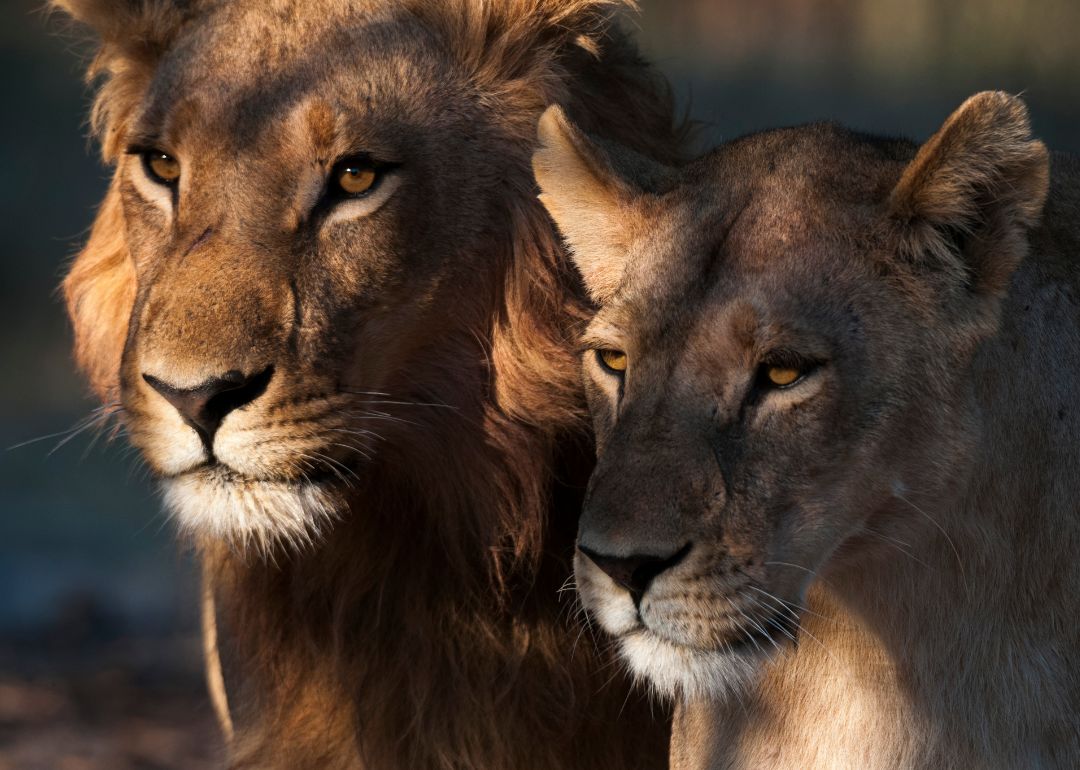
Beat poet Michael McClure recited his poem “Tantra 49” to lions of the television series “U.S.A. Poetry.” As McClure used a mix of guttural cries and roars, the lions seemed to respond in unison from their cages at the San Francisco Zoo. The poem came from McClure’s 1964 collection “Ghost Tantras.”
1967: The first issue of Rolling Stone is published
was founded in 1967 by former Berkeley student Jann Wenner and San Francisco Chronicle jazz critic Ralph J. Gleason. The first issue was released on Nov. 9, 1967, and featured John Lennon on its cover. Not only did the magazine focus on music, but it was an outlet for , including Hunter S. Thompson’s “Fear and Loathing in Las Vegas” and Tom Wolfe’s “The Bonfire of the Vanities.”
1968: Len Deighton’s ‘Bomber’ becomes the first book written on a word processor
on an IBM MTST (Magnetic Tape Selectric Typewriter). The 200-pound computer had to be lifted by a crane through Deighton’s window. When “Bomber” was published in 1970, it was a major literary success.
1969: The inaugural Booker Prize is awarded
English writer P.H. Newby for “Something to Answer For.” In 2002, the prize name changed to reflect a new sponsor, the Man Group, and was subsequently known as The Man Booker Prize from 2002-2019. Such notable authors as George Saunders, Margaret Atwood, and Salman Rushdie have all won Booker Prizes.
1970: Toni Morrison's first novel is published
"The Bluest Eye" tells the story of 11-year-old Black girl Pecola Breedlove. The novel made the in 2004, 2006, and 2010. The list is kept by the American Library Association Office for Intellectual Freedom.
1971: A literary hoax is debunked
Clifford Irving convinced a publisher that he had meetings and interview transcripts for an authorized biography of the reclusive billionaire Howard Hughes. Irving received a $750,000 advance for the book from McGraw-Hill, sold the serial rights to Life magazine, and made $400,000 for paperback rights from Dell. In late 1971, before the book came out, Hughes came forward to say he’d never heard of Irving, and . A literary-hoax case was brought against the writer by a Manhattan grand jury.
1972: ‘The Stepford Wives’ is published
Ira Levin’s satirical feminist thriller “The Stepford Wives” was released by Random House in September. The perfectly cloned wives worked their way into pop culture vernacular and even earning a place in the Oxford dictionary. Levin revealed that Stepford was , where he lived for several years in the 1960s.
1973: Thomas Pynchon’s novel ‘Gravity’s Rainbow’ is published
The World War II novel won the 1974 National Book Award for Fiction, though it was shared with Isaac Bashevis Singer. At the National Book Award gala, Pynchon to accept his award. The Pulitzer fiction jury also unanimously selected the novel in 1974, though the Pulitzer board did not agree and caused quite a scandal when it and instead awarded no Pulitzer for Fiction.
1974: The best selling true crime book of all time is published
Vincent T. Bugliosi and Curt Gentry wrote “Helter Skelter,” which told the story of the infamous . Bugliosi was the deputy district attorney in Los Angeles and prosecuted the case against Manson. Gentry was a Californian historian and author.
1975: Novelist Thomas Mann's papers are opened
German writer Thomas Mann, who wrote the 1924 novel "The Magic Mountain" and 1947's novel "Doktor Faustus," . When he died on Aug. 12, 1955, he with instructions not to open them until 20 years after his death. In 1975, at the Thomas Mann Archives, when unwrapped, they were found to contain 32 notebooks that were essentially diaries documenting 1918 to 1922 and 1933 until Mann's death.
1976: Raymond Carver’s first short story collection is published
“” was nominated for the National Book Award for Fiction in 1977 and solidified Carver’s place among the greatest short story writers. The 22 short stories explore the quiet desperation of the working class.
1977: A Pulitzer Prize for Fiction is not awarded
It marked the 10th time no prize had been given for this category in the history of the award. In 2012 it happened again, which was quite .
1978: Armistead Maupin’s ‘Tales of the City’ is published
“Tales of the City” got its start as a serialized column in the San Francisco Chronicle, which picked up the column from the Pacific Sun, a local San Francisco paper. The book series included nine volumes in total. The books and the explored and portrayed the LGBTQ community in an honest and real way.
1979: ‘The Hitchhiker’s Guide to the Galaxy’ is published
Written by Douglas Adams, it remains one of the most famous sci-fi books of all time and was also a great satire that introduced comedy to what had traditionally been a serious genre. Adams' novel, which brought science fiction to a wider audience, originated as in 1978.
1980: 'A Confederacy of Dunces' is published 11 years after the author's death
The novel was not published during author John Kennedy Toole's lifetime. Instead, his mother begged to read it. Toole died by suicide in 1969 and the Pulitzer Prize for Fiction for the novel.
1981: The first PEN/Faulkner Award for Fiction is awarded
In a ceremony held in May 1981 at the University of Virginia, was given to Walter Abish for the 1980 novel “How German Is It?” The award, whose jury was paneled by writers, was established by , who won the 1978 National Book Award for Fiction for her novel “Blood Tie.”
1982: The first annual Banned Books Week takes place
The . Several organizations committed to free expression sponsor the event, including the American Library Association, the National Coalition Against Censorship, and the American Booksellers Association. It is typically held in the last week of September.
1983: A German magazine claims to have found Hitler’s diaries
Stern magazine made the claim, insisting that history would need to be rewritten. Two weeks later, when it was discovered that the diaries were written by a forger and crook named Konrad Kujau.
1984: ‘The Bonfire of the Vanities’ is serialized in Rolling Stone
Tom Wolfe’s novel in Rolling Stone magazine. It appeared in 27 biweekly installments beginning in 1984 before being published in its entirety in 1987. “The Bonfire of the Vanities” was Wolfe’s first novel.
1985: E.B. White dies
On Oct. 1, 1985, a man the as "one of the nation's most precious literary resources," died of Alzheimer's disease at the age of 86. White revised and expanded upon Professor William Strunk Jr.'s work to create "The Elements of Style," a no-nonsense grammar guide. The author also penned the beloved children's book "Charlotte's Web."
1986: The Los Angeles Public Library catches fire
More than 1 million books were destroyed in that burned for more than seven hours on April 29. Though the police had a suspect, the arson case to this day.
1987: Toni Morrison writes another award-winning novel
“Beloved” was published by Alfred A. Knopf in September 1987. Morrison’s novel about a family of former slaves and the haunting of their home won both the Pulitzer Prize for Fiction and the American Book Award in 1988. She would go on to in 1993, making her the first African American woman to do so.
1988: Tom Harris’ ‘The Silence of the Lambs’ is published
The psychological thriller was made into an Oscar-winning movie in 1991. Harris on three infamous serial killers: Ed Gein, Ted Bundy, and Gary Heidnik.
1989: Amy Tan’s ‘The Joy Luck Club’ is published
The novel, published by Putnam, touched upon the lives of immigrant Chinese mothers and their American-born daughters. for both the National Book Award and the National Book Critics Circle Award, the book was adapted into a .
1990: Book Bandit Stephen Blumberg is arrested
Blumberg was arrested for his status as the most prolific in the history of the United States. The Minnesota native stole more than 23,000 rare, valuable books from museums and colleges all over the U.S. and Canada.
1991: Brett Easton Ellis’ ‘American Psycho’ is published
The novel, about a Wall Street Manhattanite , was . Simon & Schuster, the original publisher, dropped it three months before its release, but it was picked up and published by Vintage Books.
1992: ‘The English Patient’ is published
Michael Ondaatje’s novel followed four people struggling at the end of World War II. It won the Booker Prize in 1992 and in 2018. The novel was adapted into a .
1993: Maya Angelou reads at the inauguration of President Bill Clinton
On Jan. 20, 1993, “On the Pulse of Morning.” While this made her to read a poem for the presidential inauguration, it also made Angelou the first woman and the first African American.
1994: The Booker Prize winner causes controversy
The novel “How Late It Was, How Late” by James Kelman includes of the F-word. The main character's use of the Glaswegian dialect confused many, and that Britain's highest literary honor was awarded to such a book. “"Frankly," Neuberger said, "it's crap."
1995: The Dylan Thomas Centre is opened in Wales
opened the Dylan Thomas Centre in Swansea, Wales, to celebrate the Welsh poet who was known for poems such as ""Do not go gentle into that good night." The center is home to the only permanent Dylan Thomas exhibition.
1996: ‘A Game of Thrones’ is published
George R.R. Martin’s first book in “The Game of Thrones” series, “A Song of Ice and Fire,” introduced readers to the kingdom of Winterfell. It won the 1997 for Fantasy Novel and cemented Martin’s place as a major fantasy author. The book series was adapted into the popular HBO series of the same name, which ran for eight seasons.
1997: ‘Harry Potter and the Sorcerer’s Stone’ is published
With an initial printing of only 50,000 copies, the first book in the fantasy series by J.K. Rowling was published by Scholastic in September. Rowling was a single mother who wrote the book in various cafes in Edinburgh, Scotland. To date, more than 500 million copies of the Harry Potter books have been sold, making Rowling .
1998: Poet Ted Hughes dies
Poet and children’s author Ted Hughes at the age of 68. He was appointed Poet Laureate of Britain in 1984 and was known as much for his marriage to Sylvia Plath as he was for his writing. Before his death, Hughes published his last work, a collection of poems based on his relationship with Plath called ''Birthday Letters.”
1999: Stephen King injured in car accident
On June 19, while walking near his home in North Lovell, Maine, King was hit by a minivan. The seriously injured author , “As I lay unconscious in the hospital, the docs debated amputating my right leg and decided it could stay, on a trial basis. I got better. Every day of the 20 years since has been a gift.” The driver of the van, Bryan Smith, after accidentally overdosing on fentanyl.
2000: Stephen King releases his short story as an e-book rather than in print
The author made publishing history when he chose to release his short story "" as an e-book. More than 400,000 copies were sold within a 24-hour period.
2001: BookCrossing is launched
, which was launched on April 21, 2001, BookCrossing is “the act of releasing your books ‘into the wild’ for a stranger to find, or via ‘controlled release’ to another BookCrossing member, and tracking where they go via journal entries from around the world.” Nearly 20 years later, over 13 million books are traveling through 132 different countries.
2002: Donna Tartt’s second novel ‘The Little Friend’ is published
Alfred A. Knopf published Tartt’s sophomore effort on Oct. 22, 10 years after the author’s first novel, “The Secret History,” was published. It was released in paperback on Oct. 28, 2003 by Vintage. Writing for Salon, , “Some novelists, a very few, just have the hoodoo. Tartt is one of them.”
2003: Poets protest the Invasion of Iraq
In February 2003, Poets Against the War to protest the Bush administration’s decision to invade Iraq. The movement and an educational project. Over 13,000 poets submitted their work.
2004: UNESCO designates its first City of Literature
The United Nations Educational, Scientific and Cultural Organization (UNESCO) designates Edinburgh, the capital of Scotland, as its inaugural City of Literature. The designation includes and belongs to its larger .
2005: Kazuo Ishiguro's 'Never Let Me Go' is published
British novelist Ishiguro's novel is a rarity: a literary dystopian science fiction novel. It was shortlisted for the 2005 Man Booker Prize, as well as the 2006 Arthur C. Clarke Award. Ishiguro in 2017.
2006: Oprah busts James Frey for lying
In 2005, Oprah selected author James Frey’s 2003 memoir “A Million Little Pieces” for her book club. In 2006, the Frey’s book about drug addiction wasn't as real as it purported to be. Oprah called Frey back to her show, where , saying, "I have to say it is difficult for me to talk to you because I feel duped.”
2007: Doris Lessing becomes the oldest Nobel Laureate in Literature
The author of notable works including “The Golden Notebook” and “The Fifth Child,” Doris Lessing was 88 years old when she received the distinction. Rudyard Kipling, author of “The Jungle Book,” remains . He was 42 when he won the prize in 1907.
2008: The Best of Booker is awarded
To celebrate the 40th anniversary of the prize, judges selected a shortlist of the best of past Booker Award prizewinners. The overall winner was decided by the public, who voted online. Salman Rushdie’s novel “Midnight’s Children,” which received the 1981 Booker Prize, .
2009: The first female British Poet Laureate is appointed
Writer Carol Ann Duffy was appointed Poet Laureate on May 1 and in a post dominated by men for 341 years. Duffy, best known for her poetry collection “The World's Wife,” was also the first Scot and lesbian named Laureate.
2010: An author wins the Carnegie and Newbery medals with the same book
Neil Gaiman was the first author . He won for his novel "The Graveyard Book," a tale of Nobody Owens, who is raised in a graveyard by ghosts. Both medals are considered prestigious distinctions in children's literature.
2011: J.K. Rowling switches literary agents
Christopher Little represented Rowling and helped her launch the Harry Potter series. Rowling decided to in the wake of her decision to sell electronic books from the book series through her site Pottermore, and her new agent was lawyer Neil Blair. Bloomsbury, her former publisher, did not own the digital rights to the Harry Potter series.
2012: An early Hans Christian Andersen story is discovered
Retired historian Esben Brage discovered the six-page tale “Tallow Candle” in a box at Denmark’s National Archives. Andersen wrote many famous children’s stories during his lifetime, including “The Ugly Duckling” and “The Little Mermaid.”
2013: The Man Booker Prize is awarded to its youngest winner
At the age of 28, Eleanor Catton became of The Man Booker Prize. Her novel, “The Luminaries” also became the longest winning novel in the history of the Man Booker, with robust editions ranging from 832 to 864 pages.
2014: Maya Angelou dies
Novelist and poet Maya Angelou died on May 28 at her home in North Carolina at the age of 86 after suffering from heart problems. Angelou’s autobiography “I Know Why the Caged Bird Sings” received critical acclaim. During her lifetime, the author also in 2013 and the Presidential Medal of Freedom in 2010.
2015: Harper Lee's second novel is published
In February 2015, Harper Lee revealed that she had . It was a follow-up to the 1960 Pulitzer Prize-winning literary classic, "To Kill a Mockingbird," a coming-of-age story about racism and social injustice in the South. Her second novel, "Go Set a Watchman," was released on July 14, 2015, by HarperCollins but .
2016: Bob Dylan wins the 2016 Nobel Prize in Literature
When Bob Dylan won, many claimed he was the first songwriter to win a Nobel Prize in Literature. The claim was an erroneous one: The first songwriter to be was Indian poet Rabindranath Tagore in 1913.
2017: A short story in The New Yorker goes viral
Kristen Roupenian’s “Cat Person” went viral and was the most read online story as well as one of the most read stories of the year. The story is about Margot, a college student, and her relationship with Robert, a 34-year-old patron at the movie theater where Margot works.
2018: Sally Rooney’s ‘Normal People’ is published
“Normal People” was Sally Rooney’s second novel and was longlisted for the 2018 Man Booker Prize. The novel about the complicated relationship between two teenagers was a bestseller in the United States and was adapted into an television series in 2020.
2019: Bertelsmann acquires Penguin Random House
Bertelsmann acquired British media company Pearson’s in Penguin Random House, the largest trade publishing group. The acquisition cost $675 million and made Bertelsmann the sole owner of the trade publisher.
2020: Colson Whitehead wins the Pulitzer Prize for the second time
The Black author is in good company, as only three other writers have won : Booth Tarkington, William Faulkner, and John Updike. The New York author won for "The Nickel Boys," about the abuse suffered by a group of Black boys in a Florida reform school. His first win was in 2017 for his novel "The Underground Railroad."