Why weird wins in modern marketing—and how brands are pulling it off
Why weird wins in modern marketing—and how brands are pulling it off
Upon entering the one-day immersive installation known as GrazaVerse, guests were greeted with a surrealist tableau: a Renaissance-style cherub statue “peeing” olive oil, with bread skewers for dipping, risotto served by a mysterious set of disembodied hands behind a wall, and a soap dispenser filled with olive oil for drizzling on soft serve.
As bizarre or offbeat as this event, built to introduce olive oil brand Graza’s new glass bottles, might sound, it represents a cross-industry trend in which brand creative is getting … weird. 2025’s buzziest campaigns and activations have intentionally embraced surreal, controversial, and even deliberately cringe approaches.
spoke with brands and industry experts on why weirdness resonates with today’s consumers and how brands can tap into the unusual to stand out from the competition, reach new audiences, —and, ultimately, have some fun.
The weird zeitgeist
“In the last year or two, there has definitely been an uptick in brands leaning into the weird,” says Ochuko Akpovbovbo, who writes the consumer-culture-focused newsletter As Seen On. Akpovbovbo connects this shift to the overwhelming deluge of content that has inundated today’s consumer. “There’s so much content out there right now that brands are pumping out, individuals are pumping out, and creators are pumping out.” Weirdness allows brands to seize attention.
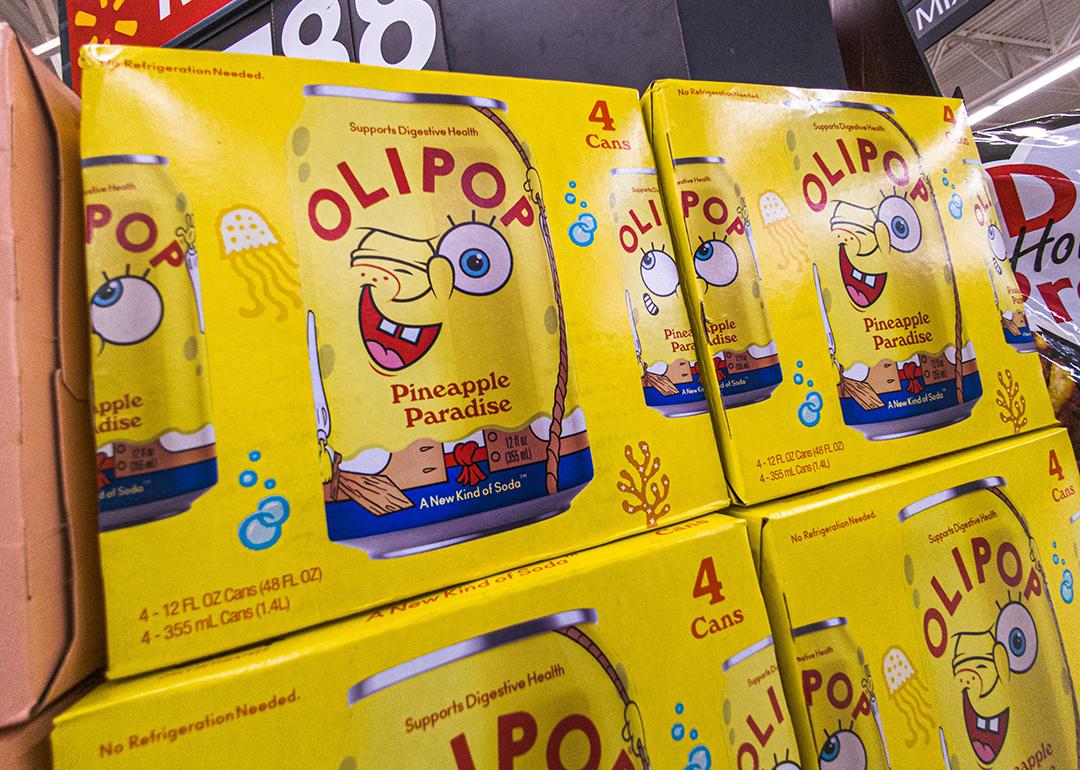
Steven Vigilante, director of strategic partnerships of the prebiotic soda brand Olipop, sees weirdness as a way to stand out from the predominant polished digital aesthetic. “I think consumers, especially the younger generation, are so jaded by the constant barrage of polished advertising in the world today,” he says. “The weird, the unique, the quirky—it cuts through the noise and helps you break through as a brand.”
The weird versus polished dynamic is especially applicable for the thousands of direct-to-consumer (DTC) businesses in the U.S., all of which are vying for customer attention. And the slices of available attention are getting smaller, as our attention spans have shortened over the past decade: 47 seconds on a given onscreen task before switching to something else (down from two and a half minutes in 2004), per the University of California.
Thinking beyond the expected
For certain brands, weirdness is about subverting expectations. By choosing a less obvious creative campaign or while still staying true to their core product or mission, brands can surprise and delight their audience—and keep them engaged.
Graza and filtered shower head brand Jolie both employ this approach when ideating “weird” products and campaigns, choosing concepts that might seem unexpected in some ways but actually make a lot of sense.
The central concept of Graza, for instance, is extra virgin olive oil. When the brand undertook its first product expansion, the team tapped into the weird by eschewing a more conventional choice, like vinegars or other condiments, in favor of a snack that highlights their core product: chips.
“Potato chips might seem kind of weird. But when you think about it, about 40% of a potato chip is fat, and we figured—why not have that fat be extra virgin olive oil?” says Kali Shulklapper, Graza’s director of brand marketing. “Turns out potatoes fried in EVOO are really delicious, and also a bit better for you! And even though it may seem slightly unconventional, olive oil and ice cream also taste really good together,” she adds, referring to Graza’s collaboration with Alec’s Ice Cream.
The Graza team has pushed further into weird territory with limited-edition launches, such as an umbrella they called the “Drizzle Umbrizzle.” For the 2024 holiday season, they launched a festive turtleneck sweater specifically for their signature squeeze bottles. “I think we have embraced a way of doing things that doesn’t feel standard for an olive oil brand,” says Shulklapper.
The team at Jolie, whose central concept is filtered showerheads, views weirdness as a way to overcome the challenge of having a limited set of SKUs. “We have this one product, and we have to tell the story of this one product time and time again—so that’s how you do that in different, interesting ways that are still relevant and connected to the core of what we’re doing,” says cofounder Arjan Singh.
The brand has hosted oyster-tasting events, using the filter-feeders to represent the filtration of its product. It also launched a YouTube series, titled “Water &,” to explore how humans relate to water, whether via surfing or painting.
“I like to take inspiration from many things, whether it’s art or fashion or a restaurant or the way in which someone does something stylistically,” says Singh. “Your shower head is not something that you look at with the same sort of lens as your handbag or a dress. So we deal with the challenge in terms of the perception of the space and the product to begin with,” he says. Rather than directly driving sales, Jolie’s forays into compelling mini-documentaries and pop-up events create a world around the brand. “In terms of measuring the [return on investment], we don’t view it on a per-video or per-activation basis when it comes to these initiatives. It’s more the totality of it, and a little bit of a gut feeling, to be honest.”
Pulling weird stunts
Weird stunts can also be a way to achieve virality, which is especially important for brands looking to and establish themselves in the cultural conversation. “It’s the so-called memeification of the internet, as in, ‘What is going to go viral?’” says Akpovbovbo. “We need weird—as in wacky—stuff that people can tweet about, that people can meme, a thing that is a huge attention driver.”
Mockery, whether directed at oneself or current trends, is a popular stunt. IESE Business School created a campaign that poked fun at LinkedIn speak. U.K.-based protein cereal brand Surreal spoofed popular song lyrics and parodied text-based Instagram slideshows to promote the launch of its granola. Liquid Death, best known for its canned water, turned negative feedback and comments into music with three Greatest Hates albums and, most recently, a live performance.
Another popular stunt is releasing products aimed at making the customer ask, “Is this a joke?” The Skinny Confidential, whose product line mainly includes elevated self-care essentials and preventive beauty tools such as ice rollers and mouth tapes, used April Fool’s Day to launch its version of toilet paper. Priced at $33 for 12 rolls and thus dubbed by founder Lauryn Bosstick as “the Birkin bag of toilet papers,” it seemed to be in jest, but it’s now sold out, without restock alerts.
These approaches work, Akpovbovbo says, because the brands have high-quality products to back up the campaigns. “I think, even with all these stunts they do, what remains is that their product line is good, which I think is why it works, and it makes more sense.”
For elaborate one-off stunts like the GrazaVerse installation, evaluating results may not be as straightforward as using typical metrics like revenue attribution or follower growth. “When it comes to IRL activations,” Shulklapper says, “success is measured by a broad mix of things: attendance, social engagement, what folks are saying at the event, what folks are saying after the event. It’s usually measured more so by vibes and sentiment than by any metrics.”
Bursting stifling bubbles
“Another way you see weirdness is in collaborations, as in, ‘What did these two things have to do with each other?’” says Akpovbovbo. Graza, for example, partnered with the Brigham Young University track and field team and also made a t-shirt with Pabst Blue Ribbon. Division I athletic teams and a lager beer that’s been around since 1844 are industries you don’t normally associate with olive oil, and that’s exactly the point.
“It’s so easy to get caught up in your bubble, especially in food and bev,” says Shulklapper from Graza. “As someone who has worked across a variety of industries, I’ve always been a firm believer that the best ideas come from outside the space that you’re in, and I’ve always really valued ‘outsider’ perspectives.”
Vigilante from Olipop echoes this sentiment. “I feel like most marketers at early-stage or growth-stage consumer brands right now are millennials in cities who live in a bit of a bubble,” he says. “Culture exists everywhere, though, and I go out of my way to source ideas from people who exist way outside of my personal sphere.” He travels all over the country for Olipop, and wherever he ends up, he says, “I constantly ask baristas, bartenders, Uber drivers, etc. about what they read, watch, and listen to. I am always fascinated by the responses and track them over time.”
Case in point: Vigilante cites Olipop’s collaboration with track and field news outlet Citius Mag as one of the most unexpected and creatively rewarding endeavors in the brand’s partnership strategy. He credits a person on Olipop’s sales team who is obsessed with Citius for letting him in on the magazine. “Citius even snuck us into the Paris Olympics and had us in their coverage,” he says, ultimately allowing the brand to reach a greater audience.
Vigilante emphasizes the power of collaborations to drive virality on social media, which is perhaps the Holy Grail that weirdness ultimately seeks. “Collaborations that you wouldn’t think of—that’s the stuff that actually breaks through,” he says. “That’s what people care about and talk about and post about on social.”
was produced by and reviewed and distributed by Â鶹ԭ´´.