
10 trends about the state of independent workers in America
This story originally appeared on Simply Business and was produced and distributed in partnership with 麻豆原创 Studio.
10 trends about the state of independent workers in America
There are many reasons why people might want to become independent workers or freelancers. For workers, it can mean greater flexibility, especially when it comes to deciding on a schedule that works best, whether it鈥檚 full-time, part-time, or built around other responsibilities.
It can also give workers an opportunity to gain more experience in a particular field, expand income, or turn passions into side gigs鈥攁nd perhaps eventually into main hustles. As the demand for independent workers grows, so too do the opportunities.
The coronavirus pandemic has hastened the pace of remote work. The percent of workers potentially needing to change career paths increased by before the pandemic.
At the same time, companies looking at the headwinds are embracing a more diverse labor force to remain competitive, with a combination of full-time, salaried employees working alongside highly skilled independent workers that offer essential expertise and experience that companies might not otherwise have on staff.
The growing rate of online talent platforms and some states鈥� growing financial incentives to encourage remote workers mean that becoming an independent worker is increasingly accessible for many workers. To understand the state of independent workers in America, analyzed briefs from a multitude of organizations including the Harvard Business Review, Mckinsey & Company, and MBO Partners.
Read on to learn more about the current trends of independent workers in the United States.

The number of skilled independent workers has risen 71% over the past decade
When many people think of independents, 鈥済ig鈥� economy workers like DoorDash and Uber drivers come to mind first. But the pool of independent workers actually consists of a wide array of professionals from various industries such as consulting, IT, creative fields, and research.
A sizable percentage of current full- and part-time independent workers鈥�34%鈥攁re considered skilled independents, that was just 20% in 2011.
Part of the reason for this increase is that companies have been hiring skilled independent workers鈥攚ho are more likely to be older and more college-educated than the average nonskilled independent worker鈥攎ore and more over the past decade, which encourages skilled independents to offer up their services.
Another reason is that skilled independents tend to have more job security than 鈥済ig鈥� workers. Due in part to these reasons, skilled independent workers of job satisfaction (87%) and optimism (83%).

Fully remote companies are significantly more likely to hire independent workers
There are many factors that contribute to a company鈥檚 likelihood of bringing independent workers on to the team, including the size of the organization, the industry the company is in, and the age of the manager and the manager鈥檚 interest in remote work.
But, perhaps unsurprisingly, an organization鈥檚 work-from-home status is one of the most crucial signifiers of a company鈥檚 willingness to hire independent workers.
Organizations that are fully remote are comparatively confident in bringing independent workers on since these companies are already used to virtual meetings and workspaces. In fact, of companies that are fully remote have also hired freelancers.
And as the number of remote workers in America is by 2025, to 36.2 million, that鈥檚 likely to be good news for independent workers: A 10% increase in the number of fully remote workers correlates to a 1.6% to 2.7% increase in the hiring of independent workers.
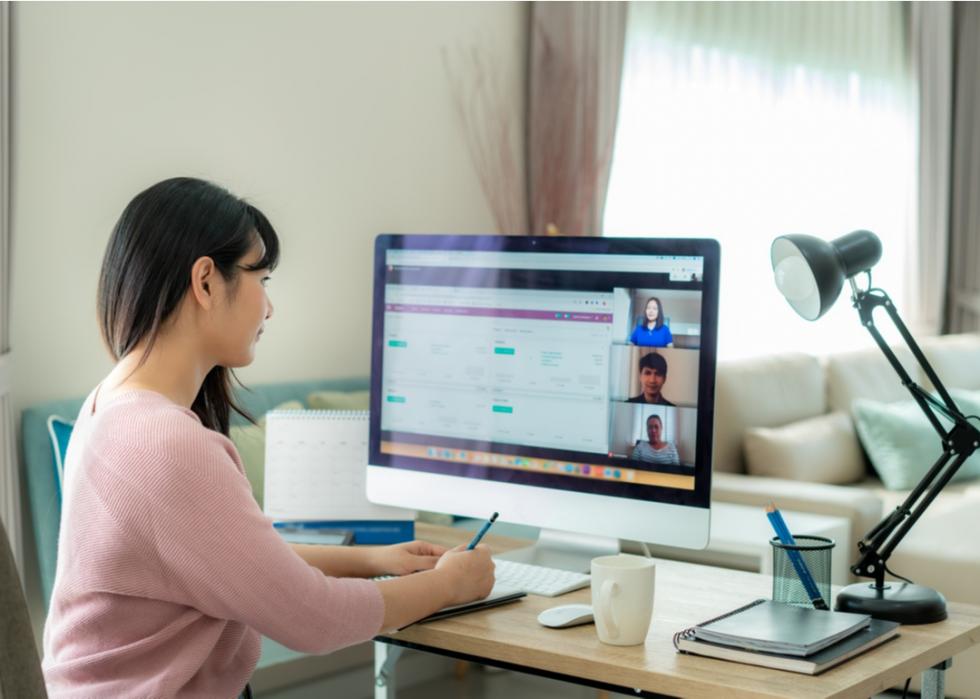
Independent workers doing business outside of the US has more than doubled in the past 5 years
Independent workers often have the chance to create their own schedules and avoid commuting. However, this mode of working has benefits that extend beyond the worker鈥檚 schedule and into the international talent community.
Including both part-time and full-time independent workers, worked independently in 2020, which generated $1.21 trillion in revenue throughout the year and made up around 5.7% of U.S. GDP in 2019.
Advancements in technology and global connectivity mean that American independent workers are increasingly available to work with companies and clients outside of the U.S. In fact, 28% of independents in 2020 did business outside the U.S.鈥攁 significant increase from 12% in 2013.

The use of crowdsourcing to solve business problems is growing
Many companies are successfully turning to a diverse talent pool of experts on crowdsourcing platforms. Using the wealth of knowledge found via crowdsourcing allows companies to get more researchers鈥� eyes on a problem without outstripping company financial resources.
Essentially, using crowdsourcing platforms has become an accessible way for companies to get ideas from experts about a host of topics鈥攆rom, say, coding to archeology鈥攖hat the companies can develop further at a fraction of the cost. The platform InnoCentive, for example, lets organizations introduce challenges for InnoCentive experts to help solve.
13% of independents use online marketplaces as their primary source of clients or customers
UpWork, Fiverr, InnoCentive, and Toptal, among others, are most likely familiar names to many independent workers. These online marketplaces are becoming increasingly popular outlets for workers to gain new clients, and they can work well for industry beginners and seasoned experts alike.
In 2020, 27% of independent workers had used in the past year, compared to just 3% in 2012. Overall, it seems that younger independent workers are more likely to use these platforms than older adults. Gen Z workers say they are using them at a rate of 44% with millennials not too far behind at 40%, versus 20% of Gen Xers and 14% of boomers.

Since 2011, the percentage of workers saying it was their choice to work independently rose 12%
When the coronavirus pandemic hit in 2020, independent workers were uniquely well-prepared for remote work, largely because they had already been working from home. In fact, 85% of said they worked remotely at least some of the time in 2019, compared to 93% in 2020. And workers are increasingly wanting to become independent.
As of 2020, who weren鈥檛 independent said that they plan on 鈥渄efinitely鈥� or 鈥減robably鈥� becoming independent within the next few years. However, there鈥檚 a caveat: 47% of these workers said it would be their choice to do so, versus 58% in 2019.
This most likely reflects the job market in 2020, which showed record job losses that weren鈥檛 seen in America since 1939, the last year of the Great Depression.

Since 2009, digital talent platforms have grown from 80 to more than 330
As businesses are seeking out more independent workers to work full-time and part-time, and in the short-term and long-term, companies are increasingly adopting what a calls an 鈥渙n-demand workforce鈥� to become more competitive. The COVID-19 pandemic has made companies shift more quickly to adopt a hybridized and less-traditional business model that incorporates independent workers.
And where are many of these companies finding these highly skilled independent workers?
According to the report, more than 30% of business leaders say they are using talent platforms like UpWork and InnoCentive frequently, with an additional 30% of businesses reporting using such platforms to scout for talent fairly often.
These platforms are likely to have a bright future ahead of them: 50% of business leaders from the same report said that they anticipate using these platforms even more in the future and 90% say that they would be at least somewhat important to the company鈥檚 future competitiveness.

Side hustles are growing
Many independent workers find that they can take up part-time gigs as a way to expand their income, learn new skills, or get their foot in the door in a new industry. And it can be especially beneficial for those who want or are in need of a flexible schedule.
As of 2020, the number of people with increased by 5.3% to 15.8 million, a 51% increase from the 2016 figure of 10.5 million. Many people with side hustles hold down other paid jobs but take on additional projects out of financial necessity. Choosing a side hustle鈥攁nd finding clients for it鈥攈as also become more accessible due to the growing number of online marketplaces.

90% of companies believe a blend of full-time and freelance employees gives them a competitive advantage
Many companies will likely benefit from strategically taking note of and seeking out independent workers. This is also true in the long-run as the rise of remote work is expected to continue as a result of the pandemic.
As many managers find that they require certain skills and expertise but may not have workers with those qualifications on staff, the ability to work quickly and find skilled independent workers outside the company can help ensure that the company will continue to be ahead of the curve and be open-minded in terms of embracing hybridized business models.

States will attract individual talent over companies
Before the coronavirus pandemic, it was common to see states offering up incentives to major companies to relocate to their states. Remember when Amazon in 2017 they were searching for a second headquarters, and states fought tooth and nail to encourage them to set up shop in their state?
But now that more workers are operating remotely, states and cities are trying to incentivize top talent rather than particular companies to call their states their new home. Topeka, Kansas, and Tulsa, Oklahoma, for example, are offering $15,000 to move to their cities.
This is yet another sign suggesting that the pandemic has altered the way Americans work鈥攁nd that remote work is here to stay post-pandemic.