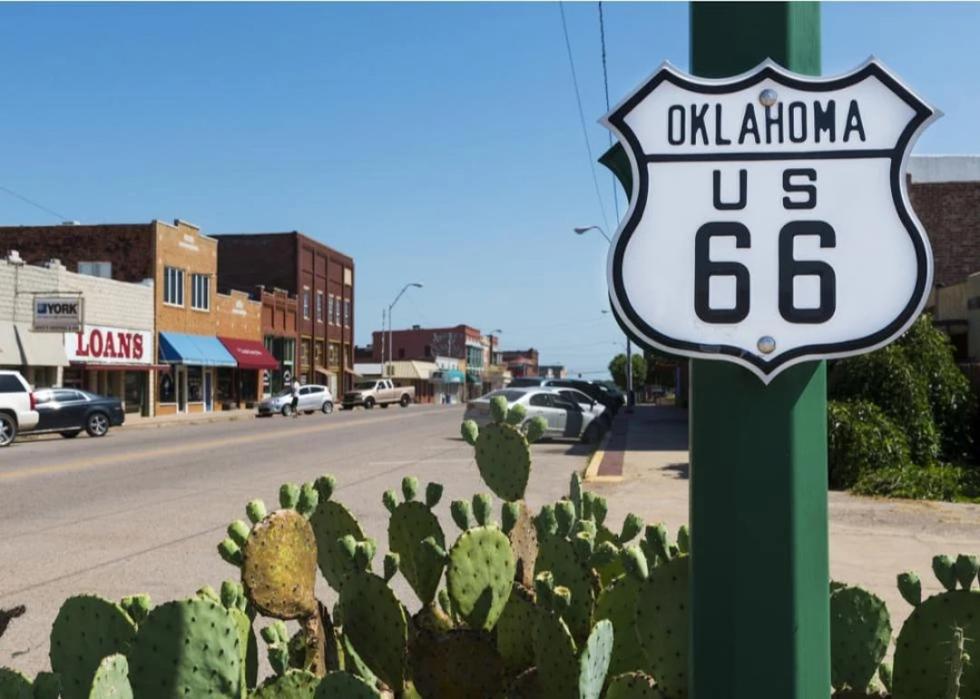
25 least expensive states to live in
Over the last three decades, the rising cost of living has been weighing on Americans.
The turbulent economic events of early 2025—most notably the Trump administration's against the United States' key trade partners— about how to afford day-to-day necessities. In June 2025, by the most in five months, which seems to indicate that tariffs are beginning to have a real impact on inflation. Experts predict the worst is yet to come, with likely to increase in July and August. Even as shows signs of improvement, concerns about tariffs and inflation remain top of mind.
Of course, a key factor in how much individual Americans will be forced to boost their spending—along with how much money they make—is where they live. Certain states, after all, are simply pricier than others.
To identify the most affordable states, Âé¶¹Ô´´ measured the cost of living in each state for 2024 using data from the . Each state's cost of living index was calculated based on the prices of 60 goods and services from a voluntary survey. The state's cost of living index was calculated using the average of the indices of metro areas and cities measured in that state. Data was rounded to the nearest tenth of a percent.
Every index is a percentage of the U.S. average. For example, a state with an index of 90 has a cost of living 10% lower than the national average. Ties were broken by the biggest consumer expense: housing cost.
Read on to see if your state is one of the most affordable in the country.
#25. Wyoming
- Average cost of living index: 95.5
--- Groceries: 100.3
--- Health care: 104.3
--- Housing: 88.6
--- Transportation: 92.4
--- Utilities: 89.1
--- Other: 100.2
Wyoming has no personal or corporate income tax, which makes it the most business-friendly locale in the nation, along with South Dakota, according to the . The Cowboy State also produces an abundance of coal, leading to utility costs that are below the national average.
#24. Pennsylvania
- Average cost of living index: 95.1
--- Groceries: 99.2
--- Health care: 90.6
--- Housing: 84.3
--- Transportation: 104.3
--- Utilities: 106.0
--- Other: 97.9
Pennsylvania has relatively low health care costs, landing among the 10 states with the most affordable health care in the country. Transportation and utilities may be expensive, but miscellaneous expenditures are not, including getting a haircut, seeing a movie, and dropping in on a yoga class, per the C2ER report.
#23. Minnesota
- Average cost of living index: 95.1
--- Groceries: 102.1
--- Health care: 105.0
--- Housing: 80.9
--- Transportation: 95.1
--- Utilities: 97.4
--- Other: 101.7
Minnesota is particularly affordable when it comes to housing. Though the is no walk in the park, 72.4% of the state's homes are owned, according to the Census Bureau. New also launched in 2024 and 2025 that provide funding to counties, metros, and Tribal Nations to help develop and preserve affordable housing.
#22. Montana
- Average cost of living index: 94.9
--- Groceries: 101.3
--- Health care: 106.3
--- Housing: 86.5
--- Transportation: 109.7
--- Utilities: 83.3
--- Other: 96.6
Big Sky Country is a top spot for renewable energy, which helped it land among the 25 least expensive states to live in. Montana has the eighth-highest share of (51%) nationwide, according to Yale Climate Connections.
The state also has some of the in the country, per the Energy Information Administration, which contributes to its utilities costing about 17% lower than the national average.
#21. Illinois
- Average cost of living index: 94.4
--- Groceries: 98.1
--- Health care: 99.1
--- Housing: 83.3
--- Transportation: 103.4
--- Utilities: 99.5
--- Other: 97.7
Illinois scores well for housing affordability, grocery prices, and miscellaneous expenses across much of the state. But that will likely come as a surprise to residents of its largest city, Chicago, where the than the rest of Illinois. According to PayScale, the is also 14% higher than the U.S. average, with housing costs coming in at 39% above the national average and groceries being 4% above the rest of the country.
#20. Ohio
- Average cost of living index: 94.2
--- Groceries: 98.9
--- Health care: 94.5
--- Housing: 85.7
--- Transportation: 95.9
--- Utilities: 99.3
--- Other: 97.2
Ohioans can thank affordable housing for their low cost of living. However, while the is nearly 23% below the , rents haven't seen the same trajectory.
A 2024 report from the National Low Income Housing Coalition and the Coalition on Homelessness and Housing in Ohio found that to afford the rent of a two-bedroom apartment in Ohio and only two of the state's most common jobs reach that pay scale.
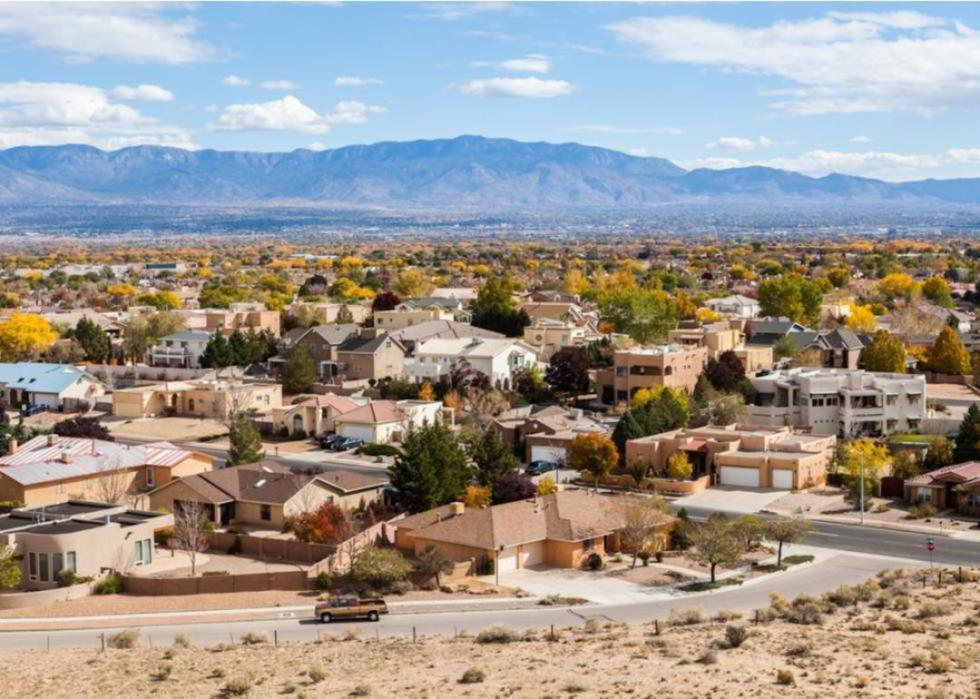
#19. New Mexico
- Average cost of living index: 93.3
--- Groceries: 96.4
--- Health care: 102.7
--- Housing: 86.9
--- Transportation: 90.1
--- Utilities: 84.3
--- Other: 99.0
New Mexico residents' utility bills are among the lowest, ranking at #7 nationwide. The state is a major oil and natural gas producer as well as a wind power leader, producing that way in 2023, per the EIA. The state also , according to 2025 Tax Foundation data.
#18. Nebraska
- Average cost of living index: 93.1
--- Groceries: 99.2
--- Health care: 100.0
--- Housing: 80.0
--- Transportation: 96.7
--- Utilities: 88.4
--- Other: 100.6
Nebraska is the only state that generates electricity . As a result, energy costs are much lower than they are in other states in the nation. Nebraska is also home to a relatively affordable cost of living thanks, in part, to its investments in more than a dozen .
#17. Kentucky
- Average cost of living index: 93.0
--- Groceries: 99.8
--- Health care: 106.6
--- Housing: 78.7
--- Transportation: 96.8
--- Utilities: 83.9
--- Other: 101.2
According to AAA's , Kentuckians pay on the low end of the spectrum. They also benefit from the east of the Mississippi River, according to the EIA. Housing is about 21% lower than the national average, but Louisville has been on the cusp of a that both and have been trying to solve for years.
#16. Texas
- Average cost of living index: 92.7
--- Groceries: 96.1
--- Health care: 94.5
--- Housing: 82.0
--- Transportation: 92.8
--- Utilities: 105.3
--- Other: 96.6
Texas , and its housing is extremely affordable for such a populous state (only California has more residents). The in the Lone Star State are $260,400 and $1,339, respectively, per the Census Bureau. Transportation costs come in #10 in the U.S., thanks to Texas' standing as an oil and gas giant.
#15. South Dakota
- Average cost of living index: 92.2
--- Groceries: 97.5
--- Health care: 101.0
--- Housing: 88.1
--- Transportation: 98.3
--- Utilities: 83.5
--- Other: 92.4
South Dakota stands out for its affordable housing and utilities—plus, the state does not have an . Its natural gas and electricity prices are also , according to the EIA.
#14. Louisiana
- Average cost of living index: 92.2
--- Groceries: 96.1
--- Health care: 96.6
--- Housing: 83.8
--- Transportation: 95.4
--- Utilities: 78.5
--- Other: 99.4
Louisiana is particularly affordable in terms of utility costs and groceries, ranking #2 for the former and #6 for the latter, according to C2ER's data. The Bayou State has the second-highest oil refinery capacity in the country and is also the third-biggest nationwide, according to the EIA.
Housing costs are 16% lower than the national average, though living in New Orleans .
#13. North Dakota
- Average cost of living index: 91.9
--- Groceries: 95.0
--- Health care: 108.2
--- Housing: 80.1
--- Transportation: 99.8
--- Utilities: 81.0
--- Other: 98.8
North Dakota has a wealth of job opportunities, sporting the nationwide as well as low-income tax rates, making it one of the most affordable places to live in the Midwest.
It's also the second-least expensive state for groceries in the country, with the city of Grand Forks specifically coming in as the , according to C2ER. Housing is also on the less costly side, and the state has one of the lowest housing-burdened rates in the Midwest.
#12. Georgia
- Average cost of living index: 91.3
--- Groceries: 97.3
--- Health care: 100.4
--- Housing: 79.2
--- Transportation: 96.0
--- Utilities: 97.4
--- Other: 94.6
Georgia's miscellaneous and housing costs are its greatest affordable living selling points. In recent years, the was $272,900, and those with mortgages paid $1,712 per month, while renters spent $1,306, according to the Census Bureau. Georgia locales consistently rank as some of the least expensive in the country.

Augusta, for example, landed at #16 on Kiplinger's list of the .
#11. Tennessee
- Average cost of living index: 90.5
--- Groceries: 97.1
--- Health care: 88.6
--- Housing: 83.2
--- Transportation: 89.1
--- Utilities: 87.2
--- Other: 94.9
In terms of transportation and health care expenses, Tennessee ranks #2 and #5 nationwide, respectively. The Volunteer State also has the ninth lowest in the country, according to the EIA. Tennessee has and effective property tax rates (0.48%), per the Tax Foundation. The state also has a relatively of 3.6% as of December 2024.
#10. Indiana
- Average cost of living index: 90.5
--- Groceries: 97.3
--- Health care: 97.3
--- Housing: 77.1
--- Transportation: 98.7
--- Utilities: 90.5
--- Other: 95.4
Indiana's housing market is one of the 10 most affordable nationwide. were owned from 2019 to 2023, according to the Census Bureau. The median home value was $201,600 with a $1,355 mortgage payment, while renters spent $1,020 on average every month.
The Hoosier State also enjoys in the country at 3% as of 2025. A new bill that went into effect on Jan. 1, 2024, will lead to , going down to 2.95% in 2026 and bottoming out at 2.9% in 2027.
#9. Michigan
- Average cost of living index: 90.4
--- Groceries: 98.2
--- Health care: 89.3
--- Housing: 73.7
--- Transportation: 99.6
--- Utilities: 98.0
--- Other: 96.5
Housing costs are low in Michigan, and two of its cities—Detroit and Grand Rapids—ranked among the in a 2024 International Housing Affordability report from the Center for Demographics and Policy at Chapman University in California. Health care costs are also lower than those in all but five states in the U.S.
#8. Iowa
- Average cost of living index: 89.7
--- Groceries: 96.6
--- Health care: 95.8
--- Housing: 74.8
--- Transportation: 97.6
--- Utilities: 92.9
--- Other: 95.4
Iowa's housing market is the eighth most affordable in the U.S., with a and 71.5% home ownership, according to the Census Bureau. Job opportunities abound in advanced manufacturing, bioscience, finance, and insurance. To boot, the state's unemployment rate (3.2%) is among the , per the Bureau of Labor Statistics.
#7. Missouri
- Average cost of living index: 88.7
--- Groceries: 96.0
--- Health care: 91.8
--- Housing: 77.8
--- Transportation: 87.2
--- Utilities: 98.8
--- Other: 91.9
Missouri boasts , and housing costs 22% below the national average. It also has the lowest transportation costs in the country, is #4 in miscellaneous expenditures, and is #5 in grocery costs, according to the C2ER report.
Smaller cities like Springfield and Joplin are particularly low cost, compared to larger cities like St. Louis and Kansas City. Still, the latter two metros found themselves among the top 20 most affordable housing markets in the world in the aforementioned 2024 Chapman University report.
#6. Arkansas
- Average cost of living index: 88.7
--- Groceries: 95.2
--- Health care: 85.7
--- Housing: 74.8
--- Transportation: 90.0
--- Utilities: 90.7
--- Other: 96.7
Arkansas comes in at #1 nationwide for lowest health care costs, while the state's grocery prices rank at #3. Transportation costs are also significantly lower than the national average, coming in at #4. The job market in the state adds to its appeal: The , and the state is home to a number of large corporations, including Walmart and Tyson Foods, which provide employment for residents.
#5. Alabama
- Average cost of living index: 88.0
--- Groceries: 97.2
--- Health care: 87
--- Housing: 69.5
--- Transportation: 90.8
--- Utilities: 100.0
--- Other: 95.6
Alabama is #2 for affordable health care in the U.S., per the C2ER data. Housing is also inexpensive, with the median home valued at , according to the Census Bureau. The state has some of the , according to AAA, though the cost of energy (largely due to ) likely kept it from landing higher in the ranking.
#4. Mississippi
- Average cost of living index: 87.9
--- Groceries: 96.3
--- Health care: 99.3
--- Housing: 73.9
--- Transportation: 89.8
--- Utilities: 88.9
--- Other: 93.3
Mississippi gets high marks for its low housing, transportation, and grocery costs. Its of 3.3% is also one of the 15 lowest in the country, according to the Bureau of Labor Statistics. But its relatively high health care costs point to other concerning metrics, including an , per the Census Bureau.
#3. Kansas
- Average cost of living index: 87.0
--- Groceries: 94.8
--- Health care: 94.5
--- Housing: 72.4
--- Transportation: 90.1
--- Utilities: 98.7
--- Other: 90.8
Aside from utilities, Kansas ranks no lower than #11 nationwide for the remainder of the above metrics. It is #1 in grocery and miscellaneous costs and #3 in the miscellaneous expenses category. The Sunflower State is also home to Pittsburg, which ranks at #4 on C2ER's list of the for the first quarter of 2024.
#2. Oklahoma
- Average cost of living index: 85.7
--- Groceries: 95.4
--- Health care: 96.6
--- Housing: 68.6
--- Transportation: 90.7
--- Utilities: 95.4
--- Other: 90.4
Oklahoma's housing, groceries, and other costs landed it the runner-up spot on this list. The state is one of the nation's , and it gets 42% of its energy from renewable wind power, according to the EIA. Two of its cities—Ponca City and Oklahoma City—appear on C2ER's list of the 10 least expensive urban areas.
#1. West Virginia
- Average cost of living index: 84.1
--- Groceries: 99.0
--- Health care: 97.7
--- Housing: 59.9
--- Transportation: 93.1
--- Utilities: 96.6
--- Other: 90.2
West Virginia has by far the lowest housing costs of any U.S. state, thanks to its , $1,225 average mortgage, and $850 median rent, per the Census Bureau. Its grocery and utility costs are on the higher end of the spectrum, but its #1 ranking on housing and all other miscellaneous expenditures pushed it to the top spot overall.
Additional writing by Cu Fleshman and Mike Taylor. Story editing by Jaimie Etkin and Mike Taylor. Copy editing by Meg Shields. Photo selection by Ania Antecka.