30 big companies that started with little to no funding
30 big companies that started with little to no funding
There are many ways . You can apply to be part of a fancy incubator, where they'll help you prove your concept, teach you how to run a company, and give you access to venture capital firms looking to fund up-and-comers. Or you could swing for the VCs and bank lenders on your own, raising cash in rounds until you have enough to get by.
You could also bootstrap. This military-sounding term sounds similar to the phrase "pulling yourself up by your bootstraps" because that's pretty much what it is. Bootstrapping entrepreneurs start a business on a small budget and take , typically doing everything themselves until their business gets off the ground. The success stories become the stuff of legends: The tech titans who started with a little operation in a garage, the chain restaurants that blossom from a tiny loan, or the mega-apps that start as a passion project.
麻豆原创 compiled the amazing stories of 30 big-time companies that started with less than $100,000 and zero or very little outside funding. Read on to see how many of these major names you recognize.
ALSO:
MailChimp
Regular podcast listeners have probably heard ads for MailChimp, a company that makes marketing software for small businesses, and is most famous for its e-newsletter service. The company was founded in 2000 in Atlanta, and built up slowly, with . Today, the company makes .
Spanx
Another Atlanta business fairytale, shapewear company Spanx was founded by Sara Blakely. When Oprah wanted to include Spanx on an episode of her show in 2000, Blakely had to call in favors to for the camera鈥攚hile in actuality, her only employee was herself. Today, Blakely is worth .
Google
In 1995, Stanford students Larry Page and Sergey Brin worked from their dorm rooms to build . You probably know it by its current name: Google. It wasn鈥檛 until 1998 that someone cut the duo a check for $100,000, which gave birth to Google Inc. It was only enough money for them to move their operations into a small Menlo Park garage, but business eventually boomed, making Google .
Craigslist
In 1995, Craig Newmark inviting them to an event. As he began sending more group emails鈥攁bout job postings, and so on鈥攑eople began to ask to be copied on his list. Newmark decided to start a site for all of these classified postings, Craigslist, which eventually became the .
GoPro
Beloved by photographers and adventurists, GoPro was founded Nick Woodman and his wife. They raised the money to start their camera company by selling shell jewelry and belts, along with a small loan from his parents. Since then, the .
Apple
Apple, which has one of the most famous founding stories, was . Steve Job and Steve Wozniak used a garage as office space, selling a calculator (in the case of Wozniak) and a car (in the case of Jobs) to fund their operation. This year, Apple became the first public U.S. company to cross into .
Quest Nutrition
Tom Bilyeu started making protein bars in his kitchen with former colleagues. Once they had a viable product, Bilyeu , along with sample protein bars, to fitness influencers. Today, Quest Nutrition, sells far more than just bars, with a line of protein powders, pasta, chips, and more.
GoFundMe
Ironically, the founders of GoFundMe were, well, not funded. Co-founders Brad Damphousse and Andrew Ballester , which is now valued at $600 million.
Cards Against Humanity
from Chicago created the cult hit game 鈥淐ards Against Humanity,鈥� which many call an 鈥淩-rated鈥� (or sometimes even 鈥淴-rated鈥�) 鈥淎pples to Apples.鈥� They gave the game away for free for two years before running a $15,000 crowdfunding campaign on Kickstarter. Now, it鈥檚 a wildly popular card game, particularly among millennials, with countless extension packs.
SurveyMonkey
Top online survey and polling company SurveyMonkey began in 1999 as a . His team didn't raise any financing until . This year, the company .
Tough Mudder
Tough Mudder is known for its difficult military-style obstacle courses, challenging participants with . Founder Will Dean is pretty tough, too: He and his co-founder . He threw his first event when he was 28. Since then, they鈥檝e run more than 400 events, and they鈥檝e still never raised capital.
GitHub
Called Facebook for web developers, GitHub was founded in 2008 by college dropout Chris Wanstrath along with Tom Preston-Werner and PJ Hyett. They didn鈥檛 take any outside funding for four years, surviving on subscriptions from individuals and businesses. This year, Microsoft .
Subway
At age 17, Fred DeLuca from a family friend to open a little sandwich shop in Connecticut. Pete鈥檚 Subway, as the place was then known, was supposed to help pay for DeLuca鈥檚 schooling, but its runaway success did a lot more than that. Today, Subway has .
BaseCamp
Basecamp began in 1999 as tiny . When founder Jason Fried had trouble finding a project management app suitable for his small company, he decided to make his own. The app was released in 2004 and, soon, the profits from paying customers exceeded their web design profits. The company switched its focus, and is now valued at .
Hewlett-Packard
with two friends doing part-time work out of a rented garage in Palo Alto, California. The two had just $538 of capital, which consisted of cash, plus the value of a used drill press. HP's first product was a resistance-capacitance audio oscillator, eight of which Disney bought to test movie theater sound systems before showings of "Fantasia." They moved out of the garage in 1940, went public in 1957, and now have 49,000 employees around the world.
Paul Mitchell
John Paul DeJoria made a friend in Paul Mitchell when the two were working at the same hair care company. In 1980, they to start John Paul Mitchell Systems. That company was plenty successful, but DeJoria and co-found the House of Blues chain of performance venues.
Thrillist
Ben Lerer and his father started Thrillist with the idea that it would be a fun, culture site for men. They held off from raising money for years and, when they did (their only round to date), they . Today, the media group reaches more than 9 million people per day.
Indeed
This top job-hunting site got started and launched its first product without any outside help. By the time it accepted its first $5 million in funding, 鈥淭hey had bootstrapped the company, launched the service, and were well on their way. They didn't need our money,鈥� . When Indeed was acquired by Recruit Co. Ltd. in 2012, it was worth .
Plenty of Fish
Markus Frind, founder of Plenty of Fish, started the dating service as a way to 鈥渋mprove鈥� his resume. Not only did he build the service without any VC funding, but he remained the sole owner of the company until 2015, when he sold it to Match Group, and .
RXBar
Peter Rahal and Jared Smith started making protein bars in the basement of Rahal's childhood home. They sold their first bars door-to-door at local gyms. Lucky for them, that's a remnant of the past: Last year, .
Dell
Michael Dell was still a 19-year-old when he began his computer parts company, PC鈥檚 Limited. He worked in the dorms with only $1,000 to his name. Dell dropped out of school at the end of the academic year and began growing the company, which would help start the PC revolution and become known simply as Dell, now valued at .
Analytica
When Mariano Lopez started Analytica, an IT and management firm, . That meant renting out his place, sleeping in a friend鈥檚 basement, not relying on a credit card, and not going out with friends. He was the company鈥檚 sole employee, doing everything from marketing to accounting. Luckily, his work paid off: Today, the company makes .
Shopify
Frustrated with the available e-commerce platforms, Tobias L眉tke decided to make a better platform himself. Along with his friend Scott Lake, he spent 18 months working on the software. Though they eventually borrowed $200,000 from people they knew and $250,000 from an angel investor, after that. By 2010, they had become profitable. They raised $7 million in funding in 2010, then $15 million in 2011. Now, Shopify is the go-to e-commerce service.
eBay
In 1995, Pierre Omidyar spent Labor Day weekend at home writing code for a new online marketplace, . The first sale was a broken laser pointer. In 1997, amid the Beanie Baby craze, he renamed the site eBay. Today, that once-humble passion project is .
Shutterstock
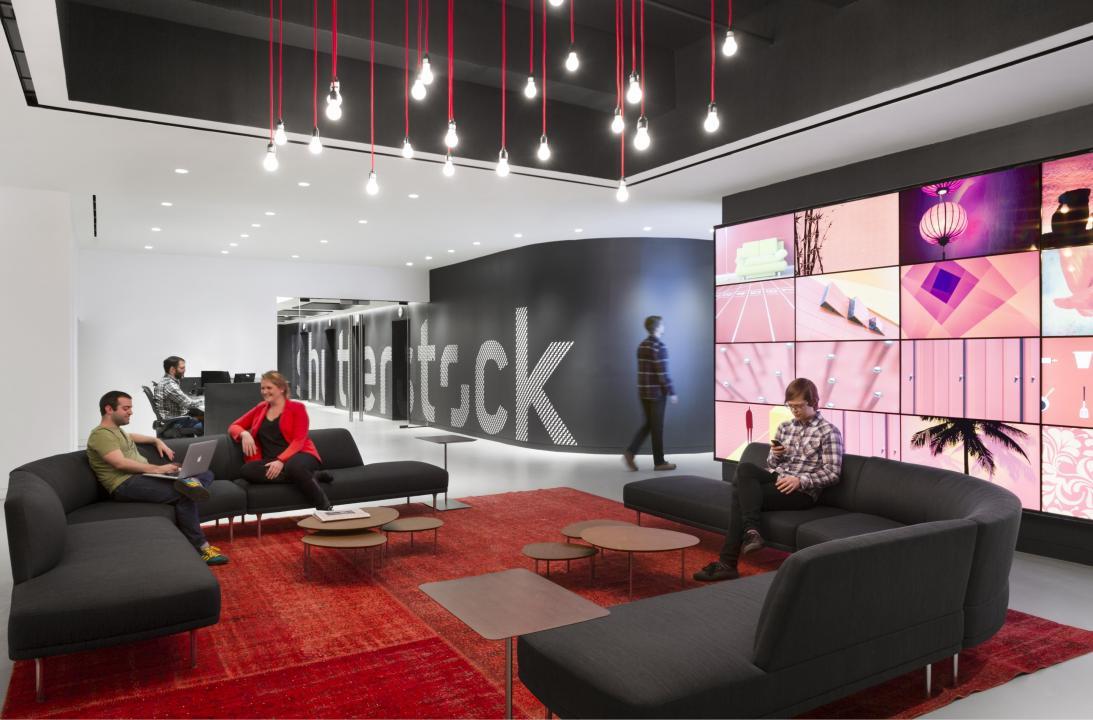
How do you start a massive online company? If you're Jon Oringer, you buy an $800 Canon Rebel, , and slap a bunch of them on a website. That's how he started Shutterstock in 2003, funding the whole endeavor himself with zero venture capital. Now his site is the go-to place for buying stock footage, and .
Scentsy
Orville and Heidi Thompson were deep in debt when they began experimenting with candle fragrances in their Crockpot. Their trick? Making a that scents rooms like a candle, but without the need for an open flame. The resulting company was Scentsy, which now has .
DiscoverOrg
This sales and marketing platform didn鈥檛 start with much, but it grew quickly. Henry Schuck, co-founder and CEO, was a first-time entrepreneur, bootstrapping to get along until they were making . Now, DiscoverOrg has been named one of Inc.鈥檚 fastest growing companies .
Gawker
Nick Denton started the massively popular blog Gawker from his living room. Eventually, the site split off into a number of different blogs, including Deadspin and Jezebel. Though the site (and Denton) went bankrupt after a lawsuit from Hulk Hogan resulted in a , it was purchased by Bryan Goldberg of Bustle and lives on today.
Under Armour
Kevin Plank didn鈥檛 have much to his name except while in college. He racked up $40,000 in credit card debt to fund his sports apparel company Under Armour. A year in, he was broke, but a sale to Georgia Tech turned into interest from the NFL and other big names in the athletic world. Today, .
Lynda
Lynda Weinman launched Lynda.com in 1995 as a free resource for people interested in learning web design and other skills. Along with her husband Bruce Heavin, Weinman taught classes and received book royalties, which funded their burgeoning business. Despite some near-failures, she .