30 times history has tanked the stock market
30 times history has tanked the stock market
The stock market is a volatile system not for the faint of heart. Even with extensive, independent research, informed financial consultants, and gobs of dumb luck, jumping in with the bulls and bears is a move that's riddled with risks standing well outside of anyone's control.
Throughout history, major events—including the Civil War, Pearl Harbor attack, and dot-com bubble burst—have been responsible for dropping the NASDAQ and Dow indexes and causing runs on the banks. Â鶹ԭ´´ has rounded up 30 such instances of history tanking the stock market, reminding everyone that what goes up, must come down. The slideshow is chock-full of stats and numbers that will tickle the fancy of investing aficionados and educate the market. So hold onto your hats (and stocks), and prepare for a walk down Wall Street memory lane.
ALSO:
1772: The Credit Crisis
of 1772 had origins in Europe, but it didn’t take long for the effects to be felt in America. British creditors had allowed southern colonies to flourish; but when merchant holders ran into economic hardships overseas, they urgently demanded debt repayment. Colonials did not have enough liquid assets to pay them back. This left the south in a crippling position and the American economy in a tailspin.
1792: The Panic of 1792
Not long after the First Bank of the United States was formed by Alexander Hamilton, Americans experienced their . The bank had been overextending credit to citizens for two years, and a sudden tightening of the reins—combined with major loan defaulting by speculators William Duer and Alexander Macomb—caused a run on the banks. It took some slick maneuvering by Hamilton and dozens of other banks extending credit to the First Bank of the United States to stabilize the market.
1819: The Panic of 1819
The War of 1812 created huge levels of economic expansion in the country; but when the fighting ended, . Some banks failed, others called in loans that land speculators couldn’t repay, many mortgages were foreclosed, and unemployment rose. In the end, these factors and new conservative credit policies caused a stock market crash that the economy wouldn't fully recover from until 1823.
1837: The Panic of 1837
A real estate bubble and erratic U.S. banking policies ushered in the , followed by a six-year depression felt around the world. Speculation holdings on Northeast forests that were grossly overvalued caused banks to fail; while the value of paper money decreased when President Andrew Jackson mandated government land must be paid for in silver or gold, essentially bringing commerce to a standstill. Eventually, shifting investments to American railroads ended up reigniting the economy.
1869: The Gold Con
Jay Gould and Jim Fisk, two financiers with reputations as cheats, had a get-rich-quick scheme that involved buying up all the gold they could and selling it all off at a major profit. The plan relied on gold's value skyrocketing—only possible if the U.S. government held onto its gold as well. But when Ulysses S. Grant became president, he sought to put more gold into the market by using it to purchase greenbacks (paper money) from the public and replace them with gold-backed bills. When he realized the plot to drive prices, Grant retaliated by ordering the sale of $4 million in government gold. The flooding of the markets and subsequent crash in gold value caused the U.S. gold market to collapse on , also known as Black Friday.
1873: The Panic of 1873
Following the Civil War, European investors began selling off investments they had made in U.S. railroad companies. Soon, there were more railroad bonds available than anyone wanted or could buy up and many railroads went bankrupt. When , one of the biggest banks in America at the time, also went under, citizens feared for their own money and attempted to withdraw as much as possible.
1901: The Panic of 1901
The first stock market crash of the New York Stock Exchange, known as , was primarily caused by the fight for control over the Northern Pacific Railroad. As businessmen E.H. Harriman and James J. Hill , stocks in dozens of other rail companies began to drop, eventually drowning the market and causing everyone to sell. As a result, the Northern Securities Company was formed and many small investors were never able to recover.
1907: The Knickerbocker Crisis
As far as financial crises of the 20th century go, the was second only to the Great Depression. The was sparked by a failed attempt to corner the copper market, which initiated runs on banks and trusts associated with the industry. A run on the Knickerbocker Trust left the company bankrupt and caused even more panic. Only pledges of large sums of money from private financiers like J.P. Morgan shored up the banking system and returned the market to normal.
1926: Florida's real estate craze
A in the 1920s increased the Sunshine State’s population; but the housing market couldn’t meet the demand, and property values swelled. The bubble burst and values shot down the same year , plummeting the stock market plummeted and establishing a precursor to the Great Depression.
1929: Black Tuesday
The 1920s stock market experienced a period of rapid expansion based on speculation. But by August 1929, production had declined, unemployment increased, and many stocks were revealed to be overvalued. The fall began on Oct. 18 and peaked Oct. 29, or when 16 million shares were sold on the stock exchange and billions of dollars lost in a single day. By 1932, stocks were only worth 20% of what they had been in the summer of 1929.
1937: Ill-timed recession
The as the nation was still attempting to recover from the Great Depression. Gross domestic product fell by 10% and industrial production fell 32%, all because of a contraction in the money supply by the Federal Reserve and U.S. Department of Treasury. Meanwhile, unemployment rates rose to 20%.
1941: Pearl Harbor
When Japan bombed Pearl Harbor on the morning of , the stock market felt the aftershock. The Dow Jones industrial average after the attack. The market didn’t fully spring back until after America entered World War II and the U.S. Navy began piling victories, making investors feel confident that a resolution to the war might be on the horizon.
1962: The flash crash
The economy managed to stay pretty steady for almost two decades following World War II, thanks to a nonstop stream of military involvement and a number of other factors. But in the , the Standard & Poor’s 500 dropped 6.7% in a single day. More shares changed hands that day than any other since 1929, and investors panicked that another Great Depression .
1963: The JFK assassination
The day was shot and killed in Dallas, Texas, ensuing chaos and political uncertainty caused the Standard & Poor’s 500 to drop 2.8%. While the steep dip was alarming, its effects were short-lived: The market closed early that day, but within two days trading returned to normal.
1973-1974: Oil crisis
From the start of the fiscal year in 1973 to the end of the fiscal year in 1974, the stock market lost . Triggered by the end of the —which tied together American currency to gold prices—and compounded by an oil crisis, inflation peaked, unemployment dropped, and people began investing their money in more secure options.
1987: Black Monday
Widely considered "the worst day in Wall Street history,” saw the biggest single-day plunge in Dow Jones industrial history. Dropping 22.6% and 508 points, the crash would be equivalent to the market losing more than 5,000 points today. A number of factors led to the drop, including hostilities in the Persian Gulf, a fear of higher interest rates, and computerized trading that accelerated movement. In the end, good old-fashioned human emotion was a driving component in the crash.
1989: The United Airlines sale
Panic ensued in October of 1989 (parent company of United Airlines) attempted to secure a $6.75 billion leveraged buyout deal that ultimately fell through. UAL shares fell $33 on the New York Stock Exchange.
1990: Gulf War recession
Unemployment rose to 6.8% during the in 1990 and 1991. A number of factors , including a real estate collapse, rising taxes, a war in the Middle East, and a spike in oil prices. Experts theorize that the recession never reached an all-our depression because industry leaders who had been children in the 1920s and 1930s handled the dip with more expertise and sense of calm than was demonstrated during the Great Depression.
2000: The dot-com bubble
The led to the greatest expansion of capital growth the United States has ever seen. From 1995 to 2000, the NASDAQ index rose from less than 1,000 to more than 5,000. But right at the market’s peak on March 10, 2000, a handful of companies including Dell and Cisco placed sell orders on their stocks. The market lost 10% of its overall value within weeks. By 2001, trillions of dollars of capital investments had evaporated and multiple dot-com companies had folded.
2001: 9/11 attacks
The Dow Jones industrial average dropped more than 600 points following the terrorist attack on . The stock market closed for four trading days, the first extended closure since a two-day close at the start of the Great Depression.
2002: The Enron scandal
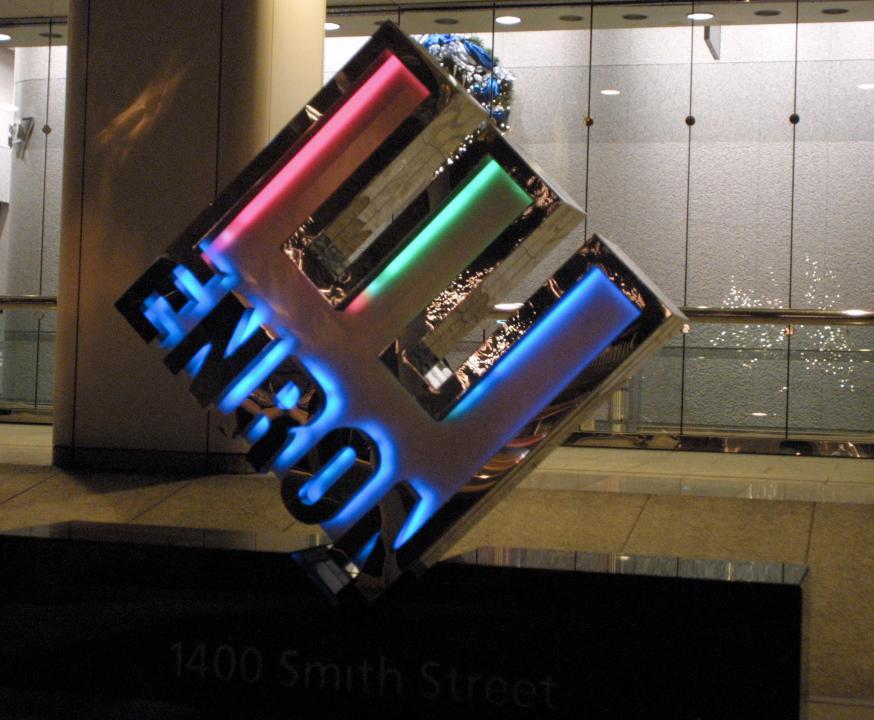
The stock market briefly rallied after the attacks of Sept. 11. But the financial landscape by had sunk to lows not seen since 1997, thanks in part to the scandal surrounding Enron. When the company declared bankruptcy, exposing a history of fraud, many investors lost faith in the market and began pulling money.
2007: The Housing Bubble
Sales of existing homes began a 4.1% sharp decline while inventories soared to a 13-year high. After the dot-com bubble burst, investors started dumping money into housing with a similarly calamitous result.
2008: Lehman Brothers declares bankruptcy
was the fourth-largest investment bank in America before it declared bankruptcy . The Dow Jones industrial average dropped a painful 504.48 points the same day.
2008: Congress rejects bank bailout bill
Two weeks after the fall of Lehman Brothers, the Dow Jones industrial average , representing the biggest single-day drop in history at that time. The cause was a bailout bill designed to solve the liquidity shortage many banks and investment firms had experienced in recent months. Congress failed to pass it, but approved a second version later that fall.
2009: The Great Recession
The Standard & Poor's 500 on March 9, 2009, marking the lowest close of the great recession. The stock market had been on a downward slope for two years, marred by the credit crisis, housing bubble burst, Lehman Brothers bankruptcy, and failed bailout bill. The passed by Congress eventually brought the stock market back to life.
2010: The one-man flash crash
In a situation that was eerily similar to the flash crash of 1962, on American share and futures indexes fell 10% in a matter of minutes on . The crash was brought about by , who spoofed the system by placing artificial sell orders to encourage others to sell and to drive up the price of his own stock. Sarao was eventually arrested, and new rules were put in place to keep something like that from happening again.
2015-2016: Stock selloff
The major had serious repercussions across global markets, causing the euro and Japanese yen to tank in value. Central banks that had bought those currencies were left in a lurch. The start of 2016 was the worst time for the market, with the Standard & Poor’s 500 falling 10.3% from January to February, and the NASDAQ index dipping 15% over that same stretch.
2017: Barcelona attacks
Terrorist attacks frequently have major negative impacts on the stock market. When a driver plowed through a crowd in Barcelona on , the Dow Jones industrial average fell almost 274 points in a single day. Perhaps as no surprise, stocks centered around travel and tourism were hit especially hard.
2018: Inflation scares
In , the Dow Jones industrial average dropped more than 3,200 points—or 12%—in two weeks before promptly turning around and regaining almost 75% of those losses. But during the last two days of the month, the Dow fell another 680 points. Worries over possible inflation helped cause the swing.
2019: The next crash?
Some experts predict a major crash might be . Paul Tudor Jones, who many cite as the prognosticator of the 1987 market crash, has warned of a swelling credit bubble. The Treasury Department's Office of Financial Research also and sensitivity of bond costs to interest rates. Meanwhile, the sent Wall Street into a selling frenzy.