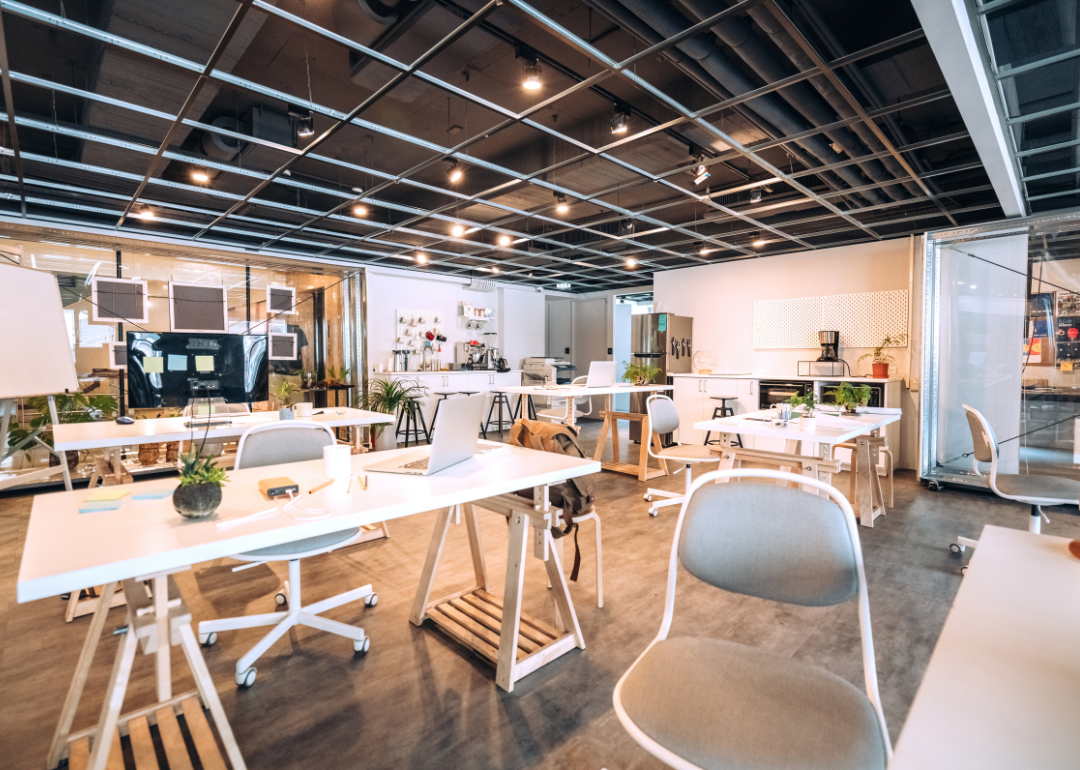
9 ways coworking has changed since the pandemic upended everything in 2020
This story originally appeared on Firmspace and was produced and distributed in partnership with 麻豆原创 Studio.
9 ways coworking has changed since the pandemic upended everything in 2020
When the COVID-19 pandemic necessitated the abrupt, widespread adoption of remote work, it didn't just create a temporary trend but a lasting preference for working remotely. At least said they prefer it to in-person office work, according to a 2022 Pew Research Center survey. Hybrid work seems the most popular option, with more than in one 2023 Gallup poll. Office occupancy data underscores the point: In January 2023, for the first time since the onset of the COVID-19 pandemic, according to Kastle Systems. That's not exactly the sweeping return-to-office movement many executives expected.
Another interesting trend in remote work is that of a : a physical location that's neither work nor home. Coworking spaces, for example, offer the background sounds and amenities of an office or cafe鈥攈ot coffee and tea readily available, meeting and conference room spaces, and reliable internet service, to name a few鈥攚ithout the many nuisances of working in an office, like an overbearing manager or a lengthy commute.
To discover how the pandemic has impacted coworking, analyzed market research, surveys, and credible news reports. The following 9 trends show just how much the pandemic disrupted work culture, as well as the lasting effects this shift could have on coworking.
Flexibility is king
Once you've discovered your work can be done remotely, it's tough to see why going into an office five days a week is necessary. , and more than half (55%) are already doing so, according to a 2022 Jones Lang LaSalle survey. With flexibility top of mind for professionals, coworking spaces will have to adapt their business models to appeal to workers who may only want to use office space once or twice a week.
Workers are looking for a sense of community
Still, remote work can be lonely: A recent Indeed survey showed . Coworking spaces might be perfectly poised to fill that void. Recent research from the Harvard Business Review found that than the ones they had at their office鈥攍ikely due to various other professionals working from a coworking space.
Tech support is a key benefit
The lack of tech support can be another pitfall of working remotely. When your computer crashes, there's only so much you can do to troubleshoot the issue over the phone. Coming out of the pandemic, more professionals are looking for tech support as a workplace benefit.
In a 2022 Jones Lang LaSalle survey, 3 in 5 respondents said from their employer. Similarly, coworking spaces that prioritize in-house IT support will likely see a positive response from their clientele.
Private offices within coworking spaces are becoming increasingly popular
During the pandemic, video conferencing became the primary option for meetings鈥攁nd even with more people returning to an office at least part-time, the trend does not seem to be easing.
About 4 in 5 people (77%) who work remotely at least some of the time said they , according to a 2022 Pew Research Center survery. With freelancers, small business owners, and corporate employees able to dial into meetings from anywhere, coworking spaces could also see an increased demand for private offices or bookable meeting rooms.
Many workers see coworking as a means of professional development
Coworking spaces aren't just a place to get work done but also like panel discussions, networking events, and even skills-based classes. Research also shows these opportunities 鈥攁 key reason why more workers will be looking for coworking spaces that offer professional development benefits.
Wellness amenities are also in demand
In addition to changing how we think about work, the pandemic caused many people to reevaluate how they think about their health and well-being. One 2022 survey found that than it was before the pandemic. That shift is being , with many prioritizing wellness-boosting features like nap pods, specially designed lighting, and even aromatherapy.
More employers are exploring coworking for their staff
Coworking isn't just for freelancers and startups; more companies are experimenting with coworking spaces for their staff. With the demand for hybrid work increasing, coworking might be an attractive option for corporations looking to downsize traditional office space. A survey of commercial real estate company CBRE's tech clients found that 36% expected to the amount of flexible office space they use by 2024.
Coworking spaces will likely become even more customizable
As a wider range of professionals鈥攊ncluding corporate employees looking for a break from headquarters, smaller operations, and freelancers鈥攂egin to cowork, the coworking spaces will likely begin offering a range of membership models. A CBRE survey found that many tech companies are already , the most common being enterprise solutions鈥攚here a company can kit out the room to their specifications鈥攃ombined with suites and access passes for their employees.
Coworking spaces could take a larger share of commercial real estate
With the amid a lackluster return-to-office movement, coworking spaces could also be poised to become a larger player in office space.
Thirty-one percent of executives believe they'll need less office space in three years, and 87% expected to make changes to their real estate strategy in the coming year, according to . The solution? More flexible work models, with half anticipating investing more in hoteling apps and 48% anticipating investing in more communal workspaces. Coworking spaces that allow companies to flex their space up and down as needed will likely look even more attractive to business leaders.
Data reporting by Dom DiFurio. Story editing by Jeff Inglis. Copy editing by Paris Close. Photo selection by Abigail Renaud.