Are we entering 2026 in an AI bubble?
As trade tensions cooled and the policy fog lifted, investors鈥� attention as we exited 2025 gravitated to a single question: Are we in the midst of an AI bubble?
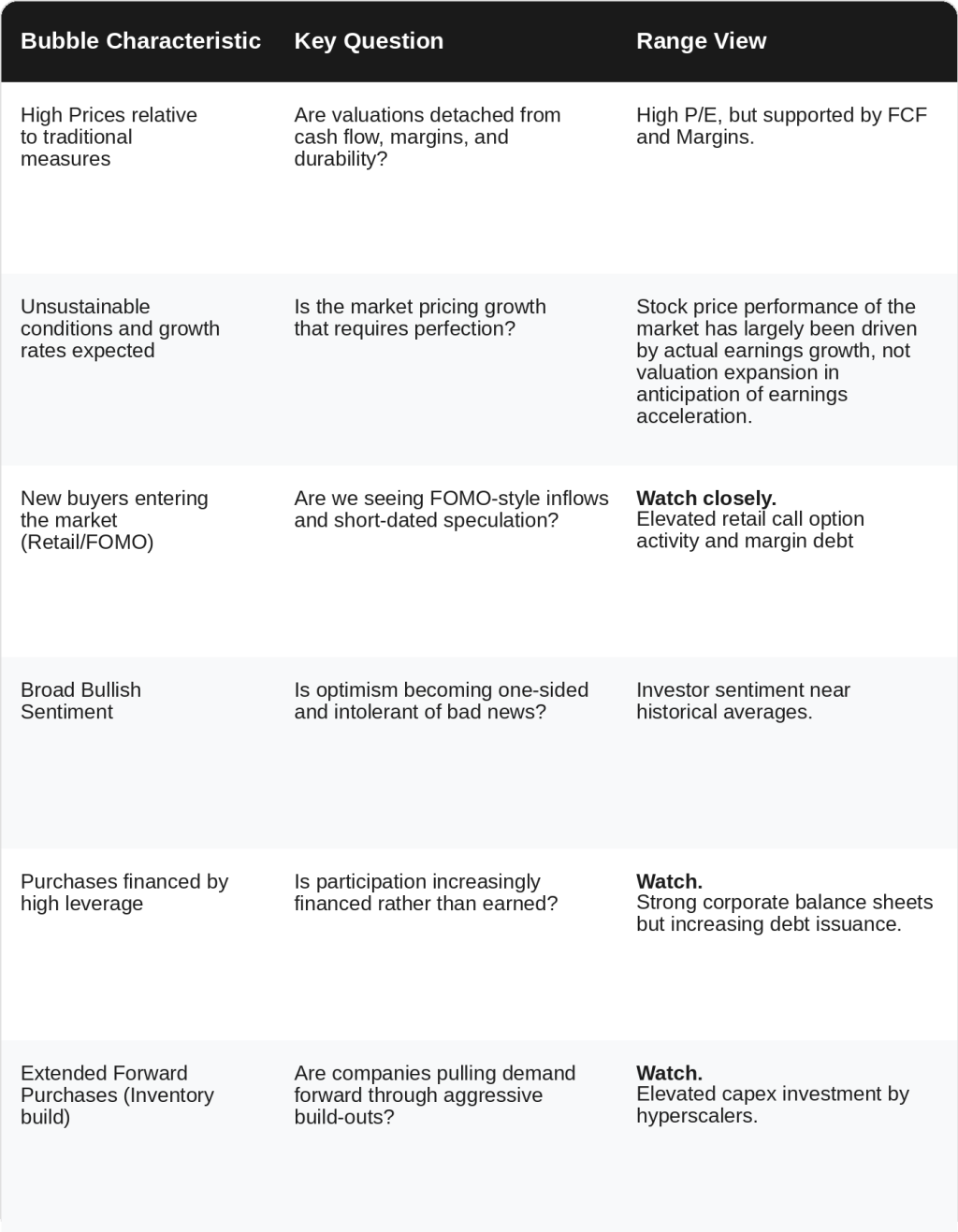
To evaluate where we are in the cycle, we need to understand the anatomy of a bubble. adapted Ray Dalio鈥檚 classic six-part 鈥淏ubble Indicator鈥� to diagnose the current landscape.
The diagnosis? There are a few areas of concern in public markets鈥攎ainly around increasing use of leverage鈥攂ut the bubble indicators are more mixed than alarming. One hypothesis is that the bigger vulnerability sits in private markets, where valuations are harder to validate and outcomes are more sensitive to financing conditions.
The Outlook for 2026 鈥� Turbulence Along The Way
An AI bubble-pop is unlikely to derail U.S. market performance in 2026. But there are areas experts are watching closely, and the ecosystem is fragile. AI-driven leadership may continue this year, but with heightened volatility.
AI investment and AI-led performance will likely continue (with air pockets)
AI is still in an investment upcycle: Capex, model deployment, and enterprise adoption should keep advancing. But with the ecosystem changing rapidly, we may see 鈥渢wo steps forward, one step back鈥� trading in 2026鈥攑eriodic resets driven by guidance, competitive surprises, extended retail positioning or changes in public sentiment around AI. The theme can keep working even if the ride is bumpier.
Private markets look most vulnerable to bubble dynamics
The highest bubble risk isn鈥檛 necessarily in liquid mega-cap equities鈥攊t鈥檚 in areas where:
- Price discovery is slower.
- Financials are murkier.
- Financing terms can change quickly.
Private markets, including venture, growth equity, and private credit, seem particularly vulnerable to AI-related hiccups. If we see a few high-profile down rounds, a stalled fundraise, or stress in private credit tied to AI-adjacent assets, the reset could spill over into public markets鈥攄riving volatility even if the fundamentals of the public AI leaders remain intact.
Overbuilding risk rises as the cycle matures
History says that major infrastructure waves tend to be temporarily overbuilt. If investment accelerates faster than near-term monetization, markets can enter a 鈥渄igestion鈥� phase鈥攚here returns are delayed. That鈥檚 a volatility risk, not necessarily a secular thesis-break.
Disclosures:
This communication contains forward-looking statements that reflect Range Advisory, LLC鈥檚 (鈥淩ange鈥�) current views, expectations, beliefs and/or projections about future events or results. Forward-looking statements involve risks and uncertainties 鈥� including, without limitation, market conditions, regulatory changes, economic conditions 鈥� any of which could cause actual results to differ materially from those expressed or implied by such statements. Range undertakes no obligation to update or revise any forward-looking statements to reflect new information, future events or otherwise, except as required by law. Recipients should not place undue reliance on forward-looking statements, which are presented for informational purposes only and do not constitute investment advice or a recommendation to buy, hold, or sell any security. Past performance is not indicative of future results. The views, opinions and analyses expressed by Range in this material are those of Range as of the date shown, and are provided for informational purposes only.
was produced by and reviewed and distributed by 麻豆原创.