The cost of these 5 construction materials grew the most in 2023
This story originally appeared on Machinery Partner and was produced and distributed in partnership with 麻豆原创 Studio.
The cost of these 5 construction materials grew the most in 2023
After three years of intense growth, costs for some construction materials have begun to normalize鈥攂ut other materials and equipment are becoming more expensive.
used data to identify which construction materials underwent the steepest price increases over the past year. The analysis considered 30 products from the BLS Producer Price Index.
The COVID-19 pandemic caused a in overall input construction costs since February 2020, according to an Associated Builders and Contractors analysis of BLS PPI data. Work stoppages, raw materials shortages, and transportation issues at the height of the pandemic caused supply chain collapses that for builders.
As some supply issues have improved, prices have cooled. Nonresidential construction input prices , according to an ABC analysis. However, many individual commodities , particularly heavy materials that are more expensive to transport, according to construction cost data provider Gordian.
High construction prices, higher mortgage interest rates, and higher labor costs have led to a in the construction of new single-family homes despite consistent demand.
Construction projects centered on infrastructure are better positioned as government money from the Infrastructure Investment and Jobs Act comes online. However, the law's "" clause requires builders to use American-made iron, steel, and other construction materials for these infrastructure projects. Certain fear these infrastructure rules may cause prices to increase even more. The also creates more demand鈥攁nd therefore increases prices鈥攆or materials used in more energy-efficient construction.
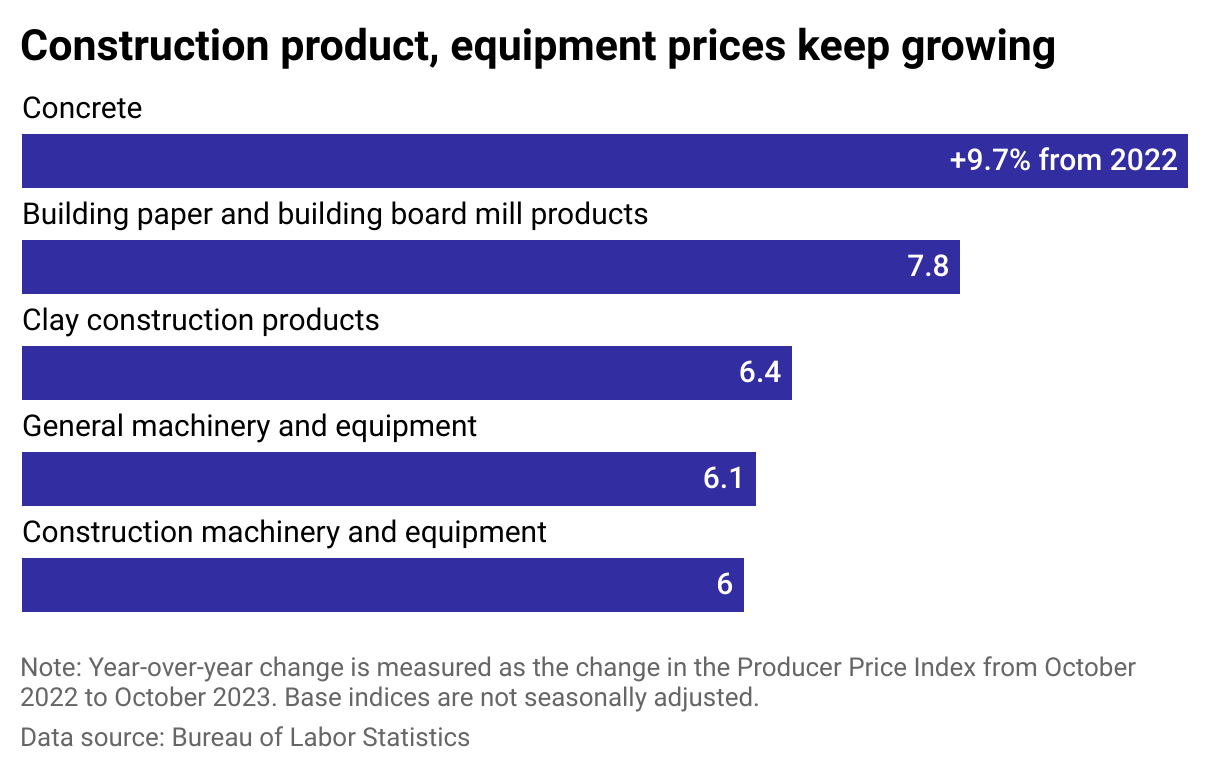
Concrete and machinery among highest cost increases
Inflation has contributed to increased prices for many construction materials, including clay products, per . More megaprojects, including two manufacturing plants in Georgia totaling $6.7 billion, also create more demand, causing price increases.
Higher transportation costs aren't the only element plaguing concrete prices. Its production is a big culprit in carbon emissions, and the drive to have more sustainable building materials adds to concrete's price tag, according to Gordian. New product development is also impacting prices鈥攏ew formulations now on the market cost more to create.
Meanwhile, have made it difficult for construction companies to take on infrastructure projects at a time when the government has increased infrastructure spending. Even companies with the right machinery find it costs more to operate due to the higher cost of diesel fuel, per Gordian.
The construction industry also faces pressure due to a highly competitive labor market forcing companies to pay higher wages. Labor costs year over year, while since the beginning of the pandemic as companies struggled to attract enough workers. A lack of labor could force companies to delay project starts, making them susceptible to increased materials costs.
Story editing by Nicole Caldwell. Copy editing by Paris Close. Photo selection by Lacy Kerrick.