
Embracing AI at work: 4 ways to make AI less scary for your team
AI is everywhere right now. It's drafting emails before you've even had your coffee, turning half-baked notes into polished docs, and quietly while you're still trying to remember if you fed the dog (you did, but he definitely needs seconds).
For a lot of folks, though, "everywhere" feels suspiciously close to "coming for my job."
If your team is giving AI the side-eye, or flat-out treating it like the office poltergeist, that's normal. Fear usually comes from not knowing how something works, how it'll affect your job, or whether you'll need to learn new skills to keep up.
Here's the good news: You, as a leader, get to set the tone. If you normalize AI and frame it as a support tool instead of a job-snatching villain, your team will follow your lead. explains how to show them it's about support, not replacement, and give them the confidence to lean in instead of brace for impact.
4 ways to make AI less scary for your team
There's no silver bullet for easing AI anxiety. But there are practical steps you can take to help your team see AI as an asset instead of a threat.
1. Broadcast AI far and wide
AI doesn't need to feel like a secret experiment tucked away in a single department. The more visible it is across your organization, the more normal it becomes. Share examples of how different teams are using AI鈥攚hether that's Marketing drafting social copy, Finance generating reports faster, or IT automating ticket triage.
Jason Bland, co-founder of , makes a point of celebrating success stories inside the company. "By celebrating how AI has helped teams hit milestones or solve stubborn problems, it turns AI from something abstract and intimidating into a valuable teammate. By leading with transparency, collaboration, and ongoing support, we're able to foster a culture of curiosity and confidence around AI adoption."
By broadcasting these wins, you not only show the variety of use cases but also highlight that everyone's in the same boat, learning together.
You can also take a more subtle approach to broadcasting AI's utility. For example, try pulling a chatbot into wherever your team works so that they can experience playing around with it.
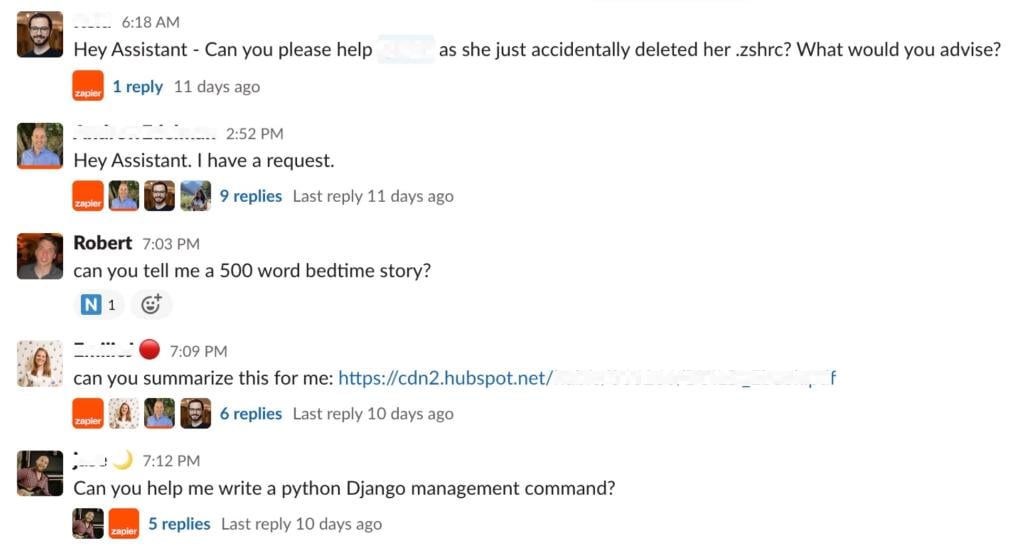
This method allows teams to test AI's capabilities鈥攁nd laugh at its limitations鈥攖ogether, helping AI feel less scary while also showing off how impressive it is.
2. Remind your team that AI is a partner, not a replacement
A big fear around AI is job replacement. The reality is that AI works best when it's seen as a collaborator鈥攐ne that so people can focus on the work that requires judgment, creativity, and context.
As Runbo Li, CEO of , puts it: "We try to make AI feel exciting rather than intimidating by framing it as a creative partner. Early on, I showed the team how an AI-powered edit could take their existing video concepts and make them more engaging without changing their artistic voice. We even ran side-by-side sessions comparing AI-assisted and manual edits, and the team saw how the AI saved hours without diluting originality. This hands-on approach helps people see AI as amplifying human creativity, not replacing it."
Ksenia Kobryn, CEO of , echoes a similar sentiment. "Reframe AI as a tool that enhances鈥攏ot replaces鈥攅mployees芒鈧劉 professional judgment." Here's what that looked like in practice: "Early on, some employees were so worried about their job security that they didn't even want to try to use AI. So we pivoted to focusing on actual AI use cases that showed it could take over some of the more repetitive and time-consuming tasks, freeing them up to focus on more strategic and creative ones."
"The more transparent we can be about how AI works and its limitations," Ksenia adds, "the more employees see it as a resource that adds value to their skillset."
3. Incorporate it into existing work
Asking employees to overhaul their entire workflow is a recipe for resistance. Instead, look for ways . Here's a practical example from Craig Flickinger, CEO of .
"I started by having team members identify their biggest time-wasters first, then showed how AI directly addressed those specific pain points," explains Craig. "When our SEO analysts saw that AI could solve their actual bottlenecks鈥攖racking competitor websites at scale鈥攖hey became AI advocates overnight."
When AI feels like a natural extension of existing workflows, adoption comes with far less friction.
4. Frame AI as a task-doer, not a decision-maker
It's helpful to frame AI as a starting point, not the final word. Make sure your team knows that there's always a human in the loop.
Louis Balla, VP of sales and partner at , shares how his team puts this into practice: "I implemented a human-in-the-loop principle from day one. For example, our AI suggests three alternatives for invoice processing or inventory forecasting, but the final decision stays with the team member."
Whether it's an , an outline for a report, or a shortlist of campaign ideas, the key is keeping people in the loop. AI helps your team move faster, but your team's expertise takes the work across the finish line.
The best way to stop being afraid of AI? Use AI.
No amount of reading, training, or reassurance will fully remove the fear until your team actually gets hands-on. Encourage experimentation, create safe spaces to share what's working (and what isn't), and show your team that AI is most powerful when it scales with them鈥攏ot instead of them.
was produced by and reviewed and distributed by 麻豆原创.