Eviction rates in every state
Evictions are devastating. They are caused by poverty鈥攁nd cause more poverty鈥攂ut they do much more extensive and lasting damage.
families in Texas evicted for owing little more than $500 in unpaid rent and families in North Carolina owing about $300. Tenants being evicted are less likely to be deep in debt and more likely to be less than a month in arrears. In other words, people can be evicted after being jolted by the unexpected cost of a car repair or a doctor's bill.
People who are evicted often lose their possessions, and sometimes their jobs. Evictions are linked to health problems, mental health issues, and depression. Children who are forced to move miss school and fall behind. Neighborhoods with high eviction rates have high rates of crime. People who have evictions on their record encounter trouble trying to rent again. Taxpayers foot the bills for publicly subsidized housing or homeless shelters.
Evictions are mostly rooted in the widening gap between low-income wages that have stagnated and housing costs that have skyrocketed. the number of rental units costing less than $600 a month dropped by 4 million in the United States between 1990 and 2017.
A bill called the Eviction Crisis Act has been introduced in the U.S. Senate by Democrat Michael Bennet of Colorado and Republican Rob Portman of Ohio to provide emergency funding to tenants facing eviction. It would also establish a nationwide database to track eviction cases. Other proposals in Congress would help fund landlord-tenant mediation and "right to counsel" programs to provide tenants with legal representation.
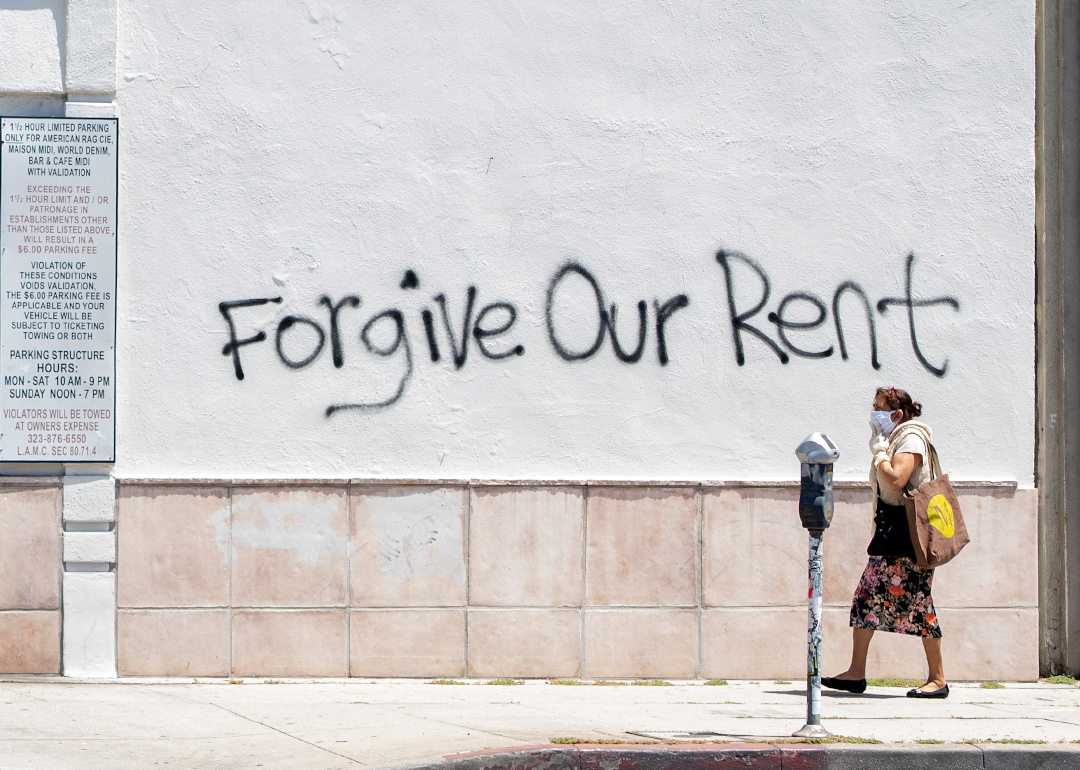
During the coronavirus crisis, tenants who lived in rental properties with federal-backed mortgages could not be evicted, but . Most states enacted some suspensions of their own, but none was designed to stem a flood of evictions once the crisis ends, and soaring unemployment leaves renters unable to make ends meet. Tenant advocates fear that the deluge of evictions will be more catastrophic than the loss of housing in the 2008鈥�2009 recession.
To examine eviction rates in every state, used (more information can be found at ). The Eviction Lab compiled the data by requesting eviction case records from courts and online portals, cleaning the records, and standardizing across states. The "eviction rate" refers to the rate of renters who received an eviction judgment from the court and were ordered to leave, while the "eviction filing rate" refers to the rate of eviction requests filed by landlords. The denominator used in these rates is the total number of renting households in a state, taken from the census. The most recent eviction data available is from 2016.
Alabama
- Eviction rate: 1.8% (#16 lowest rate, 11,213 total evictions in 2016)
- Eviction filing rate: 3.9% (#23 lowest rate, 24,294 total filings in 2016)
- Renter-occupied households: 616,428 (31.3% of all households)
- Median monthly rent: $717
- Average rent burden: 30.5%
- Poverty rate: 14.5%
In the city of , the eviction rate was double the state rate in 2019, and someone was being evicted nearly every other day. The northern Alabama city鈥檚 poverty rate was also higher than the rest of the state. More recently, in some parts of the state have continued during the pandemic, although tenant advocacy groups like Alabama Appleseed have called for a moratorium.
Alaska
- Eviction rate: Not available
- Eviction filing rate: 2.0% (#12 lowest rate, 2,064 total filings in 2016)
- Renter-occupied households: 104,905 (36.6% of all households)
- Median monthly rent: $1,146
- Average rent burden: 28.2%
- Poverty rate: 7.0%
, evictions have always been a risk in cities like Anchorage, which is some 25% more expensive than other U.S. cities on average. Statewide, eviction proceedings were barred during the coronavirus crisis. to distribute one-time payments of up to $1,200, distributed by lottery, to residents struggling to pay housing costs due to the pandemic. Designed to avert homelessness, the program requires applicants to show how much income they have lost due to COVID-19.
Arizona
- Eviction rate: 3.9% (#9 highest rate, 8,339 total evictions in 2016)
- Eviction filing rate: 5.7% (#18 highest rate, 12,132 total filings in 2016)
- Renter-occupied households: 212,626 (37.2% of all households)
- Median monthly rent: $913
- Average rent burden: 30.1%
- Poverty rate: 13.3%
Tenants being evicted in Arizona have often been at a disadvantage in court. in Maricopa County, which includes metropolitan Phoenix, found that from 2018 to 2019 only two tenants out of more than 1,000 eviction cases had a lawyer. In , no tenants can be evicted through July if they have a COVID-19-related hardship documented in writing, but court hearings were not suspended.
Arkansas
- Eviction rate: Not available
- Eviction filing rate: 0.7% (#4 lowest rate, 2,963 total filings in 2016)
- Renter-occupied households: 422,136 (33.9% of all households)
- Median monthly rent: $677
- Average rent burden: 29.5%
- Poverty rate: 14.3%
Arkansas has had a low eviction filing rate compared with other states. It is one of just a handful of states that to suspend evictions during the pandemic. The governor said he wanted landlords and tenants to work together to resolve their issues, and that .
California
- Eviction rate: 0.8% (#7 lowest rate, 41,178 total evictions in 2016)
- Eviction filing rate: 1.0% (#6 lowest rate, 47,079 total filings in 2016)
- Renter-occupied households: 4.9 million (45.7% of all households)
- Median monthly rent: $1,255
- Average rent burden: 33.7%
- Poverty rate: 12.2%
has extended the state's eviction moratorium through late July. To qualify, tenants must prove their financial hardship is related to COVID-19. They also cannot have been behind in rent as of late March.
Colorado
- Eviction rate: 2.8% (#21 highest rate, 18,195 total evictions in 2016)
- Eviction filing rate: 5.5% (#19 highest rate, 36,240 total filings in 2016)
- Renter-occupied households: 661,532 (35.7% of all households)
- Median monthly rent: $1,002
- Average rent burden: 30.6%
- Poverty rate: 8.5%
have been forcing Colorado鈥檚 eviction rate higher in recent years. In Aurora, just east of Denver, the eviction filing rate has been more than twice as high as the rest of the state. The governor implemented a temporary ban on evictions and late fees during the COVID-19 crisis. predicted that about 350,000 state residents will be vulnerable to eviction this year, based on income, rent, and unemployment data.
Connecticut
- Eviction rate: 3.0% (#17 highest rate, 13,760 total evictions in 2016)
- Eviction filing rate: 3.9% (#22 lowest rate, 17,470 total filings in 2016)
- Renter-occupied households: 452,973 (33.0% of all households)
- Median monthly rent: $1,075
- Average rent burden: 31.7%
- Poverty rate: 7.6%
, four of Connecticut鈥檚 cities (Waterbury, Hartford, Bridgeport, and New Haven) ranked among the 100 cities in the country with the highest eviction rates. Connecticut is one of only two states, along with New Hampshire, where its COVID-19 on evictions froze every step in the process, from giving notice to a tenant to taking the case before a judge. The state also has a grace period giving tenants time to pay their back rent after the moratorium expires, and.
Delaware
- Eviction rate: 5.1% (#3 highest rate, 5,468 total evictions in 2016)
- Eviction filing rate: 16.2% (#4 highest rate, 17,370 total filings in 2016)
- Renter-occupied households: 107,285 (28.8% of all households)
- Median monthly rent: $1,018
- Average rent burden: 29.9%
- Poverty rate: 8.2%
With one of the highest eviction rates in the country, Delaware鈥檚 legal process for ousting tenants is easy and inexpensive for landlords, and the state lacks subsidized, low-income, and affordable housing, . landlords were not allowed to evict tenants or charge late fees or interest.
District of Columbia
- Eviction rate: 2.6% (#23 highest rate, 4,537 total evictions in 2016)
- Eviction filing rate: 15.7% (#5 highest rate, 27,434 total filings in 2016)
- Renter-occupied households: 175,121 (58.8% of all households)
- Median monthly rent: $1,327
- Average rent burden: 29.5%
- Poverty rate: 14.3%
Officials in but a proposal that would have made it more difficult for landlords to reject renters who have previously been evicted. The measure would allow eviction records to be sealed after three years. Supporters of the measure say prior evictions can severely hamper people's ability to find fresh housing. In the more than a dozen households were evicted in D.C. each day.
Florida
- Eviction rate: 2.5% (#24 highest rate, 71,615 total evictions in 2016)
- Eviction filing rate: 4.9% (#22 highest rate, 139,577 total filings in 2016)
- Renter-occupied households: 2.8 million (34.7% of all households)
- Median monthly rent: $1,002
- Average rent burden: 34.4%
- Poverty rate: 12.0%
Jacksonville, Pompano Beach, Miramar, and West Palm Beach have had some of the highest eviction rates among U.S. cities, although Florida ranks around the middle overall among all states. The state has but tenants will need to pay their missed rent when it ends.
Georgia
- Eviction rate: 4.7% (#4 highest rate, 56,963 total evictions in 2016)
- Eviction filing rate: 16.8% (#3 highest rate, 203,212 total filings in 2016)
- Renter-occupied households: 1.2 million (36.7% of all households)
- Median monthly rent: $879
- Average rent burden: 31.3%
- Poverty rate: 14.2%
Not only does Georgia have one of the highest eviction rates in the country, but has ranked among the 10 metro areas in the country with the most evictions. The city also has had among the highest poverty and foreclosure rates. Research has found that in Fulton County, where Atlanta is located, the eviction rate was 22%. Nearby locales had rates topping 40%. Experts say rents have risen faster than incomes, and child care and other costs have risen as well.
Hawaii
- Eviction rate: 0.4% (#3 lowest rate, 201 total evictions in 2016)
- Eviction filing rate: 0.5% (#3 lowest rate, 263 total filings in 2016)
- Renter-occupied households: 49,552 (43.1% of all households)
- Median monthly rent: $1,438
- Average rent burden: 33.4%
- Poverty rate: 7.7%
Eviction rates are among the nation鈥檚 lowest in Hawaii, which already is grappling with the second-highest rate of homelessness in the country and the Last year, the city of Oahu had more than With tourism collapsing in the pandemic, the state will struggle with a severe lack of tax revenues to pay for housing assistance and services.
Idaho
- Eviction rate: 0.6% (#5 lowest rate, 1,107 total evictions in 2016)
- Eviction filing rate: 1.1% (#8 lowest rate, 2,037 total filings in 2016)
- Renter-occupied households: 182,896 (31.1% of all households)
- Median monthly rent: $743
- Average rent burden: 29.4%
- Poverty rate: 10.9%
eviction hearings were temporarily on hold for the coronavirus but have started up again. While the state鈥檚 overall eviction rate is low, advocates say the city of Boise was facing a severe shortage of affordable housing before the pandemic, and they expect eviction rates to grow. Idaho law allows landlords and property managers to kick off the eviction process once rent is a mere three days overdue.
Illinois
- Eviction rate: 1.6% (#13 lowest rate, 26,453 total evictions in 2016)
- Eviction filing rate: 3.4% (#19 lowest rate, 56,948 total filings in 2016)
- Renter-occupied households: 1.7 million (33.6% of all households)
- Median monthly rent: $907
- Average rent burden: 30.3%
- Poverty rate: 10.5%
Of Illinois鈥� biggest cities, the highest eviction rates have been in Rockford, Joliet, and Peoria, areas that have struggled In Chicago, race has played a role. In 2017, areas in the city with the highest eviction filing rates were majority-Black communities, and the in majority-Black neighborhoods were twice as high as the citywide rate. A ban on evictions was enacted due to COVID-19, but to cancel rent and mortgage payments for 180 days failed in the state legislature.
Indiana
- Eviction rate: 4.1% (#7 highest rate, 31,767 total evictions in 2016)
- Eviction filing rate: 8.5% (#10 highest rate, 66,544 total filings in 2016)
- Renter-occupied households: 781,426 (31.0% of all households)
- Median monthly rent: $745
- Average rent burden: 29.8%
- Poverty rate: 11.1%
has the second-highest number of evictions in the United States, and , where the city is located, had 40% of the state's evictions, according to the most recent research. Statewide, data shows that . for nonpayment of rent during the coronavirus crisis.
Iowa
- Eviction rate: 2.0% (#18 lowest rate, 7,358 total evictions in 2016)
- Eviction filing rate: 4.0% (#24 lowest rate, 14,520 total filings in 2016)
- Renter-occupied households: 365,324 (28.5% of all households)
- Median monthly rent: $697
- Average rent burden: 27.5%
- Poverty rate: 8.1%
, where the city of Cedar Rapids is located, ranks among the 100 U.S. locations with the highest eviction rates. Advocates say the region is considered high-risk for renters, meaning the cost of a potential eviction is calculated into rents, increasing housing costs for struggling families and leading to more evictions.
Kansas
- Eviction rate: 2.3% (#25 highest rate, 8,559 total evictions in 2016)
- Eviction filing rate: 3.5% (#20 lowest rate, 12,972 total filings in 2016)
- Renter-occupied households: 372,342 (33.3% of all households)
- Median monthly rent: $757
- Average rent burden: 27.9%
- Poverty rate: 9.1%
that put evictions on pause during the coronavirus was recently allowed to expire. filing for unemployment in the first 10 weeks of the health crisis, advocates are braced for a spike in evictions in the coming weeks and months. , has had one of the nation鈥檚 highest eviction rates., voters in Lawrence, Kansas, approved an allocation of one-20th of a 1 cent sales tax to an affordable housing trust fund.
Kentucky
- Eviction rate: 2.9% (#18 highest rate, 12,980 total evictions in 2016)
- Eviction filing rate: 4.8% (#24 highest rate, 21,427 total filings in 2016)
- Renter-occupied households: 446,135 (32.8% of all households)
- Median monthly rent: $675
- Average rent burden: 29.3%
- Poverty rate: 14.4%
In 2019, During the coronavirus crisis, which prompted the state to enact a temporary moratorium on evictions, had not been paying rent, so evictions are anticipated to rise in coming months. Some advocates have called for rental assistance from the government, while others have proposed a forgiveness plan to wipe out rent payments entirely during the pandemic.
Louisiana
- Eviction rate: 2.6% (#22 highest rate, 13,095 total evictions in 2016)
- Eviction filing rate: 6.0% (#17 highest rate, 29,511 total filings in 2016)
- Renter-occupied households: 496,037 (34.2% of all households)
- Median monthly rent: $788
- Average rent burden: 32%
- Poverty rate: 15.2%
Before the pandemic, New Orleans was nearly two times the national average and nearly four times the national average in some majority-Black and low-income neighborhoods. Since 2000, city according to a leading housing rights organization. Tenant advocates have proposed laws making it harder for landlords to evict on short notice and providing a grace period for renters who encounter unexpected expenses.
Maine
- Eviction rate: 2.3% (#22 lowest rate, 4,113 total evictions in 2016)
- Eviction filing rate: 2.4% (#15 lowest rate, 4,381 total filings in 2016)
- Renter-occupied households: 181,713 (28.8% of all households)
- Median monthly rent: $777
- Average rent burden: 30.9%
- Poverty rate: 9.3%
due to the pandemic and set up providing tenants with a one-time payment of up to $500. Last fall, at the start of the winter holiday season, from an apartment complex in Portland, Maine's largest city, made headlines and underscored concerns about how easy it was for a landlord to oust tenants, as well as about a lack of affordable housing options.
Maryland
- Eviction rate: 3.6% (#10 highest rate, 4,694 total evictions in 2016)
- Eviction filing rate: 103.7% (#1 highest rate, 136,740 total filings in 2016)
- Renter-occupied households: 131,919 (33.2% of all households)
- Median monthly rent: $1,230
- Average rent burden: 30.8%
- Poverty rate: 7.0%
Research in Baltimore found that , and that when tenants do have attorneys, 92% found ways to avert abrupt displacement. A moratorium was put into effect in during the coronavirus pandemic requiring tenants to prove their financial hardship was linked to COVID-19 in order to be protected from eviction. 鈥攁lmost 1 in 5 working residents in Maryland filed for unemployment benefits in March and April鈥� of a torrent of evictions when the state of emergency ends.
Massachusetts
- Eviction rate: 1.5% (#12 lowest rate, 15,708 total evictions in 2016)
- Eviction filing rate: 3.6% (#21 lowest rate, 37,121 total filings in 2016)
- Renter-occupied households: 1.0 million (37.9% of all households)
- Median monthly rent: $1,102
- Average rent burden: 30.3%
- Poverty rate: 8.2%
From 2001 to 2016,evicted in Massachusetts rose 91%, and the number of eviction filings rose 207%. A state program has been set up to provide funds to help pay off back rents and resolve eviction cases. on evictions was challenged as unconstitutional in court by landlords. Thousands of evictions could get underway when state courts reopen.
Michigan
- Eviction rate: 3.3% (#14 highest rate, 34,016 total evictions in 2016)
- Eviction filing rate: 13.3% (#7 highest rate, 138,169 total filings in 2016)
- Renter-occupied households: 1.0 million (29.0% of all households)
- Median monthly rent: $783
- Average rent burden: 31.7%
- Poverty rate: 11.9%
in Michigan had been falling over the last decade, but that is expected to change with high unemployment related to COVID-19. In 2018, the latest data available, one eviction case was filed for every six rental units in the state. In cities, rates were higher in majority-Black neighborhoods, in households with single mothers and children, and in multifamily units. have been found in small cities and in rural areas such as Robin Glen-Indiantown, which had an eviction rate of almost 41% in 2016.
Minnesota
- Eviction rate: 0.6% (#4 lowest rate, 3,480 total evictions in 2016)
- Eviction filing rate: 2.3% (#14 lowest rate, 13,622 total filings in 2016)
- Renter-occupied households: 588,037 (28.3% of all households)
- Median monthly rent: $848
- Average rent burden: 29.2%
- Poverty rate: 7.3%
In Minnesota, some of the highest eviction rates have been , in the southern part of the state, where between 2000 and 2015, median rents rose 16% but median renter鈥檚 income fell by 13%. , the number of eviction orders dropped by a third over the last decade, and more potential evictions ended in settlements between tenants and landlords, according to pre-pandemic research. Experts credit the implementation of eviction prevention programs and increasing numbers of tenants using lawyers.
Mississippi
- Eviction rate: 4.0% (#8 highest rate, 12,479 total evictions in 2016)
- Eviction filing rate: 6.8% (#13 highest rate, 21,324 total filings in 2016)
- Renter-occupied households: 315,015 (31.6% of all households)
- Median monthly rent: $717
- Average rent burden: 31.7%
- Poverty rate: 17.6%
The city of Jackson had of evictions in 2016, with more than seven households removed from their homes every day. In mid-sized cities like Horn Lake, Gulfport, and Pascagoula, the rates were even higher. in Mississippi are considered among the weakest in the country, and a tenant can be evicted after being three days late with rent. Last year, lawmakers approved a bill to eliminate a 10-day grace period that had allowed evicted tenants time to pay up or pack up.
Missouri
- Eviction rate: 2.9% (#19 highest rate, 20,651 total evictions in 2016)
- Eviction filing rate: 4.8% (#23 highest rate, 35,106 total filings in 2016)
- Renter-occupied households: 725,712 (32.8% of all households)
- Median monthly rent: $746
- Average rent burden: 29.4%
- Poverty rate: 11.1%
In Jackson County, which encompasses most of metropolitan Kansas City,, an average of 42 per business day. Research found that race was the most predictive factor, and even holding income constant, Black people were evicted at a higher rate than were white people. eviction hearings have been held remotely by telephone or videoconference during the pandemic, and tenant representatives say they are braced for a tsunami of evictions in coming months.
Montana
- Eviction rate: 0.9% (#8 lowest rate, 1,249 total evictions in 2016)
- Eviction filing rate: 1.6% (#10 lowest rate, 2,292 total filings in 2016)
- Renter-occupied households: 144,773 (32.8% of all households)
- Median monthly rent: $711
- Average rent burden: 28.6%
- Poverty rate: 9.9%
in Montana can be initiated by landlords if a tenant is just three days late with the rent. Montana implemented a very limited suspension of evictions to deal with nonpayment of rent during the pandemic. To qualify, tenants had to show a significant COVID-19-related financial hardship, remain sheltered at home, and be particularly vulnerable to the virus either by being over 65 or having a serious health condition.
Nebraska
- Eviction rate: 2.2% (#21 lowest rate, 5,615 total evictions in 2016)
- Eviction filing rate: 2.8% (#16 lowest rate, 7,325 total filings in 2016)
- Renter-occupied households: 258,410 (33.8% of all households)
- Median monthly rent: $726
- Average rent burden: 27%
- Poverty rate: 8.8%
placed a short-term coronavirus-related ban on evictions that expired at the end of May. More recently, the mayor of Lincoln announced to provide free legal assistance to renters facing eviction. The project will train volunteer attorneys to represent tenants. A spike in evictions is expected in coming months, advocates say.
Nevada
- Eviction rate: 3.4% (#13 highest rate, 13,478 total evictions in 2016)
- Eviction filing rate: 6.2% (#16 highest rate, 24,319 total filings in 2016)
- Renter-occupied households: 394,807 (44.9% of all households)
- Median monthly rent: $973
- Average rent burden: 30.1%
- Poverty rate: 11.4%
are the second-highest, after Arizona, in the eight western mountain states, and North Las Vegas, Las Vegas, and Henderson rank among the 100 U.S. cities with the highest rates. looking at education in Clark County, where Las Vegas is located, found a strong correlation among poorly performing schools, high transiency rates, and high eviction rates. School officials said that after an eviction, many students cannot retrieve their books or school supplies, and at one school with a 40% transiency rate, some student families move two or three times a year due to housing issues.
New Hampshire
- Eviction rate: 1.7% (#14 lowest rate, 161 total evictions in 2016)
- Eviction filing rate: 1.8% (#11 lowest rate, 166 total filings in 2016)
- Renter-occupied households: 9,451 (29.0% of all households)
- Median monthly rent: $1,000
- Average rent burden: 29.5%
- Poverty rate: 5.6%
was one of only two states, along with Connecticut, that implemented a sweeping moratorium on evictions during the coronavirus crisis, halting every step of the process. , however, when the crisis ends. live in rental units, and since 2007, the median income of renting households has been less than half the income of homeowners. Advocates say since the coronavirus outbreak began, some 40% of state renters have been hit with unemployment or reduced earnings.
New Jersey
- Eviction rate: 0.0% (#1 lowest rate, 136 total evictions in 2016)
- Eviction filing rate: 12.1% (#8 highest rate, 147,671 total filings in 2016)
- Renter-occupied households: 1.2 million (35.5% of all households)
- Median monthly rent: $1,192
- Average rent burden: 32.1%
- Poverty rate: 8.2%
had enjoyed the lowest eviction rate in the nation, one that had fallen to its lowest level in more than a decade. A troubling spot remains the city of where about 20,000 cases were filed in 2018. to provide temporary help to low- and moderate-income households that lost jobs or income due to the pandemic. Households can apply for an initial round of three months of assistance and for another three months if necessary.
New Mexico
- Eviction rate: 3.2% (#15 highest rate, 6,006 total evictions in 2016)
- Eviction filing rate: 4.2% (#25 lowest rate, 7,984 total filings in 2016)
- Renter-occupied households: 188,623 (31.9% of all households)
- Median monthly rent: $777
- Average rent burden: 30.7%
- Poverty rate: 15.9%
in New Mexico ordered a temporary moratorium on evictions due to inability to pay during the COVID-19 emergency, halting the process by which law enforcement removes tenants. Tenants were required to show why they could not pay their rent. called for the state to go further and place a stay of all court evictions and create a rent-relief fund for needy residents.
New York
- Eviction rate: 2.2% (#19 lowest rate, 38,055 total evictions in 2016)
- Eviction filing rate: 7.2% (#12 highest rate, 126,657 total filings in 2016)
- Renter-occupied households: 1.8 million (46.4% of all households)
- Median monthly rent: $1,132
- Average rent burden: 32.2%
- Poverty rate: 12.0%
in 2017 guaranteeing free legal help to low-income households facing eviction. In its first year, in the areas the law initially covered, compared with 2% in the rest of the city, and as of late 2019, more than 350,000 New Yorkers had gotten free legal assistance. legislation has since passed in several states and in other cities. was introduced last year in Congress to expand such legal services nationwide.
North Carolina
- Eviction rate: 4.6% (#5 highest rate, 62,539 total evictions in 2016)
- Eviction filing rate: 10.9% (#9 highest rate, 147,038 total filings in 2016)
- Renter-occupied households: 1.4 million (34.9% of all households)
- Median monthly rent: $797
- Average rent burden: 30.3%
- Poverty rate: 12.8%
were on the list of the 100 U.S. cities with the highest eviction rates, and three of those (Greensboro, Winston-Salem, and Fayetteville) were in the top 20. The rates are generally blamed on rising rents, a lack of public housing, and stagnant wages among low-income earners. one at Duke Law School in Durham and the other at the University of North Carolina-Greensboro, have been providing legal advice to tenants facing eviction.
North Dakota
- Eviction rate: Not available
- Eviction filing rate: 1.1% (#7 lowest rate, 1,339 total filings in 2016)
- Renter-occupied households: 122,157 (35.9% of all households)
- Median monthly rent: $709
- Average rent burden: 24.9%
- Poverty rate: 7.2%
Evictions can proceed quickly in because state law does not require landlords to provide tenants with an opportunity to remedy whatever lease violations (such as nonpayment of rent) have occurred. Evictions were due to the coronavirus, but the suspension . Several groups, had urged the governor to consider blocking evictions on behalf of those hit hard economically by the pandemic.
Ohio
- Eviction rate: 3.5% (#12 highest rate, 57,980 total evictions in 2016)
- Eviction filing rate: 6.2% (#15 highest rate, 103,027 total filings in 2016)
- Renter-occupied households: 1.7 million (33.7% of all households)
- Median monthly rent: $730
- Average rent burden: 29.5%
- Poverty rate: 11.5%
among the 100 U.S. cities with the highest eviction rates, with Akron at 6%, followed by Dayton, Toledo, Cincinnati, Columbus, and Cleveland. Since 1960, officials say, median rent in Ohio has risen 61%, but the median income of renters grew just 5%. One effort to fend off evictions is in Cleveland, where social workers assist tenants dealing with job loss, medical bills, and other financial crises.
Oklahoma
- Eviction rate: 4.2% (#6 highest rate, 21,814 total evictions in 2016)
- Eviction filing rate: 8.2% (#11 highest rate, 42,251 total filings in 2016)
- Renter-occupied households: 515,013 (33.9% of all households)
- Median monthly rent: $727
- Average rent burden: 28.3%
- Poverty rate: 12.4%
According to 2018 research from the Oklahoma City University School of Law, about 18 households were evicted every day in . A Pro Bono Housing Eviction Assistance Program was set up at the Oklahoma City University School of Law to provide free legal help to tenants facing eviction in Oklahoma County, where some 200 families face eviction every week. Before the COVID-19 outbreak, Tenant advocates say that number will surely rise after unemployment statewide hit record levels in the early weeks of the outbreak.
Oregon
- Eviction rate: 1.1% (#11 lowest rate, 7,038 total evictions in 2016)
- Eviction filing rate: 2.9% (#17 lowest rate, 18,805 total filings in 2016)
- Renter-occupied households: 641,543 (38.7% of all households)
- Median monthly rent: $907
- Average rent burden: 32.1%
- Poverty rate: 11.2%
Renters in Oregon, like elsewhere, are most typically evicted for not paying rent, but the state also allows no-cause evictions, permitting landlords to oust tenants without providing a reason. In , which includes a large part of metropolitan Portland, the Statesmen Journal reported a. Eviction was a factor in more than 100 suicides between 2014 and 2018, including people who had been recently dealing with losing their homes. To deal with the pandemic, the governor issued on evictions, and a number of local communities issued their own versions as well.
Pennsylvania
- Eviction rate: 1.8% (#15 lowest rate, 29,257 total evictions in 2016)
- Eviction filing rate: 5.3% (#20 highest rate, 87,898 total filings in 2016)
- Renter-occupied households: 1.7 million (30.8% of all households)
- Median monthly rent: $840
- Average rent burden: 30.3%
- Poverty rate: 9.3%
Pennsylvania has roughly , and eviction rates are highest in Philadelphia, Erie, and , where the working class, mostly Latino city of Reading is located. More than a third of the Reading population lives in poverty, and the city鈥檚 Human Relations Commission, which aids renters, has had a 45% increase in the number of clients since 2015. While there has been a moratorium on evictions during the coronavirus crisis, evictions will resume and likely surge once the court system reopens, advocates say.
Rhode Island
- Eviction rate: 3.1% (#16 highest rate, 5,069 total evictions in 2016)
- Eviction filing rate: 5.1% (#21 highest rate, 8,346 total filings in 2016)
- Renter-occupied households: 165,333 (39.9% of all households)
- Median monthly rent: $925
- Average rent burden: 30.6%
- Poverty rate: 10.1%
Rhode Island has had the highest eviction rate in New England, and hundreds of families will be facing the threat of eviction when courts reopen following the coronavirus shutdowns. Pre-pandemic, averaged almost 14 evictions a day. The city of Providence averaged more than four evictions a day, and Providence has grappled with poverty and inequality with the and to nearly 20%. many from the Dominican Republic.
South Carolina
- Eviction rate: 8.9% (#1 highest rate, 41,099 total evictions in 2016)
- Eviction filing rate: 18.7% (#2 highest rate, 86,682 total filings in 2016)
- Renter-occupied households: 463,545 (31.4% of all households)
- Median monthly rent: $790
- Average rent burden: 31.1%
- Poverty rate: 13.5%
The distinction of being the city with the nation鈥檚 highest eviction rate of 16.5% goes to North Charleston, South Carolina, where . The eighth-highest rate was in Columbia, South Carolina, with more than six daily household evictions. In the three days after the state鈥檚 suspension of evictions due to coronavirus ended in mid-May, were filed in Charleston County alone. But both tenant advocates and landlords say such notices are often used as a pressure tactic, and typically less than half end in actual evictions.
South Dakota
- Eviction rate: Not available
- Eviction filing rate: 0.5% (#2 lowest rate, 574 total filings in 2016)
- Renter-occupied households: 109,252 (31.9% of all households)
- Median monthly rent: $655
- Average rent burden: 26%
- Poverty rate: 9.1%
to protect renters from evictions during the coronavirus. Tenant advocates fear soaring unemployment will mean rising evictions for renters, who already may have been living on the edge financially. The number of South Dakota residents filing for unemployment was about 6% of the labor force at the end of April, . By mid-May, from the time the COVID-19 outbreak began.
Tennessee
- Eviction rate: 2.8% (#20 highest rate, 19,556 total evictions in 2016)
- Eviction filing rate: 6.7% (#14 highest rate, 46,907 total filings in 2016)
- Renter-occupied households: 703,544 (33.2% of all households)
- Median monthly rent: $764
- Average rent burden: 30.3%
- Poverty rate: 13.2%
plagues the city of Memphis, where nearly 18 households were being evicted every day, according to a 2017 Apartment List study. At the same time, nearly 1 in 5 residents was living in poverty. The same research found that , even controlling for education and income. The is nearly two-thirds Black.
Texas
- Eviction rate: 2.2% (#20 lowest rate, 75,431 total evictions in 2016)
- Eviction filing rate: 4.8% (#25 highest rate, 165,708 total filings in 2016)
- Renter-occupied households: 3.5 million (37.8% of all households)
- Median monthly rent: $882
- Average rent burden: 29.3%
- Poverty rate: 13.5%
stand among the 100 U.S. cities with the highest eviction rates, Fort Worth with more than 15 households evicted daily and Killeen with almost six. Statewide, a moratorium on evictions due to the coronavirus was lifted in mid-May, one of the biggest cities in the country to allow evictions to resume. A $15 million rental assistance program that opened in Houston in early May .
Utah
- Eviction rate: 0.9% (#10 lowest rate, 2,787 total evictions in 2016)
- Eviction filing rate: 2.2% (#13 lowest rate, 6,590 total filings in 2016)
- Renter-occupied households: 301,260 (30.5% of all households)
- Median monthly rent: $887
- Average rent burden: 29%
- Poverty rate: 9.2%
with rising prices that have left low- and middle-income renters without affordable options, advocates say. Also, with low vacancy rates, landlords can take a tougher stance with tenants, knowing there is demand for their property. To deal with the impact of the coronavirus, the on some evictions that expired in mid-May. The suspension was restricted to tenants who were current with their rent at the end of March.
Vermont
- Eviction rate: 0.1% (#2 lowest rate, 39 total evictions in 2016)
- Eviction filing rate: 0.1% (#1 lowest rate, 39 total filings in 2016)
- Renter-occupied households: 42,185 (29.0% of all households)
- Median monthly rent: $895
- Average rent burden: 30.9%
- Poverty rate: 7.3%
About 1,700 eviction cases are filed each year in Vermont, mostly due to tenants falling behind on rent. found that the median amount of unpaid rent in eviction cases was $2,000. due to the COVID-19 pandemic.
Virginia
- Eviction rate: 5.1% (#2 highest rate, 51,821 total evictions in 2016)
- Eviction filing rate: 14.5% (#6 highest rate, 146,534 total filings in 2016)
- Renter-occupied households: 1.0 million (33.8% of all households)
- Median monthly rent: $1,116
- Average rent burden: 29.9%
- Poverty rate: 8.2%
Virginia halted new evictions to protect renters during the coronavirus crisis, although they saw a surge in tenants being evicted illegally from extended-stay motels. Pre-pandemic, was more than three times the national average, according to 2018 data from the Eviction Lab, and five Virginia cities (Chesapeake, Norfolk, Newport News, Hampton, and Richmond) were listed within the 10 U.S. cities with the most evictions.
Washington
- Eviction rate: 0.8% (#6 lowest rate, 7,904 total evictions in 2016)
- Eviction filing rate: 1.5% (#9 lowest rate, 14,166 total filings in 2016)
- Renter-occupied households: 968,615 (37.5% of all households)
- Median monthly rent: $1,014
- Average rent burden: 30%
- Poverty rate: 8.9%
of evictions in Washington found that more women were evicted than men, and in its most populated counties, the rates among Black and Latinx people were nearly seven times higher than rates among whites. In Pierce County, where Tacoma is located, 1 in 6 Black adults was named in an eviction filing between 2013 and 2017, compared with 1 in 55 white adults.
West Virginia
- Eviction rate: 3.5% (#11 highest rate, 8,268 total evictions in 2016)
- Eviction filing rate: 4.4% (#26 highest rate, 10,314 total filings in 2016)
- Renter-occupied households: 234,658 (27.5% of all households)
- Median monthly rent: $643
- Average rent burden: 28.9%
- Poverty rate: 13.1%
after being closed due to the coronavirus, and a torrent of evictions is expected. about 3,500 unemployment claims a month in 2019 and now is processing about 40,000 a month due to businesses closing in the public health crisis. Pre-pandemic, the highest eviction rate of about 15% was in , a town in Morgan County known for its mineral spas and arts community.
Wisconsin
- Eviction rate: 1.9% (#17 lowest rate, 14,871 total evictions in 2016)
- Eviction filing rate: 3.4% (#18 lowest rate, 26,508 total filings in 2016)
- Renter-occupied households: 787,739 (32.7% of all households)
- Median monthly rent: $776
- Average rent burden: 28.9%
- Poverty rate: 8.6%
Stretching along the coast of Lake Michigan, , and the city of Milwaukee accounted for more than a third of the state's overall evictions. there is a link between increased evictions and higher numbers of violent crimes.
Wyoming
- Eviction rate: 0.9% (#9 lowest rate, 377 total evictions in 2016)
- Eviction filing rate: 0.9% (#5 lowest rate, 382 total filings in 2016)
- Renter-occupied households: 42,997 (30.9% of all households)
- Median monthly rent: $789
- Average rent burden: 25.6%
- Poverty rate: 7.7%
Housing insecurity has been an issue in Wyoming since pushed many residents into lower-paying jobs. Nearly 4 in 10 renters pay more than 30% of their income for housing, and local advocates fear the number of evictions stemming from coronavirus business closings could reach into the thousands.