How AI is impacting e-commerce: Quicker conversions, faster growth and new operational pressures
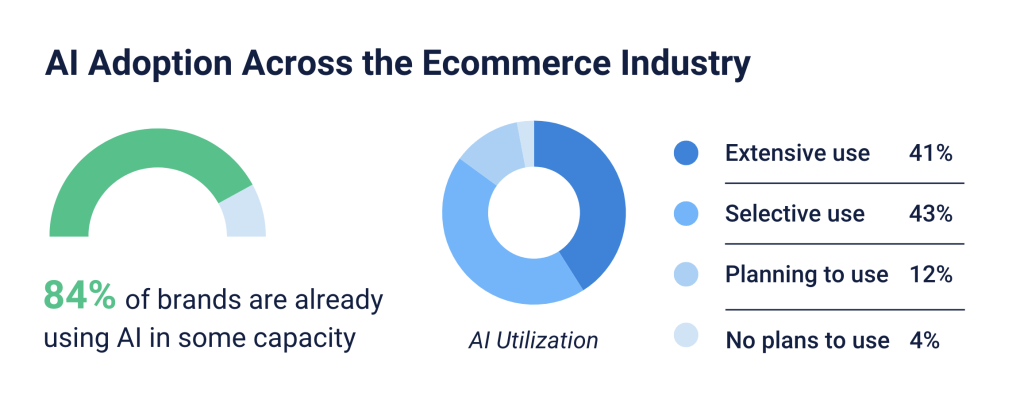
AI is transforming e-commerce at record speed. What started with chatbots and recommendation engines has evolved into a network of advanced tools that now influence everything from how shoppers browse to how brands engage and convert them. A conducted in August 2025 by in partnership with found that 84% of brands have already adopted AI across key customer-facing areas such as marketing, personalization, and support. But as the front-end of e-commerce grows more sophisticated, pressure is mounting on fulfillment, compliance, and delivery operations to keep pace.
AI Is Redefining How Shoppers Discover, Decide, and Buy
AI is becoming deeply embedded in how people shop, influencing more moments of the buyer journey than ever before. What began with simple personalization algorithms has evolved into systems that anticipate intent and remove friction from the buying process. Adobe forecasts a this holiday season鈥攅vidence of how quickly consumers are embracing these advancements.
The traditional sales funnel is beginning to collapse as once-separate steps鈥攕earch, comparison, and checkout鈥攃onverge into a single, seamless interaction. Tailored suggestions and predictive analytics now guide shoppers before they even begin searching, while dynamic pricing and real-time merchandising adjust instantly to sustain engagement. Plus, emerging tools like are introducing a new era of conversational shopping鈥攚here a customer might simply ask, 鈥淐an you find me a pair of leather boots under $100?鈥� and complete the purchase within the same chat.
However, almost every major platform has in recent years. For example, Google鈥檚 Buy on Google and Meta鈥檚 Facebook and Instagram Shops both aimed to keep transactions within their ecosystems鈥攂ut adoption remained limited as both merchants and shoppers gravitated back to brand websites. The exception is , which, in 2024, reached roughly $9 billion in gross merchandise volume in the U.S. and about $33 billion globally within just a few years鈥攑roving that integrated discovery and purchasing can work when the experience feels natural to the platform.
That history makes ChatGPT鈥檚 entry especially intriguing. Rather than forcing shopping into feeds or search results, it introduces something new鈥攃ommerce through conversation. If successful, it could finally close the distance between search, consideration, and purchase, redefining not just how consumers shop but what they expect from every e-commerce interaction.
The Bottleneck Behind AI-Accelerated Demand
While AI is redefining how brands attract and convert customers, it鈥檚 also exposing the limits of their operational infrastructure. Quicker conversions and rising order volumes can鈥檛 sustain growth without the operations to support them.
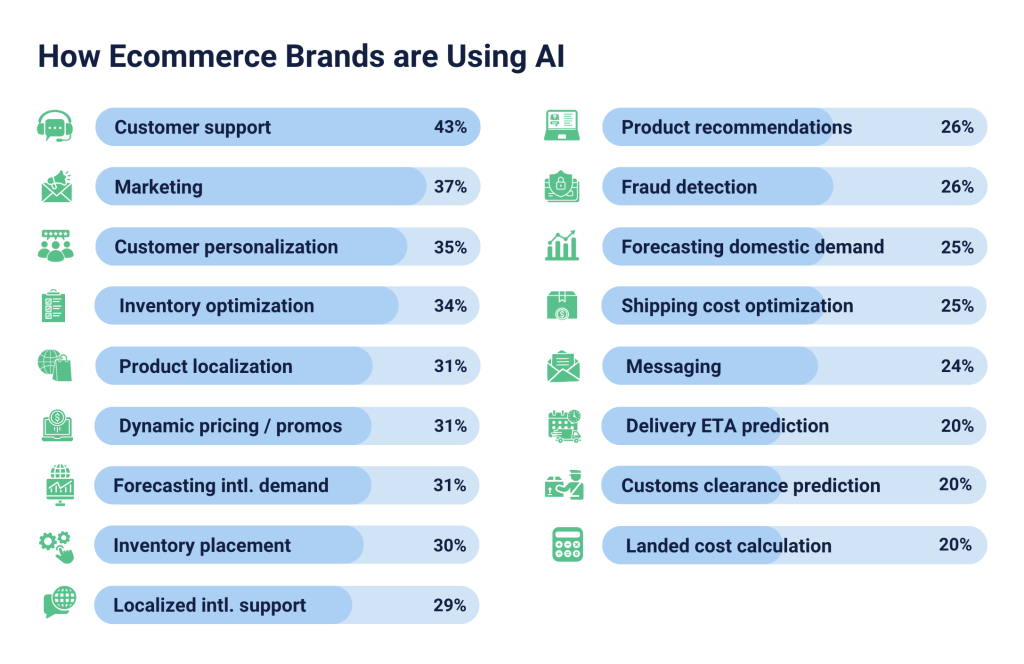
According to Passport鈥檚 study, many e-commerce leaders are still lagging behind the curve. Only about one-third use AI for inventory optimization, and even fewer have applied automation to compliance or cross-border logistics. The result: AI may be accelerating performance on the front-end, but it鈥檚 amplifying pressure on the back-end鈥攚here most inefficiencies still live.
Fulfillment networks are being tested by more dynamic order volumes, tighter delivery windows, and the . Every faster checkout requires quicker movement of goods; every predictive promotion adds uncertainty to inventory planning. As e-commerce becomes increasingly AI-driven, the brands that succeed will be the ones that connect what drives demand with what delivers it.
Delivering on AI-Driven Growth
From automatic translation to localized pricing and predictive modeling, new tools are making it easier to and reach customers in more markets than ever before. But as the path to purchase gets easier, the delivery process is becoming more complex.
Another , which surveyed 100 U.S. e-commerce leaders in February 2025, found that 91% of merchants view international sales as a profitable revenue stream, yet few feel equipped to manage the expanding layers of compliance, taxation, and cross-border logistics that come with it. The same AI systems that accelerate discovery and checkout are now revealing cracks in how global operations are managed.
New , , and shifting import requirements are testing even the most established brands. Those relying on traditional fulfillment models are finding it harder to adapt to local market needs and fluctuating costs. Meeting the promise of AI-powered growth requires more than automation at checkout鈥攊t requires efficient and agile infrastructure to support it.
Connecting Intelligence and Infrastructure
The next wave of standout e-commerce brands will be those that align automation with accountability鈥攃onnecting predictive insights at the point of sale to precision in how every shipment moves, clears, and arrives.
Success in this new era won鈥檛 come from just selling faster, but from delivering smarter. The brands that thrive will use AI to unify marketing, checkout, fulfillment, and compliance into a single, cohesive flow鈥攚here insights translate into action and operational decisions move as quickly as customer expectations.
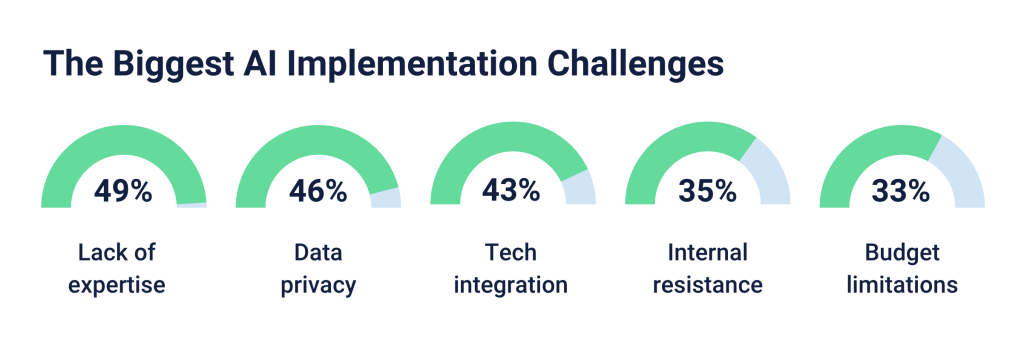
That鈥檚 easier said than done though. Nearly half of e-commerce leaders cite a lack of expertise as their biggest barrier to operational adoption鈥攁 gap that technology alone can鈥檛 close. Partnering with experts who understand the nuances of , , and can turn AI-driven growth into sustainable performance.
While AI is making e-commerce more efficient, the real opportunity lies with those ensuring every part of the operation keeps pace鈥攂uilding the infrastructure to match the intelligence.
was produced by and reviewed and distributed by 麻豆原创.