How farming has changed in every state the last 100 years
How farming has changed in every state the last 100 years
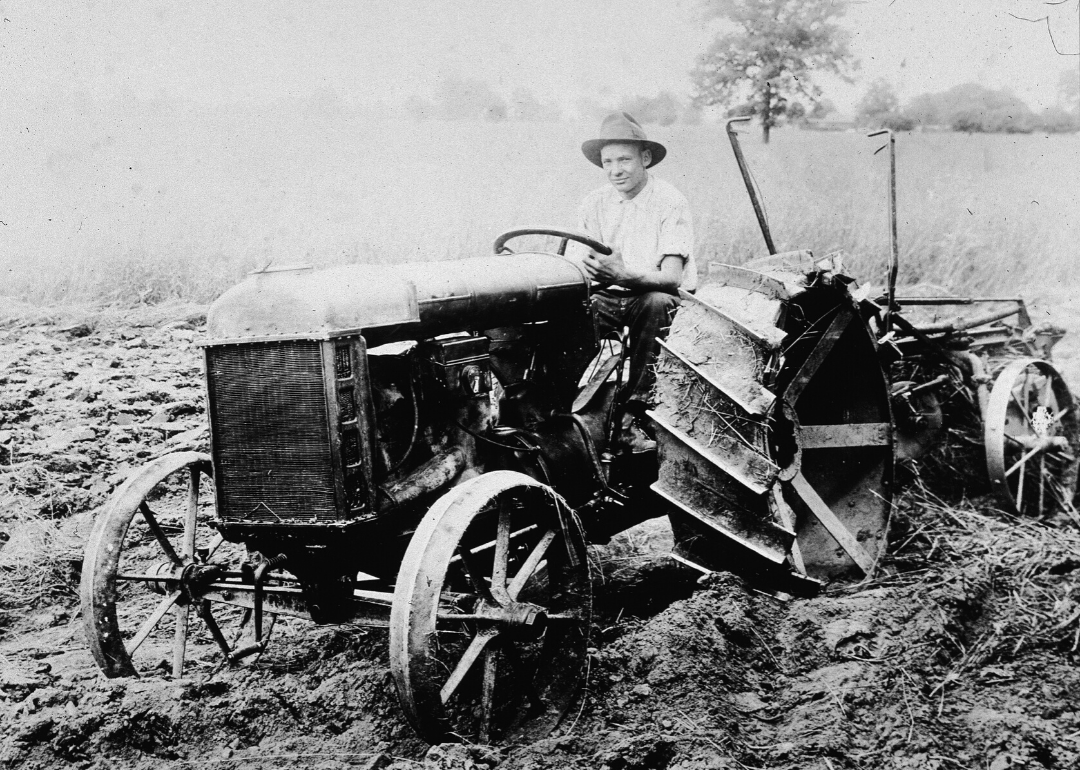
Over the past century, American farming has changed dramatically. Crops with long histories like tobacco are still prevalent throughout the South, while many farmers across the country are now exploring the possibility of a thriving hemp market. Every state has a rich farming history, from the tomatoes made in New Jersey, to the sheep used for wool production in Wyoming. Currently, some farms are looking to new technology to maintain their blue-collar livelihood, while others have decided to shut down shop, unable to keep up with fluctuating markets, export worries, and other daily concerns of America's farmers. Those aspects and more are detailed in Â鶹ԭ´´'s dive into how American farming over the past 100 years.
compiled a list comparing agriculture in each state over the last 100 years using data from the , and most recent data as of Feb. 28, 2020, from the 2019 . The 1920 Census figures were released in 1922, and even include some data for areas of the U.S. that weren't even technically states yet, like Alaska and Hawaii (where bees were widely harvested to make honey and waxes).
While American farming has certainly expanded and increased its value since 1920, there were almost three times as many farms 100 years ago than there are today—in 1920 there were 6.5 million farms, while 2020 estimates come in at two million. Within each slide, we discuss the essence of a state's agricultural economy then and now, significant changes in crops, legislation, and industry size, and other tidbits like where some of the earliest immigrant farmers arrived from. From Austrians in Delaware to Japanese farmers in Oregon, agricultural workers from around the world helped shape modern American farming. Click through to find out your state's farming past, present, and future.
1920: Alabama
- Number of farms: 256,099
- Average farm size: 76 acres
- Total farm acres: 19.6 million
Dairy produced some of in 1920, accounting for more than $15.2 million in value. Eggs and chickens were close behind, producing about $500,000 less. Overall, Alabama had over $30 million in value from livestock products.
2019: Alabama
- Number of farms: 39,700 (-84.5% from 1920)
- Average farm size: 214 acres (+179.9% from 1920)
- Total farm acres: 8.5 million (-56.6% from 1920)
- Top crops: cotton ($311.2 million), hay & haylage ($226.1 million), corn ($157.1 million), peanuts ($114.6 million), soybeans ($113.9 million)
- Cattle inventory: 1.3 million
- Chicken production: 1.1 billion
Dairy is no longer a major industry in Alabama, but still accounts for about a impact on the economy. Cotton is now king and Alabama regularly ranks as cotton producers in the U.S. In the future, could be a crop to be on the lookout for in Alabama.
1920: Alaska
- Number of farms: 364
- Average farm size: 249 acres
- Total farm acres: 0.1 million
Alaska didn’t become a state until 1959, and their farming industry had yet to really take off in 1920—the value of all farm property was only about $1.8 million. Horses, cattle, and even reindeer could be found on Alaskan farmland at the time, while potatoes were one of the only bountiful crops.
2019: Alaska
- Number of farms: 1,000 (+174.7% from 1920)
- Average farm size: 850 acres (+241.3% from 1920)
- Total farm acres: 0.9 million (+837.7% from 1920)
- Top crops: hay & haylage ($10.3 million), potatoes ($4.8 million), barley ($0.9 million), bedding plants, annual ($0.0 billion), corn ($0.0 billion)
- Cattle inventory: 16,000
One hundred years ago, hay and haylage accounted for only $219,075 in value on Alaskan farmland, but it is now the state’s most valuable crop. Alaska has a diverse range of products produced on farmland, including , a flower that have traditionally been more valuable in Alaska than anywhere else in the U.S.
1920: Arizona
- Number of farms: 9,975
- Average farm size: 582 acres
- Total farm acres: 5.8 million
Despite only being a recognized U.S. state for eight years, Arizona quickly became a farming force in the union. By 1920, 8% of land area was farms, and the value of all farm property was over $233 million. Horses, cattle, swine, and poultry were all important parts of Arizona's early farming base.
2019: Arizona
- Number of farms: 19,200 (+92.5% from 1920)
- Average farm size: 1,365 acres (+134.7% from 1920)
- Total farm acres: 26.2 million (+351.6% from 1920)
- Top crops: hay & haylage ($488.6 million), lettuce ($453.5 million), cotton ($142.6 million), melons ($87.0 million), spinach ($83.8 million)
- Cattle inventory: 1.0 million
Lettuce has become one of Arizona’s biggest crops, but growing the leafy greens occasionally come with peril, such as . Another concern in this farm-heavy state is that many of Arizona’s farmers are aging out. State government to encourage incentives for more youth to enter the industry.
1920: Arkansas
- Number of farms: 232,604
- Average farm size: 75 acres
- Total farm acres: 17.5 million
In 1920, almost 90% of farms in Arkansas had poultry, creating over $6 million in value. But chickens weren’t the biggest livestock money maker. Only 54% of Arkansas farms had horses and 75% had cattle, but those livestock accounted for $24 million and $35 million respectively in value.
2019: Arkansas
- Number of farms: 42,500 (-81.7% from 1920)
- Average farm size: 327 acres (+335.7% from 1920)
- Total farm acres: 13.9 million (-20.4% from 1920)
- Top crops: soybeans ($1.4 billion), rice ($1.1 billion), corn ($443.6 million), cotton ($385.0 million), hay & haylage ($234.8 million)
- Cattle inventory: 1.8 million
- Chicken production: 1.1 billion
Arkansas soybean production ranks in the , producing more than 150 million bushels each year. is now used more frequently in Arkansas farming, and this southern state also boasts an agriculture .
1920: California
- Number of farms: 117,670
- Average farm size: 250 acres
- Total farm acres: 29.4 million
California was one of the only non-Midwest states in 1920 with farmland value exceeding $3 billion. A variety of fruits contributed to this thriving industry, with apples, peaches, pears, plums, and prunes each out-producing grapes at the time.
2019: California
- Number of farms: 69,400 (-41.0% from 1920)
- Average farm size: 350 acres (+40.2% from 1920)
- Total farm acres: 24.3 million (-17.3% from 1920)
- Top crops: grapes ($6.3 billion), almonds ($5.5 billion), pistachios ($2.6 billion), strawberries ($2.3 billion), hay & haylage ($1.3 billion)
- Cattle inventory: 5.2 million
Sorry to tell all you fans of , but California farming is more than just raisins (even though grapes now are the state's most productive crop). Recently, have hampered farming in the Golden State. This led to a controversy when President Trump , which could impact local wildlife and power production.
1920: Colorado
- Number of farms: 59,931
- Average farm size: 408 acres
- Total farm acres: 24.5 million
Colorado more than doubled its value of farm property from 1910 to 1920, surpassing $1 billion. Hay and forage were major sources of production, as were wheat, corn, and even cabbage.
2019: Colorado
- Number of farms: 38,900 (-35.1% from 1920)
- Average farm size: 817 acres (+100.2% from 1920)
- Total farm acres: 31.8 million (+30.0% from 1920)
- Top crops: hay & haylage ($794.1 million), corn ($572.4 million), wheat ($324.8 million), potatoes ($216.8 million), sorghum ($47.6 million)
- Cattle inventory: 2.9 million
Hay, corn, and wheat remain Colorado’s farming staples, but the state produces rare items like . In 2018, Colorado was one of the states that had many farmers eager to take advantage of , but hemp farmers are still encountering problems .
1920: Connecticut
- Number of farms: 22,655
- Average farm size: 84 acres
- Total farm acres: 1.9 million
Connecticut’s number of farms dropped from 1910 to 1920, even though the value of all farm property in the state increased about $67 million. A majority of farms were 500 acres or less, with cereals, hay, and potatoes among the most popular crops planted.
2019: Connecticut
- Number of farms: 5,500 (-75.7% from 1920)
- Average farm size: 69 acres (-17.7% from 1920)
- Total farm acres: 0.4 million (-80.0% from 1920)
- Top crops: hay & haylage ($19.0 million), maple syrup ($1.4 million), propagative material ($0.0 billion), cut flowers ($0.0 billion), corn ($0.0 billion)
- Cattle inventory: 47,000
Vermont might be the New England state you think of first when it comes to maple syrup, but Connecticut has a rich history producing the sweet topping. offer tours and in 2017, March was designated “” in Connecticut. Recently, local wine growers in the state have that would allow establishments to sell wine from out-of-state grapes and still call themselves a Connecticut winery.
1920: Delaware
- Number of farms: 10,140
- Average farm size: 93 acres
- Total farm acres: 0.9 million
Despite being one of America's smallest states in terms of farming land, Delaware had a diverse set of farm owners in the 1920s. Dozens of Austrians, Italians, and almost 100 Germans owned farmland in the state, which had been in the union since 1787. While many states relied on hay as a basic crop, Delaware actually had more farms producing cereal than hay in 1920.
2019: Delaware
- Number of farms: 2,300 (-77.3% from 1920)
- Average farm size: 230 acres (+146.9% from 1920)
- Total farm acres: 0.5 million (-43.9% from 1920)
- Top crops: corn ($98.9 million), soybeans ($57.5 million), sweet corn ($16.6 million), wheat ($15.7 million), melons ($11.3 million)
- Cattle inventory: 15,000
- Chicken production: 263.6 million
Delaware is emerging as one of America’s top soybean producers, with in recent years. July and the summer months are , while are becoming another source of farm wealth in the state. That doesn’t mean farmers aren’t looking for new methods to jumpstart the industry—one aquaponics farm is to grow its crop.
1920: Florida
- Number of farms: 54,005
- Average farm size: 112 acres
- Total farm acres: 6.0 million
Immigrants from Canada and Sweden were among the most prevalent farm owners in Florida 100 years ago. Florida was one of the rare states where swine outnumbered horses on farms at the time. Florida cows produced butter and cheese at a rate of almost five times more than they did milk.
2019: Florida
- Number of farms: 47,500 (-12.0% from 1920)
- Average farm size: 204 acres (+82.2% from 1920)
- Total farm acres: 9.7 million (+60.4% from 1920)
- Top crops: oranges ($701.9 million), sugarcane ($536.7 million), tomatoes ($344.1 million), strawberries ($281.8 million), peppers ($180.6 million)
- Cattle inventory: 1.7 million
- Chicken production: 65.4 million
Florida is one of several states to boost their farming industry. But oranges remain the key crop in the Sunshine State. Groves have been producing commercial citrus since the mid-19th century, and today the groves .
1920: Georgia
- Number of farms: 310,732
- Average farm size: 82 acres
- Total farm acres: 25.4 million
Georgia has always been a state reliant on cotton farming and in 1920, cotton fields contributed to over $1.3 billion in farm property value. Farms with mules and cattle outnumbered those with horses by almost three to one, while over 81% of farms carried swine.
2019: Georgia
- Number of farms: 41,600 (-86.6% from 1920)
- Average farm size: 243 acres (+196.8% from 1920)
- Total farm acres: 10.1 million (-60.3% from 1920)
- Top crops: cotton ($695.4 million), peanuts ($593.0 million), corn ($218.2 million), hay & haylage ($142.7 million), pecans ($113.4 million)
- Cattle inventory: 1.1 million
- Chicken production: 1.4 billion
Cotton remains Georgia's most productive crop, but some areas of the state have had to Peanuts have been another pillar of Georgia's farming industry, and the state provides . Georgia is also
1920: Hawaii
- Number of farms: 5,284
- Average farm size: 511 acres
- Total farm acres: 2.7 million
Although Hawaii did not become a state until 1959, its farm industry was already bustling by 1910. Sugarcane was a major crop and bees were vital in creating honey and waxes. The island state also had a sizable population of beef cattle.
2019: Hawaii
- Number of farms: 7,300 (+38.2% from 1920)
- Average farm size: 151 acres (-70.5% from 1920)
- Total farm acres: 1.1 million (-59.3% from 1920)
- Top crops: coffee ($50.2 million), macadamias ($42.0 million), papayas ($5.7 million), taro ($2.0 million), avocados ($1.6 million)
- Cattle inventory: 142,000
Hawaii’s coffee industry has experienced , but it remains the state’s biggest crop. One crop undergoing a rebirth is Centuries ago, the root was a staple on the island, and is now making a comeback that could be central Hawaii’s farm industry.
1920: Idaho
- Number of farms: 42,106
- Average farm size: 199 acres
- Total farm acres: 8.4 million
Idaho has always been potato country, but the state also had quite a diversity of farmers. Workers from Japan, India, Denmark, Finland, and Switzerland were just some of the foreign-born farmers counted in the 1920 census. Besides potatoes, wheat, barley, and alfalfa were prominent crops.
2019: Idaho
- Number of farms: 24,800 (-41.1% from 1920)
- Average farm size: 468 acres (+135.3% from 1920)
- Total farm acres: 11.6 million (+38.5% from 1920)
- Top crops: potatoes ($1.0 billion), hay & haylage ($850.8 million), wheat ($539.0 million), sugarbeets ($303.7 million), barley ($269.3 million)
- Cattle inventory: 2.5 million
According to the (yes, that’s a real place!), spuds were first planted in Idaho in the early 19th century by Rev. Henry Spaulding. Later, settlers from Utah further spurred potato farming. However, the state also produces a high amount of sugarbeets, which are used in the .
1920: Illinois
- Number of farms: 237,181
- Average farm size: 135 acres
- Total farm acres: 32.0 million
Illinois had over $6 billion in farm property value in 1920. Over 200,000 farms with horses, poultry, or cattle could be found statewide, with corn, oats, wheat, and potatoes among its most plentiful crops.
2019: Illinois
- Number of farms: 72,000 (-69.6% from 1920)
- Average farm size: 375 acres (+178.2% from 1920)
- Total farm acres: 27.0 million (-15.6% from 1920)
- Top crops: corn ($8.2 billion), soybeans ($5.8 billion), hay & haylage ($210.8 million), wheat ($176.3 million), potatoes ($25.7 million)
- Cattle inventory: 1.2 million
Last year, Illinois farmers experienced , and state officials are figuring out how to tackle climate change and its effect on farms. The is the biggest producer of Illinois’ biggest crops—corn and soybeans—but statewide those crops are suffering a decline in production.
1920: Indiana
- Number of farms: 205,126
- Average farm size: 103 acres
- Total farm acres: 21.1 million
Indiana, like Illinois and California, also surpassed $3 billion in farm property value by 1920. Although a majority of the 205,000 farmers in the state were locals, Indiana boasted more than 3,000 farmers from Germany. Swine, particularly young pigs and sows, were among Indiana’s most popular domestic animals on farms.
2019: Indiana
- Number of farms: 56,100 (-72.7% from 1920)
- Average farm size: 267 acres (+160.0% from 1920)
- Total farm acres: 15.0 million (-28.8% from 1920)
- Top crops: corn ($3.7 billion), soybeans ($3.0 billion), hay & haylage ($211.0 million), wheat ($90.5 million), tomatoes ($31.5 million)
- Cattle inventory: 880,000
Located in America’s “,” Indiana is one of the country’s biggest producers of corn. In 2002, though, a new law prevented some corn and soybean farmers from planting different crops. That left certain farmers out of the lucrative markets for tomatoes, cabbage, cucumbers, and the state produces.
1920: Iowa
- Number of farms: 213,439
- Average farm size: 157 acres
- Total farm acres: 33.5 million
Even in 1920, Iowa was a farming power. Iowa’s farm property value surpassed $8.5 billion. Although women only made up a small percentage of farm owners in Iowa, there were 3,711 female farm owners at the time.
2019: Iowa
- Number of farms: 86,000 (-59.7% from 1920)
- Average farm size: 356 acres (+127.0% from 1920)
- Total farm acres: 30.6 million (-8.6% from 1920)
- Top crops: corn ($9.0 billion), soybeans ($4.7 billion), hay & haylage ($432.4 million), oats ($6.1 million), wheat ($1.7 million)
- Cattle inventory: 4.0 million
Iowa is America's top corn producer, with much of it . With such a focus on corn in the state, the Iowa corn lobby is a major player in local and national legislature. Keeping tax credits and expanding trade agreements are among priorities for the .
1920: Kansas
- Number of farms: 165,286
- Average farm size: 275 acres
- Total farm acres: 45.4 million
Kansas, like Iowa, had over 3,000 female farm owners in 1920. Immigrants of Swedish, Russian, and German descent each accounted for at least 2,000 each of the state’s farm workers. Despite thriving farm industries in many Midwestern states, goats were one domestic animal not in large supply throughout most of the country; here they were present on only 0.7% of farms.
2019: Kansas
- Number of farms: 58,900 (-64.4% from 1920)
- Average farm size: 778 acres (+183.1% from 1920)
- Total farm acres: 45.8 million (+0.8% from 1920)
- Top crops: corn ($2.3 billion), soybeans ($1.6 billion), wheat ($1.4 billion), sorghum ($730.0 million), hay & haylage ($679.4 million)
- Cattle inventory: 6.4 million
Like many Midwest states, Kansas relies heavily on corn and soybean production. However, Kansas also produces more sorghum than any other state, . Sorghum is a sweetener that can be used for
1920: Kentucky
- Number of farms: 270,626
- Average farm size: 80 acres
- Total farm acres: 21.6 million
For the first time in Kentucky’s history, farm property value topped $1 billion in 1920. Kentucky, a state known for its illustrious history with horses, had 382,442 horses reported on its farms. But cattle were even more prevalent among domestic animals, numbering over 1 million.
2019: Kentucky
- Number of farms: 75,100 (-72.2% from 1920)
- Average farm size: 172 acres (+115.4% from 1920)
- Total farm acres: 12.9 million (-40.3% from 1920)
- Top crops: soybeans ($865.2 million), corn ($819.8 million), hay & haylage ($770.6 million), tobacco ($298.2 million), wheat ($102.8 million)
- Cattle inventory: 2.1 million
- Chicken production: 303.3 million
Tobacco has been a historically productive crop in Kentucky, but declines in production have caused worry throughout the state. Some co-ops to farmers adversely affected by weak tobacco production. are also experiencing rough times as they navigate a still developing market.
1920: Louisiana
- Number of farms: 135,463
- Average farm size: 74 acres
- Total farm acres: 10.0 million
Louisiana did not have as many immigrant farmers as other states; despite its strong French ties, only 149 French-born farmers were on record in 1920. Italy was the only country to have more than 1,000 farmers in Louisiana, a state that had a solid sweet potato crop a century ago.
2019: Louisiana
- Number of farms: 27,400 (-79.8% from 1920)
- Average farm size: 292 acres (+294.8% from 1920)
- Total farm acres: 8.0 million (-20.2% from 1920)
- Top crops: sugarcane ($590.0 million), soybeans ($548.5 million), rice ($348.3 million), corn ($300.5 million), cotton ($152.2 million)
- Cattle inventory: 800,000
After Hurricane Katrina, crop damage in Louisiana was . The Louisiana farm industry still relies on sugarcane as its anchor. Reportedly, Louisiana was America’s first sugarcane producer,
1920: Maine
- Number of farms: 48,227
- Average farm size: 113 acres
- Total farm acres: 5.4 million
By 1920, Maine’s farmland was shrinking (about 28% of the state), even though the average farm size went up. There were only six female farm managers, compared to 780 males. Maine did have one of the more robust sheep populations on farms, as they were present on almost 20% of all farms.
2019: Maine
- Number of farms: 7,600 (-84.2% from 1920)
- Average farm size: 171 acres (+52.0% from 1920)
- Total farm acres: 1.3 million (-76.0% from 1920)
- Top crops: potatoes ($166.9 million), hay & haylage ($28.1 million), blueberries ($23.2 million), maple syrup ($21.7 million), oats ($3.6 million)
- Cattle inventory: 78,000
Up until the , Maine was the nation’s top potato producer. Today, potatoes remain the state’s top crop, but have become another viable crop and their fields are a vital part of Maine’s tourism industry. Blueberries are also Maine’s official state fruit.
1920: Maryland
- Number of farms: 47,908
- Average farm size: 99 acres
- Total farm acres: 4.8 million
For the 50 years before 1920, Maryland’s farm property value only increased slightly every decade. But by 1920, the state saw a 62% increase, with horses and poultry among the most popular domestic farm animals. However, there were only 171 farms reporting goats throughout Maryland.
2019: Maryland
- Number of farms: 12,400 (-74.1% from 1920)
- Average farm size: 161 acres (+62.1% from 1920)
- Total farm acres: 2.0 million (-58.0% from 1920)
- Top crops: corn ($228.0 million), soybeans ($198.6 million), hay ($91.1 million), wheat ($61.7 million), sweet corn ($14.0 million)
- Cattle inventory: 197,000
- Chicken production: 289.4 million
Maryland's is seemingly as beloved in the state as crab cakes. Staples like soybeans and hay are other popular crops in Maryland, and the state recently launched its first .
1920: Massachusetts
- Number of farms: 32,001
- Average farm size: 78 acres
- Total farm acres: 2.5 million
Overall farmland in Massachusetts was decreasing by 1920, but the average value per acre jumped almost $45 from the previous decade. Despite being one of the early centers of American pilgrimage from Europe, the majority of Massachusetts’ foreign-born farmers hailed from Canada.
2019: Massachusetts
- Number of farms: 7,200 (-77.5% from 1920)
- Average farm size: 69 acres (-11.5% from 1920)
- Total farm acres: 0.5 million (-80.0% from 1920)
- Top crops: cranberries ($50.0 million), hay & haylage ($21.7 million), maple syrup ($3.8 million), corn ($0.0 billion), ($0.0 million)
- Cattle inventory: 37,000
Cranberry farming in Massachusetts originated in Cape Cod in the mid-19th century, . Today, Massachusetts is regularly one of the top two cranberry producers in the nation. The state also offers a landmark preservation program, for Massachusetts farmers.
1920: Michigan
- Number of farms: 196,447
- Average farm size: 97 acres
- Total farm acres: 19.0 million
After experiencing huge growth at the turn of the century, Michigan’s farm numbers fell 5.1% from the previous decade in 1920. Farm property value shot up more than 61% from 1910, though, and the state had one of the more bountiful beehive stables in the country.
2019: Michigan
- Number of farms: 47,000 (-76.1% from 1920)
- Average farm size: 209 acres (+115.7% from 1920)
- Total farm acres: 9.8 million (-48.5% from 1920)
- Top crops: corn ($1.1 billion), soybeans ($936.0 million), hay & haylage ($413.9 million), apples ($294.4 million), potatoes ($191.5 million)
- Cattle inventory: 1.2 million
Whether it’s a coincidence or not in this major corn-producing state, the colors of the University of Michigan’s athletic teams are and blue. Tart cherries, blueberries, and are other popular crops, with many of Michigan’s farming exports going to China, Japan, and South Korea.
1920: Minnesota
- Number of farms: 178,478
- Average farm size: 169 acres
- Total farm acres: 30.2 million
Minnesota's farm property value in 1920 jumped over 156% from 1910, as the state was well on its way to becoming one of the country's agricultural heavies. About 45,000 of the state's farmers hailed from Sweden, Norway, or Germany, and over half of Minnesota's farms produced butter or cheese.
2019: Minnesota
- Number of farms: 68,500 (-61.6% from 1920)
- Average farm size: 372 acres (+119.7% from 1920)
- Total farm acres: 25.5 million (-15.6% from 1920)
- Top crops: corn ($4.7 billion), soybeans ($3.1 billion), hay & haylage ($507.8 million), wheat ($487.8 million), sugarbeets ($288.4 million)
- Cattle inventory: 2.3 million
- Chicken production: 59.1 million
Minnesota ranks and fourth in dairy sales. According to MPR, while the total number of farms in the state are decreasing, average farm size is increasing. However, the state’s farmers are not very diverse MPR reports, as over 110,000 farmers are white; Hispanics are the next biggest demographic, with 651 farmers.
1920: Mississippi
- Number of farms: 272,101
- Average farm size: 67 acres
- Total farm acres: 18.1 million
As Mississippi’s farming industry was still in its nascent stages, 11% of all its farms still needed drainage by 1920. More than 261,000 acres of Mississippi land were still considered swamps or subject to overflow.
2019: Mississippi
- Number of farms: 34,700 (-87.2% from 1920)
- Average farm size: 300 acres (+350.8% from 1920)
- Total farm acres: 10.4 million (-42.6% from 1920)
- Top crops: soybeans ($1.0 billion), cotton ($527.0 million), corn ($323.4 million), hay & haylage ($120.2 million), rice ($110.3 million)
- Cattle inventory: 900,000
- Chicken production: 747.8 million
Cotton is traditionally one of Mississippi’s biggest crops. Mississippi plants over 1 million acres of cotton annually, although that total is noticeably down from a high of . The state’s Delta region is being targeted as , due to climate change affecting those crops in states like California.
1920: Missouri
- Number of farms: 263,004
- Average farm size: 132 acres
- Total farm acres: 34.8 million
While Missouri relied heavily on native farmers, the state had over 4,000 farmworkers from Germany. It may have been a shock for those German farmers to witness sparing cheese production in the state—only 0.4% of Missouri’s farms produced cheese at the time.
2019: Missouri
- Number of farms: 95,000 (-63.9% from 1920)
- Average farm size: 292 acres (+120.8% from 1920)
- Total farm acres: 27.7 million (-20.3% from 1920)
- Top crops: soybeans ($2.2 billion), corn ($1.7 billion), hay & haylage ($674.2 million), cotton ($314.8 million), rice ($182.9 million)
- Cattle inventory: 4.3 million
- Chicken production: 293.1 million
Farming is a way of life to many in Missouri, but stats show that Missouri's farmers are aging. said that for these elderly workers in rural areas of the state, the farming workload can cause stress and mental-health problems.
1920: Montana
- Number of farms: 57,677
- Average farm size: 608 acres
- Total farm acres: 35.1 million
Montana’s farm land almost tripled between 1910 and 1920, with a 120% increase in total farms. Montana’s new farms were expansive, as well, with almost 75% being between 100 and 1,000 acres.
2019: Montana
- Number of farms: 26,900 (-53.4% from 1920)
- Average farm size: 2,156 acres (+254.6% from 1920)
- Total farm acres: 58.0 million (+65.4% from 1920)
- Top crops: wheat ($1.0 billion), hay & haylage ($800.9 million), barley ($155.2 million), lentils ($68.5 million), sugarbeets ($54.6 million)
- Cattle inventory: 2.5 million
Montana is the nation’s lentil capital, producing of the country’s lentils. Not everything is rosy in Montana’s farming ecosystem, though. , particularly affecting small wetlands in the state, are in danger of being dissolved due to new federal regulations scheduled to go into effect this year.
1920: Nebraska
- Number of farms: 124,417
- Average farm size: 339 acres
- Total farm acres: 42.2 million
Nebraska’s farm property value grew 102% from 1910 to 1920, even though the state lost 5,000 farms. This included a drop in the number of farms producing corn, although that product remained Nebraska’s top crop.
2019: Nebraska
- Number of farms: 45,900 (-63.1% from 1920)
- Average farm size: 980 acres (+188.8% from 1920)
- Total farm acres: 45.0 million (+6.6% from 1920)
- Top crops: corn ($6.4 billion), soybeans ($1.9 billion), hay & haylage ($716.6 million), wheat ($233.1 million), sugarbeets ($204.0 million)
- Cattle inventory: 6.8 million
The University of Nebraska’s athletic teams are called the Cornhuskers for good reason. The crop has been a part of Nebraska farming , and Nebraskans began harvesting corn for ethanol more than 100 years ago.
1920: Nevada
- Number of farms: 3,163
- Average farm size: 748 acres
- Total farm acres: 2.4 million
Nevada still had a very young farming industry by 1920. Only about 6% of all farms sold milk, cream, or butter, and the census counted 89 goat farms throughout the state. Wheat, a future major crop for Nevada, was grown on less than 1,000 farms in 1920.
2019: Nevada
- Number of farms: 3,400 (+7.5% from 1920)
- Average farm size: 1,794 acres (+139.7% from 1920)
- Total farm acres: 6.1 million (+157.7% from 1920)
- Top crops: hay & haylage ($202.6 million), wheat ($4.7 million), corn ($0.0 billion), ($0.0 million), ($0.0 million)
- Cattle inventory: 470,000
Studies show that Nevada is Hay and wheat are at the center of the growth, but the dairy industry also has made news. Recently, presidential candidate Bernie Sanders was in Nevada.
1920: New Hampshire
- Number of farms: 20,523
- Average farm size: 127 acres
- Total farm acres: 2.6 million
In 1920, New Hampshire’s total farms dropped almost 27%, but farm property value grew by more than 14%. Early in the 20th century, New Hampshire farms received a boost from workers from Canada, which aided in their robust dairy, corn, and potato production.
2019: New Hampshire
- Number of farms: 4,100 (-80.0% from 1920)
- Average farm size: 105 acres (-17.2% from 1920)
- Total farm acres: 0.4 million (-83.5% from 1920)
- Top crops: maple syrup ($9.1 million), hay & haylage ($8.1 million), corn ($0.0 billion), ($0.0 million), ($0.0 million)
- Cattle inventory: 33,000
Although New Hampshire may not have the name recognition of neighbor Vermont when it comes to maple syrup production, there are to be found in this New England locale. Like Connecticut, New Hampshire designated March its “,” when visitors can catch first-hand glimpses into the maple syrup production process at farms around the state.
1920: New Jersey
- Number of farms: 29,702
- Average farm size: 77 acres
- Total farm acres: 2.3 million
New Jersey counted farmers from at least 14 different European countries in 1920, although there were only a total of three farmers from China or Japan. Corn and potatoes were found in abundance, but only six farms grew tobacco.
2019: New Jersey
- Number of farms: 9,900 (-66.7% from 1920)
- Average farm size: 76 acres (-1.1% from 1920)
- Total farm acres: 0.8 million (-67.1% from 1920)
- Top crops: blueberries ($62.4 million), tomatoes ($42.4 million), peaches ($41.0 million), hay & haylage ($41.0 million), peppers ($39.7 million)
- Cattle inventory: 30,000
New Jersey is the Garden State, and unlike most of its counterparts, boasts a farming industry led by a variety of sweet crops. Scientists have even that originated almost 80 years ago. are another tasty fruit found throughout the state's diverse farmland.
1920: New Mexico
- Number of farms: 29,844
- Average farm size: 818 acres
- Total farm acres: 24.4 million
Although the number of New Mexico farms fell over 16% from 1910, the farm property value increased over 103%. Unlike many states, New Mexico had more Native American—listed as Indian in the census—farmworkers than foreign-born labor.
2019: New Mexico
- Number of farms: 24,700 (-17.2% from 1920)
- Average farm size: 1,640 acres (+100.5% from 1920)
- Total farm acres: 40.5 million (+65.9% from 1920)
- Top crops: hay & haylage ($211.8 million), pecans ($173.1 million), peppers ($53.8 million), corn ($28.1 million), cotton ($8.4 million)
- Cattle inventory: 1.5 million
While you may not immediately think of pecans as New Mexico’s top food crop, peppers are a Southwest cuisine staple. New Mexico is , which are the official state vegetable.
1920: New York
- Number of farms: 103,195
- Average farm size: 200 acres
- Total farm acres: 20.6 million
New York had over 7,000 female farm owners in 1920, and at least nine European countries had more than 1,000 workers on New York farms. New York farms were also a major honey producer, with over 11,000 farms boasting beehives.
2019: New York
- Number of farms: 33,400 (-67.6% from 1920)
- Average farm size: 207 acres (+3.5% from 1920)
- Total farm acres: 6.9 million (-66.6% from 1920)
- Top crops: hay & haylage ($833.6 million), corn ($406.8 million), apples ($262.3 million), soybeans ($137.8 million), cabbage ($52.9 million)
- Cattle inventory: 1.5 million
While farming barely extends beyond rooftop patches or window sills in New York City, upstate New York is rich in farming culture. New York is, and apples are grown on about 55,000 acres. A majority of those apples are sold as fresh market fruit, with the rest going toward juice, cider, pie fillings, and other uses.
1920: North Carolina
- Number of farms: 269,763
- Average farm size: 74 acres
- Total farm acres: 20.0 million
Tobacco has always been essential to North Carolina's farms. In 1920, over 95,000 farms in North Carolina grew tobacco—outnumbering potatoes, oats, wheat, and peanuts. Total acreage for tobacco more than doubled from 1910, totaling at almost 500,000 acres.
2019: North Carolina
- Number of farms: 46,400 (-82.8% from 1920)
- Average farm size: 181 acres (+143.9% from 1920)
- Total farm acres: 8.4 million (-58.0% from 1920)
- Top crops: tobacco ($481.3 million), soybeans ($448.7 million), corn ($411.7 million), hay & haylage ($271.9 million), sweet potatoes ($261.6 million)
- Cattle inventory: 800,000
- Chicken production: 873.6 million
While tobacco is still North Carolina’s richest crop, tobacco farmers are seeing declines in production. severely hurt export trades—75% of tobacco grown in the U.S. is exported, with much of it going to Asia.
1920: North Dakota
- Number of farms: 77,600
- Average farm size: 467 acres
- Total farm acres: 36.2 million
North Dakota experienced small growth in total farms, but farm property value nearly doubled from 1910. The most foreign-born farmworkers hailed from Norway, which had a delegation of over 10,000 on North Dakota farms. Cucumbers were among the most-grown vegetables at the time.
2019: North Dakota
- Number of farms: 26,100 (-66.4% from 1920)
- Average farm size: 1,506 acres (+222.7% from 1920)
- Total farm acres: 39.3 million (+8.5% from 1920)
- Top crops: soybeans ($1.9 billion), wheat ($1.8 billion), corn ($1.5 billion), canola ($489.3 million), hay & haylage ($358.0 million)
- Cattle inventory: 1.8 million
North Dakota farming has grown exponentially over the past 100 years, with its influence even appearing in exhibitions . With such a robust industry, though, there are perils, with being one such concern.
1920: Ohio
- Number of farms: 256,695
- Average farm size: 92 acres
- Total farm acres: 23.5 million
Ohio had over 8,000 female farm owners in 1920, one of the highest numbers in the country. Corn, oats, and wheat were all major crops, while cabbages, cantaloupes, and tomatoes were also notable fruits or vegetables raised for sale.
2019: Ohio
- Number of farms: 77,800 (-69.7% from 1920)
- Average farm size: 179 acres (+95.4% from 1920)
- Total farm acres: 13.9 million (-40.9% from 1920)
- Top crops: soybeans ($2.4 billion), corn ($2.3 billion), hay & haylage ($424.8 million), wheat ($171.5 million), tomatoes ($52.2 million)
- Cattle inventory: 1.3 million
- Chicken production: 107.9 million
are helping keep Ohio's farm industry robust, but federal conservation cuts could hurt the industry as a whole. Last spring, of farmland went unplanted in Ohio. , Ohio's top crop, are traditionally planted during those spring months.
1920: Oklahoma
- Number of farms: 191,988
- Average farm size: 162 acres
- Total farm acres: 31.1 million
Just over 1% of all farms in Oklahoma had sheep or goats in 1920, but horses, cattle, swine, and poultry were found on 70% or more of all farms. Apples, peaches, and pears were some of the most widely planted orchard fruits.
2019: Oklahoma
- Number of farms: 77,300 (-59.7% from 1920)
- Average farm size: 442 acres (+173.3% from 1920)
- Total farm acres: 34.2 million (+10.1% from 1920)
- Top crops: hay & haylage ($539.1 million), wheat ($357.0 million), cotton ($213.8 million), corn ($139.7 million), soybeans ($132.6 million)
- Cattle inventory: 5.3 million
- Chicken production: 196.8 million
became one of Oklahoma’s most valuable crops at the turn of the century, but hay is now tops, even though . Throughout the state, are a growing problem for ranchers and farmers.
1920: Oregon
- Number of farms: 50,206
- Average farm size: 270 acres
- Total farm acres: 13.5 million
In 1920, Oregon had sizable populations of German and Japanese born farmers. Wheat, cabbages, strawberries, and cherries were among the most bountiful crops at the time.
2019: Oregon
- Number of farms: 37,200 (-25.9% from 1920)
- Average farm size: 430 acres (+59.4% from 1920)
- Total farm acres: 16.0 million (+18.1% from 1920)
- Top crops: hay & haylage ($590.4 million), wheat ($298.5 million), potatoes ($201.7 million), blueberries ($180.7 million), pears ($141.0 million)
- Cattle inventory: 1.3 million
Although hay & haylage is Oregon’s top crop, the state is among the nation’s biggest producers in . Almost 30,000 female farmers represent .
1920: Pennsylvania
- Number of farms: 202,250
- Average farm size: 87 acres
- Total farm acres: 17.7 million
Pennsylvania experienced slower growth than most states, only raising farm property value by 38% from 1910. Pennsylvania was one of the few eastern states to produce over 1 million pounds of honey, and strawberries, raspberries, and apples were among the state's most productive fruit crops.
2019: Pennsylvania
- Number of farms: 53,000 (-73.8% from 1920)
- Average farm size: 138 acres (+58.1% from 1920)
- Total farm acres: 7.3 million (-58.7% from 1920)
- Top crops: hay & haylage ($753.5 million), corn ($525.8 million), soybeans ($236.1 million), apples ($107.6 million), wheat ($50.0 million)
- Cattle inventory: 1.6 million
- Chicken production: 200.1 million
Pennsylvania is another state where a majority of its farmers are aging. Pennsylvania also has some of the nation’s most expensive farmland, at . While farmland preservation programs are in place, some farmers have begun renting land instead of owning it to save costs.
1920: Rhode Island
- Number of farms: 4,083
- Average farm size: 81 acres
- Total farm acres: 0.3 million
Rhode Island lost over 1,000 farms from 1910, and its farm property value only increased 2% to just over $33 million. Corn, potatoes, and apples were among the crops still standing strong, though, by 1920.
2019: Rhode Island
- Number of farms: 1,100 (-73.1% from 1920)
- Average farm size: 55 acres (-32.3% from 1920)
- Total farm acres: 0.1 million (-81.9% from 1920)
- Top crops: hay & haylage ($1.7 million), corn ($0.0 billion), ($0.0 million), ($0.0 million), ($0.0 million)
- Cattle inventory: 4,700
Although hay & haylage is the only crop to top the $1 million mark, other farming sources like are on the rise in Rhode Island. However, the state is trying to prevent the .
1920: South Carolina
- Number of farms: 192,693
- Average farm size: 64 acres
- Total farm acres: 12.4 million
Despite a 143% growth in size, South Carolina just missed bringing in over $1 billion in farm property value in 1920. Poultry, corn, and cotton helped spur the rise, with vegetables like cabbages and green beans also making an economic impact.
2019: South Carolina
- Number of farms: 24,600 (-87.2% from 1920)
- Average farm size: 195 acres (+202.4% from 1920)
- Total farm acres: 4.8 million (-61.4% from 1920)
- Top crops: corn ($177.2 million), cotton ($150.6 million), hay & haylage ($93.8 million), soybeans ($87.1 million), peaches ($71.5 million)
- Cattle inventory: 350,000
- Chicken production: 237.8 million
In South Carolina, the amount of land used to plant cotton also , like peanuts. Price changes and , caused by the cotton leafroll dwarf virus, affect how the cotton farming industry proliferates.
1920: South Dakota
- Number of farms: 74,031
- Average farm size: 468 acres
- Total farm acres: 34.6 million
Despite having just over 74,000 farms, South Dakota reached over $2 billion in farm property value by 1920. A strong workforce from Germany and Norway contributed to the growth, with butter, oats, and potatoes some of the more potent byproducts of North Dakota farming.
2019: South Dakota
- Number of farms: 29,600 (-60.0% from 1920)
- Average farm size: 1,459 acres (+211.8% from 1920)
- Total farm acres: 43.2 million (+24.7% from 1920)
- Top crops: corn ($2.6 billion), soybeans ($2.0 billion), hay & haylage ($621.9 million), wheat ($378.6 million), sunflower ($161.0 million)
- Cattle inventory: 4.1 million
In South Dakota, some farmers are concentrating on to yield better crops. are pushing for labeling on beef specifying country of origin, fuel production for E30 vehicles, and implementation of soil enhancement tools.
1920: Tennessee
- Number of farms: 252,774
- Average farm size: 78 acres
- Total farm acres: 19.6 million
Almost 93% of Tennessee’s farms in 1920 had poultry, with butter a focus over milk and cream production. Sorghum, corn, and onions also posted impressive outputs.
2019: Tennessee
- Number of farms: 70,000 (-72.3% from 1920)
- Average farm size: 156 acres (+101.1% from 1920)
- Total farm acres: 10.9 million (-44.4% from 1920)
- Top crops: soybeans ($664.9 million), hay & haylage ($510.4 million), corn ($423.2 million), cotton ($257.2 million), tobacco ($98.7 million)
- Cattle inventory: 1.8 million
- Chicken production: 177.3 million
In an effort to modernize farming in the state, is offering classes to teach farmers about business management and marketing. Elsewhere, farms are implementing to keep costs down.
1920: Texas
- Number of farms: 436,033
- Average farm size: 261 acres
- Total farm acres: 114.0 million
Texas' farm property value doubled to over $4 billion from 1910, with corn and cotton being two of the state's major crops. However, Texas did see drops in production of certain fruits like strawberries, watermelons, and cantaloupes.
2019: Texas
- Number of farms: 247,000 (-43.4% from 1920)
- Average farm size: 514 acres (+96.6% from 1920)
- Total farm acres: 127.0 million (+11.4% from 1920)
- Top crops: cotton ($2.2 billion), hay & haylage ($1.1 billion), corn ($780.6 million), wheat ($289.5 million), sorghum ($230.9 million)
- Cattle inventory: 13.0 million
- Chicken production: 653.5 million
Texas leads the U.S. in farms and ranches, and . The average Texas farmworker is 59, and the state is noticing an increase in female and Asian farmers—some farms are specifically working to for a growing national market seeking Asian cuisines.
1920: Utah
- Number of farms: 25,662
- Average farm size: 197 acres
- Total farm acres: 5.1 million
Wheat, potatoes, and alfalfa were some of Utah’s biggest crops in 1920, as the state was still just launching its farm industry. Tomatoes were the only vegetable (classified as such by the census at the time) produced on 1,000 or more farms, while only three Utah farms produced loganberries—a blackberry/raspberry hybrid.
2019: Utah
- Number of farms: 18,100 (-29.5% from 1920)
- Average farm size: 591 acres (+200.3% from 1920)
- Total farm acres: 10.7 million (+111.9% from 1920)
- Top crops: hay & haylage ($364.1 million), wheat ($31.0 million), corn ($17.3 million), cherries ($9.1 million), barley ($5.1 million)
- Cattle inventory: 810,000
Hog farming is causing a stir in Utah, with as operations are expanding. A growing population throughout the state could also affect Utah’s —cherries are currently the fourth most lucrative crop in the state.
1920: Vermont
- Number of farms: 29,075
- Average farm size: 146 acres
- Total farm acres: 4.2 million
Vermont experienced an 11% decrease in farms from 1910, with less horses, mules, and sheep throughout the state. Corn, oats, potatoes, and apples were among the crops keeping the farming industry afloat.
2019: Vermont
- Number of farms: 6,800 (-76.6% from 1920)
- Average farm size: 176 acres (+20.8% from 1920)
- Total farm acres: 1.2 million (-71.7% from 1920)
- Top crops: hay & haylage ($156.0 million), maple syrup ($54.3 million), corn ($0.0 billion), ($0.0 million), ($0.0 million)
- Cattle inventory: 255,000
Vermont produced almost of maple syrup last year, tops in the nation. Early in Vermont's production, only of sap was transformed into maple syrup, but now that rate has climbed to 90%, even though there are almost 10,000 less producers in the state.
1920: Virginia
- Number of farms: 186,242
- Average farm size: 100 acres
- Total farm acres: 18.6 million
Potatoes and corn outnumbered tobacco production in 1920, but Virginia would soon become one of the nation’s top tobacco producers. Strawberries, tomatoes, and apples were some of Virginia’s most sought after fruits and vegetables 100 years ago.
2019: Virginia
- Number of farms: 42,500 (-77.2% from 1920)
- Average farm size: 184 acres (+84.6% from 1920)
- Total farm acres: 7.8 million (-58.0% from 1920)
- Top crops: hay & haylage ($347.5 million), soybeans ($205.7 million), corn ($192.6 million), tobacco ($89.0 million), cotton ($62.4 million)
- Cattle inventory: 1.4 million
- Chicken production: 278.9 million
Virginia still ranks in the top 10 in production of . The average Virginia farmer is 58.5 years old, and Virginia is one of the few states that hasn’t seen a notable increase .
1920: Washington
- Number of farms: 66,288
- Average farm size: 200 acres
- Total farm acres: 13.2 million
In 1920, Washington had over 3,000 farmers from Germany and Sweden each, plus 600 farmers from Japan. At the time, pears were almost as bountiful as apples, with cherries coming in a close third among fruit crops.
2019: Washington
- Number of farms: 35,700 (-46.1% from 1920)
- Average farm size: 412 acres (+106.2% from 1920)
- Total farm acres: 14.7 million (+11.0% from 1920)
- Top crops: apples ($2.2 billion), wheat ($844.6 million), potatoes ($788.3 million), hay & haylage ($637.6 million), hops ($427.5 million)
- Cattle inventory: 1.2 million
Apples are synonymous with the state of Washington. Some Washington apple orchards cover more than Yet only recently did Washington create a special with an apple logo.
1920: West Virginia
- Number of farms: 87,289
- Average farm size: 110 acres
- Total farm acres: 9.6 million
Unlike other states that had large foreign-born farm working contingents, West Virginia only had 752 such workers in 1920, a total down 87 from 1910. Local West Virginians produced many berry varieties, as well as strong yields of beans and cabbages.
2019: West Virginia
- Number of farms: 23,400 (-73.2% from 1920)
- Average farm size: 154 acres (+40.5% from 1920)
- Total farm acres: 3.6 million (-62.4% from 1920)
- Top crops: hay & haylage ($116.4 million), corn ($20.5 million), soybeans ($12.2 million), wheat ($0.7 million), maple syrup ($0.4 million)
- Cattle inventory: 390,000
- Chicken production: 83.3 million
are some of the rising crops in West Virginia farming. West Virginia also has (thanks in part to cider), but increasing demand is not helping all of the state’s orchards that face rising operational costs.
1920: Wisconsin
- Number of farms: 189,295
- Average farm size: 117 acres
- Total farm acres: 22.1 million
Ninety-one percent of all Wisconsin farms had dairy cattle in 1920, showing just how important the dairy industry was to the state’s farming culture even 100 years ago. Cucumbers, cabbages, and apples were also produced in abundance on Wisconsin’s early farms.
2019: Wisconsin
- Number of farms: 64,800 (-65.8% from 1920)
- Average farm size: 221 acres (+88.9% from 1920)
- Total farm acres: 14.3 million (-35.4% from 1920)
- Top crops: corn ($1.9 billion), hay & haylage ($1.0 billion), soybeans ($888.4 million), potatoes ($284.9 million), cranberries ($142.7 million)
- Cattle inventory: 3.5 million
- Chicken production: 55.8 million
have affected Wisconsin farmers of late. Last year, 820 dairy farmers quit their jobs, but the state is still tops when it comes to cheese; of all Wisconsin milk is produced into cheese.
1920: Wyoming
- Number of farms: 15,748
- Average farm size: 750 acres
- Total farm acres: 11.8 million
Wyoming farm property value jumped 100% from 1910 to 1920, with more farms reporting production of alfalfa than corn or wheat. Few farms produced vegetables—according to the census, cabbages were the only vegetable appearing on more than 100 farms.
2019: Wyoming
- Number of farms: 11,900 (-24.4% from 1920)
- Average farm size: 2,437 acres (+225.0% from 1920)
- Total farm acres: 29.0 million (+145.6% from 1920)
- Top crops: hay & haylage ($387.6 million), corn ($42.4 million), sugarbeets ($37.7 million), barley ($24.1 million), wheat ($18.6 million)
- Cattle inventory: 1.3 million
Wyoming has the —more than five times the U.S. average. Wyoming farms produce the most wool in the country, but that doesn't mean you can always order textiles online from Wyoming farms—one out of five Wyoming farms don't have internet access.