How state economies have changed during the Trump administration
How state economies have changed during the Trump administration
Donald Trump is presiding over a national economy that, depending on whom you listen to, is either rockin' and rollin' or not as robust in many areas as the economies of some recent predecessors in the Oval Office. But state economies are clearly feeling the effects of the Trump Administration's policies and politics; some for the better, some for the worse.
as with any other president, is critical for several reasons. One of the biggest is that assessing the many factors that make up a state's gross domestic product (GDP) assists in avoiding faulty financial moves in the future.
The GDP numbers are estimates that the Bureau of Economic Analysis (BEA) "derives as the sum of the gross domestic product originating in all industries in the state," which can range from agricultural, forestry, fishing, and hunting to heavy manufacturing and government enterprises. The , including all 50 states and Washington D.C., to come up with the numbers: "GDP = consumption + investment + government spending + exports 鈥� imports," which is based on 4Q 2016 GDP figures that are adjusted for inflation to 3Q 2018 dollars.
The overall U.S. economy has been on solid ground since Trump took office, and 麻豆原创 finds that the wholesale and retail trade, and the finance and insurance sectors are the leading engines of growth in most states. Still, with trade war threats and one serious government shutdown already,.
Connecticut was the country's slowest-growing economy over the time period Slacker studied, with a 0% change, while Washington State led the list at 15% thanks to a friendly business environment. California's financial footprint continues to get more massive: Its GDP now approaches $3 trillion, which would make it the world's fifth-largest economy if it were a nation, passing the U.K. Despite that, the Golden State's 7.97% growth didn't crack the top five.
Read on to see where each state and the District of Columbia ranks in growth during the Trump Administration.
You might also like:
#51. Connecticut
- % change in real GDP: 0%
- 2016 Q4 real GDP: $276.2 billion
- 2018 Q3 real GDP: $276.2 billion
Connecticut had a bad year economically in 2017, so its overall growth was stagnant in spite of growing quarter-over-quarter in 2018. In fact, Connecticut's economy has been; and while the state consistently ranks among the five richest in the country, that's mostly because of its wealthy residents along the 鈥淕old Coast鈥� (lower Fairfield County). With the exception of Stamford (also in the Gold Coast), Connecticut's cities are.
#50. West Virginia
- % change in real GDP: 0.57%
- 2016 Q4 real GDP: $77.9 billion
- 2018 Q3 real GDP: $78.3 billion
The Trump administration's tariffs while the GDP for mining across the nation was unaltered in the second quarter of 2018. On the flip side, West Virginia University's College of Business and Economics reports a brighter future. The university research, provided by public- and private-sector state and national clients, says that 鈥渁fter several years of economic hardship, West Virginia's economy hit bottom in 2016 and has grown over the past few quarters.鈥�
#49. New Mexico
- % change in real GDP: 1.21%
- 2016 Q4 real GDP: $98.4 billion
- 2018 Q3 real GDP: $99.6 billion
Despite having one of the slowest growing GDPs, New Mexico's 0.69% growth in government and government enterprises in the second quarter of 2018 on The Land of Enchantment. 鈥淣ew Mexico's economy leads other states in job and wage gains since President Donald Trump's Inauguration in January 2017, according to an analysis of Federal Reserve Bank of Philadelphia data,鈥� reports Bloomberg.
#48. Kentucky
- % change in real GDP: 1.31%
- 2016 Q4 real GDP: $208.8 billion
- 2018 Q3 real GDP: $211.5 billion
Retail trade was among the fastest-growing sectors in the Bluegrass State; however, President Trump's face-off with China over trade. Meanwhile, the administration of GOP Gov. Matt Bevin despite the state's slowing income and limited workforce. 鈥淕ov. Bevin has sent a clear message that Kentucky is open for business, and the 45,791 new jobs and nearly $16.5 billion in investment announced since the start of the administration (in December 2015) prove that companies are choosing to invest in Kentucky,鈥� a spokesperson for the governor said last September.
#47. Missouri
- % change in real GDP: 1.49%
- 2016 Q4 real GDP: $315.4 billion
- 2018 Q3 real GDP: $320.1 billion
Professional, scientific, and technical services saw the largest rise at 0.36% in the second and third quarters of 2018. Missouri was recently awarded a portion of the U.S. Environmental Protection Agency (EPA) Region 7's $51 million contract to to the Superfund Technical Assessment and Response Team (START V), which will further that sector's growth. Information and retail trade services also rose at 0.33% each in the Show-Me State.
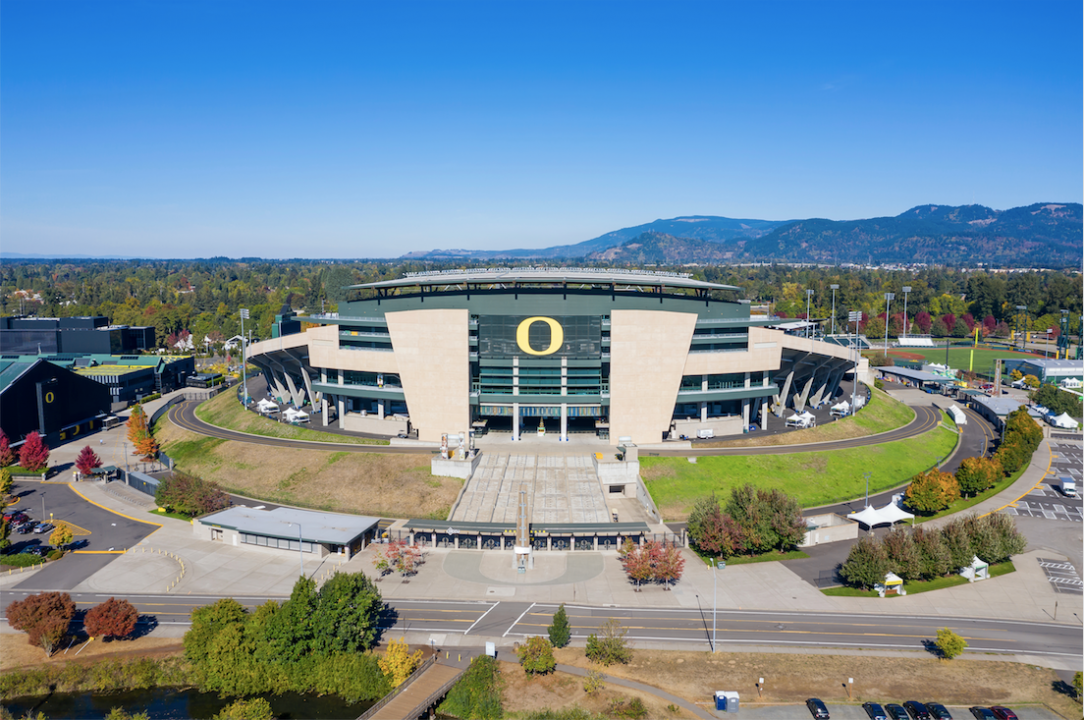
#46. Oregon
- % change in real GDP: 1.5%
- 2016 Q4 real GDP: $238.1 billion
- 2018 Q3 real GDP: $241.7 billion
Some of the 1.5% rise in GDP in the construction, real estate, rental, and leasing sectors can be, whose fiscal year 2017鈥�2018 showed an economic footprint of approximately $2.2 billion. It is expected that some of the $518 million in general obligation bonds鈥攊ncluding more university renovations and Department of Fish and Wildlife facility upgrades鈥攚ill raise GDP a little higher.
#45. Delaware
- % change in real GDP: 1.82%
- 2016 Q4 real GDP: $74.4 billion
- 2018 Q3 real GDP: $75.7 billion
The finance and insurance sector rose 1.68%, giving Delaware. The Trump Administration is making it easier for insurance brokers to sell short-term health plans in an effort to repeal the Affordable Care Act, and that may have spurred growth in the insurance sector. In November 2018, up five spots in its Best State for Business rankings, reporting that because of its business-friendly corporate law, more than 50% of U.S. publicly traded companies reside in the state.
#44. Mississippi
- % change in real GDP: 1.9%
- 2016 Q4 real GDP: $112.1 billion
- 2018 Q3 real GDP: $114.2 billion
Mississippi only, ranking highest in retail trade, yet the state remains economically depressed. USA Today of America's worst cities to live in, reporting it has double the comparable national unemployment rate and is losing jobs instead of gaining them like the rest of the country. Furthermore, the jobs gained earn an average household less than $21,000 annually and keep 49% of Mississippi residents living below the poverty line.
#43. Iowa
- % change in real GDP: 2%
- 2016 Q4 real GDP: $187.5 billion
- 2018 Q3 real GDP: $191.3 billion
Although the finance and insurance sector posted the highest percentage increase at 0.8, it is the retail trade category at only 0.17% that helped boost the economy, with more than $561 million in exports to China. That led to around 5,600 new jobs last year. In an effort to enhance the economy and slight 2% GDP rise, Hawkeye State business leaders are in hopes of presenting a welcoming and business-friendly state for newcomers to America.
#42. Rhode Island
- % change in real GDP: 2.07%
- 2016 Q4 real GDP: $60.6 billion
- 2018 Q3 real GDP: $61.9 billion
The wholesale trade and finance and insurance sectors dominated the slight rise in the 2.07% GDP, but the state's economy still suffered, managing to a steady 4% unemployment rate.
#41. North Dakota
- % change in real GDP: 2.33%
- 2016 Q4 real GDP: $54.7 billion
- 2018 Q3 real GDP: $56 billion
Growing 0.83% in two years, push the $1.3 billion rise in GDP. Unfortunately, areas like, job growth, or sales-tax income while the rest of the state is experiencing a rise in those sectors. The good news for North Dakota is the economic impact of the booming oil industry, which is adding billions to the state economy while creating long-term employment.
#40. Alaska
- % change in real GDP: 2.38%
- 2016 Q4 real GDP: $53.4 billion
- 2018 Q3 real GDP: $54.6 billion
An op-ed in Fairbanks' that 鈥淎laska's budget has been cut so much during the past five years that it is hurting our economy and endangering our residents.鈥� It presents an eight-point plan to help Alaska prosper, including raising Alaska's royalty and production tax, creating competitive oil taxes, no longer handing out tax credits for oil exploration, and reinstating the state income tax. One answer to Alaska's economic woes from the Trump Administration: to oil exploration.
#39. Louisiana
- % change in real GDP: 2.4%
- 2016 Q4 real GDP: $246.1 billion
- 2018 Q3 real GDP: $252 billion
Louisiana's depressed economy has made it hard to live in The Pelican State, according to USA Today. It to see a GDP decline in 2017, and 鈥渁mong all 50 states, Louisiana is the worst place to do business.鈥� Recently, a former Louisiana congressman to be an assistant secretary of commerce for economic development.
#38. Arkansas
- % change in real GDP: 2.44%
- 2016 Q4 real GDP: $125.8 billion
- 2018 Q3 real GDP: $128.9 billion
Although the educational sector accounted for only a 0.05% bump in Arkansas' overall $3.1 billion GDP increase, the surpassed $2 billion in 2018. Still, like many other states, on the U.S. Chamber of Commerce's projected effect of retaliatory tariffs by Canada, China, Mexico, and the EU.
#37. Ohio
- % change in real GDP: 2.83%
- 2016 Q4 real GDP: $661.1 billion
- 2018 Q3 real GDP: $679.8 billion
Wholesale trade,, along with finance and insurance, helped boost GDP most. However the increase in jobs based on a Bloomberg report on the Buckeye State. The agriculture, forestry, fishing, and hunting sector put a serious drag on the economy, showing a -0.18% loss during the middle of 2018.
#36. Wyoming
- % change in real GDP: 2.88%
- 2016 Q4 real GDP: $39.8 billion
- 2018 Q3 real GDP: $41 billion
In 2018, Gov. Mark Gordon signed a law allowing for the regulation, cultivation, and sale of hemp-derived CBD, which it is hoped will. Meanwhile, the mining, quarrying, and oil and gas extraction sector subtracted -0.67% from GDP in the second quarter of last year. Like Alaska and West Virginia, Wyoming is one of three states in which the mining industry has been a drag on GDP.
#35. Nebraska
- % change in real GDP: 2.98%
- 2016 Q4 real GDP: $121 billion
- 2018 Q3 real GDP: $124.6 billion
Nebraska's economy has been up and down but saw a strong finish in 2018, buoyed by a 0.55% increase in the finance and insurance sector. The agriculture, forestry, fishing, and hunting sectors may have tied with the retail trade sector at 0.38 % GDP growth, but a seriously declining farming industry Despite that, Omaha list of 125 Best Places to Live in the USA.
#34. South Dakota
- % change in real GDP: 3.09%
- 2016 Q4 real GDP: $50.7 billion
- 2018 Q3 real GDP: $52.2 billion
South Dakota's 0.67 % rise in the finance and insurance component of its GDP is consistent with its. The Atlantic reported in 2013 that the state held $2.5 billion in Citibank assets,. Despite a sluggish overall economy due to tightening labor markets and a tough environment for farming, construction and building investments.
#33. Kansas
- % change in real GDP: 3.3%
- 2016 Q4 real GDP: $160.1 billion
- 2018 Q3 real GDP: $165.4 billion
A failed tax cut experiment for the wealthy by Gov. Sam Brownback, has Kansas trying to keep its head above water. Because of tax cuts for the wealthy, middle-income Kansans have suffered transportation, health care, and agriculture, exacerbating economic inequality and leading to sluggish GDP growth.
#32. Minnesota
- % change in real GDP: 3.66%
- 2016 Q4 real GDP: $353.6 billion
- 2018 Q3 real GDP: $366.5 billion
Federal tax policy overhauls in trade, along with tariffs imposed by the Trump administration, are. There has been a -0.92% downturn in the agriculture, forestry, fishing, and hunting sectors, and farmers are fighting for survival. The farmers' plight has been so severe that the Minnesota House of Representatives has set aside funds for mental health counseling for the farm families facing hardship.
#31. Vermont
- % change in real GDP: 3.77%
- 2016 Q4 real GDP: $32.6 billion
- 2018 Q3 real GDP: $33.8 billion
Trade, finance and insurance, and the technical and scientific service sectors pushed overall GDP slightly forward in the second quarter of 2018, but Vermont's continues to keep the state from reaching its full potential. Forbes says that while 鈥渋ts five-year average unemployment rate of 3.6% was the fifth-lowest among states...Vermont suffers from business costs that are 12% above the national average.鈥�
#30. Alabama
- % change in real GDP: 3.86%
- 2016 Q4 real GDP: $215.1 billion
- 2018 Q3 real GDP: $223.4 billion
With a 3.86% rise in GDP and the, Alabama finds itself in the middle of the pack in terms of growth. Wholesale and retail trade remain the fastest-growing sectors in the state, while technical, automotive, and aerospace jobs. That helps to average out lagging labor force growth across the state. However, with its manufacturing costs at fifth-lowest in the nation, Alabama may see brighter days ahead.
#29. Montana
- % change in real GDP: 3.92%
- 2016 Q4 real GDP: $48.2 billion
- 2018 Q3 real GDP: $50.1 billion
A sluggish 2017, highlighted by two quarters of loss, landed Montana in the bottom 10 for the year, but the economy recovered strongly in 2018, with average quarterly growth in GDP of 4.1%. Agriculture continues to be one of the state's top economic drivers and employers, with more than.
#28. Virginia
- % change in real GDP: 3.95%
- 2016 Q4 real GDP: $518.8 billion
- 2018 Q3 real GDP: $539.4 billion
Virginia's politics, with some local leaders' Still, the more than $20 billion difference in the state's real GDP and the fact that foretell a more stable economy ahead.
#27. Indiana
- % change in real GDP: 3.96%
- 2016 Q4 real GDP: $359.1 billion
- 2018 Q3 real GDP: $373.3 billion
The Economist's, and the Hoosier State delivered with 3% growth in each quarter after a sluggish 2017. As in many other states, wholesale and retail trade, plus finance and insurance, spurred its economy. Indiana may have an economic output boost of 3.2% in the 2019 fiscal year driven by business investments recently stoked by tax cuts.
#26. New Jersey
- % change in real GDP: 4.01%
- 2016 Q4 real GDP: $609.9 billion
- 2018 Q3 real GDP: $634.3 billion
The Garden State as seen in the more than 4% rise in GDP, but 1 in 10 families remains below the poverty line. Nondurable goods manufacturing at 0.46%, wholesale trade at 0.7%, and professional, scientific, and technical service sectors at 0.41% helped boost the state economy the most, while losses in mining, utilities, and construction subtracted from overall growth in the second quarter. Meanwhile, in the gaming industry after a long slump.
#25. Pennsylvania
- % change in real GDP: 4.06%
- 2016 Q4 real GDP: $766.7 billion
- 2018 Q3 real GDP: $797.8 billion
In late 2018, Pennsylvania's wholesale and retail trade sectors pumped up GDP growth, which had been topsy-turvy since Trump took office. Growth in manufacturing helped the, while the economy got further support from such key industries as tourism, life sciences, and agribusiness.
#24. Texas
- % change in real GDP: 4.13%
- 2016 Q4 real GDP: $1.71 trillion
- 2018 Q3 real GDP: $1.78 trillion
Texas economists, as the Lone Star State's GDP rose to the tune of $70 billion. to support the surging mining and construction sectors, which, respectively, saw a 0.33% and 0.32% rise in the second quarter of 2018. Wholesale trade was the state's largest-growing sector, maintaining 0.79%.
#23. Wisconsin
- % change in real GDP: 4.21%
- 2016 Q4 real GDP: $325.4 billion
- 2018 Q3 real GDP: $339.1 billion
Reports suggest that while almost , Wisconsin still struggles with poverty-level wages, despite a 4.21% rise in GDP. to the state's economy. In turn,, further enhancing the state's economic development.
#22. North Carolina
- % change in real GDP: 4.4%
- 2016 Q4 real GDP: $545.8 billion
- 2018 Q3 real GDP: $569.8 billion
North Carolina has been over the past decade, and it's 1.8% growth in the third quarter of 2018 was 47th among the states. are also not being accepted by those that claim new businesses coming into the state are only offering low-paying service jobs. One thing that is for sure is that the billions.
#21. Maine
- % change in real GDP: 4.55%
- 2016 Q4 real GDP: $62 billion
- 2018 Q3 real GDP: $64.8 billion
The Pine Tree State's economy saw, growing just 1.9% for the year, well below the national average. After a sluggish start to 2018, during the second quarter, with 3.4% growth, thanks to the real estate market. Labor shortages have long plagued Maine, but a higher minimum wage and some population growth give
#20. Hawaii
- % change in real GDP: 4.57%
- 2016 Q4 real GDP: $87.9 billion
- 2018 Q3 real GDP: $92 billion
The real estate sector is hot in Hawaii, accounting for 0.54% of growth in the middle half of 2018. Add in 0.51% in government enterprise, 0.31% in finance and insurance, and 0.44% in the retail trade sector growth, and it is clear those categories carry the most economic weight in the state. However, don't let the numbers fool you: Hawaii's financial future forecast. If true, any growth the region sees.
#19. Illinois
- % change in real GDP: 4.83%
- 2016 Q4 real GDP: $827.7 billion
- 2018 Q3 real GDP: $867.7 billion
Illinois boasts a $40 billion increase in GDP growth, even with. Though the Prairie State is surviving stronger than many others, it and could see a slowdown in the next two years. The state saw two negative quarters over the past two years but recovered late in 2018, despite a -0.33% fall in the agriculture, forestry, fishing, and hunting sector.
#18. Michigan
- % change in real GDP: 4.85%
- 2016 Q4 real GDP: $513.1 billion
- 2018 Q3 real GDP: $538 billion
Once known for its booming automotive industry, While GDP is now up鈥攚ith the durable goods manufacturing sector being the strongest component at 0.48% in 2018鈥攈ome ownership and household income is down. The labor force participation rate has fallen more than 7% since 2001.
#17. Maryland
- % change in real GDP: 5.12%
- 2016 Q4 real GDP: $398.2 billion
- 2018 Q3 real GDP: $418.6 billion
The Trump administration's national defense spending in the last two years In 2012 the state received 20% of its economy through Maryland's military sector; in 2017 the defense industry fed $60 billion into the state,
#16. Oklahoma
- % change in real GDP: 5.23%
- 2016 Q4 real GDP: $192.3 billion
- 2018 Q3 real GDP: $202.3 billion
Oklahoma has seen its GDP grow by $10 billion under Trump. The economy and hopes to grow a gaming industry that currently account annually. The wholesale trade and retail trade sectors collectively boosted GDP by over 1% while the to the economy as the state's largest industry in 2018.
#15. New Hampshire
- % change in real GDP: 5.73%
- 2016 Q4 real GDP: $82 billion
- 2018 Q3 real GDP: $86.7 billion
based on smart manufacturing, and that is borne out by the 0.69% contribution to GDP of the wholesale trade sector and the 0.38% rise retail trade posted late in 2018. A roller coaster 2017 finished with a -3.5% dip, but a steady 2018 had 24/7 Wall Street putting New Hampshire
#14. South Carolina
- % change in real GDP: 5.74%
- 2016 Q4 real GDP: $220.2 billion
- 2018 Q3 real GDP: $232.8 billion
Though South Carolina experienced 5.74% growth in GDP, Democratic presidential candidate in taxes. Taxes haven't affected the government enterprise sector, which claimed the highest percentage of growth, at 0.46%, in 2018. A to spur the education and jobs market is currently up for debate.
#13. Florida
- % change in real GDP: 6.3%
- 2016 Q4 real GDP: $981.1 billion
- 2018 Q3 real GDP: $1.04 trillion
Florida's economy surged in 2018 thanks to a healthy real estate market and growth in wholesale trade, capping five straight quarter with over 3% overall growth. Florida will continue to see gains in the near future, primarily through international trade, tourism, and. How much the economy will suffer because of a ban on offshore drilling has yet to be determined,
#12. District of Columbia
- % change in real GDP: 6.58%
- 2016 Q4 real GDP: $133.2 billion
- 2018 Q3 real GDP: $142 billion
Policies from helped keep GDP growing in 2017, including a 7.5% bump in the third quarter. The District's economy slowed in 2018, and the, in addition to the government shutdown, have left the immediate future somewhat murky.
#11. Tennessee
- % change in real GDP: 6.75%
- 2016 Q4 real GDP: $346 billion
- 2018 Q3 real GDP: $369.3 billion
A friendly business climate and low unemployment have helped the Volunteer State's economy The state saw positive growth in nearly every sector through the middle half of 2018, led by a 0.52% rise in wholesale trade. among cities in adding jobs, and forecasts predict
#10. Utah
- % change in real GDP: 7.57%
- 2016 Q4 real GDP: $165.8 billion
- 2018 Q3 real GDP: $178.3 billion
Finance and insurance was the leading contributor to growth in Utah, and helped push it into the top 10 in GDP growth. The Beehive State among U.S. News & World Report's Best States. However, like many other states, Utah could get hurt by. The wholesale trade sector (0.68%) and retail trade sector (0.46%) were the biggest economic drivers late in 2018, so trade battles.
#9. Georgia
- % change in real GDP: 7.71%
- 2016 Q4 real GDP: $552 billion
- 2018 Q3 real GDP: $594.5 billion
Things are looking peachier for Georgia: The information sector saw the highest GDP increase at 0.65% in 2018. Some of the $42.5 billion brought in can be directly. While growth slowed toward the end of 2018, business expansion and suggests a bright future.
#8. Massachusetts
- % change in real GDP: 7.76%
- 2016 Q4 real GDP: $535.1 billion
- 2018 Q3 real GDP: $576.6 billion
Massachusetts' professional, scientific, and technical service sectors contributed the most to GDP growth in 2018 at 0.63%, with the information sector at 0.52%. That had an impact on the workforce, which of any other state. The population is getting so large that by 2025, which is only going to help the construction component of GDP rise higher.
#7. Colorado
- % change in real GDP: 7.88%
- 2016 Q4 real GDP: $342.2 billion
- 2018 Q3 real GDP: $369.2 billion
Colorado comes in at lucky #7 for GDP growth of almost 8%. was legalized in 2014, and Colorado is often a model for of marijuana. Aside from cannabis, other industries鈥攊ncluding energy, tourism, and real estate鈥攁re assisting in the GDP rise that has brought in $27 billion since Trump took office.
#6. California
- % change in real GDP: 7.97%
- 2016 Q4 real GDP: $2.75 trillion
- 2018 Q3 real GDP: $2.97 trillion
With a GDP in the trillions, California ranks as. It is home not just to the world's entertainment capital, but to Silicon Valley, the engine of technological innovation A 0.43% bump in real estate shows how the 鈥淩epublic of California鈥� exhibits few
#5. Nevada
- % change in real GDP: 8.62%
- 2016 Q4 real GDP: $156.8 billion
- 2018 Q3 real GDP: $170.3 billion
When what happens in Vegas is an 8.62% rise in the GDP, then Nevada's good news is no longer private. Tourists continue to feed the economy, mostly visiting the Vegas Strip, and promises even more prosperity. With the highest GDP percentage for all sectors, at 0.57%, construction was the leading industry in the state.
#4. Idaho
- % change in real GDP: 8.67%
- 2016 Q4 real GDP: $70.9 billion
- 2018 Q3 real GDP: $77.1 billion
Among the top five, the Gem State seems to be shining as it boasts billions in added GDP. Retail trade growth at 0.6% in 2018 helped spur a $6.2 billion uptick in GDP; however, NPR pointed out in 2017 that state based on a Census Bureau survey. Two years later, the state has the fourth-highest GDP in the country.
#3. Arizona
- % change in real GDP: 9.25%
- 2016 Q4 real GDP: $320.2 billion
- 2018 Q3 real GDP: $349.9 billion
Information services at 0.47% was the leading component of GDP growth in Arizona in 2018鈥攖he third fastest-growing state. Emblematic of its success, three of the, suggesting that the hot state has plenty of cold hard cash.
#2. New York
- % change in real GDP: 9.44%
- 2016 Q4 real GDP: $1.55 trillion
- 2018 Q3 real GDP: $1.69 trillion
New York stands second in state economy wealth and health, thanks mostly to a 7% rise in GDP during the first quarter of 2017. The economy hasn't eclipsed 3.1% in any quarter since. The finance and insurance sector showed the largest rise to finish 2018 by contributing nearly a full percentage point. Ironically though, the New York Post recently reported that. Until that happens, the Big Apple remains the state's most fruitful economy during the Trump administration.
#1. Washington
- % change in real GDP: 15.17%
- 2016 Q4 real GDP: $493.7 billion
- 2018 Q3 real GDP: $568.6 billion
Washington's economy tops the GDP charts thus far into the Trump Administration with growth of over 15%鈥攖he only state to break 10%. The economy has posted over 5% surges in four of the last six quarters. The information sector, led by the presence of Microsoft, posted nearly a 1.5% gain over the middle of 2018. and one of the promise to keep the Evergreen State growing strong.