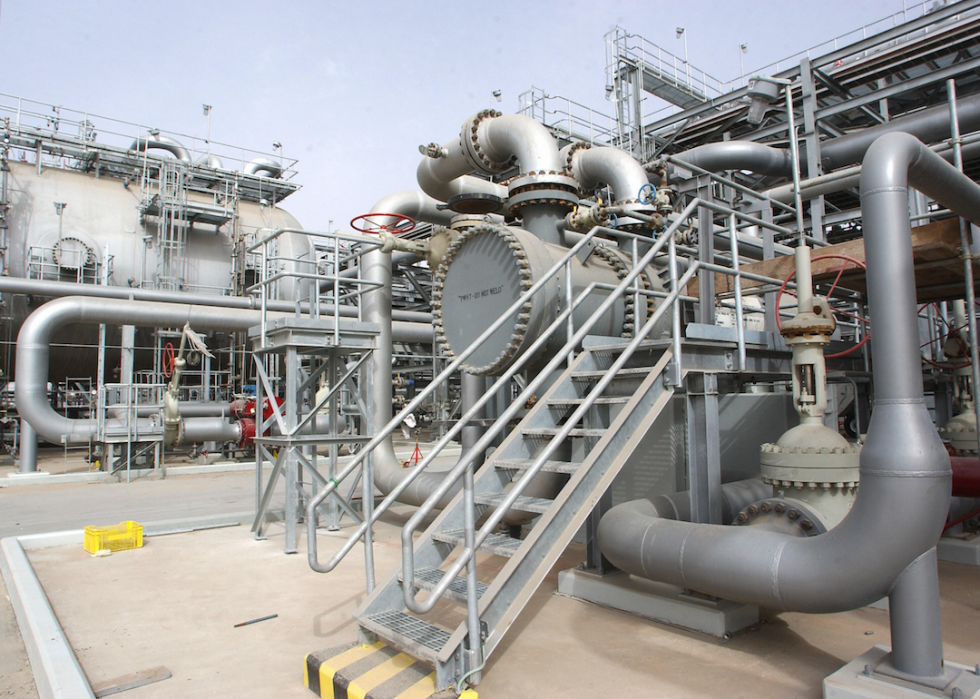
Largest oil fields in the world
Growing climate concerns and commitments to clean energy have done little to curb , which in the third quarter of 2019 increased by 1.1 million barrels per day. Experts expect , with in the U.S. going toward transportation alone.
To find out where the most oil is being produced globally, 麻豆原创 used a variety of sources to create a gallery of the 20 largest oil fields in the world, ranked by oil reserves both past and future. Many of the supergiant fields in our list have found renewed life thanks to technological advances and upgrades that allow for increased extraction. One example is a that once used flooding to push oil closer to the surface鈥攁 practice that required 95 barrels of water for every five barrels of oil. Today, that field uses hydrodynamic approaches including hydraulic fracturing and horizontal drilling: maneuvers that have slowed the production decline to just 1%.
The United States is the , posting a pair of fields in the top 20 that help contribute to the country's accounting for
Although , sanctions placed on the country by the United States have forced by more than 80%. The that would be the country's second-largest.
Not surprisingly, ExxonMobil, BP, and Chevron are spread throughout a number of the fields, while the largest field is owned and operated by the world's most profitable company, which claimed profits of $111 billion in 2018.
Keep reading to see the 20 largest oil fields in the world, from the deserts of the Middle East to the frozen tundras of Alaska and Siberia.
#20. West Qurna Field, Iraq (tie)
- Oil reserves (past and future):
The West Qurna 2 Field in southern Iraq is projected to to 480,000 barrels per day under the ownership of Russian energy company Lukoil. ExxonMobil, which purchased the rights to develop Phase I of the field in 2009, ExxonMobil withdrew its employees from the field for two weeks in 2019 after the U.S. removed all non-essential personnel from its embassy in Baghdad, citing threats from Iran.
#20. Sakhalin Islands, Russia (tie)
- Oil reserves (past and future):
Exxon Neftegas is the primary owner of Sakhalin I, which comprises three oil platforms in the Okhotsk Sea, while Russian-based Gazprom holds a majority in Sakhalin II after the original agreement was denied by the Russian government since no local partner was involved. The Sakhalin I project, which got under way in
#18. Rumaila Field, Iraq (tie)
- Oil reserves (past and future):
The Rumaila Field in Iraq has been In production since 1972, with ownership shifting hands to a conglomerate called the Rumaila Operating Organization, consisting of BP, PetroChina, and the South Iraq Oil Company. In April 2019, the Rumaila Field thanks to upgraded facilities and increased water injections. Rumaila accounts for nearly and is one of the largest fields by area, encompassing nearly 1,000 square miles.
#18. Romashkino Field, Russia (tie)
- Oil reserves (past and future):
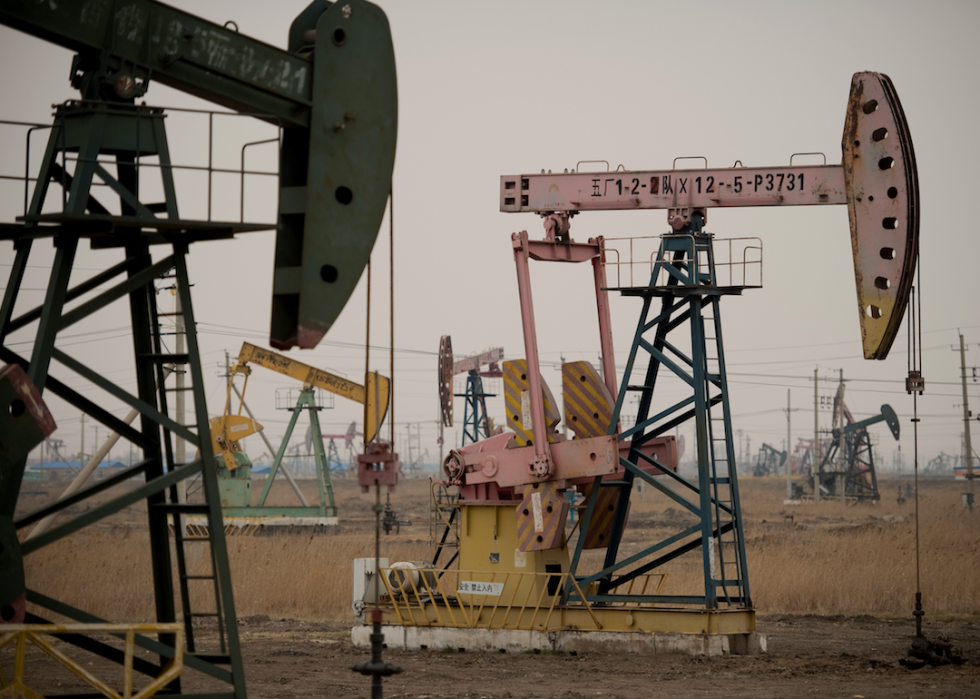
When it was discovered in 1948, the Romashkino Field represented the in the world at 17 billion barrels. Nearly 1,600 square miles, the Russia鈥檚 sixth-largest oil company, since its opening. In April 2019, the Romashkino Field鈥檚 after high levels of contamination were found in the crude, stopping a flow of nearly 1.5 million barrels per day to Western Europe.
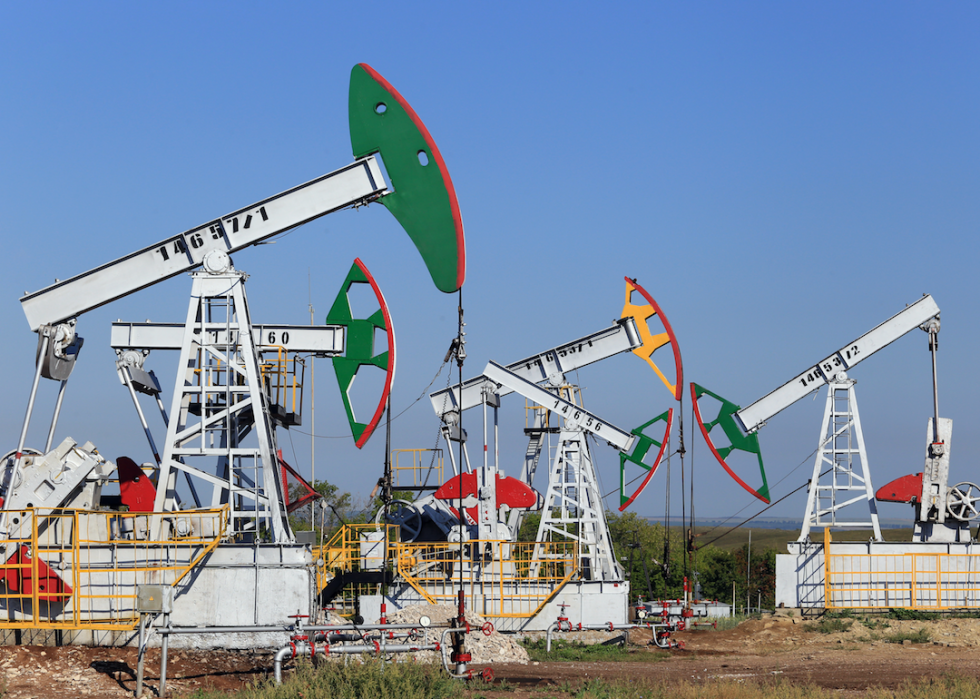
[Pictured: Oil pumps in Tatarstan, Russia.]
#16. Wolfcamp Shale, United States
- Oil reserves (past and future):
The United States Geological Survey deemed the Wolfcamp Shale site in West Texas the in the country at 20 billion barrels. Combined with the overlying Bone Spring fields in the Permian Basin, an estimated which would double the country's reserves. Wolfcamp, operated by the Bureau of Land Management, nearly tripled the
#15. Marun Field, Iran
- Oil reserves (past and future):
滨谤补苍鈥檚 the Marun Field has been owned and operated by the state-owned National Iranian Oil Company since its discovery in 1963. The sanctions against Iran sent oil exports down to just in April 2018. At its peak in the 1970s, Marun was producing more than one million barrels per day.
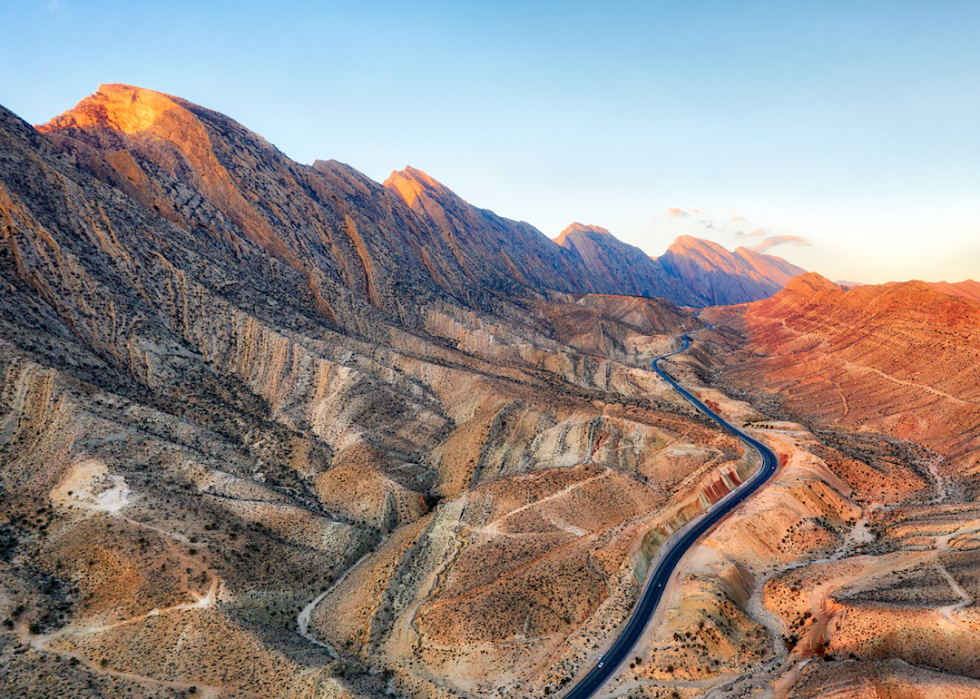
[Pictured: Road through the Zagros Mountains in Iran near where Marun Field is located.]
#14. Samotlor Field, Russia (tie)
- Oil reserves (past and future):
Samotlor is Russia鈥檚 at its peak in the 1980s. Rosneft, Russia鈥檚 largest oil company, owns and operates the Siberia-based field, which saw profitability fall as it took nearly New technology has changed that, as the field today utilizes hydrodynamic approaches including hydraulic fracturing and horizontal drilling. These maneuvers that have slowed the production decline to just 1%.
#14. Prudhoe Bay, United States (tie)
- Oil reserves (past and future):
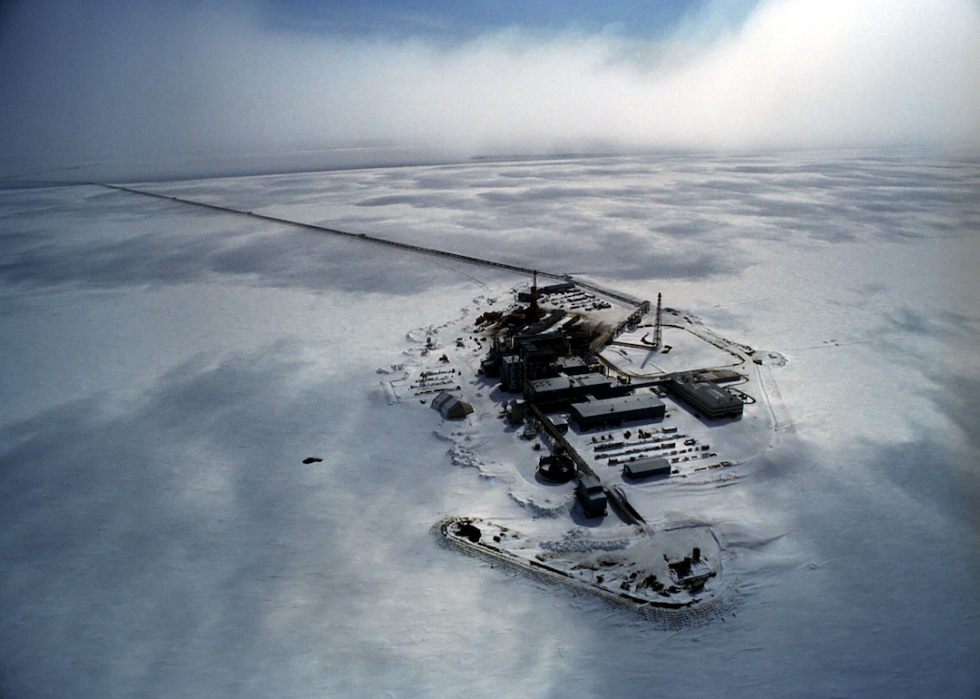
In service for over 40 years, is the biggest in the U.S., with more than 800 active wells. ConocoPhillips owns the largest stake in Prudhoe at 36%, while announced in August 2019 it was after 40 years. In June 2019, Alaska鈥檚
#12. Tengiz Field, Kazakhstan
- Oil reserves (past and future):
in the field, which is undergoing a massive construction effort that could raise the daily output of the facility to nearly a million barrels by 2022. That deadline may have taken a hit in June 2019 when a left 40 people injured. The cost of the expansion was estimated at $45.2 billion, though to lower costs in November.
#11. Kashagan Field, Kazakhstan
- Oil reserves (past and future):
The shallow water, offshore Kashagan Offshore Oil Field represents the , with KazMunaiGas, Shell, Total, Eni, ExxonMobil, CPNC, Inpex combining for the $55 billion project. In the early part of 2019, Kashagan reached its target goal of 380,000 barrels per day for the first time since beginning production in 2016. Kashagan Phase I actually began production in 2013, but forced a three-year delay.
#10. Aghajari Field, Iran
- Oil reserves (past and future):
Discovered in 1938, is one of the oldest fields on this list and is owned by the National Iranian Oil Company. Sanctions have limited 滨谤补苍鈥檚 trading partners for oil down to China and Syria, with in 2019. That production is down from 440,000 barrels in 2017 when the was one of two bombed by Arab separatists.
[Pictured: An oil facility in the Khark Island, on the shore of the Gulf.]
#9. Bolivar Coastal Field, Venezuela
- Oil reserves (past and future):
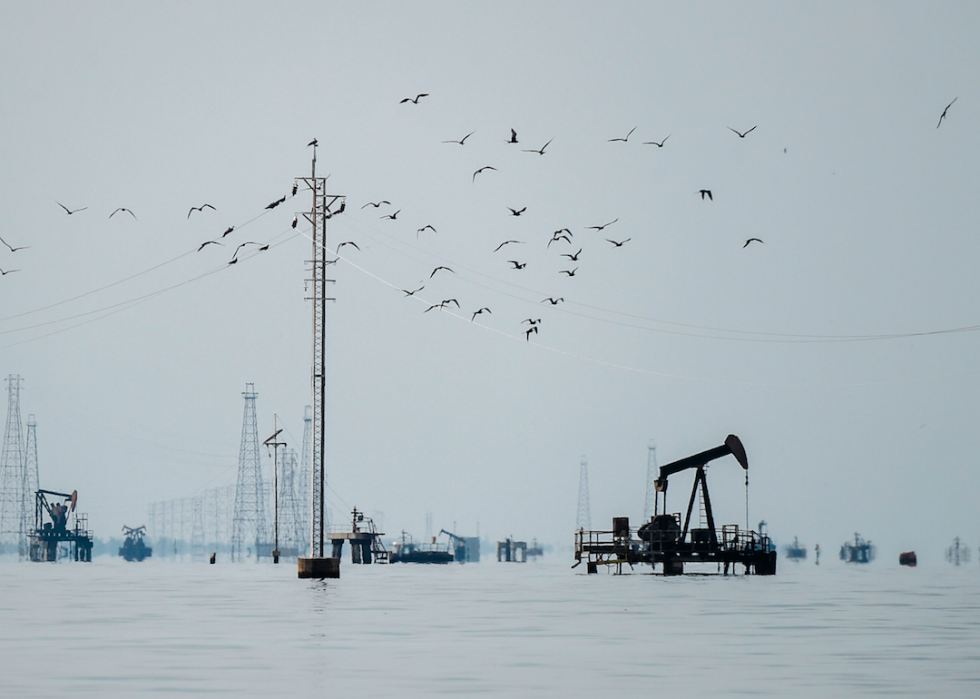
The Bolivar Coastal Field is Venezuela鈥檚 largest, and since its discovery in 1917. Of the edge of Lake Maracaibo, the facility produced nearly but have reduced the country鈥檚 oil exports to its lowest level in 75 years. Venezuela, which has the largest oil reserves in the world, is expected to see further drops in production during 2020.
#8. Cantarell Field, Mexico
- Oil reserves (past and future):
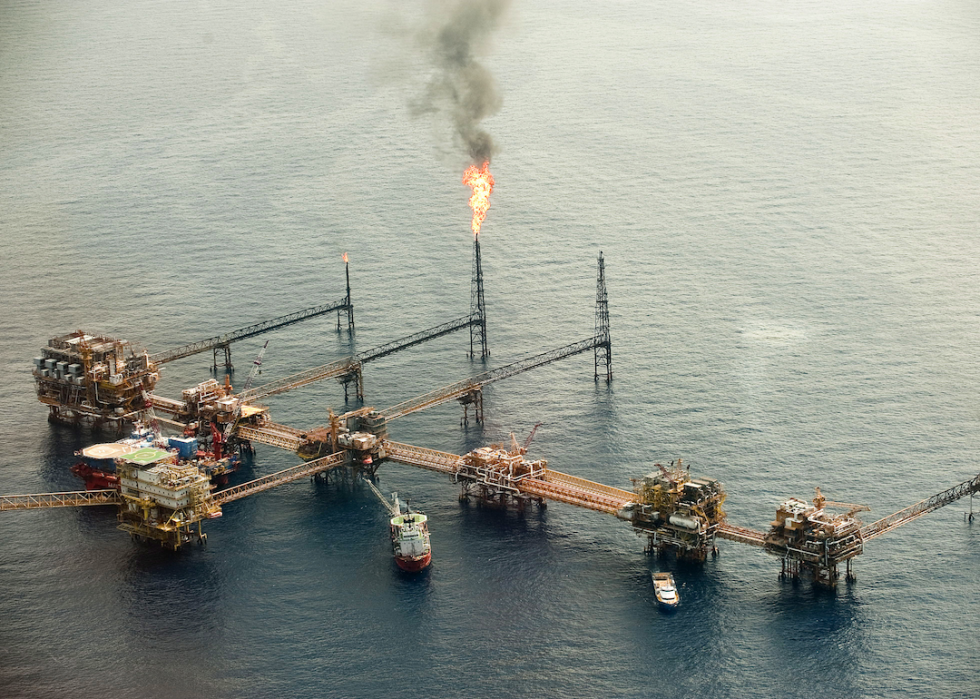
The Cantarell Field formed as the result of a meteor strike and was Composed of four fields, production at Mexico鈥檚 largest oil reserve has fallen steadily over the past 20 years, though nitrogen injections have helped increase outputs. Owned and operated by state-run Pemex, Cantarell was surpassed in 2009 as the country鈥檚 biggest oil producer.
#7. Safaniya Oil Field, Kuwait / Saudi Arabia
- Oil reserves (past and future):
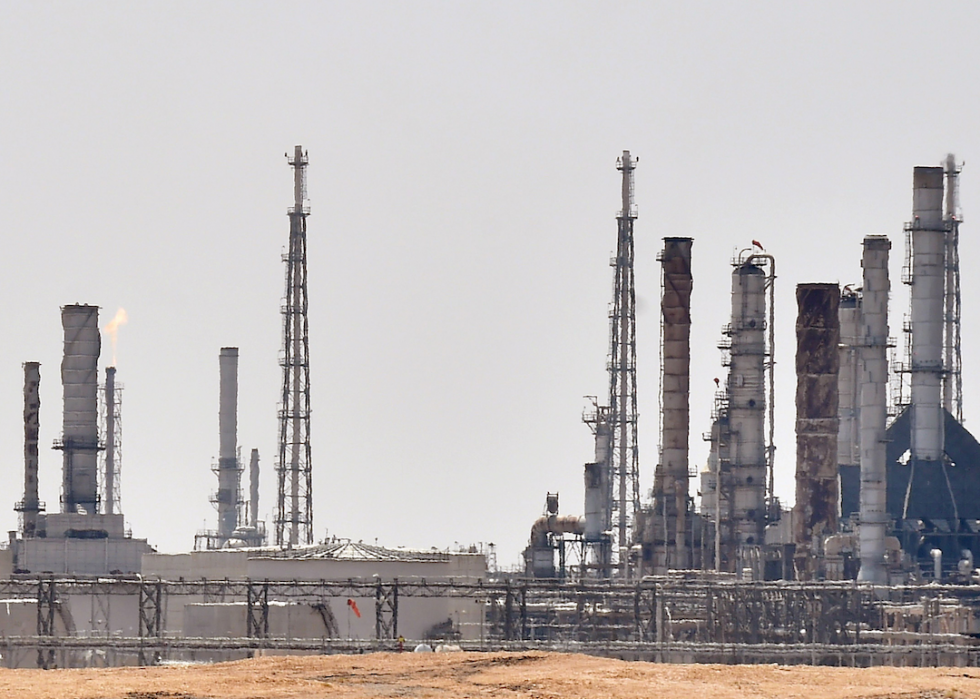
Owned and operated in the Persian Gulf by state-run Saudi Aramco, Safaniya is the The platforms and servicing facilities are to help Safaniya sustain its output capacity, which is north of 1 million barrels per day. For political and environmental reasons, . The two countries agreed to reopen the two fields, and their 500,000 barrels per day capacity, in December 2019, with Chevron gaining the rights to half the production from the fields.
[Pictured: An Aramco oil facility near al-Khurj.]
#6. Daqing Field, China
- Oil reserves (past and future):
went into full-scale production in 1963 after its discovery in 1959, and today accounts for nearly Since 2008, oil output in the field has fallen by nearly 20% while , the field's operator, was rocked by scandal in 2013 and Despite falling oil outputs, Daqing Field saw an increase in natural gas output in 2018.
#5. Upper Zakum Oil Field, UAE
- Oil reserves (past and future):
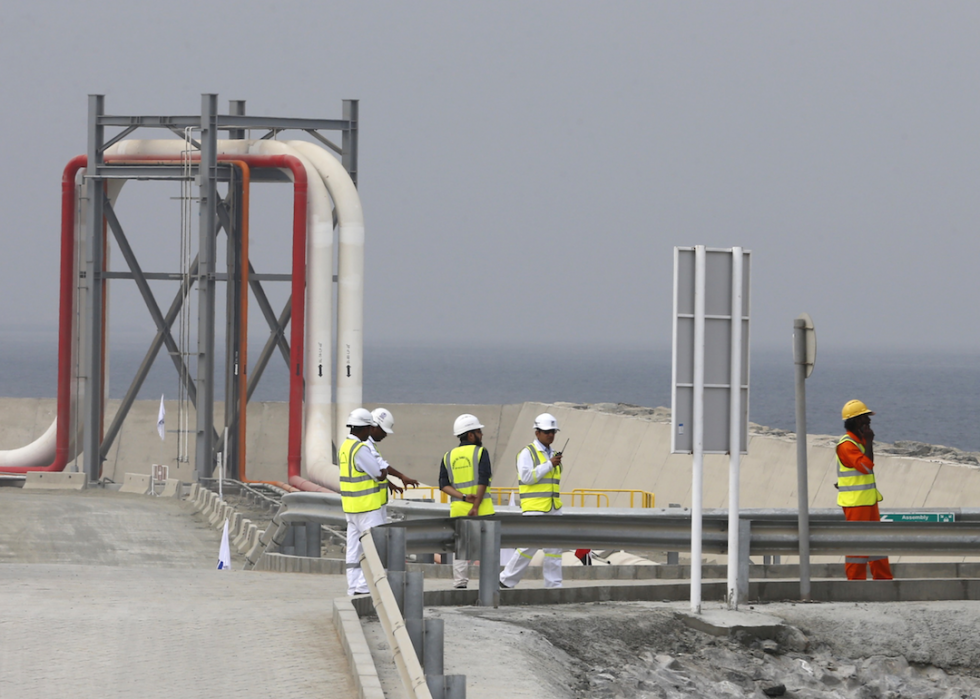
operates the world鈥檚 second-largest offshore oil field, with ownership held by ADNOC, ExxonMobil, and the Japan Oil Development Corporation. A $10-billion construction project currently underway aims to raise production of the facility to one million barrels per day by 2024. The oil field comprises four man-made islands, the largest measuring at about 135 football fields.
[Pictured: A pipeline at the oil terminal of Fujairah in the United Arab Emirates.]
#4. Gachsaran Field, Iran
- Oil reserves (past and future):
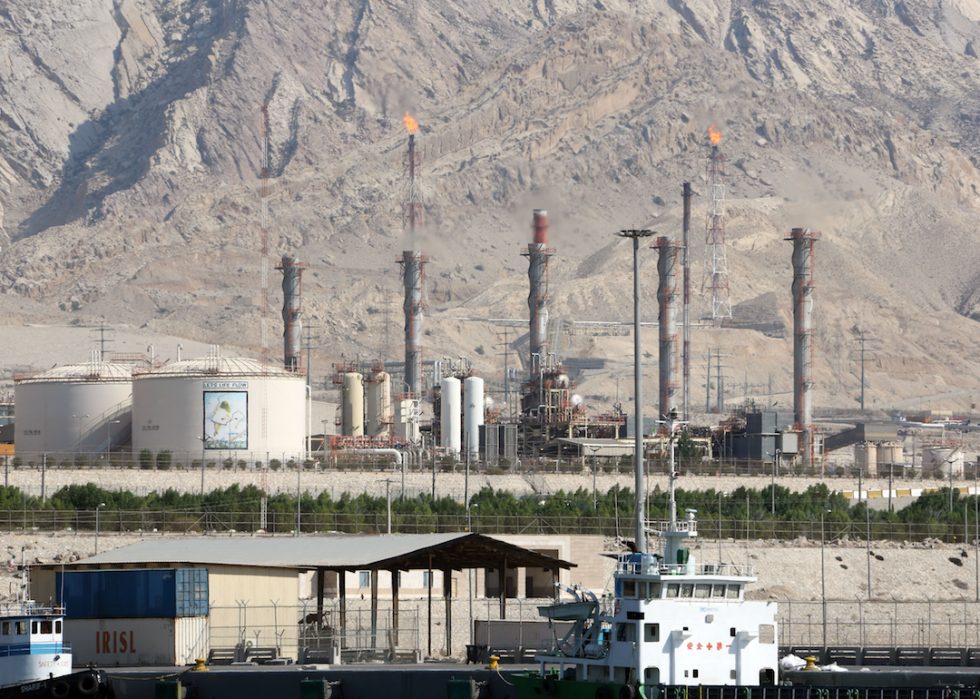
The , with reserves at 52.9 billion barrels and production at 560,000 per day. Iran increased productivity and reduced environmental impact at , which has been in operation since 1930, by using devices to eliminate oil burnoff and potential spills. The Iranian government also announced in August 2019 that the fields in southern Iran, including Gachsaran, would
[Pictured: South Pars gas field facilities in the southern Iranian port town of Assaluyeh.]
#3. Ahvaz Field, Iran
- Oil reserves (past and future):
Ahvaz has been in operation since 1954 and, like other fields in the country, is owned by the National Iranian Oil Company. The facility, which was producing 750,000 barrels per day in 2016, is amid U.S. sanctions against Iran. Ahvaz remains the country鈥檚 largest oil field, even considering 滨谤补苍鈥檚
[Pictured: South Pars gas field facilities in the southern Iranian port town of Assaluyeh.]
#2. Burgan Field, Kuwait
- Oil reserves (past and future):
The world鈥檚 largest sandstone oil field, in 2018, down slightly from 2017. Owned and operated by the During the first Gulf War, retreating Iraqi soldiers set that burned for seven months.
#1. Ghawar Field, Saudi Arabia
- Oil reserves (past and future):
The in both reserves and daily production Ghawar spans more than 2,000 square miles, an area State-run Saudi Aramco owns and operates the field, and was revealed as the most , with $111 billion in profits. Down from its peak of five million barrels per day, Ghawar still rolls out nearly four million per day, accounting for nearly