Malls are closing across the country. These states are keeping them alive.
This story originally appeared on Findbusinesses4sale and was produced and distributed in partnership with 麻豆原创 Studio.
Malls are closing across the country. These states are keeping them alive.
Malls, once hubs for big chains and small retailers alike, are struggling. That is shifting the way entrepreneurs launch and run businesses.
According to a 2023 Jones Lang LaSalle report, mall vacancies are , exacerbated by COVID-19 pandemic lockdowns, the proliferation of online shopping, and closures and bankruptcies among popular mall retailers and major department stores that have historically anchored the destinations.
As a result, malls are closing, and their popularity is waning. The number of malls in the U.S. to about 1,150 by late 2022. And this holiday season, just 2 in 5 shoppers (41%) plan to go to stores inside malls, according to JLL's report. That compares to at least 3 in 4 shoppers (77%) expecting to buy online with home delivery and nearly half (48%) planning to shop at physical stores that aren't inside malls.
While malls struggle to stay relevant, developers continue to build retail space鈥攃onsiderably open-air centers of neighborhoods and communities. In those developments, traditional mall tenants and new retailers alike are opening shops. Moreover, a widely cited Coresight Research report shows , especially those innovated with dining, recreational experiences, and more.
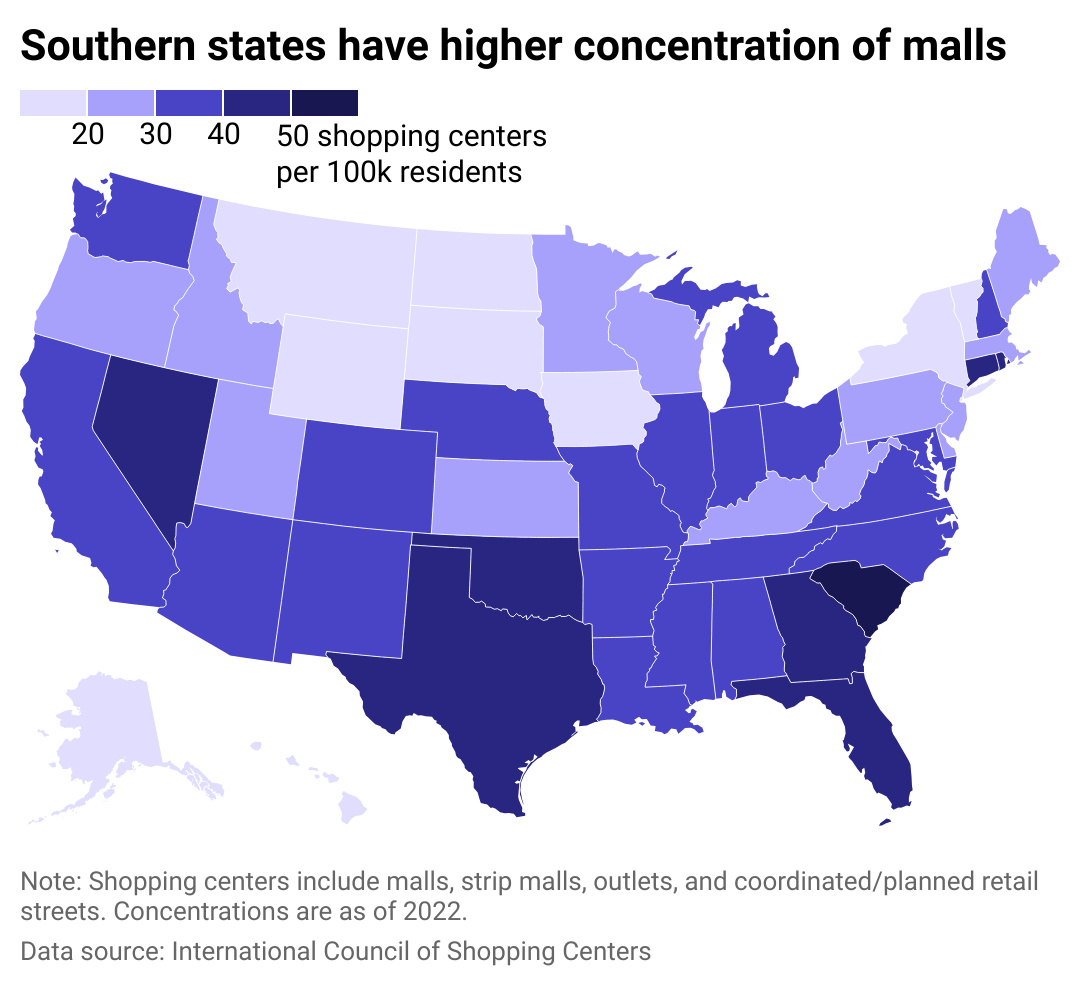
Between malls and other shopping centers, Americans continue to flock to brick-and-mortar establishments. This is true in some locales more than others. To dig deeper into these trends, used data to identify states with the highest concentration of marketplaces, measured as the number per 100,000 residents in 2022. For its data analysis, the ICSC defines marketplaces as malls, strip malls, outlets, and coordinated or planned retail streets.
Marketplaces prevail in the South
Shopping centers are most concentrated among southern U.S. states鈥攁nd nowhere more than South Carolina. Marketplaces are prevalent nationwide, particularly in Charleston, Columbia, Greenville, Hilton Head Island, and Myrtle Beach. Notable Columbia-area shopping centers are adapting to changes in how their communities shop and live鈥攕hifting spaces to host gyms, charter schools, and even churches鈥攖o become more embedded in average people's days.
Florida is another U.S. leader in shopping centers. The state's population has grown fast, spurring a need for more housing鈥攕ome of which has been . These live-and-shop plazas bake a customer base directly into their malls and are becoming increasingly trendy in South Florida. Fine dining is another staple of thriving malls, and some have built restaurants headed by celebrity chefs as modern anchors for their locations. Major grocer Publix has also and inserted itself as the anchor store, making these malls a destination for everyday necessities.
Trends within these states are becoming more common in successful malls across the country, revitalizing indoor and outdoor shopping centers with more than just a fresh coat of paint.
Story editing by Jeff Inglis. Copy editing by Paris Close. Photo selection by Ania Antecka.