Quirky projects funded by taxpayer dollars in every state
Quirky projects funded by taxpayer dollars in every state
Benjamin Franklin said there are only two things certain in life: death and taxes. The latter helps to keep cities, states, and the country going鈥攂ut that doesn't mean every dollar is going toward equal causes.
It's public knowledge that most taxation gets allocated for public transportation, schools, parks, defense, public works, and the like. But have you ever wondered where the rest of your tax money goes?
There are certainly some lesser-known, highly unusual, and even on occasion frivolous projects being funded every day by taxpayer money. Through 麻豆原创's own independent research, the team found examples of tax dollars going toward everything from fancy bus stops and glow-in-the-dark billboards to teaching animals to run and potato chip PR鈥攁s well as interactive art and innovative outreach.
Check out this list to see an example of quirky projects being funded by your state鈥攁nd then see what all the other states are up to.
ALSO:
Alabama: Right to privacy
The Department of Justice spent $500,000 to install powerful, . The cameras were able to zoom in on computer screens and text messages, as well as overhear conversations between attorneys and their clients. Eventually, they were deemed too powerful to use because they violated people's constitutional rights to privacy.
Alaska: The airport to nowhere
Akutan, Alaska, spent that are essentially inaccessible and sit unused. The airport cost $75 million and the harbor $29 million. There are only five boats in the entire town鈥攁nd the harbor has connecting roads to the town. As for the airport, there are no airlines running so it is also unused.
Arizona: Smartphone parking app
Arizona State University (ASU) to develop a parking management system powered entirely by smartphone apps. There are other privately owned parking apps in the area, but the ASU campus was the pilot program for this app. The app and gives them a better parking experience.
Arkansas: Unbuilt veteran housing
A $60,000 General Improvement Fund grant was that promised to use the money to build a three-quarter transitional home that would provide shelter for homeless veterans. Yet upon a 2017 progress review, no such structure had been implemented for the project by Creative Strategies Community Development Corp.鈥攁lthough the organization had bought a small home that it rents out.
California: Treadmill-running mountain lions
The about mountain lions' ability to run on a treadmill. They spent $856,000 in federal grant money to see whether they could teach the wild animals to run on the machine. In fairness, the mountain lions did learn鈥攕o maybe it wasn't a total waste.
Colorado: Banning the tanning
The Department of to persuade mothers to as well as drum up support for a legal ban of the beds. The campaign was blasted across social media platforms including Instagram, YouTube, and Facebook.
Connecticut: A $10 million soccer stadium
The governor of Connecticut to construct a new soccer stadium in the city of Hartford. The state has approved other frivolous spending, but the soccer stadium is by far the most expensive.
Delaware: Vacant housing
Wilmington, Del., in 2017 to clean up and address abandoned and foreclosed properties across the city and state. The money is additionally being used to create new housing projects to help families and individuals in need of housing assistance.
Florida: Turtle safety
Turtles are a major part of the Florida landscape and are beloved by many Floridians. People love the reptiles so much, in fact, that Florida lawmakers so they can cross major highways safely.
Georgia: Virtual weight-loss program
Virtually Better Inc. in 2012 was to develop a virtual weight loss system that worked not by getting people to actually lose the weight, but by helping them form habits that could lead to weight loss. The second phase of this project garnered an additional $1,264,285.
Hawaii: Chocolate festival
In 2011, Hawaii received to fund the Second Annual Hawaii Chocolate Festival. Tickets for the festival were $25 each at the door and attendees received 10 samples of chocolate during the five-hour event.
Idaho: Gun show
While the right to bear arms is covered by the second amendment, the government is not supposed to fund the industry. That wasn't clear to the Idaho Firearms and Accessories Manufacturers Association to study the economics of the state's gun industry.
Illinois: Failed Westin in Lombard
An Illinois suburb has been funding a , using taxpayer money. Last year, the hotel filed for bankruptcy and the funded $4.3 million was lost. At the time of filing, . DuPage County, home to Lombard, has the second-highest property taxes in the state of Illinois.
Indiana: Lucas Oil Stadium, home of the Colts
NFL stadiums cost taxpayers a lot of money鈥攁bout $3 billion, to be exact. However, the residents of Indiana shell out the big bucks for the Indianapolis Colts. According to a 2017 report, goes into funding the Lucas Oil Stadium.
Iowa: Pizza grant
A new pizzeria in downtown Cedar Falls, Iowa, was to carry out multiple green design elements, including a vertical garden (to provide herbs for the kitchen) and a water permeable patio to reduce the burden on the city's storm sewers. The funds, awarded by the Iowa Department of Economic Development Main Street Iowa board, came from the Department of Housing and Urban Development.
Kansas: No-bid contracts
The Kansas government has been in recent years. The number of no-bid contracts since 2013 has grown by more than 4,500, which costs about $160 million within the same time frame. Now, the number has surpassed 7,000 with a cost of $428 million.
Kentucky: Cocaine and quails
To find out if , the National Institute of Health awarded $175,000 to the University of Kentucky to perform a study... using Japanese quails. All told, the research cost more than $340,000 and lasted more than two years.
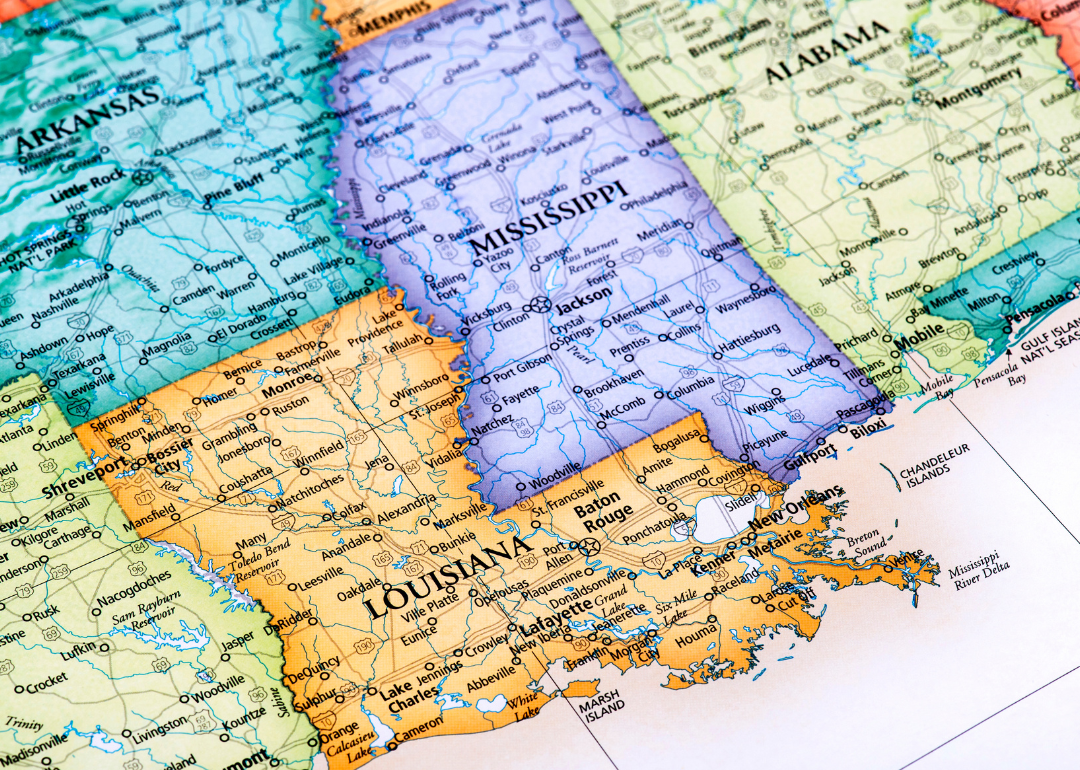
Louisiana: Mardi Gras float
The United States Coast Guard spent more than $24,000 on a float in the NOLA Mardi Gras parade in 2011. The float was primarily used as a recruitment tool to help boost sign-ups and educate people on the importance of the Coast Guard.
Maine: New Apple products for children
It is the age of technology, and one school district in Maine is taking that very seriously. Auburn in 2011 found $228,000 to buy every kindergarten student an iPad鈥攆unding which .
Maryland: LGBT community and tobacco
The Department of Health and Human Services in 2016 to the Pacific Institute for Research and Evaluation in order to . The study specifically looked at undesirable consequences of in the LGBT community.
Massachusetts: Solar panels at Manchester-Boston Airport
A federal grant of $3.5 million was used to install solar panels on top of the parking garages at the Manchester-Boston Airport, but it ended up being a major fail on their part. A quarter of the panels had to be removed because .
Michigan: Christmas tree PR
Did you know that Michigan plays a major role in the life of a Christmas tree? Well, the state wants it known because of the fact that Michigan is the third-largest producer of Christmas trees. The name of the campaign is 鈥淢ake it a Real Michigan Christmas.鈥�
Minnesota: Make it snow
The Minnesota city of Duluth is the fourth-snowiest city in the United States; getting on average more than 80 inches of snow a year. Still, the city somehow managed to secure at Spirit Mountain Recreation Area.
Mississippi: Fleet vehicles
Residents here been critical of the for misusing funds. Money that should be going toward repairing roadways, for example, was found being used instead to .
Missouri: Recognition awards
The loves to . Over the years, Missouri spent more than $3 million in recognition awards. The dollar amount of these awards caused budget cuts in education and emergency communication.
Montana: Sheep spending
The Department of Agriculture gave a three-year grant of to study the connection between sheep grazing and organic farming. With their findings, the university will develop two new college courses. It has been a long-understood fact that sheep graze, leading some to wonder about the relevance of such research.
Nebraska: Pet shampoo project
Sergeant's Pet Care Products secured $505,000 from the government for new machinery and equipment to produce more pet shampoo, toothpaste, and other care products for furry friends. The grant was expected to help the company add 58 new full-time positions.
Nevada: How many trees are there?
A census is usually performed when the government wants to know how many people are living in an area, and how those people live. However, in 2011, Nevada used $60,000 of taxpayer money to run a tree census to (there are 15,000). Of course, the grant wasn't just for counting鈥攖he data includes site characteristics, maintenance, location, and species tracking. The information was to be used for an updated tree maintenance plan.
New Hampshire: Protect the pumpkins
The small town of Keene, N.H., has about 23,000 people and 40 police officers. Crime levels here are extremely low; but that didn't stop the town from , mostly to patrol events like the pumpkin festival.
New Jersey: Sandy emergency funds directed toward tourism
After the superstorm that was Hurricane Sandy slammed the East Coast in 2012, New Jersey was given part of $6 million to fund the rebuild of cities. However, most of that was for the Garden State.
New Mexico: Should we want to be happy?
New Mexico State University was given almost $25,000 The scope of the class would focus on what it means to be happy and where that feeling comes from.
New York: North Fork potato chips
The government thought New York's Martin Sidor Farms with marketing, despite the fact that the company was named the snack of the day on the "Rachael Ray Show." The farm was awarded $50,000 to increase brand awareness and drive consumer sales.
North Carolina: Study on grandparents and video games
It's not just the younger generation that is affected by video games鈥攁 research team from North Carolina State University and Georgia Tech to study whether computer games might be able to inhibit mental decline in the elderly.
North Dakota: Educational spending
North Dakota has , primarily K-12, over the past few years. The increase was said to be 80% over the course of only a few years鈥攈owever, the state did not see any payoff in terms of bettering the students.
Ohio: Underwater robot
Columbus, Ohio, used $98,000 to purchase an underwater robot to assist with underwater rescues. This was part of a project put in place by the federal government to help urban areas respond better to dire situations.
Oklahoma: State swag
Oklahoma Gov. Mary Fallin in 2017 claimed state office spending of nonessential swag items like promotional stress balls, pens, mugs, and bags were each year. Fallin ordered a statewide moratorium on such items.
Oregon: Archway to Cottage Grove
The USDA in 2012 awarded Cottage Grove, Ore., $15,000 to add a bit of pizzazz to its historic district. The money that leads right onto the main street of Cottage Grove.
Pennsylvania: Tweets and heart disease
The National Institute of Health awarded a $668,000 grant to the University of Pennsylvania in 2016 to study the connection . The project is a follow-up to a previous study of keywords that demonstrated fatigue, interpersonal tension, and hostility, suggesting a higher risk of death from atherosclerotic heart disease.
Rhode Island: Effects of alcohol
Brown University was given $18,000 to . The research focused on how alcohol affects the sex drive and sexual decisions of men.
South Carolina: Meditation apps and high blood pressure
The Medical University of South Carolina was to fight high blood pressure. To accomplish this, they tested a meditation app on ages 21 to 50 to see whether it could help to regulate the subjects' high blood pressure.
South Dakota: Hobo Day
The National Endowment for the Arts to help preserve the school's long-standing 鈥淗obo Day." Since 1912, the homecoming event has included a parade through campus and downtown Brookings, football game, and various other activities.
Tennessee: Fruits and vegetables promo
The University of Tennessee used $4.9 million in taxpayer money to promote healthy eating and fight obesity among college students . The social media and outreach campaign is titled as a blend word alluding to fruits and vegetables The initiative, for which UT partnered with 13 other schools, involved students dressing up as fruits and vegetables, organizing dance parties, and gardening on campus.
Texas: Mellow Mushroom Pizza
The U.S. Department of Housing and Urban Development , to build a new structure in Arlington, Texas, for the Mellow Mushroom Pizza restaurant. The funding for the hippie-themed, national pizza chain was expected to create at least 36 new, full-time jobs.
Utah: Mobile app lab
The U.S. Economic Development Administration awarded $1 million in 2012 to the Ogden City Corporation of Ogden, Utah, to The lab was designed to offer space for business start-ups and training for new workers in the growing mobile devices and software applications field. Over the next decade, the lab was anticipated to generate $4.6 million and create 750 jobs.
Vermont: Critter crossing
The Conservation Commission in Vermont so salamanders and other amphibians could safely cross the street. The location was carefully selected, as the tunnel would provide these animals with a safe passage to a specific swamp they use every year for mating.
Virginia: $1 million bus stop
If you want to see what a $1 million bus stop looks like, head to Arlington, Va. Built by the Washington Metropolitan Area Transit Authority and from county, state, and federal governments, the bus stop has space for two buses to pull up at once, and shelter sufficient for up to 15 people.
Washington: Wine
The Federal Economic Development Administration in 2011 awarded $2 million to Washington State's Clore Center and the Port of Benton in order to . The $4 project would create several indoor and outdoor spaces to be used for a tasting room, classroom, and office space including conference rooms, shops, and vineyard areas to be used for education.
West Virginia: Lego roads instead of real ones
Martinsburg, W.Va., museum 鈥淔or the Kids, By George" to support interactive projects, including a 1920s-era streetscape out of Legos. The permanent exhibit was for getting funding at a time when thousands of actual West Virginia bridges and roads were in need of repairs and upgrades.
Wisconsin: Unused bridges get a makeover
There are 37 bridges in a . The light traffic didn't dissuade a $15.8 federal stimulus package a decade ago from supporting repair or replacement projects for the structures.
Wyoming: School district disaster
A Wyoming school district found itself in some hot water when it became public that the district . Instead, the Natrona County School District鈥攚hich employees 2,500 people and has 12,975 enrolled students鈥攈as 1,400 workers with access to district cards. There were 28,000 transactions made in 2017, averaging 76 transactions every day. About $287,000 of the funding was used at 457 restaurants (including $6,195 at Krispy Kreme), $622,000 on travel (United Airlines alone made $102,000 off the district), and $1.08 million on entertainment (including $317,000 to Amazon and more than $10,000 to iTunes).