Surprising inequities in compensation

Written by:
July 29, 2021
Rawpixel.com // Shutterstock

This story originally appeared on 麻豆原创 and was produced and distributed in partnership with 麻豆原创 Studio.

Surprising inequities in compensation

The gender pay gap is consistently in the news鈥攜et the problem is not being readily resolved.

But there are other groups in the United States鈥 working world who are less likely to see stories about their lower pay rates. Most people know women and nonbinary individuals overall earn less than their white male colleagues, but mothers earn even less than women without children. Other reasons some groups see fewer dollars in their bank accounts include age and disability, or they are part of racial minority groups or the LGBTQ+ community.

The differential between pay awarded to white males versus other workers is getting smaller in some instances, but the gap between wages paid to Caucasian men and both Black men and women has actually worsened in the past two decades, according to from the Economic Policy Institute.

compiled data from government agencies, human resources organizations, news outlets, and advocates for equal pay to create this list of individuals and groups still struggling to achieve pay equity.

Continue reading to learn why these inequities exist, and ways that employers, human resource professionals, and advocates are trying to eliminate the differences via policy reform, litigation, and other tools.


1 / 10
fizkes // Shutterstock

Women still earn vastly less than men

Studies show women are still being compensated or more less than men with similar education, experience, and qualifications. The campaign was established by a consortium of advocacy organizations against the gender gap in wages. It demonstrates how many more days women work to catch up with men鈥檚 earnings from the previous year. For Asian American and Pacific Islander women, the date in 2021 was March 9. For all women, the date was March 24. Women who are mothers work until May 5 to earn as much as male colleagues. And Black, Native and Latina women work months longer鈥攗ntil Aug. 3, Sept. 8, and Oct. 21, respectively鈥攂efore their bank accounts show an equal number. are some of the ways that advocates for worker and social justice are closing the gap.

2 / 10
Canva

Mothers earn less than women without children

Women with children work more than five months longer than male colleagues to earn as much: This is called the 鈥渕otherhood penalty.鈥 But it turns out work environments contribute to this inequity. When , they also earn more. One executive from Techstars, a startup accelerator, suggests we have learned from the pandemic and question whether commutes are really necessary, shifting the focus to outcomes rather than 鈥渟eat鈥 time. would benefit not only mothers who are juggling work and family responsibilities, but also the entire workforce.

3 / 10
Toa55 // Shutterstock

Age-based discrimination still exists

Even though the 1967 legislation was designed to protect workers 40 and over from discrimination in the workplace, the hasn鈥檛 stopped employers from treating older workers differently. Companies that are desperate to cut costs, especially during economic downturns, increasingly turn to younger, less-experienced workers who will work for lower wages. Rising unemployment directly correlates with the trend to fire more-experienced older workers, . And like other types of wage inequality, AARP reports , including 8.6 million less jobs and an $850 billion loss in gross domestic product. suggested by experts include more-frequent Equal Employment Opportunity Commission audits and the development of a bureau focused on the specific needs of older workers.

4 / 10
Canva

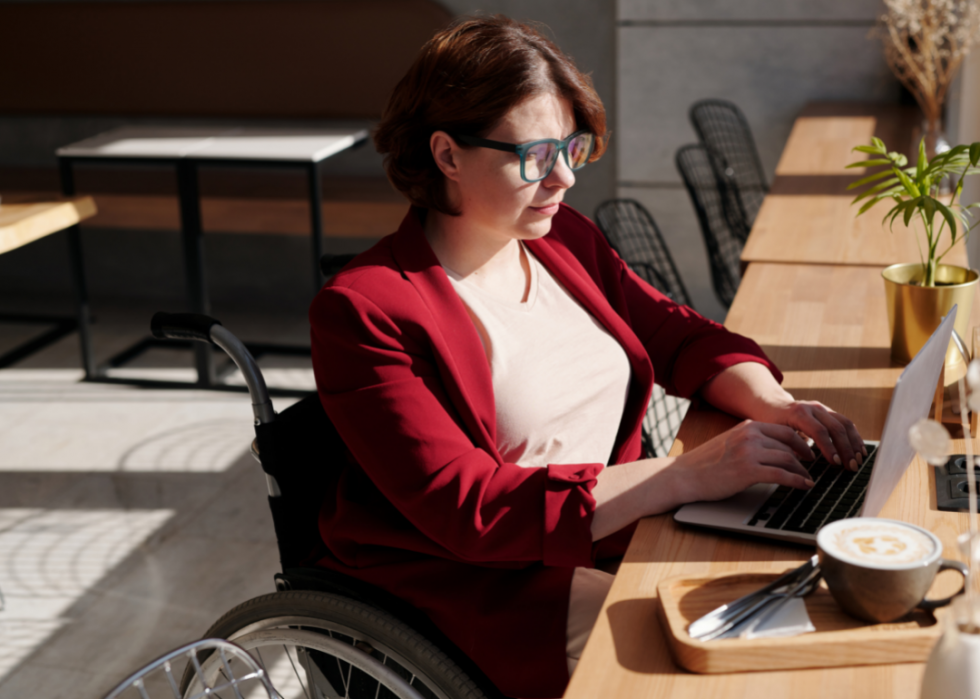
Workers with disabilities experience wider gaps despite higher education

Most people expect higher education is a pathway to better pay, but the American Institutes for Research reports  almost $21,000 less than colleagues, compared to a $6,505 gap for workers with high school degrees. These differences in compensation are even greater than those experienced by women workers. One of the 鈥檚 authors said, 鈥淓qual pay is key to keeping people with disabilities economically independent and out of poverty.鈥 The U.S. Census Bureau states major disparities between pay for those with and without disabilities exist in high-level professions including chief executive, attorney, and financial analyst. When the numbers consider work schedule and age, as much as peers. Beyond the impact to individuals, the impact to the U.S. economy is equivalent to approximately 1% of GDP. A shows legal action is one way to address this gap.

5 / 10
Drazen Zigic // Shutterstock

The pay gap between Black and white workers is getting larger

Though some claim we鈥檙e in a 鈥減ost-racial鈥 society, the Economic Policy Institute reports than three-quarters of the pay awarded to their white colleagues鈥71 cents on the dollar for Black males, and 64 cents on the dollar for Black females. Additionally, the , who comprise only 1% of CEO roles within that group. This inequity negatively impacts everyone: Citi reported eliminating that gap would have boosted the U.S. economy by $2.7 trillion in the past 20 years. Though the past can鈥檛 be changed, moving forward and correcting inequalities in not only pay, but also housing, education, and investment could by 2025. Changing corporate culture to support Black employees and create 鈥渟upport or infrastructure behind ... diversity and inclusion initiatives鈥 is crucial to changing this trend, according to a recruiter who鈥檚 worked with both Facebook and Tinder.

6 / 10
Gagliardi Photography // Shutterstock

Pay equity differs across subgroups of the AAPI community

One stereotype paints Asian Americans as the 鈥渕odel minority ... well off [with] stable incomes.鈥 Although big-picture statistics show Asian American and Pacific Islander women to the dollar compared to white, non-Hispanic men鈥攂etter than some groups鈥攖he numbers ignore diversity within the larger group, which encompasses more than 50 subgroups. Some of those the typical wages of Caucasian males.

7 / 10
Rawpixel.com // Shutterstock

Education doesn鈥檛 improve pay for many Native American workers

One in three , according to the American Community Survey. And education seems to have no real impact鈥攄espite growing numbers who attend high school and college, both employment rates and wages have declined since 1980. Native American women are especially impacted鈥攊n some communities, they earn garnered by their white male peers. One contributing factor is 80% of them experience domestic violence, which results in lost productivity. Addressing both discrimination and safety at home are crucial to changing current trends.

8 / 10
Canva

Differences between pay for Latinx and white workers persist

Latinx workers earn as their white peers. The pay gap between male Latino workers and their white male colleagues is gradually growing smaller, but the difference was still 14.9% in 2017. But 2015 statistics showed that as much as white males who hadn鈥檛 completed high school鈥攁nd 36.4% less than white male colleagues who had attained the same educational level. A story in the Harvard Business Review states  are one way to resolve the inequality.

9 / 10
Canva

How queer individuals face compensation inequities

Though queer men traditionally have taken home less pay than their heterosexual male peers, their income still exceeds all women鈥攊ncluding queer women, who were reported to earn more than straight women colleagues in one University of Washington study. The 2020 Bostock v. Clayton County ruling by the U.S. Supreme Court extended protections against discrimination in the workplace to the LGBTQ+ community. More recently, , which would expand protections in employment, housing, and beyond, passed in the U.S. House of Representatives.

10 / 10
Canva

Trans and nonbinary workers have different barriers to pay equity

Numbers showing wages for transgender and gender non-conforming workers are still sparse, but 鈥 of female-to-male transgender workers will increase slightly following their transitions, while average earnings of male-to-female transgender workers fall by nearly one-third,鈥 which correlates with big-picture statistics and trends based on gender. A study from the National Center for Transgender Equality also reported respondents felt workplace bias contributed to fewer promotions for that community. However, taking . Workers still need to identify as either male or female and make a claim that they are being treated differently from other workers with that gender. One advocate for the transgender community notes employers can close the gap by allowing workers to use their chosen name for their email address, and 鈥渃reating specific policies that include gender identity and gender expression as protected grounds.鈥

This story was produced and distributed in partnership with 麻豆原创 Studio.

Trending Now