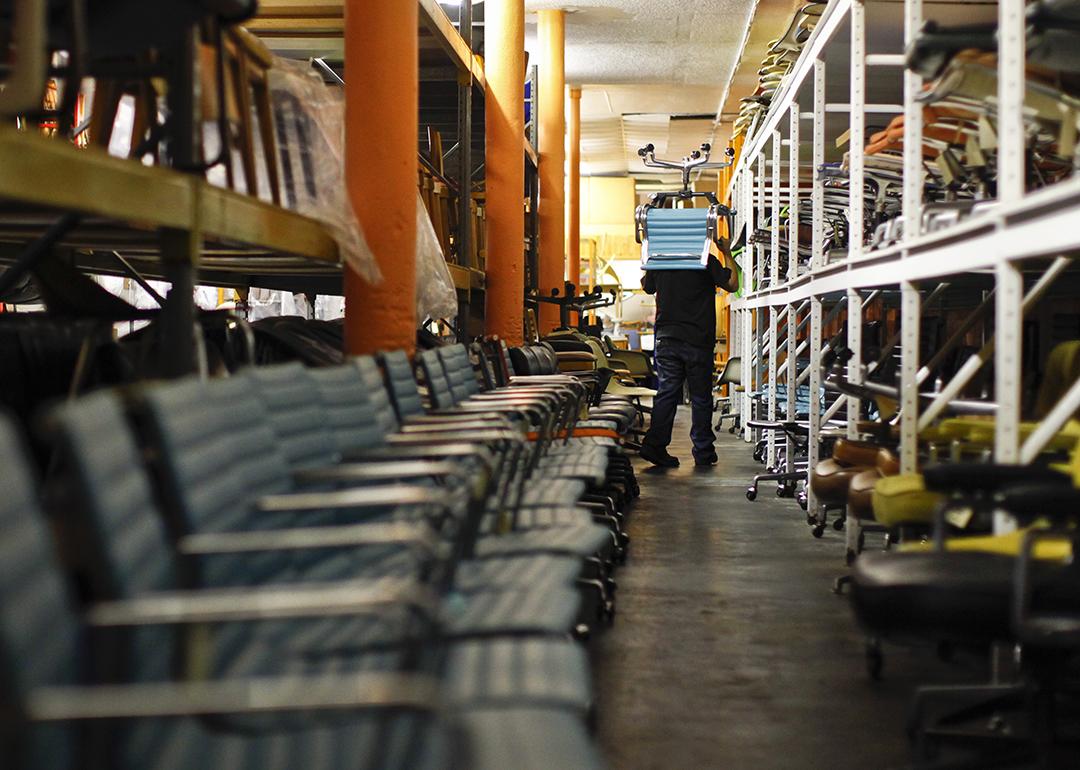
The US cities where furniture manufacturing still thrives
The US cities where furniture manufacturing still thrives
For much of the 20th century, American homes were furnished by factories scattered across the Midwest and South. explains that while globalization pushed much of that manufacturing overseas, several U.S. cities remain synonymous with furniture production鈥攄riven by a blend of history, craftsmanship, and industrial know-how.
High Point, North Carolina: The Unrivaled Leader
No city has embraced its furniture legacy quite like High Point, North Carolina, long branded the 鈥淔urniture Capital of the World.鈥� For over a century, the city has been the epicenter of American furniture design and manufacturing. , a staggering statistic that underscores its dominance.
Today, the biannual High Point Market鈥攖he world's largest home furnishings trade show鈥攄raws over 70,000 designers, retailers, and buyers from around the globe, filling 11 million square feet of showroom space. Despite increased imports, High Point and its neighboring towns like Thomasville and Lexington remain central players in U.S. furniture production, particularly in wood and upholstered furnishings.
Source: Architectural Digest, Southern Living, High Point Market Authority
Grand Rapids, Michigan: The Home of Office Furniture
While High Point leads in residential furniture, Grand Rapids, Michigan鈥攁ptly nicknamed 鈥淔urniture City鈥濃��. Brands like Steelcase, Herman Miller, Haworth, and American Seating all call the region home, producing the desks and chairs that fill corporate offices worldwide.
The city鈥檚 furniture roots date back to the 1800s when Scandinavian immigrants established woodworking shops in the region. Today, Grand Rapids remains one of the world鈥檚 largest hubs for high-end office furnishings, according to the Grand Rapids Historical Society and Steelcase Company History.
Chicago: A Hidden Giant
Chicago may be better known for its architecture than its manufacturing, , making it one of the largest hubs in the country. Companies in and around the Windy City produce everything from commercial fixtures to residential pieces, benefiting from the city鈥檚 historic transportation networks and skilled labor force.
Gardner, Massachusetts: A Legacy of Craftsmanship
On a smaller scale, Gardner, Massachusetts, once known as the 鈥淐hair City of the World,鈥� still holds a place in America鈥檚 furniture heritage. , a staggering output for a town of its size. Though modern production has waned, the legacy of craftsmanship remains part of the town鈥檚 DNA.
Why These Cities Persist
While low-cost imports from Asia have decimated much of America鈥檚 manufacturing base, these cities continue to thrive thanks to:
- Deep-rooted industry clusters that support skilled labor, suppliers, and logistics.
- Proximity to major U.S. markets, reducing lead times compared to overseas shipping.
- A growing demand for custom, sustainable, and American-made furniture, particularly in the high-end market.
The Bigger Picture: State Leaders
At the state level, , followed by California, Texas, Ohio, Michigan, Illinois, and Pennsylvania. Smaller states like Indiana and Wisconsin punch above their weight in specialty production.
The Future of American Furniture Manufacturing
Even as global supply chains evolve, these American cities show that furniture manufacturing is far from dead. Instead, it's becoming more specialized, design-driven, and increasingly responsive to consumer demand for sustainability and quality.
High Point may no longer produce the majority of America鈥檚 furniture, but twice a year, the world still comes knocking.
was produced by and reviewed and distributed by 麻豆原创.