
Why your AI-generated content sounds like everyone else's and 4 ways to fix it
There鈥檚 a challenge brewing for businesses everywhere.
Content is becoming virtually indistinguishable online, and it all boils down to the latest industry disruptor: AI.
It鈥檚 no secret that AI adoption is reaching top speed across many aspects of life and work. Statista predicts that by the end of this year, will be using AI.
While these tools are more accessible than ever, this also defines a growing problem 鈥� everyone has access to the same resources. The universal ability to prompt ChatGPT or your favorite LLM for the same output, over and over again.
Unremarkable AI-generated content is flooding our screens as a result, creating a phenomenon known as the Sea of Sameness 鈥� a world where inboxes are full of nearly identical emails, all sites are curating the same portable vacuum cleaners or publishing the same pumpkin bread recipes, the hosts of the videos 测辞耻鈥檙别 watching are all selected from a preestablished bench of avatars, and all digital ads start to look the same.
To break through the noise, taste and authenticity are everything. Brands that harness their unique value proposition 鈥� that X-factor that makes them stand out from the rest 鈥� are winning in the AI era.
shares how to use AI to help build the foundation.
Navigating the Sea of Sameness
Business leaders want fast results. Naturally, this makes AI seem like a panacea for idea generation and content production.
You ask a tool like Claude to help you draft an email to appeal to prospective customers, and you get something like the following in seconds:
Input: You鈥檙e a marketer at a software company. Create a lead generation email for cold outreach.
Output: Here鈥檚 a lead generation email template.
Subject: Quick idea for [Company Name]
Hi [First Name],
I noticed [something specific about their company/role 鈥� e.g., 鈥測our team has been growing quickly鈥� or 鈥測ou recently launched a new product鈥漖. That鈥檚 exciting!
I work with [type/size of companies, e.g., 鈥渟mall businesses鈥漖 to help them [main benefit, e.g., 鈥済enerate more qualified leads on a limited budget鈥漖. On average, our clients see [insert short, tangible result, e.g., 鈥渁 30% lift in inbound demo requests within 3 months鈥漖.
Would you be open to a quick 10-minute call next week to see if this might be useful for [Company Name]?
Best,
[Your Name]
[Your Role]
[Your Company]
[LinkedIn link or website]
Speed can be an advantage, but keep in mind that a company on the other side of the globe, or a competitor in your backyard, could use a prompt like this and yield a similar result. Because, as you know, everyone has access to the same tools.
Quality in, quality out. The difference lies in what you feed them.
Churning out content at scale has never been more attainable, but that鈥檚 yesterday鈥檚 strategy. To navigate the Sea of Sameness, you need to focus on taste, not tactics.
While AI has lowered the barrier to entry for content production, the volume of content available for consumption is at an all-time high. Anyone who scrolls through Instagram knows there鈥檚 a constant stream of posts from brands and creators.
Not to mention, customer attention is spread thin. From email to websites. Instagram to YouTube. And even Threads to Lemon8. Your audience is now spending time on platforms that in some cases didn鈥檛 exist five or 10 years ago. And they鈥檙e turning to AI search and forums like Reddit for product discovery.
Traditional marketing tactics, like SEO, aren鈥檛 working as well as they used to. In 2024, SparkToro found that end in no clicks.
We鈥檙e at the cusp of a generational shift in how people shop for products, and brands need to .
Why Taste Beats Tactics
Driving traffic to your website used to be the easy part. Now, businesses need to adapt to a world where buyers are everywhere except your website, and AI answers questions before they click.
that most consumers prefer social media to discover new products, and 1 in 4 users bought a product on social media in the past three months.
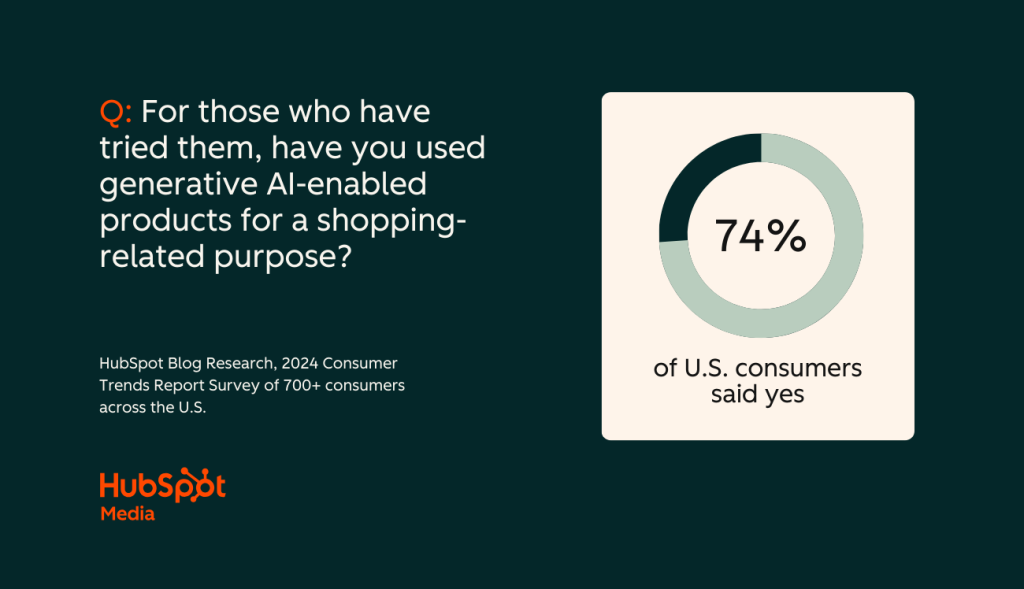
Plus, 74% of those who have tried generative AI tools have already used them for a shopping-related purpose, such as researching products, pricing, or reviews.
These shifts in how people discover and evaluate products raise the stakes for businesses. With discovery happening off your site and decisions being shaped by algorithms, the question isn鈥檛 just how to get in front of buyers 鈥� it鈥檚 how to stand out when you do. That鈥檚 where taste comes in.
Taste is rooted in understanding how to deliver the right message to the right person at the right moment. It鈥檚 human. It鈥檚 difficult to imitate. It鈥檚 a team effort between defining your unique brand identity and leveraging AI to make the customer go, 鈥淲as this message written just for me?
Achieving this requires a thoughtful effort to figure out what differentiates your brand from competitors 鈥� and to codify it. The reality? have this information documented, according to a HubSpot survey conducted in August.
How to Express Your Brand Identity
The starting point for tackling this new AI-driven era of marketing is to express your unique brand identity.
Before you tap AI to help you create content, use what you know about your audience, like customer data, to define who you are and how you want customers to perceive you. Then, bring in AI as a brand identity concierge to help you produce content that actually connects with your audience and, most importantly, looks and sounds like you.
This express stage is measured in efficiency. How well does your business story match how buyers need to experience it? In this stage, it鈥檚 the data, context, and point of view you give the AI that gives you a competitive advantage.
It鈥檚 worth repeating that because it鈥檚 crucial to your success: Only you can give AI the context it needs to tell your story.
That鈥檚 the difference between using AI as a shortcut and using it as a true amplifier for your business.
Here鈥檚 the breakdown.
1. Define your audience.
The first step in building a strong brand identity is outlining your audience profile. Who are they? What do they care about? Figure out what goals they鈥檙e chasing and what obstacles stand in their way.
The more you know about who 测辞耻鈥檙别 talking to, the easier it is to create messages and experiences that actually land.
Let AI handle the busy work. Instead of manually combing through customer reviews, call notes, and social chatter, ask your favorite tool 鈥� whether that鈥檚 Claude, ChatGPT, Gemini, or Breeze 鈥� to summarize these insights for you. Something like: 鈥淭ell me about our most successful customers. What are the biggest pain points that they have expressed in their feedback? Give me the history of our best deals.鈥�
In return, you鈥檒l get a clear customer profile that guides your strategy and ensures your content resonates at every connection point.
2. Craft your style guide.
Knowing who 测辞耻鈥檙别 talking to is only part of the equation. You also need to articulate why 测辞耻鈥檙别 the right choice for them. That means defining what makes you cooler than the competition.
Drop those details into a simple, shareable style guide that captures your mission, tone, and brand POV. Then, upload that style guide into your AI agent to ensure your brand identity is embedded into every campaign, conversation, and piece of content you create.
3. Generate your concept.
A style guide defines how you show up, but the real power comes from turning those guardrails into a story buyers can rally around.
This is where you build the foundational, customer-driven narrative that defines who you are and why 测辞耻鈥檙别 the best option. You can then use that narrative to generate the creative concepts that will carry it into the market.
Start by translating your brand story into themes, angles, or key messages that matter most to your customers. Then, use AI to expand on those themes by using prompts like: 鈥淐reate three campaign concepts with key messages for our target customers,鈥� or 鈥淟ist five content ideas based on our core brand themes.鈥�
In the process, 测辞耻鈥檙别 building a bank of audience-informed, story-driven content ideas that your marketing team can pull from and begin riffing off.
4. Build your content strategy.
A strong narrative is only as good as how it comes to life across formats. You have to deliver it in all the right places, whether that鈥檚 YouTube videos, ads, emails, text articles, or social media.
Create a campaign brief that maps your key messages to the channels where your audience spends their time the most. Maybe they鈥檙e heavy email users or deep into forums. Then, outline the mix of assets you鈥檒l need to bring it all together. In this case, newsletter content and a Reddit response bank.
Once your assets are created, test and refine them before hitting 鈥渟end鈥� or pressing the 鈥減ublish鈥� button. You can use AI to get specific recommendations on what to keep or refine based on the context 鈥� customer insights, style guide, and brand narrative 鈥� that you provide.
Putting it all together turns raw data into actionable marketing. It鈥檚 a repeatable system for reaching the right people with the right story, every time.
The Bottom Line
The Sea of Sameness is rising faster and faster as AI adoption accelerates. But sameness doesn鈥檛 have to be inevitable. Instead of drifting along, you can chart your own course, one where every message feels like it was written just for your audience.
That starts with expressing your identity clearly and consistently. It means using AI as a partner to amplify your voice and scale without losing what makes you unique. When you harness AI with intention, you build a foundation that transforms it from a content factory into a true growth engine.
In a world where everyone has access to the same tools, trust, taste, and authenticity become the only competitive advantage.
was produced by and reviewed and distributed by 麻豆原创.