50 jobs that no longer exist
As technology advances and processes become automated, naturally, some people that once held jobs that were considered essential may find themselves out of work. In the next decade in the United States, employment is expected to increase by 11.5 million, but it is also projected that
By 2030, about 800 million jobs could disappear due to automation, and in the United States alone, 39 million to 73 million jobs could become automated. However, the outlook isn't all bad鈥� in the future if today's automation technology is adopted while most other jobs will only incorporate some aspects of automation.
Jobs have popped up and waned throughout the course of human history, and oftentimes, it has been for the better. After all, people no longer have to risk contracting diseases thanks to the invention of toilets, and medical research has advanced to the point where humans no longer have to guess a person's character traits based on the shape of their head.
麻豆原创 has compiled a list of 50 jobs that are no longer hiring, and while some evoke nostalgia for the days before extensive technological advancements, others might suggest that mankind is better off today.
RELATED:
Leech collector
In the mid-1800s when medical professionals believed that bloodletting could cure an illness or disease, leech collectors were responsible for retrieving the blood-sucking insects from their natural habitat for doctors to use. People with this job , or even their own legs, to attract leeches from rivers and creeks. Eventually, medical research advanced, and this profession became obsolete.
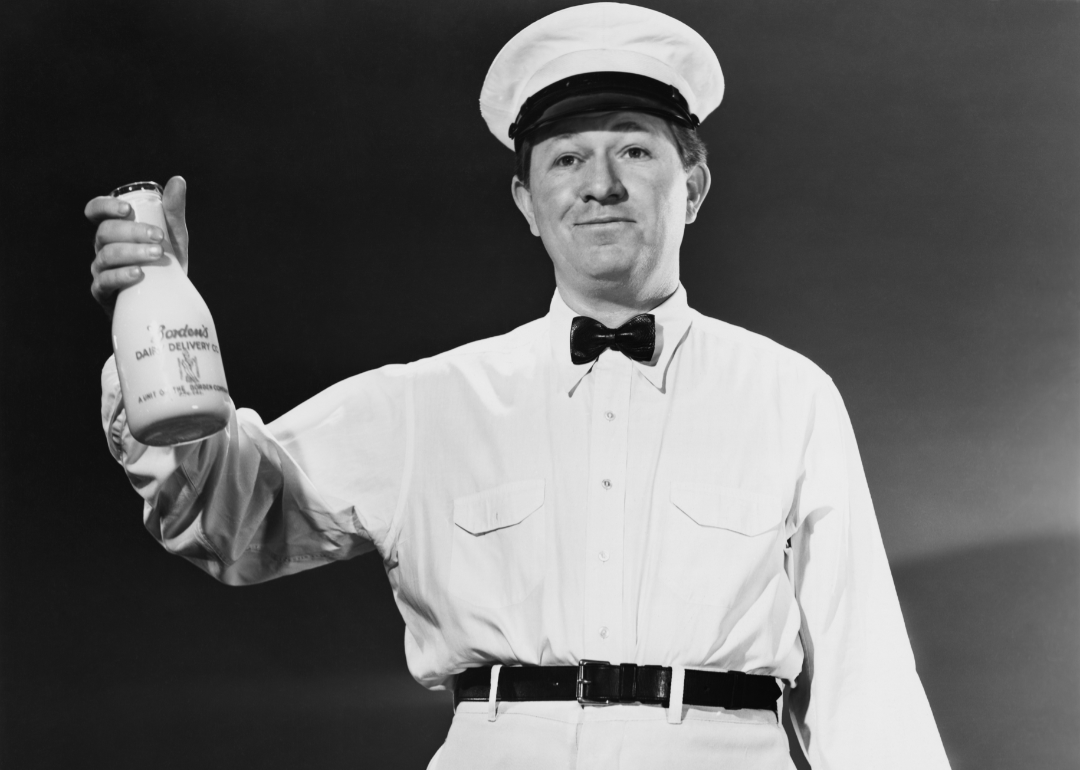
Milkman
The first home milk deliveries took place in Vermont in 1785 and were commonplace in the United States until in the 1950s, and people no longer needed daily deliveries. The practice of leaving empty bottles for the milkman to collect is now considered to be an early version of recycling.
Knockerupper
Before there was the alarm clock, there was a human alarm clock. People would hire 鈥渒nocker uppers鈥� to tap on the glass of their window with a long pole or shoot peas at the glass to wake them up. The job eventually fell to the wayside when the .
Town crier
In medieval England, the town crier would inform the townspeople of the latest news, proclamations, and other information, as most people were illiterate and were not able to read the news. After the town crier would read his message, he would post a notice on the door of a local inn鈥攚hich is
Scissors grinder
Scissors grinders would sharpen scissors, knives, or other tools using an abrasive wheel, and would often go door to door performing the service. The practice because most people found it easier and cheaper to buy new tools instead of sharpening their old ones. Today, some people refer to cicadas as scissors grinders because of the similar sound they produce.
Deer culler
In the 1930s, the government was concerned about the sharp rise in the deer population and hired professional deer cullers to hunt the deer and slow their spread. Government-funded culling with the rise of commercial hunting.
Ice cutter
When reliable refrigeration and freezing didn鈥檛 yet exist, ice cutters were tasked with cutting up the ice on frozen lakes. To do this, they would to cut the ice block free. However, this was a dangerous job鈥攏ot only did it come with biting weather that cultivated frostbite, ice cutters and their horses also faced the danger of falling into the bone-chilling waters. Thankfully, mechanical refrigeration came about in the 1930s and this job became obsolete.
Food taster
The practice of employing people to taste the food for a member of a royal family or an important figure to ensure that the food wasn鈥檛 poisoned dates back to ancient Egypt and ancient Rome. Several chemicals can be used to poison people, but . Other poisons take time to show effects, and most royals weren鈥檛 keen on waiting days to eat a meal just to see if the food taster would end up ill.
Video store owner
Internet services like Netflix and Hulu have put video stores out of business, and the days of browsing through a myriad of DVD cases at the local Blockbuster is over. According to Blockbuster, . However, in 2016, a Twitter account popped up claiming to be the true last Blockbuster, saying in its Twitter bio that the store was separate from Blockbuster Corporate.
Cigarette girl
Cigarette or cigar girls . They would usually sport a pillbox hat and a tray around her neck with a selection of cigarettes for patrons to purchase. The cigarette girl became a popular cultural icon, and by the 1950s, cigarette girls could also be found at sporting events. However, as Americans' attitudes toward smoking changed, she became a thing of the past.
Phrenologist
Beginning in the 1820s, phrenology came about as a study of the brain based on the shape and size of a person鈥檚 head. Phrenologists would and diagnose people with different personality traits. They would tell clients which career paths were favorable for a person based on their head shape and traits they should look for in a love interest. However, this practice became widely discredited and the job of a phrenologist became obsolete.
Bematist
Bematists were people trained in ancient Greece to . The bematists would often publish their findings in monographs called Stathmoi, which published distances as well as reports of natural findings and empirical customs.
Tosher
During the Victorian era in London, people called toshers would make a living by breaking into the city鈥檚 sewage system and searching for coins, scraps of metal, pieces of bone, or anything else they could find that was of value. , which put them at the same level as the working class. Entering into sewers became illegal in 1840, and people who caught others breaking this law were offered a reward, which discouraged the sewer-diving.
Breaker boy
A breaker boy was a young coal miner who was tasked with separating impurities from coal. The breaker boys were often as young as 5 years old, and would . The work was extremely dangerous, and many children lost fingers or limbs in factory machinery. A member of the National Child Labor Committee took photographs of breaker boys, which prompted the public to demand that labor laws be reformed.
Moirologist
In ancient Egyptian and Mediterranean cultures, moirologists, or professional mourners, were of relatives and lament the death of a loved ones. The moirologist would also guard the body before it was buried and instruct mourners throughout the grieving process.
Castrato
When women were banned from performing in the theater in the 16th century, young boys would undergo castration before puberty . The 鈥渃astrati鈥� were all the rage and extremely popular in Italian opera and often reached celebrity status. However, the practice was both illegal and inhumane, and thankfully died out.
Linkboy
In 17th century-London before street lights were commonplace, young boys looking to make money would be people home from taverns or other places. Sometimes, link-boys would lead patrons into dark alleys where robbers would be waiting in the shadows.
Billy boy
Billy boys were young men charged with making tea for men working at building sites, blacksmiths, and railway yards. During break times, the billy boys鈥斺�攚ould light a fire and boil water in 鈥渂illy cans鈥� in order to make tea. Billy boys often also performed other odd jobs like delivering messages or running errands.
Typist
A position as a typist was once largely reserved for women, who would be skilled with typewriters and would be tasked with creating a variety of documents. Typists would often sit in a typing pool together while at work. Women who were talented typists .
Sea sponger harvester
Men in Greece's Kalymnos Island made a living for hundreds of years as sea sponge harvesters, which was a profession reserved only for physically fit and fearless people who were up to the challenge. Beginning in the 1800s, men and dive up to 30 meters. When the water became too cold after summer ended, the sea sponge harvesters would return home, much to the relief of their friends and family.
Brewess
Ancient civilizations actually credit the invention of beer to women, and in Europe during the 1700s, licensed female brewers were the norm. There were even laws that mandated that brewing tools were the sole property of women. However, during the industrial revolution, brewing was moved out of the home and into the marketplace, and brewesses were phased out.
Broomsquire
Broomsquires, a profession that was common before the 1800s, were artisans that made and sold brooms. The broomsquires were often poor and lived in rural areas, where they would collect birch twigs to produce brooms. People with this profession were often looked down upon and .
Scribe
Before printing was invented, scribes would copy manuscripts and other documents word for word, and they were common in the medieval period around 1350. In Judaism, a scribe was originally called a 鈥渟ofer鈥� and was from the fifth century BCE to the first century CE. Eventually, the printing press was invented and this tedious job became obsolete.
Rat catcher
In London starting in the Victorian era, the city was infested with rats, which were known by then as carriers of disease. To solve the problem, many young people, including children, became rat catchers, and . Rats were either captured alive and sold as house pets, or poisoned in an effort to eradicate them from the streets.
Soda jerk
Beginning in the 1940s, half of a million people were employed as soda jerks. They would wear white coats and be responsible for and dispensing glasses of soda from a spigot behind a counter. They were also tasked with remembering orders, and making complicated milkshakes and egg creams.
Plague doctor
In the 14th century as the bubonic plague took hold and rapidly spread, plague doctors were hired by villages to treat infected people. The plague doctors and many carried a wooden cane so they could examine patients without touching them. These doctors would usually attempt to treat the plague through bloodletting or having the patient drink a juice with rose hips.
Water carrier
In India beginning in the 1600s, water carriers or bhishtis would , providing fresh water to families and individuals. However, as pipe systems evolved and became more commonplace, the profession was no longer necessary and became obsolete.
Physiognomist
In the early 1900s, physiognomy was a popular theory that was based on the from their physical appearance. Physiognomists based their principles on racist ideals, believing that traditional features of Western Europeans represented sincerity and features associated with other races and ethnicities, such as hooked noses and almond eyes, represented deceit.
Pinsetter
In the early 1900s, young men were hired as pinsetters in bowling alleys to by bowling balls. After a bowler would take a turn, the pinsetter would jump into a pit, clear the downed pins, and roll the ball back to the bowler. After the second turn, the pinsetter would quickly gather the pins and realign them. By the early 1950s, the Automatic Pinspotter had found its way into bowling alleys, rendering the pinsetters unnecessary.
Herb strewer
In the 16th and 17th centuries, royal families would employ an herb strewer whose job would be to . However, when sewage systems and plumbing became more advanced and controlled and perfumes were invented, the job was no longer needed.
Toad doctor
Starting in the 1600s, doctors and medical researchers believed that toads had healing properties, and they started to use toads in the practice of medicine. Toad doctors would practice a medicinal folk magic in western England until the end of the 19th century, as well as relieve headaches and a skin condition known today as scrofula.
Lamplighter
Before lightbulbs and electric street lights, lamplighters would go around town . When electric light bulbs were invented and used in place of gas lamps, lamplighters became jobless.
Mud clerk
Mud clerks were making bank landings when steamboats would get stuck in the mud. The profession was common during the American Civil War period. Mud clerks would also be charged with all-around menial tasks to upkeep steamboats.
Elevator operator
Elevator operators would greet guests and shuffle patrons from floor to floor, but they have gone extinct as people are now choosing to press their own elevator buttons. However, elevator operators in their heyday would be in charge of , controlling the speed of the car, and announcing what businesses were situated on each floor as the car approached. By the 1970s, many elevator operators had been let go.
Gong farmer
Until the end of the 19th century, gong farmers would be hired to dig out all the feces from a house's privy and bring it to a dump to be repurposed as fertilizer or building materials. , faced the prospect of diseases, and were sometimes required to live far away from the rest of a village or town.
Drysalter
In Great Britain in the 1700s, a drysalter was a dealer that would provide chemical products鈥攕uch as dyes and dry chemicals鈥攊n . These products would be used for dyeing clothes or preserving food. Some drysalters also traded hemp, flax, logwood, and potashes.
惭耻谤蝉尘盲肠办补
A 惭耻谤蝉尘盲肠办补 was a profession in Sweden reserved for women who would hand over mortar during construction work. It was a during the 19th century, especially in places like Stockholm. The job was discontinued in 1922.
Switchboard operator
The earliest telephones were extremely difficult to use, so telephone companies hired switchboard operators to assist with connecting customers. The job became an almost because women were considered to be more polite. Women saw the job as a step up from factory and domestic work. In 1919, switchboard operators in New England went on strike and earned a wage increase as a result.
Crossing sweeper
In the 19th century when streets were frequently dirty, littered, and filled with sewage, people would hire crossing sweepers to sweep a path ahead of pedestrians as they walked down the street. Wealthy citizens would readily pay sweepers to protect their long skirts or articles of clothing and to prevent contact with manure. A crossing sweeper was . Many people took up the profession because starting the business would cost nothing more than a broom.
Stone eater
In the Georgian and Victorian eras, people called stone eaters would travel around and of crowds. Visitors were even encouraged to bring their own stones to exhibitions for stone eaters to swallow. However, newspapers frequently denounced stone eating as a sham, and people began to see through the practice.
Baked potato seller
In London in the mid-1800s, baked potato sellers were a common sight on the streets. While most were purchased for consumption, baked potatoes were during harsh city winters. In the summer, many baked potato sellers would switch to selling raspberries or strawberries.
Daguerreotypist
A daguerreotypist was essentially a photographer, and they used the process of daguerreotype to print a unique image on a silvered copper plate. Because daguerreotypes were incredibly expensive, only the wealthiest people could afford to pay for a portrait when daguerreotypes were . The daguerreotype would be printed on a heavy, mirror-like material and would be presented in a special case that preserved the metal plate. As technology developed, the process became outdated and too expensive.
Nomenclator
In ancient Rome, a nomenclator would be hired to announce the names of guests or people to their master. Roman politicians, especially, took up the practice of employing nomenclators and would have them during a political rally to make the politician appear personable and knowledgeable.
Lector
While people today might listen to podcasts or radio on the job, people working in the early 1900s factories had to devise another source of entertainment. Factories would hire lectors to keep workers entertained. The lector would usually sit or stand on an elevated surface to perform so that the entire factory would be able to hear. Lectors who read material deemed too radical were fired.
Hush shopkeeper
During Prohibition in the United States, when it was illegal to sell, buy, or consume alcohol, hush shopkeepers would . They received their name because they had to keep their private business "hush." Eventually, when Prohibition ended, hush shopkeepers were no longer needed.
Alchemist
In ancient eras, alchemists would try to turn chemicals or other substances into gold. Alchemists because they frequently tried to concoct special elixirs to cure sickness and grant immortality. Today, some people consider alchemists to have been early chemists because of their work with base metals and other chemicals.
Human computer
Human computers at NASA and other organizations would be in charge of making calculations to determine, for example, how many rockets it would take to make a plane airborne. The calculations took place on graph paper and could sometimes take up to a week. Eventually, the . In 1942, Macie Roberts made the decision to hire only female computers because she believed male computers would undermine the group.
Caddy butcher
A caddy butcher , which was popular in both the United Kingdom and the United States until the 1940s. The meat was relatively cheap and was considered an alternative to beef or venison. However, eating horse meat became taboo, and the practice died out.
Telegram messenger
In the second half of the 19th century, telegram messengers were an essential component of communication. In the United Kingdom, after the General Post Office took control of inland telegrams in 1870, telegram boys became emblematic of the next era of communication. In 1913, and most were delivered by telegram messengers on bicycles. After 1946, however, telephones and other communication innovations steadily replaced telegrams.
Gandy dancer
Gandy dancers were railroad employees who would perform any task related to the railroad track, including laying, spreading, replacing rail, hammering spikes, and setting ties. Gandy dancers were an integral part of railroad maintenance from the time the railroad industry started in the 1820s. Many , and the job drew tens of thousands of people looking for work.