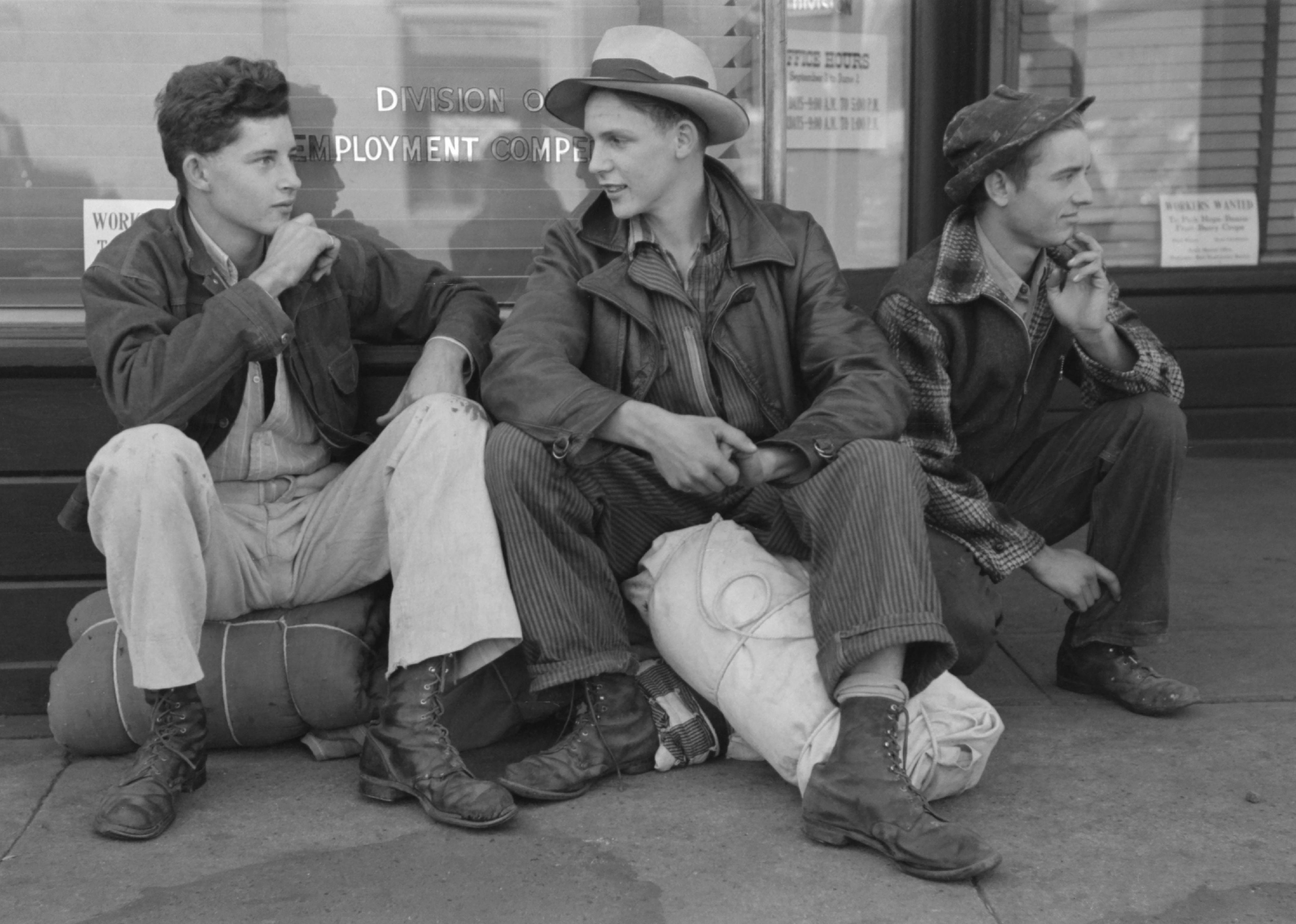
The unemployment rate the year you turned 16
COVID-19 forced into the ranks of the unemployed overnight. Nationally, the unemployment rate this year so far ; by September the rate had , with employers adding fewer jobs than in previous months and signaling that improvement in the labor market was losing steam.
To contextualize these rises and falls, researched the unemployment rates back to 1929 using the (BLS) as the main source for U.S. unemployment rates between 1940 and 2019. Prior to 1947, the BLS considered adolescent laborers at least 14 years old in unemployment totals. In 1947, the BLS changed the law and only began accounting for people 16 and older. Then and now, the BLS if they are currently jobless, looking for a job, and available for work.
BLS didn't estimate unemployment rates from 1929 to 1939, until the 1940s, when reports were based on data from several sources. Rates for those years are therefore approximations, and there are no monthly estimates for that decade.
One obvious trend in the rise and fall of unemployment over the years is the federal government's immediate assistance if need be. When more than 6% of Americans cannot find work, in to bring the number down in different ways, from tax cuts to the Fed adjusting interest rates to fight inflation. For example, COVID-19 stimulus checks were sent out to Americans in order to keep the economy somewhat stable during the first wave of the inevitable job losses.
Along with each year's unemployment rate, information about programs or events that may have an effect on the overall rate was included. Read on to find out the unemployment rate the year you turned 16.
You may also like:
1929
- Annual unemployment rate: 3.2%
The stock market crash in October of 1929 was the match that sparked the Great Depression. Going into that crash, the country鈥檚 unemployment rate was at a healthy鈥攁nd low鈥�3.2%. The Great Depression caused ballooning rates of unemployment over the next several years.
1930
- Annual unemployment rate: 8.7%
The unemployment rate almost tripled in one year as the U.S. sank into a deep depression. In 1930, while inflation fell to -6.4%. Exacerbating economic woes was the , which slapped 900 import tariffs with increased rates of up to 48% and ground trade to a virtual halt.
1931
- Annual unemployment rate: 15.9%
Unemployment in 1931 almost doubled as the and put even more Americans out of work. The Dust Bowl鈥攃aused by a combination of drought and unsustainable farming practices鈥攔endered almost 100 million acres in the Southern Plains unworkable and unlivable.
1932
- Annual unemployment rate: 23.6%
President Herbert Hoover in 1932 called for a temporary for many Americans. The highest income tax rate jumped from 25% to 63% while the lowest tax rate jumped from 1.1% to 4%. The increases served to further balloon the unemployment rate, while significantly reducing the amount of revenue collected from individual income tax.
1933
- Annual unemployment rate: 24.9%
1933 represents the worst unemployment rate in U.S. history since records have been kept, second only to April 2020 numbers amid the coronavirus pandemic. To help dig the country out of the Great Depression, that year President Franklin D. Roosevelt rolled out the New Deal.
1934
- Annual unemployment rate: 21.7%
Enacting the throughout the U.S., bringing GDP growth that year out of negative numbers鈥攖o 10.8%鈥� for the first time since the Great Depression hit. The unemployment rate dipped and was followed by three years of more-significant drops.
1935
- Annual unemployment rate: 20.1%
Unemployment continued notching down in 1935, although in 1934 and 1935 had largely come to a standstill. When the Supreme Court deemed the National Recovery Administration (NRA) unconstitutional, American industries were able to grow production unfettered. American recovery gained momentum later in the year.
1936
- Annual unemployment rate: 16.9%
President Roosevelt requested from Congress , following up on aid already requested the year prior. 1936 also brought with it a new presidential election, that Roosevelt won against his challenger, Kansas Republican Gov. Alf Landon.
1937
- Annual unemployment rate: 14.3%
Spending cuts in 1937 resulted in significant drops in manufacturing (37%) that dropped down to 1934 levels. The "Roosevelt recession"鈥攁 period in which economic recovery stalled鈥攍asted well into 1938.
1938
- Annual unemployment rate: 19.0%
The (FLSA) in 1938 established the first-ever minimum wage in the United States. The act further capped the American workweek at 44 hours and made child labor illegal.
1939
- Annual unemployment rate: 17.2%
After almost 10 years, the . The end of droughts signaled new opportunities for farms and other industries throughout the Midwest鈥攂ut not before 3.5 million people had fled the Great Plains, mostly relocating out west.
1940
- Annual unemployment rate: 14.1%
The country was preparing for World War II when the became the first peacetime draft in U.S. history. By the time the war ended in 1945, more than 10 million American men between 18 and 45 years old had been drafted.
[Pictured: Crowd reading war map in front of Philadelphia Bulletin Newspaper.]
1941
- Annual unemployment rate: 10%
The Great Depression, which lasted until the end of the 1930s, with more than 20% of Americans out of work. By 1941, the rate dropped to half that, directly due to President Franklin D. Roosevelt鈥檚 New Deal, a series of programs designed to energize the American economy in the 鈥�30s.
1942
- Annual unemployment rate: 4.7%
The attack on Pearl Harbor in 1941 , putting thousands back to work while dropping the unemployment rate by more than 5%. The wartime draft also reduced the rate, with thousands of men now employed as soldiers for the federal government.
[Pictured: North American B-25 bomber is prepared for painting on an outside assembly line, Inglewood, California, 1942.]
1943
- Annual unemployment rate: 1.9%
The U.S. tripled its defense while battling the Japanese, lowering the unemployment rate significantly in one year. brought on growth and production, which also created office employees and factory workers to meet consumer demands, dropping the rate to 1.9%.
[Pictured: A Japanese American fighting unit salutes their country's flag at Camp Shelby, Mississippi, June 1943.]
1944
- Annual unemployment rate: 1.2%
After the gold standard was weakened after World War II, a fixed exchange rate brought on by the increased the value of the U.S. dollar. Its increased value led to further wealth and work, with the U.S. becoming a potent global force politically and economically with a 1.2% unemployment rate.
[Pictured: Bretton Woods Conference. John Maynard Keynes and Harry Dexter White, founding fathers of the IMF and the World Bank, 1944.]
You may also like:
1945
- Annual unemployment rate: 1.9%
As the U.S. ended the war with the Japanese in 1945, unemployment began to rise, leveling off with the minimum wage at 40 cents. Though the strong was thriving, the release of more than 20 million servicemen from 1945 to 1947 took jobs away from civilians who were working while soldiers were overseas.
1946
- Annual unemployment rate: 4.0%
The enacted by President Harry Truman, promised to promote maximum employment through production and purchasing power. Though it didn鈥檛 set forth specific programs to increase employment, federal policy would follow the guidelines laid out in it for decades.
1947
- Annual unemployment rate: 3.9%
A and rising unemployment turned the tides of American finance by 1947, and the would be drafted and enacted a year later. Also called the European Recovery Program, the U.S. plan loaned the continent over $15 billion dollars to rebuild, helping to blunt the destruction of World War II.
[Pictured: Gen. George Marshall examines the last articles of his Plan in Washington,1947.]
1948
- Annual unemployment rate: 3.8%
When Truman was reelected in 1948, the unemployment rate dropped by 0.1%. in January, promoting nationwide health coverage, civil rights reform, and a hike in the minimum wage, only some of which made it to law.
1949
- Annual unemployment rate: 5.9%
unemployment doubled and brought on the . Additionally, in 1949, child labor laws were enforced with the Fair Labor Standards Act, which also established the minimum wage and overtime pay.
[Pictured: President Harry Truman marching in a veterans parade, Little Rock, Arkansas, 1949.]
You may also like:
1950
- Annual unemployment rate: 5.3%
The Korean War, which lasted between 1950鈥�53, but battle time production dropped the unemployment rate by 0.6% from the prior year. Additionally, the , causing growth in consumer demand, helping spur even more employment.
[Pictured: The first sailors to be called to active duty in Oakland for the Korean War, 1950.]
1951
- Annual unemployment rate: 3.3%
After the European Payment Union formed in 1950, the began, with Post-World War II wealth bringing jobs back, dropping the unemployment rate 2% in one year. The economic expansion caused a boom of regeneration, construction, and security unlike anything before, giving birth to the American Dream and creating the middle class.
[Pictured: Construction crew near new Union Station, Los Angeles, California, 1951.]
1952
- Annual unemployment rate: 3.0%
By 1952, the economic boom reverberated, dropping the unemployment rate another 0.3% as more Americans sought the dream of family and home. In the early 1950s, , which would continue to be strong into the next year, lowering unemployment even further.
1953
- Annual unemployment rate: 2.9%
The Korean War ended, and post-wartime production added to the economic boom by 1953, dropping unemployment from 3% the prior year to 2.9%. Middle-class America held a that made up much of the labor force of the time, from milkmen to bus drivers.
[Pictured: A vendor sells hotdogs for 20 cents at Ebbets Field in Brooklyn, New York, 1953.]
1954
- Annual unemployment rate: 5.5%
The though the unemployment rate would nearly double from 1953. President Dwight Eisenhower signed federal unemployment insurance legislation, providing unemployment benefits for more than 3 million Americans.
You may also like:
1955
- Annual unemployment rate: 4.4%
In 1954, 48 states adopted similar as set forth in federal guidelines. Many of the bills relaxed contribution requirements and raised the maximum benefit levels.
[Pictured: Street scene on Maxwell Street near Halsted Street, Chicago, Illinois, 1955.]
1956
- Annual unemployment rate: 4.1%
While the U.S. minimum wage rose from 75 cents hourly to $1, up 25 cents from the 1950 rate, the jobless rate dropped slightly. The increased minimum wage was the first time a earning minimum wage.
[Pictured: A scene of daily life on West 119th Street in Harlem, New York, 1956.]
1957
- Annual unemployment rate: 4.3%
1957 was the beginning of the that bumped up the unemployment rate 2.5% within two years. While the recession saw unemployment rates increase directly due to less motor vehicle production and housing construction, the flu killed up to 70,000 Americans, which caused a decline in the GDP.
[Pictured: Automatic transfer machine completes the cores in the Chevrolet V-8 engine, Flint, Michigan, 1957.]
1958
- Annual unemployment rate: 6.8%
The second year of the two-year recession saw significantly higher unemployment rates, exceeding the post-WWII high of 5.9%. With more than the 1958 recession caused the federal government to lighten up on mortgage lending to propel construction jobs, as well as extend more unemployment benefits to citizens.
[Pictured: Construction of the Pan American Airways Building in New York.]
1959
- Annual unemployment rate: 5.5%
After the two-year recession, economic expansion ignited, creating jobs and causing the unemployment rate to drop 1.3% in one year. helped spur the economy, providing more jobs in the U.S. that year.
[Pictured: Idle machines at the Fairchild Aviation engine division plant in Deer Park, New York, after 2,000 workers were laid off, 1959.]
You may also like:
1960
- Annual unemployment rate: 5.5%
The jobless rate remained at 5.5% for a second year in 1960, when the economy slowly started to implemented in order to control inflation. 1960鈥檚 recession lasted for 10 months until February 1961.
1961
- Annual unemployment rate: 6.7%
While the , the unemployment rate didn鈥檛 follow suit right away, peaking in May 1961 before declining to . This year, President John F. Kennedy raised the minimum wage to $1.15 hourly, up 15 cents, as well as adding for working Americans.
1962
- Annual unemployment rate: 5.5%
spurred wartime production, dropping the unemployment rate 1.2% in 1962, when the U.S. prepared for nuclear war with the Soviet Union before President Kennedy negotiated peace. While 5.5% of Americans were out of work this year, those employed
1963
- Annual unemployment rate: 5.7%
After taking office, President Lyndon B. Johnson , which would slowly bring the unemployment rate down each year he served. Along with a rise in the GDP, an increase in the minimum wage to $1.25 hourly, and no recession, the existing labor force was strong, with some of the most popular jobs being factory work, nursing, and teaching.
1964
- Annual unemployment rate: 5.2%
proposed to end the War on Poverty declared by President Lyndon B. Johnson. The program would fund vocational programs and extend loans to farmers and small businesses in an effort to grow the economy fairly throughout the U.S. The unemployment rate, down 0.5% from the previous year, would slowly continue to decline under Johnson鈥檚 administration.
You may also like:
1965
- Annual unemployment rate: 4.5%
wartime production would drop the unemployment rate by 0.7% in a year, with more jobs available due to Additionally, wartime production propelled the economy and created jobs, while the Civil Rights Act of 1964 and Equal Employment Opportunity Commission simultaneously prohibited workplace discrimination based on race, sex, and religion.
1966
- Annual unemployment rate: 3.8%
In 1966, the U.S. had spent up to and by the turn of 1965鈥�66, the GNP was averaging $705 billion annually, with around 8% of it dedicated to the U.S. military budget. In 1966, the approximately 80 million people working averaged an estimated full-time median family income of $7,400, a new high.
1967
- Annual unemployment rate: 3.8%
Employment was so strong in the U.S., the up 15 cents from the 1963 increase. with consumer demand and production stabilizing the unemployment rate at the same percent as the year prior.
1968
- Annual unemployment rate: 3.6%
The U.S. economy's fortitude remained, with unemployment dropping 0.2% in one year, and the bumping up the average American pay to 35 cents an hour in less than two years. Jobs were abounding and paying well for U.S. workers, who labored hard while the country was fighting the Vietnam War.
1969
- Annual unemployment rate: 3.5%
Dropping another 0.1%, the U.S. unemployment rate in 1969 reflected the fruits of the country's economy, but that would soon change due to the Vietnam War deficit incurred over almost a decade of overseas battle. When President Richard Nixon took office this year, the U.S. would begin to , with unemployment rising quickly after.
You may also like:
1970
- Annual unemployment rate: 4.9%
The U.S. recession in 1970 bumped joblessness up 1.4% in one year. the state of the economy in 1970 to that of 2018, suggesting America would see the same loss of employment and recession again. While millions of jobs would cease in 1970, it would get even worse a year later.
1971
- Annual unemployment rate: 5.9%
President Nixon signed which added 150,000 new jobs to the American workforce. His efforts, along with , would immediately begin to lower the 5.9% rate down a few notches, giving America a hopeful reprieve in terms of unemployment.
1972
- Annual unemployment rate: 5.6%
Dropping another 0.3% by 1972, U.S. unemployment under Nixon continued to decline. However, 鈥攁 combination of high joblessness and inflation tied with idle economic growth鈥攚ould begin during the Watergate scandal that began this year.
1973
- Annual unemployment rate: 4.9%
By 1973, President Richard Nixon signed the , a new federal law that mandated citizens receive schooling for public service jobs. Also, which would greatly affect joblessness in the next two years.
1974
- Annual unemployment rate: 5.6%
Stagflation and the end of the gold standard immediately rose unemployment by 1974, when Nixon resigned in the wake of the Watergate scandal. , as the joblessness rate spiked significantly by nearly 3% a year later.
[Pictured: President Gerald Ford, who took over when Nixon resigned.]
You may also like:
1975
- Annual unemployment rate: 8.5%
Unemployment grew to its highest level since 1941, although the recession that began with an oil embargo in 1973 was showing signs of ending. The embargo caused the worst stock market crash since the Great Depression and lasted nearly two years. To help stem inflation and spur the economy, in April 1975, and while a month later, it began to fall for the remainder of the year.
1976
- Annual unemployment rate: 7.7%
Unemployment remained high in 1976, even as the country pulled out of the recession that began in 1973. The labor force was growing, with and increased unemployment benefits established during the recession allowed workers to hold out for a better job. Worker registration requirements, a condition of welfare established in the early 1970s, increased the total number of unemployed.
[Pictured: American labor activist and cofounder of the United Farm Workers of America Dolores Huerta speaks at a UFW rally, California, 1975.]
1977
- Annual unemployment rate: 7.1%
Jimmy Carter took office in January 1977, when the the recession behind. Rapid growth in the gross national product helped roughly by the end of the year. however, increasing from 4.9 to 6.7%.
1978
- Annual unemployment rate: 6.1%
The unemployment rate dropped a full percentage point in 1978, but the dropped to a low point that wouldn't be reached again until 2013. however, with a 15% increase in the minimum wage the previous year being one of the main factors. In October, the established new goals for the Fed, including reining in inflation and reducing unemployment.
[Pictured: Boston Deputy Mayor Clarence Jones speaks to kids marching for jobs at the steps of city hall in Boston, 1978.]
You may also like:
1979
- Annual unemployment rate: 5.8%
Although the final year of the decade was nearly three percentage points lower than the 1975 high, there were signs of trouble ahead. Heavy layoffs in the auto and steel industries, rising unemployment in New York City, and were indicators of the recession to come. The unemployment rate among teenagers dropped to 14.3%.
You may also like:
1980
- Annual unemployment rate: 7.1%
The Fed鈥檚 at the end of the 鈥�70s led to the recession of 1980 and snowballing unemployment. The layoffs in the auto and steel industries were finally counted in the overall unemployment statistics. The economy and employment showed at the end of 1980, though a much deeper recession was coming.
1981
- Annual unemployment rate: 7.6%
President Ronald Reagan walked into the when he assumed the presidency in 1981. High interest rates led to steep cuts in manufacturing and construction projects, which would take their toll on the unemployment rate Reagan鈥檚 Economic Recovery Tax Act of 1981 cut tax rates for all earners.
1982
- Annual unemployment rate: 9.7%
Unemployment rose by over 25% from 1981, with of all job losses. In December of 1982, unemployment reached its peak of the Fed chairman Paul Volcker ignored pressure from Congress to loosen monetary policy, resulting in a 5% decline in inflation and steadying of the unemployment rate toward the end of the year.
[Pictured: Max R. Pacheco, one of the workers who had enough seniority to keep his job after layoffs at Climax mine, 1982.]
1983
- Annual unemployment rate: 9.6%
The unemployment rate would reach its peak in the early part of 1983, a mark that wouldn't be seen again Increased consumer spending led overall in 1983, with goods producers accounting for a third of the growth. Tensions between the U.S. and the Soviet Union led President Reagan to increase military spending as the creating jobs in the process.
1984
- Annual unemployment rate: 7.5%
A drop of 2.1% over the 1983 rate signaled that the recessions of the early 鈥�80s were in the past. By December, the country had from the low point of the downturn. Teen employment didn鈥檛 see the same gains though, reaching 18.4% overall by the end of the year, but roughly 40% for Black teens.
You may also like:
1985
- Annual unemployment rate: 7.2%
Unemployment continued to improve in 1985, with gained for the year. By the end of 1985, the country had experienced the best three-year period for job recovery since World War II. The in August 1985 after six consecutive months at 7.2%.
1986
- Annual unemployment rate: 7.0%
Gradual improvements to unemployment in 1986 were mostly due to jobs in the 翱肠迟辞产别谤鈥檚 cut the corporate tax rate and lowered income tax rates. The that would set off a recession in the early 鈥�90s found its roots in 1986, as mortgages and credit were more readily available.
1987
- Annual unemployment rate: 6.2%
in the first half of 1987, including the rate for teenagers, which dipped to 17%. Tax reforms passed the year prior took effect, Black Monday, pre-2020, occurred on Oct. 19, but the Fed avoided an immediate recession and job losses by flooding banks with money.
1988
- Annual unemployment rate: 5.5%
The first half of 1988 saw job growth begin to level off as the In an effort to fight inflation, the setting the stage for a mild recession in the early 1990s.
[Pictured: The floor of the Boston Stock Exchange, 1988.]
1989
- Annual unemployment rate: 5.3%
The economy continued to grow in the , as the stock market continued to trend upward. Unemployment reached its lowest point since 1973, though the The was the most significant banking collapse since the Great Depression, costing taxpayers more than $100 billion and setting off a mild recession.
You may also like:
1990
- Annual unemployment rate: 5.6%
The Fed鈥檚 efforts to fight inflation in the late 1980s led to a short recession in the early 1990s, starting with a slight increase in unemployment. The fallout from the Savings and Loan crisis and Black Monday was felt when in August caused the price of oil to spike.
[Pictured: As Emir of Kuwait Jaber Al-Ahmad Al-Sabah listens, George H.W. Bush speaks to the press on the White House's South Lawn, 1991.]
1991
- Annual unemployment rate: 6.8%
The country officially entered into in January and had liberated Kuwait by the end of February. The fallout, as well as the led unemployment to jump 1.2% over 1990.
[Pictured: American medics treat a young boy's shoulder injury during the Gulf War, Iraq, 1991.]
1992
- Annual unemployment rate: 7.5%
Unemployment bottomed out in 1992, and setting the stage for Bill Clinton to defeat President Bush in the November election. Before leaving office, Bush signed the , which would ease trade restrictions with Mexico and Canada.
1993
- Annual unemployment rate: 6.9%
Bill Clinton assumed the presidency in January and introduced the first of his raising taxes on the highest income earners and cutting spending. eliminating tariffs between the U.S., Canada, and Mexico.
1994
- Annual unemployment rate: 6.1%
NAFTA took effect on Jan. 1, while Clinton signed the into law in May 1994, which gave funding to every state for work-based programs. Advancements in computers led to including the formation of Netscape and Java, setting the stage for a new employment field in technology.
[Pictured: A World Cup official (L) advises a journalist on the use of the media computer system at the Citrus Bowl press center in Orlando, 1994.]
You may also like:
1995
- Annual unemployment rate: 5.6%
The unemployment rate continued to trend downward in 1995 as the country expanded from an A major increase in the use of home computers spurred even further development in technology, as and Microsoft released its Windows 95 platform.
[Pictured: Computer enthusiasts line up for the launch of Microsoft's Windows 95 operating system, New York, 1995.]
1996
- Annual unemployment rate: 5.4%
Economic expansion continued in although federal employment dropped. President Bill Clinton in August that aimed to promote self-sufficiency through employment. The bill added work requirements and limits to the length of benefits.
1997
- Annual unemployment rate: 4.9%
Employment dipped below 5% for the first time since 1973, as more than they had in 21 years. The minimum wage was pushed up in two stages from $4.25 to $5.15 by the end of the year, the
1998
- Annual unemployment rate: 4.5%
were on their way to record highs in 1998. a hedge fund based in Connecticut, moved to the brink of bankruptcy in 1998, forcing the Fed to ask banks to step in and bail it out.
1999
- Annual unemployment rate: 4.2%
The teen unemployment rate fell under 14%, its , while the reached its lowest level since 1953. Tech employment saw gains as well, with large businesses spending over
You may also like:
2000
- Annual unemployment rate: 4.0%
came to a crashing halt with the The NASDAQ, which had increased five-fold since 1995, lost almost a trillion dollars in value in less than a month from March to April.
2001
- Annual unemployment rate: 4.7%
The country officially entered a recession in March 2001, as increase more than 1%. The dropped the Dow by 700 points, only The attacks on U.S. soil would be the beginning of the War on Terror, which would cost the to fight over the next few years.
[Pictured: Firefighters demonstrate over cutbacks in force at Ground Zero, New York, Nov. 2, 2001.]
2002
- Annual unemployment rate: 5.8%
The unemployment rate reached an eight-year high as the War on Terror, which would cost $59.1 billion by 2002, began in earnest. The events of 9/11 had major effects on the airline industry, which laid off thousands of workers.
2003
- Annual unemployment rate: 6.0%
assisted in dropping the unemployment rate 0.5% by 2004. The act would increase tax deductions for small businesses as well as , both of which would assist in lowering rates of joblessness.
2004
- Annual unemployment rate: 5.5%
In 2004, economic expansion, created more American jobs, slicing more off the already-declining unemployment percentages. The economic expansion created all types of employment positions, with the retail sales associates, registered nurses, post-secondary professors, and customer service representatives.
You may also like:
2005
- Annual unemployment rate: 5.1%
Though the good intentions of the would assist in lowering the unemployment rate 0.4% from the prior year, By the end of the year, ; however, the unemployment rate continued to decline 0.5% to 4.6%, where it would remain for two years.
2006
- Annual unemployment rate: 4.6%
Economic expansion in the next two years would stabilize the unemployment rate at 4.6%, but a weakening labor market and retail sales would start to slowly affect the economy. In 2006, the U.S. economy was creating around 149,000 jobs per month, but the housing boom was ending and mortgage failures were rising.
[Pictured: Terri and Bill Van Beckum in front of their foreclosed home after health challenges and his layoff in 2006.]
2007
- Annual unemployment rate: 4.6%
The longest economic due largely to subprime mortgage lending and a severe Dow Jones dive, both of which decreased median U.S. income by 20% that year. Unemployment would rise 1.2% in one year, with millions of Americans losing their jobs.
2008
- Annual unemployment rate: 5.8%
was in full swing and would raise the joblessness rate by 3.5% within less than a year. Despite the bank bailouts would still not be enough to keep the rate from rising so high in such a short time. The U.S. sliced 2.6 million jobs in 2008, causing serious financial devastation that would continue to rise along with joblessness.
2009
- Annual unemployment rate: 9.3%
, enacted by President Barack Obama, would assist in ending the recession by gradually giving up to $787 billion to small businesses and taxpayers. Obama also authorized the extension of including some workers who were otherwise not entitled to receive the benefits.
You may also like:
2010
- Annual unemployment rate: 9.6%
Obama that would somewhat alleviate U.S. economic problems and assist in starting to lower the unemployment rate in the next year. Meanwhile, included Nevada at 14.9%, California at 12.4%, and Florida at 11.5%; and the states with the highest employment-population proportions were North Dakota at 69.8%, Nebraska at 67.7%, and South Dakota at 67.6%.
[Pictured: Contractors install solar modules in New Jersey as part of state and federal tax incentives to help commercial enterprises.]
2011
- Annual unemployment rate: 8.9%
By 2011, up to were out of work. , the constant rise in the U.S. debt ceiling and end of the Iraq War would help alleviate unemployment, which would drop by .8% by 2012.
[Pictured: The facade of the U.S. Chamber of Commerce in Washington D.C., on Feb. 22, 2011.]
2012
- Annual unemployment rate: 8.1%
Quantitative easing, was one reason unemployment began to decline, with more money available to hire employees. In 2012, the Congressional Budget Office implemented five tax increases and two spending cuts to take place on Jan. 1, 2013, which helped contribute to a healthier economy and inevitably helped recover jobs.
2013
- Annual unemployment rate: 7.4%
Unemployment continued to decline, as the country recovered from the Great Recession. Congress extended unemployment benefits in January 2013 but when Recession-era protections expired.
2014
- Annual unemployment rate: 6.2%
The economy picked up steam in 2014, Lower gas prices and a positive outlook from American consumers in the third quarter, and the unemployment rate dipped below 6% by the end of the year.
You may also like:
2015
- Annual unemployment rate: 5.3%
The U.S. economy saw its , as the GDP grew 2.9% for the year despite The unemployment rate continued to drop in 2015, though from 2014.
2016
- Annual unemployment rate: 4.9%
The election of Donald Trump as president in November of 2016 helped The economy began to slag during the year 鈥� growing at its 鈥攂ut maintained a streak of seven straight years of growth. Following Trump鈥檚 election, the stock market reached all-time highs in anticipation of his economic policies.
2017
- Annual unemployment rate: 4.4%
The unemployment rate hit its lowest level since 2000, although in September caused the first month of job loss in seven years. President Trump signed the at the end of the year, paving the way for unemployment to dip below 4% for the first time since 1969.
2018
- Annual unemployment rate: 3.9%
Neil Armstrong had only just returned from the moon the last time the The simplification of the tax code through the Tax Cuts and Jobs Act left more disposable income for Americans, although wage growth began to slow. The government shutdown in December was the
2019
- Annual unemployment rate: 3.7%
Unemployment reached its but wages slipped in September for the first time in nearly two years. Despite that, workers were showing confidence in the job market as well, with the level of people leaving jobs reaching its highest mark in 17 years. prevented the unemployment rate from going even lower, as it cost roughly 300,000 jobs.
[Pictured: U.S. President Donald Trump hosts a roundtable discussion with small business owners at the White House Dec. 6, 2019, in Washington D.C., 2019.]
You may also like:
2020
- Unemployment rate (September 2020): 7.9%
The impacts of COVID-19 roiled employment numbers in 2020, with the unemployment rate jumping from to . Those numbers improved in subsequent months, but the most recent report of September's unemployment rate shows the economy remains sluggish and the improving rates of unemployment may be losing momentum.