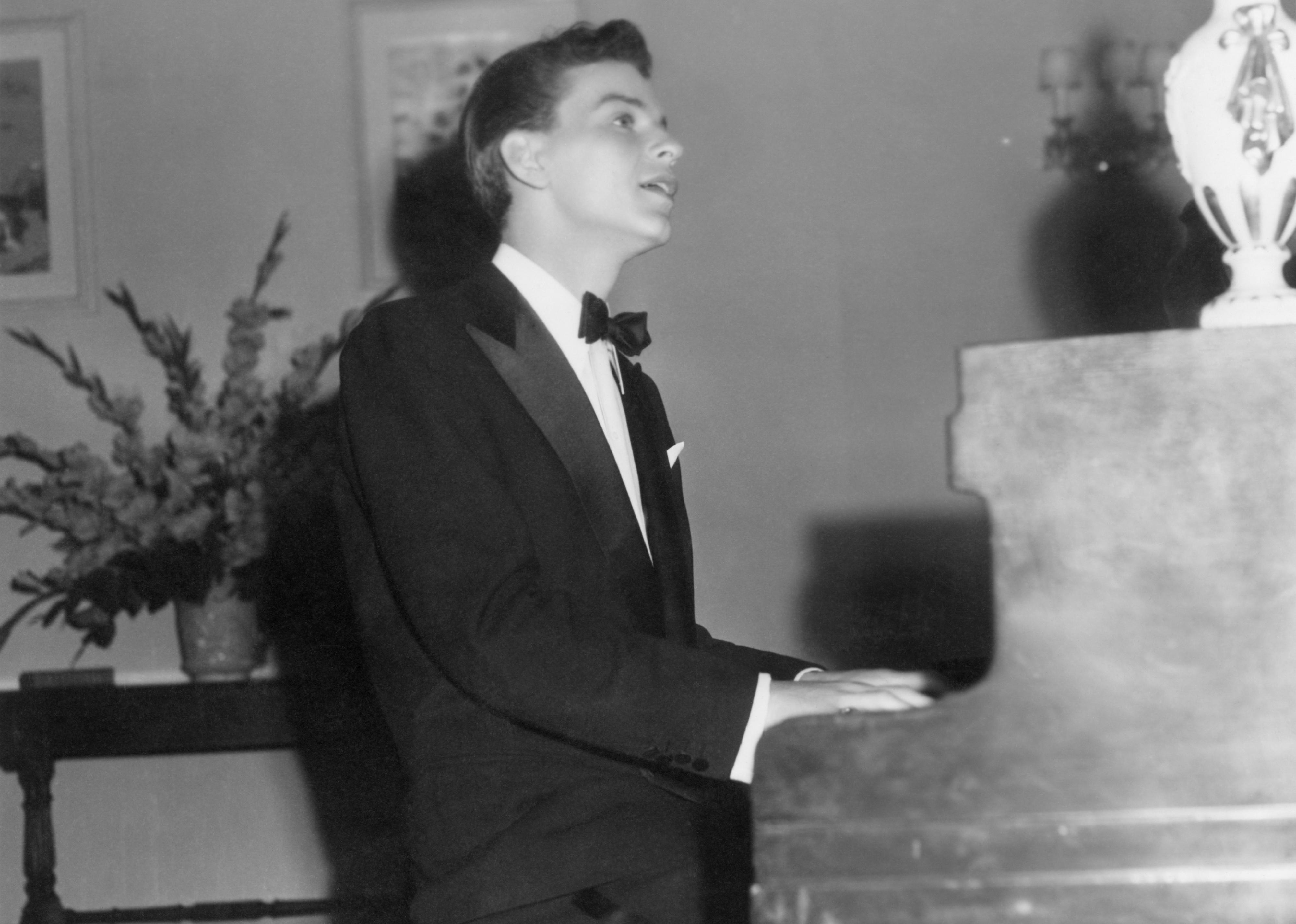
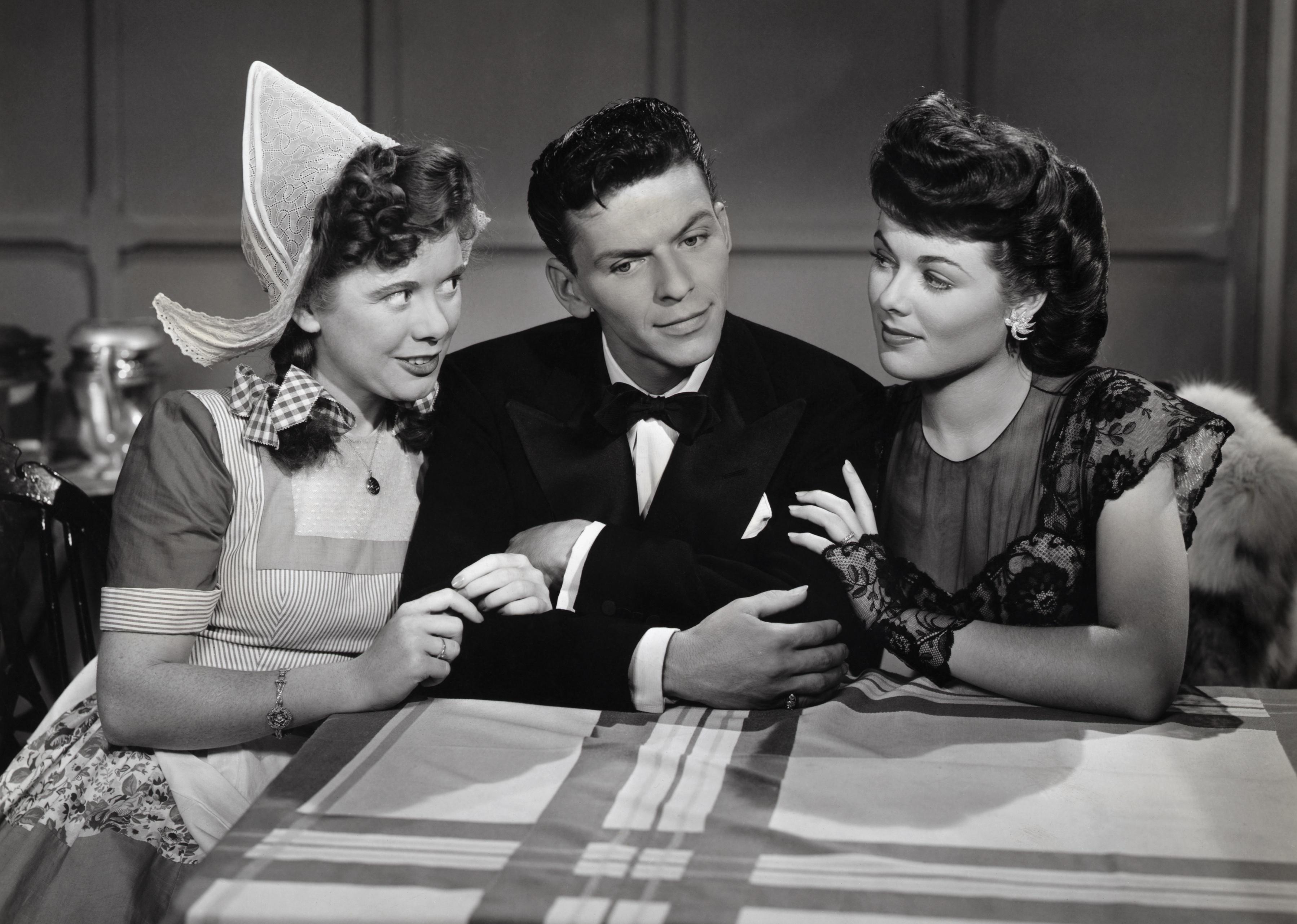
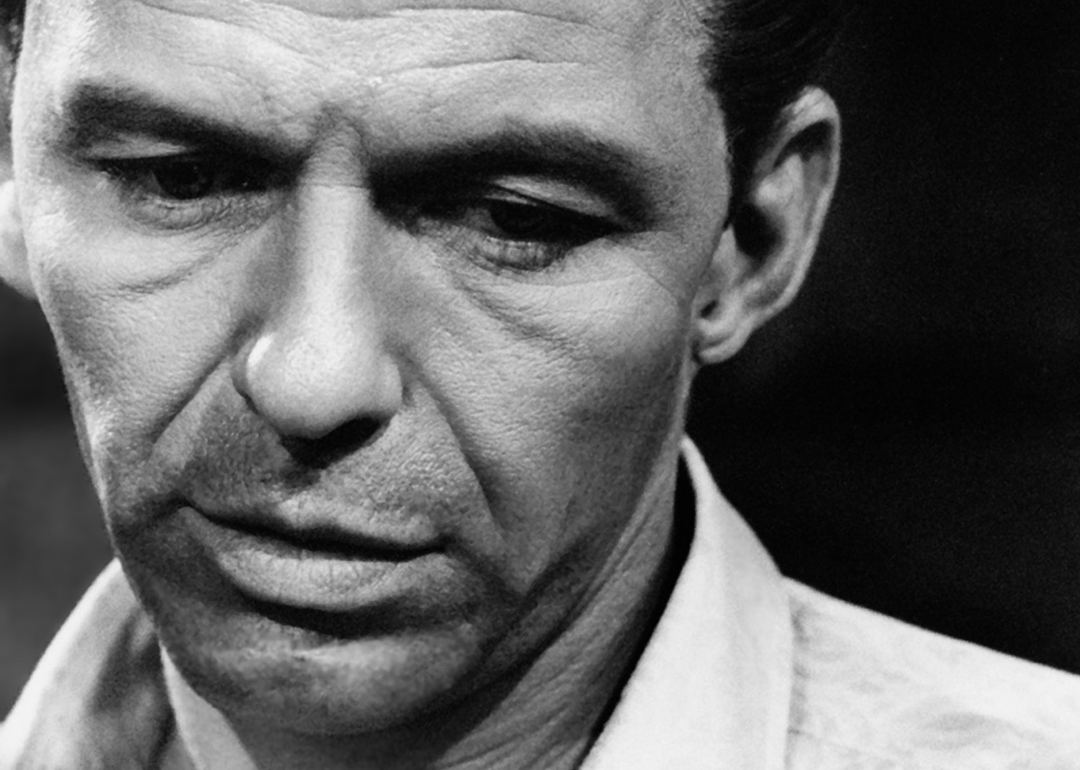
Frank Sinatra poses for a portrait in 1958.

Frank Sinatra: The life story you may not know

Written by:
August 9, 2023
Bettmann // Getty Images

Frank Sinatra: The life story you may not know

With a voice Frank Sinatra is one of the most influential figures of the 20th century. His 60-year singing career paved the way for everything from to the emergence of fan culture and pop superstardom as we know it today, so it's easy to forget what else Sinatra was: an Oscar-winning actor with under his belt; the ; a and other influential figures; and a man with a documenting ties to the mafia, extortion and racketeering charges, and more.

Sinatra's legacy is as complex and full of contradictions as the man himself was. He is remembered for bringing pop music into the realm of high culture and for infusing a kind of intimacy and emotionality into his songs that was new to many audiences of the time. He is also who was easily angered and known to be violent. His tumultuous relationships with women were often fodder for headlines and public speculation, as were his public friendships with mob bosses and mafiosos. He was, and is, whose influence is still potent today.

To commemorate the career and personal life of one of America's most legendary artists, compiled a list of 25 things about Frank Sinatra's life you may not know, drawing from news accounts, biographies, magazine interviews, and music databases.

Frank Sinatra in "Higher and Higher."
1 / 25
Bettmann // Getty Images

1915: Born in Hoboken

The only child in Hoboken, New Jersey, Sinatra weighed 13 pounds and due to being breech. He was reportedly mistaken for stillborn until his grandmother poured cold water over the baby and slapped his back. The marks from the forceps remained on his face for the rest of his life, prompting the nickname "Scarface" from his teenage peers.

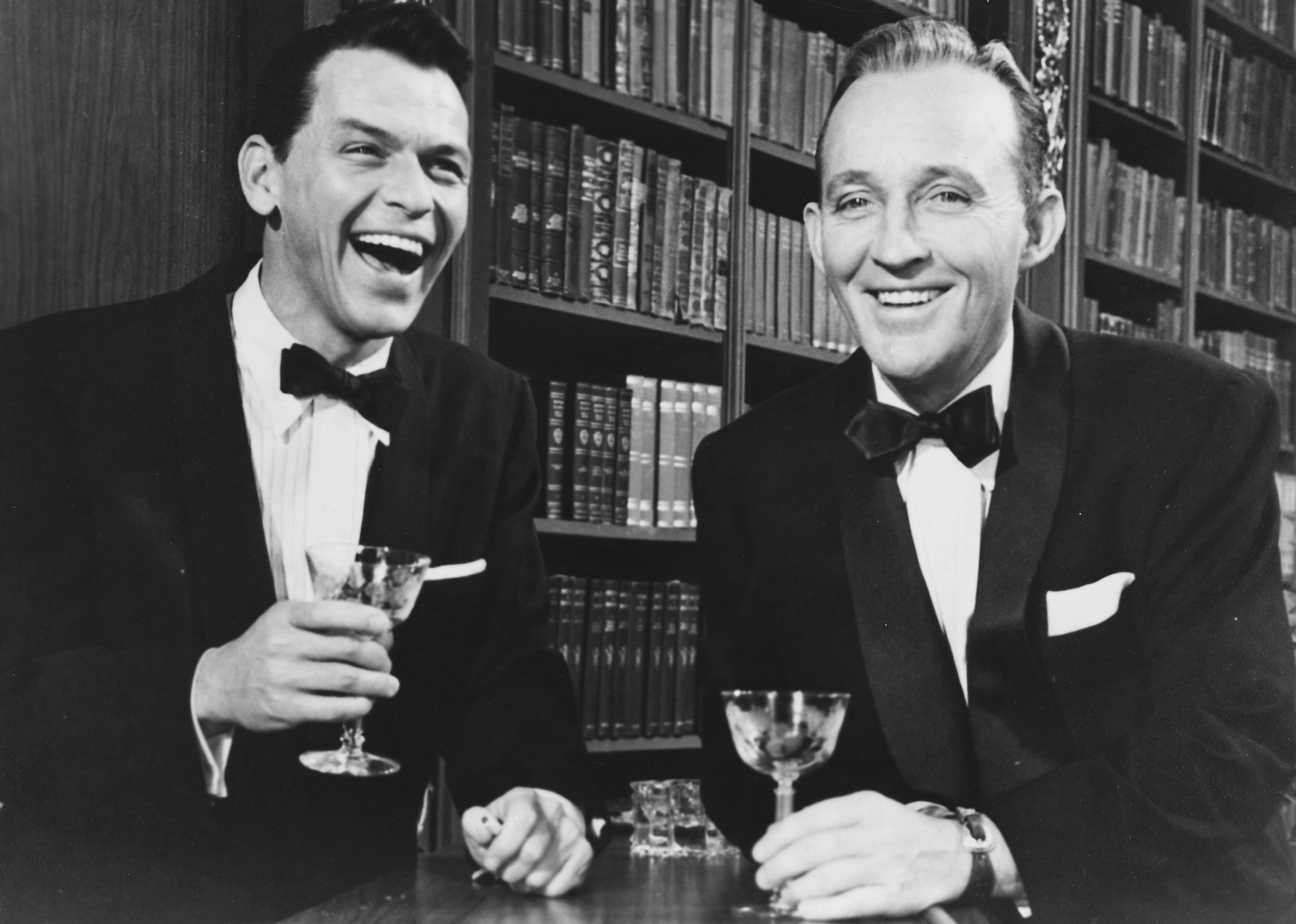
Frank Sinatra and Bing Crosby in 'High Society'.
2 / 25
Silver Screen Collection // Getty Images

1931: Bing Crosby inspires a career in music

According to legend, , the iconic singer and actor whom , perform in concert or a film in the early '30s鈥攆rom there, he decided he wanted to pursue music seriously. His mother allowed him to drop out of high school to begin his singing career, and she even helped him find work as he struck out on his path.

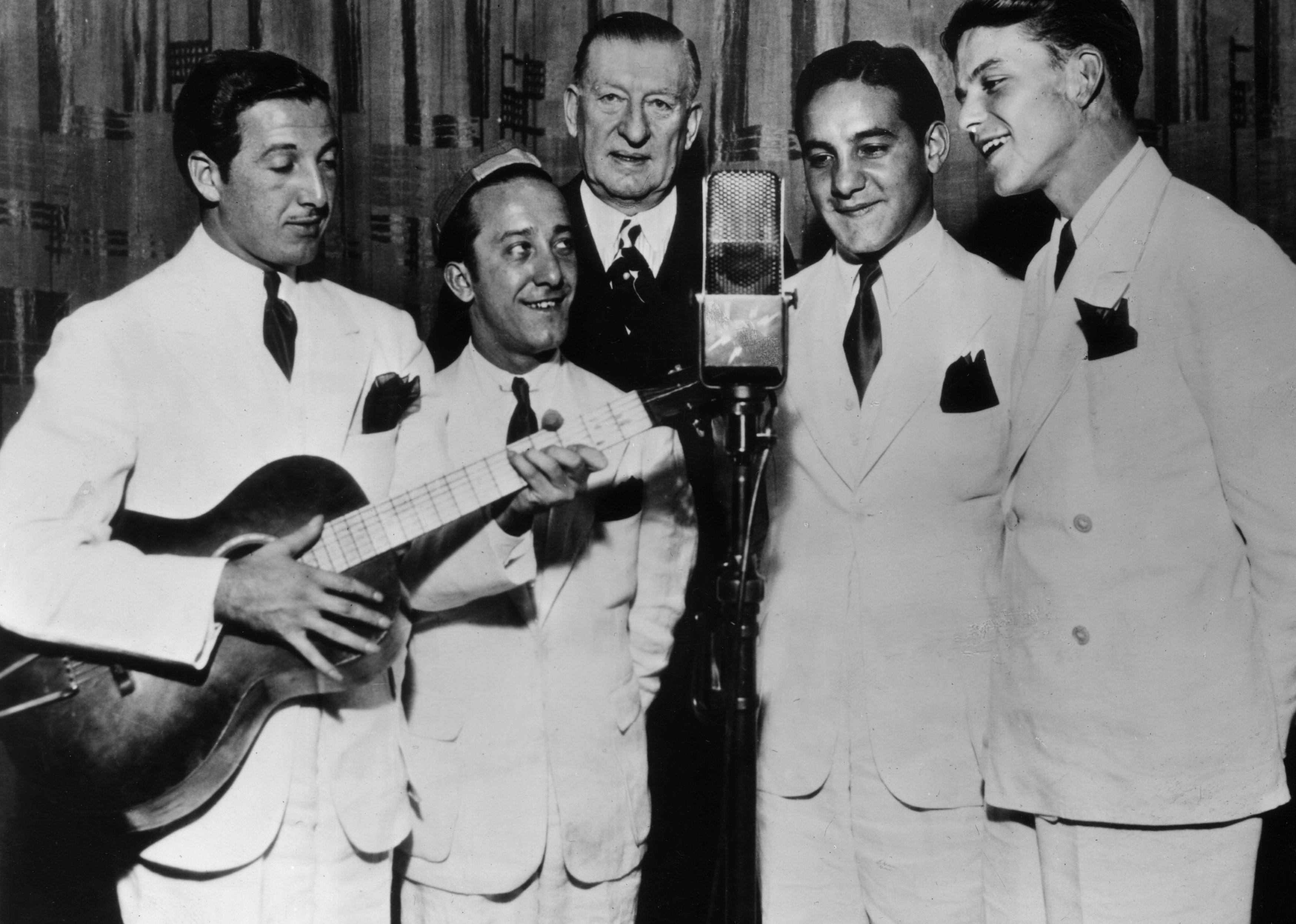
Frank Sinatra singing with The Hoboken Four on 'The Amateur Hour ' radio show.
3 / 25
CBS Photo Archive // Getty Images

1935: Early work

Young Sinatra joined an existing Hoboken-based trio called the Three Flashes, and the group became known as the Hoboken Four in 1935. After performing together for a while, Sinatra left to pursue his own gigs.

He got a job as a singing waiter at a club called the Rustic Cabin, a gig that would prove pivotal since it . It was through these radio broadcasts Sinatra captured the attention of famous trumpeter and big-band leader Harry James.

In 1939, Sinatra joined the band and began performing and recording on a larger stage than ever before.

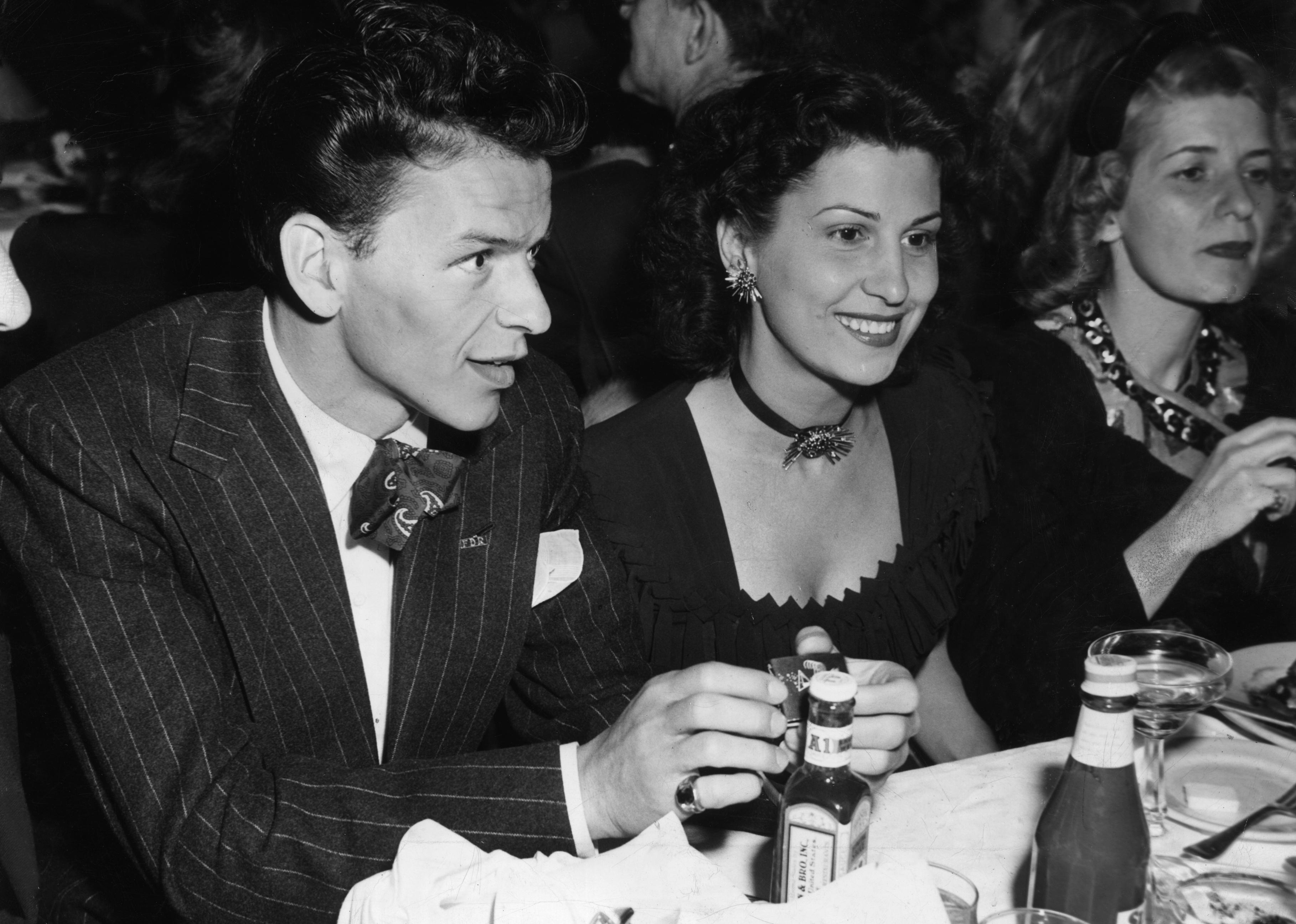
Frank Sinatra sitting at a table in a nightclub next to his first wife, Nancy Barbato.
4 / 25
Hulton Archive // Getty Images

1939: Marries childhood sweetheart

That same year, Sinatra married Nancy Barbato, his high school sweetheart. They moved in together in New Jersey and lived modestly at first, . Once Sinatra became a part of Harry James' band, the two traveled together for performances.

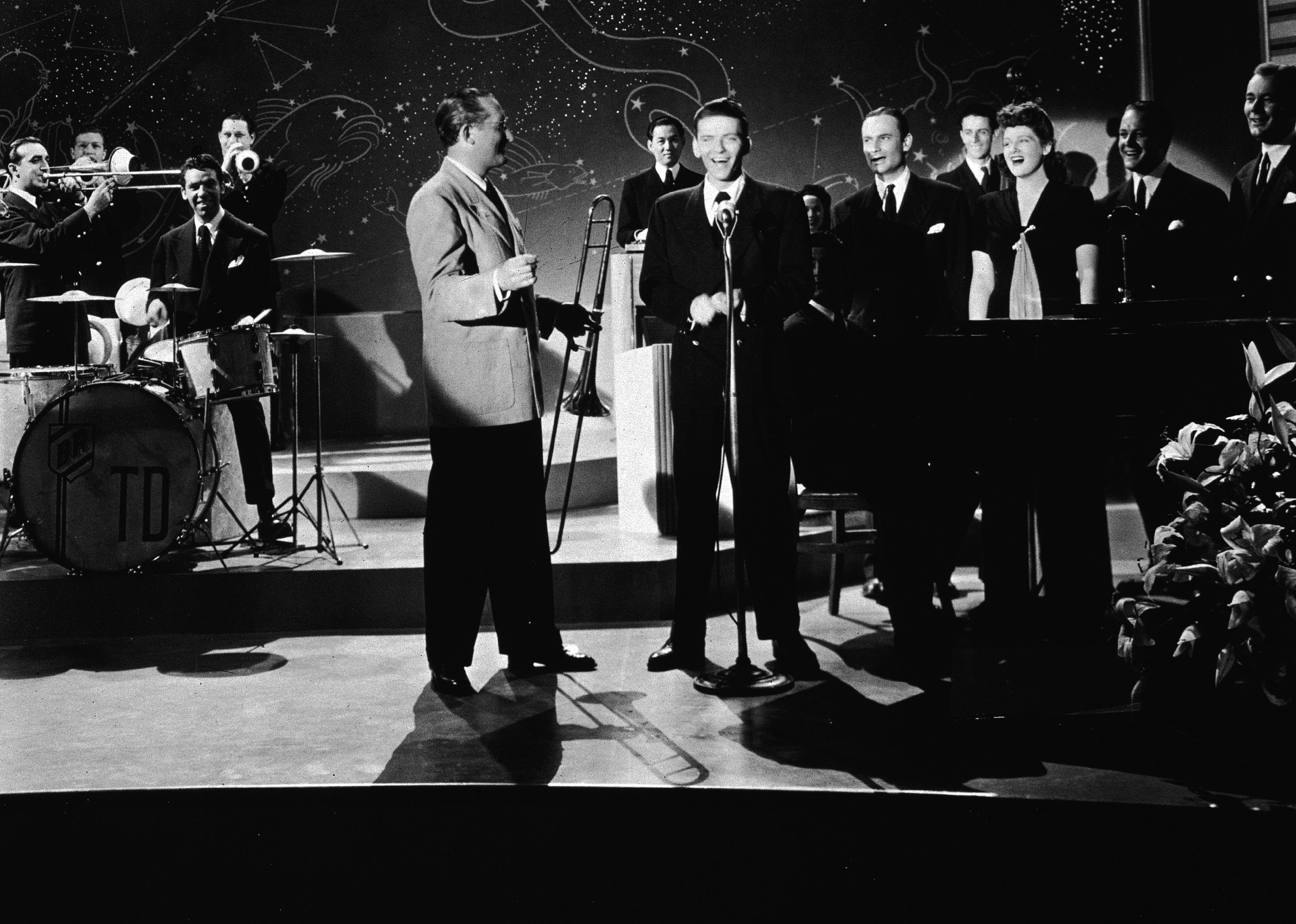
Frank Sinatra performs with the Tommy Dorsey Orchestra in a still from the film, 'Ship Ahoy'.
5 / 25
MGM Studios // Getty Images

1940: Joins Tommy Dorsey's band

Sinatra's tenure with Harry James' band was short-lived, as he soon jumped ship to join Tommy Dorsey's much more popular big band. The move was an important moment for the evolution of Sinatra's vocal style, which was heavily and trombone playing.

During the two years Sinatra was with the band, he paid close attention to Dorsey's long phrasing and where and when he paused for breath. Sinatra even , eventually allowing him to sing long, unbroken phrases.

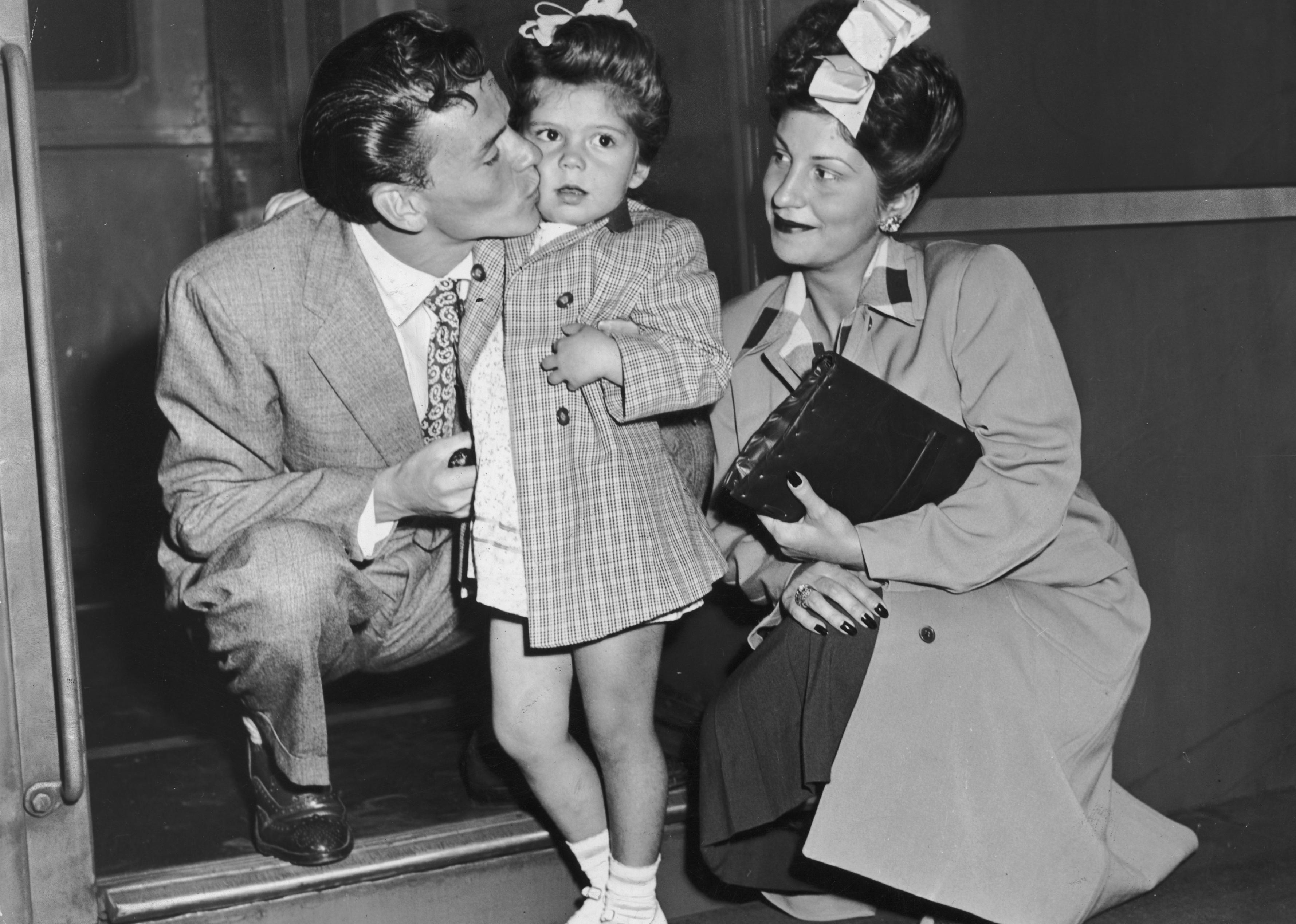
Frank Sinatra crouches to kiss his daughter, Nancy Jr. while his wife watches at a train platform.
6 / 25
Hulton Archive // Getty Images

1940: Nancy is born

Nancy and Frank had their first child, Nancy Jr., in 1940, followed by Frank Jr. in 1944 and Christina in 1948. Sinatra was as his career ramped up throughout the '40s, and when he was away from home.

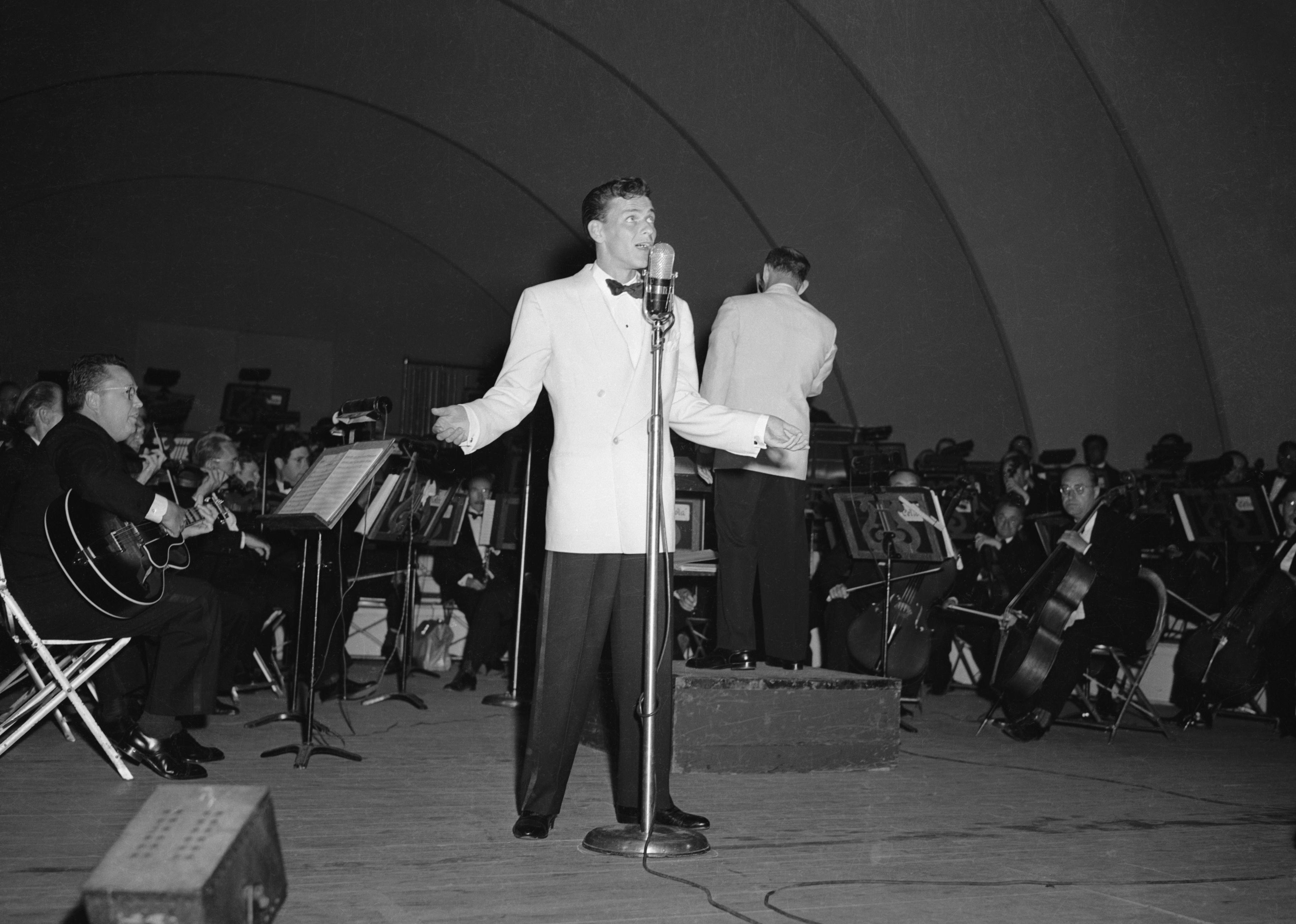
Frank Sinatra performs at the Hollywood Bowl.
7 / 25
Bettmann // Getty Images

1942: Goes solo

In 1942, after beginning to develop a following, Sinatra left Dorsey's band to strike out on his own. The split was not amicable鈥擠orsey reportedly told Sinatra, "I hope you fall on your a--"鈥攁nd Sinatra was bound by a contract to Dorsey that stipulated he would for the next decade. Nevertheless, Sinatra was determined to create a career for himself in the style of Bing Crosby, and he insisted on departing the band.

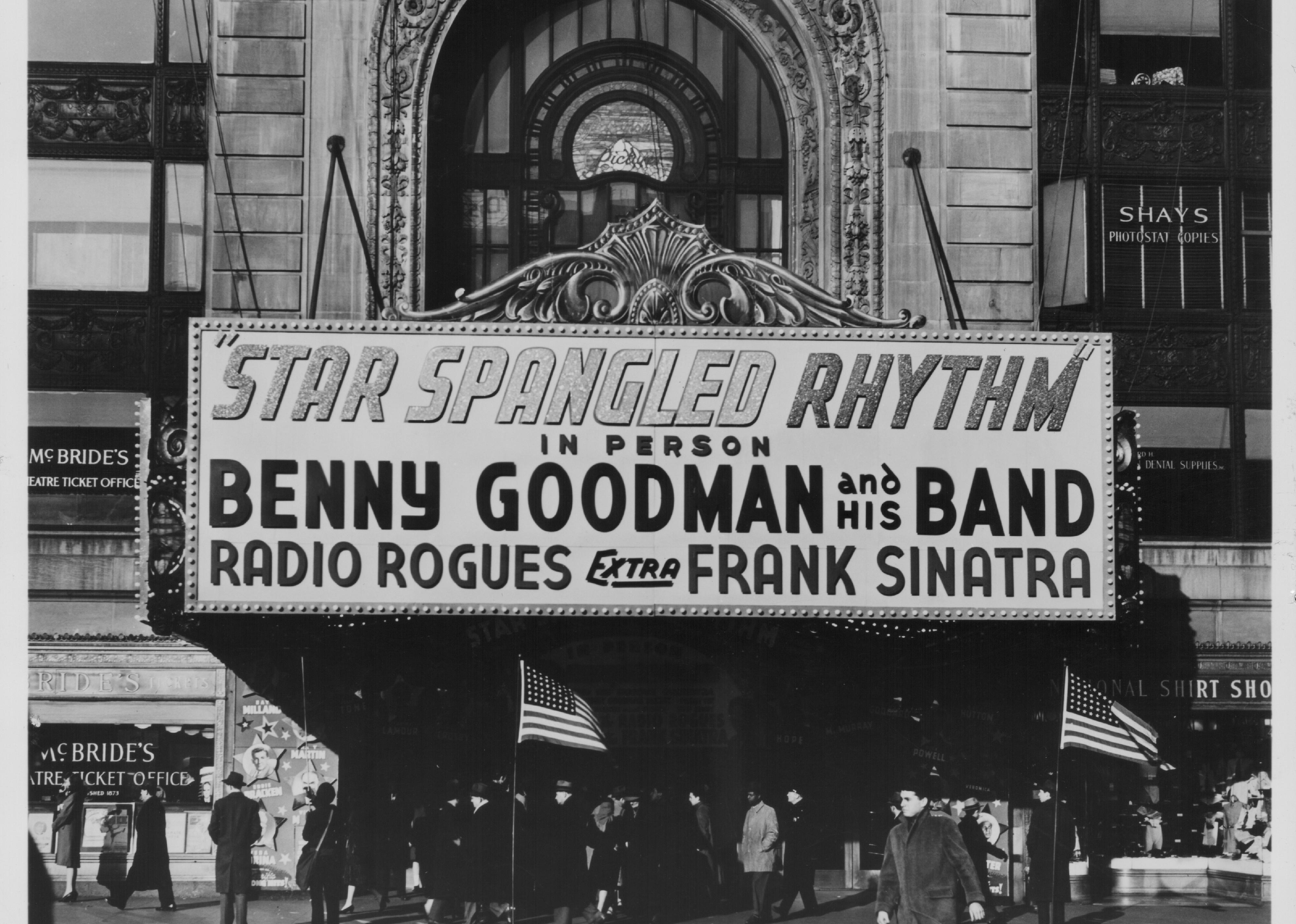
An advertisement awning outside a theater featuring Benny Goodman and Frank Sinatra.
8 / 25
Archive Photos // Getty Images

1942: Paramount Theater performance sparks record deal and 'Sinatramania'

In 1942, Benny Goodman was set to play a few performances at New York's popular big band venue, the Paramount Theater. The theater's manager asked Goodman if Sinatra could sing with them, and he agreed despite not knowing who Sinatra was.

The night of the show, , and the room exploded when Sinatra, then 27, came onstage. The screams of audience members were reportedly so enthusiastic that Benny Goodman and Sinatra himself were stunned, and the mania over their appearance made headlines, a harbinger of the massive fan enthusiasm that Elvis and the Beatles would later invoke.

That night would be Sinatra's big break, as he was signed to Columbia Records, scored a movie contract with R.K.O. Pictures, and even got a radio contract.

Frank Sinatra in Movie Still from Higher and Higher.
9 / 25
Bettmann // Getty Images

1943: Hollywood acting debut

Sinatra took on his first acting role in a Hollywood picture in 1943 with the film "Higher and Higher" and began appearing in at least one film every year for several years afterward. He , frequently playing roles in which he won the hearts of women while remaining ignorant of his allure.

In 1945, as part of an effort to fight antisemitism at the end of World War II, in which he played himself coming to the aid of a young Jewish boy being bullied. In the film, he teaches kids to practice religious tolerance (although, in the process, he uses slurs prejudicial toward Japanese and Japanese American people). The film .

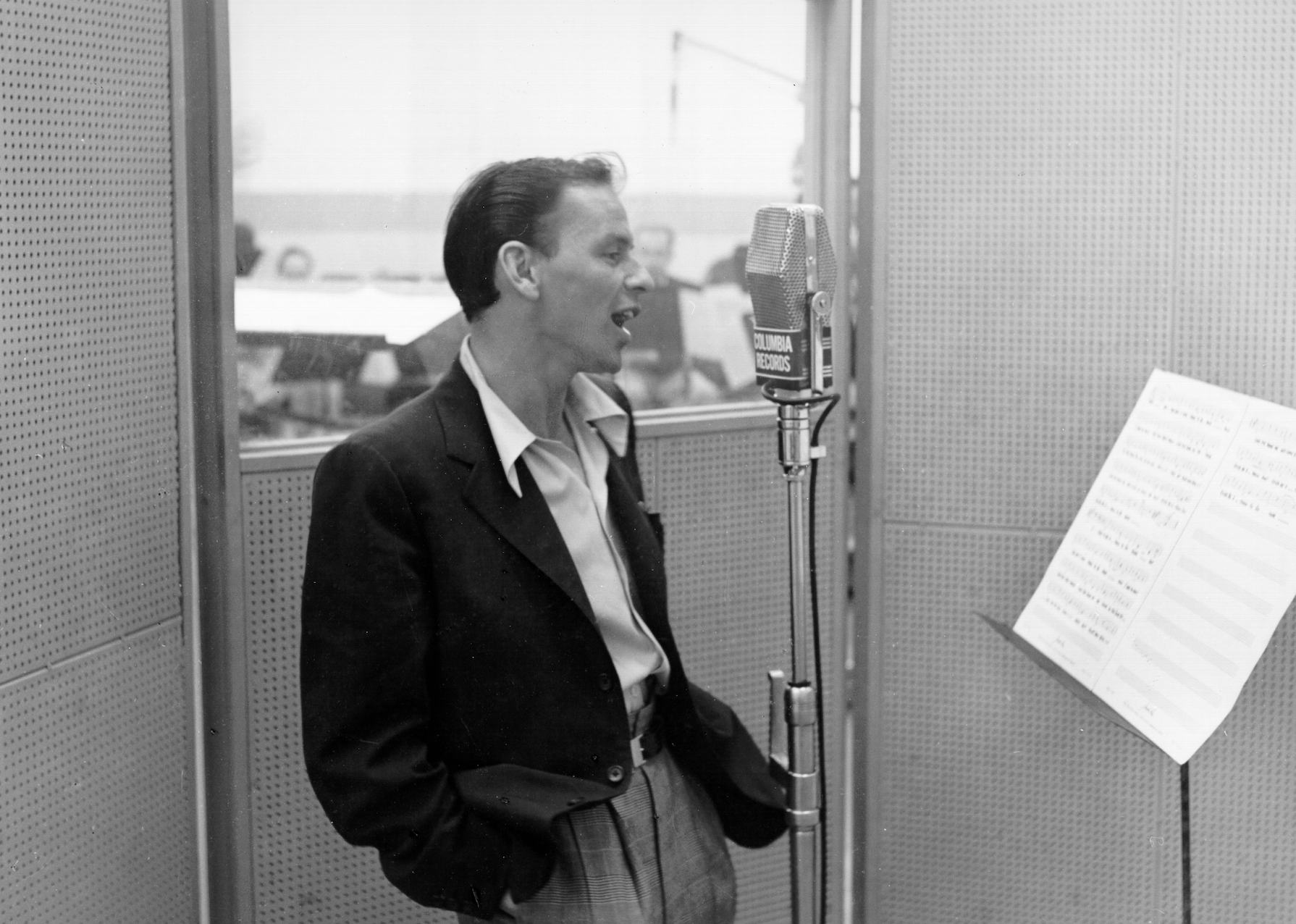
Frank Sinatra records in the studio at a Columbia Records microphone.
10 / 25
Michael Ochs Archives // Getty Images

1943: A string of hits

The year 1943 also marked the beginning of Sinatra's successful career as a recording and performing singer. With Columbia, , including "These Foolish Things," "Someone to Watch Over Me," "Put Your Dreams Away," "I'll Never Smile Again," "Nancy (With the Laughing Face)," and "That Old Black Magic." By the mid-'40s, Sinatra was so popular that he was invited to the White House by President Franklin Roosevelt, whose fourth presidential term he began campaigning for.

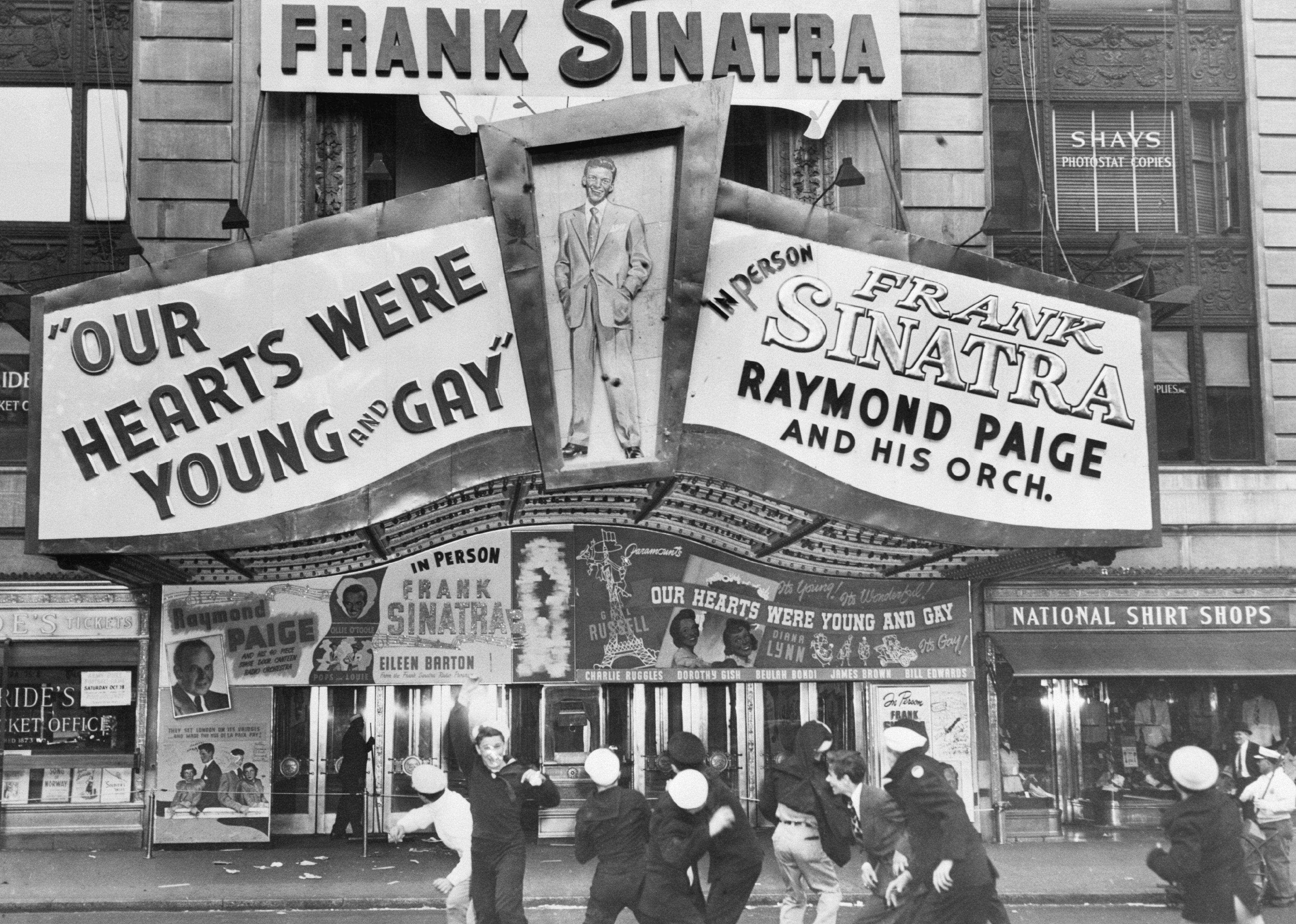
People Throwing Tomatoes at a Theater with Frank Sinatra sign.
11 / 25
Bettmann // Getty Images

1946: Peak Sinatra and the beginning of a decline

"Sinatramania" peaked in the middle of the decade. In 1944, two years after his original performance, he returned to the Paramount Theater, that resulted in riots outside between fans competing for entry.

In 1946, he had 15 hit singles, but that year also marked the beginning of a slide into an era of unpopularity many thought he would not recover from. Between acting in a string of unsuccessful films, damaging his vocal cords (and roughening his normally velvety sound), and becoming the subject of rumored ties to the mob, Sinatra had fallen, by many standards, from the position he had occupied in American pop culture.

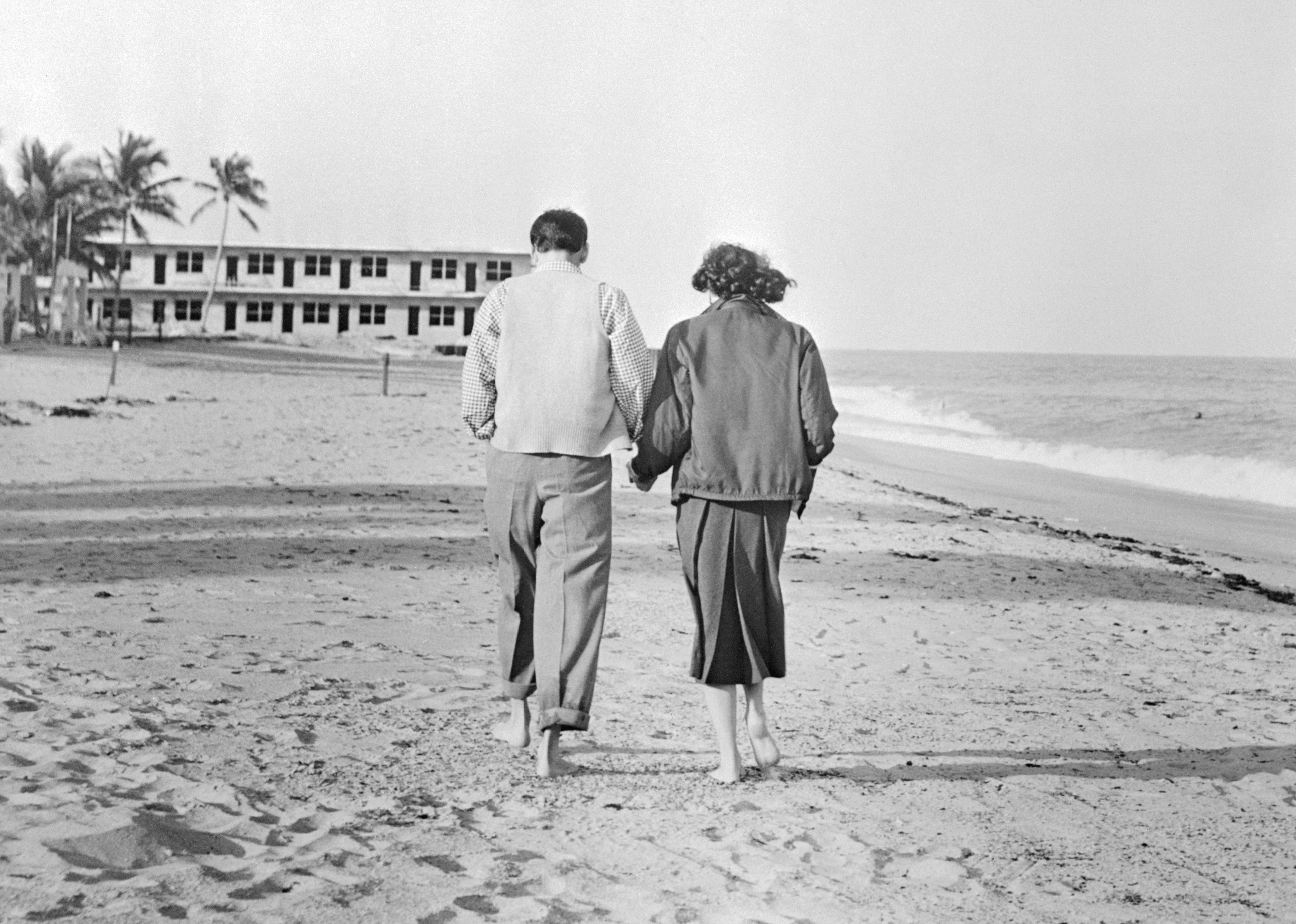
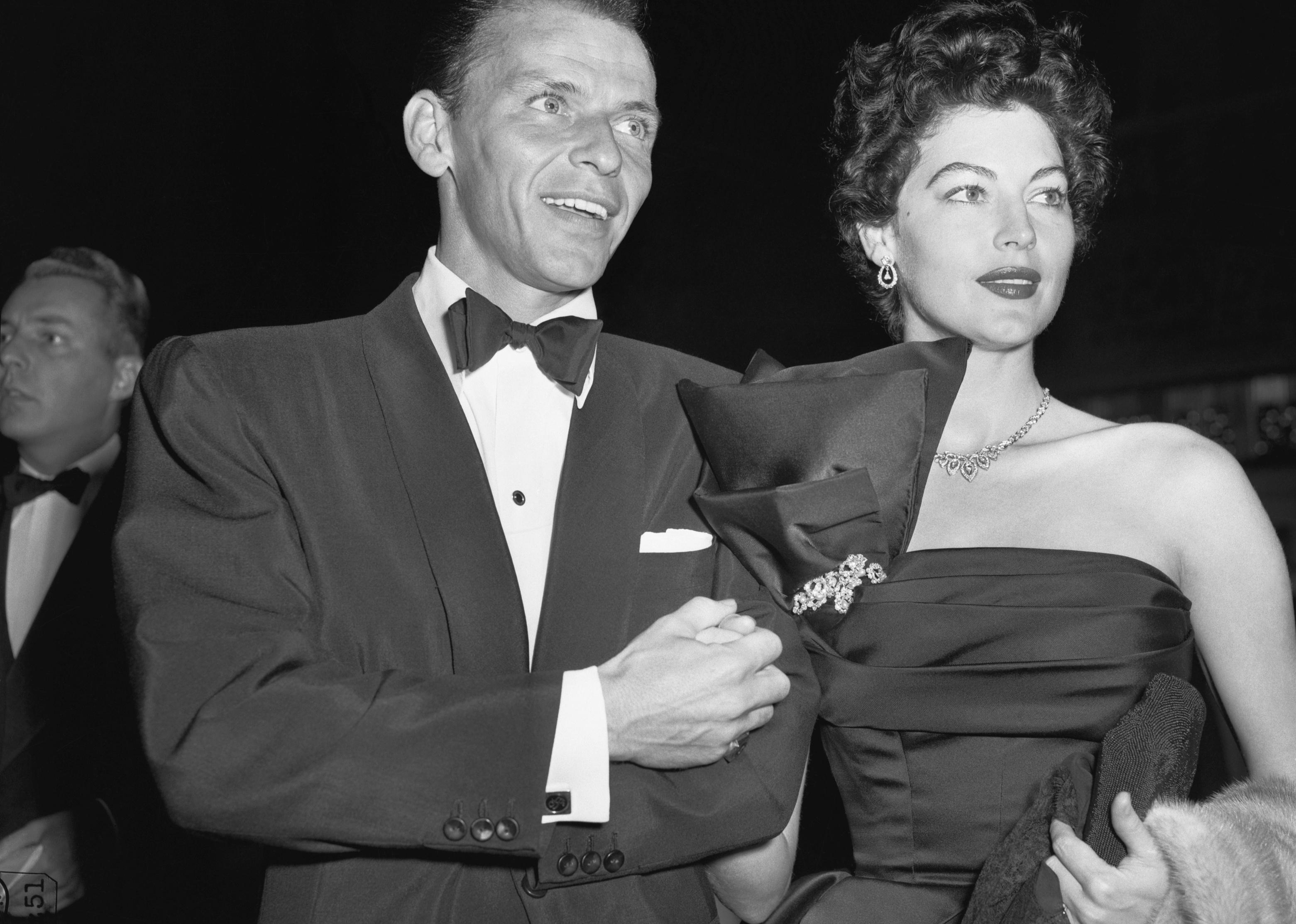
Newlyweds Frank Sinatra and Ava Gardner stroll along a beach in Miami.
12 / 25
Bettmann // Getty Images

1949: Marriage troubles

As Sinatra's career began to falter, his marriage, too, was suffering. The Sinatra family had for Frank's career, bringing him into contact with Hollywood's beautiful, rich, and famous. At the end of the decade, he met Hollywood star Ava Gardner, and the two began a public affair that ultimately ended Sinatra's 12-year marriage to Nancy.

Though Frank and Nancy remained close friends and confidantes for the rest of their lives, the end of their marriage became ugly, with Frank becoming more shameless around his infidelity and Nancy refusing to accept a divorce for nearly two years. The two finally divorced in 1951, and Frank married Gardner within a week of its finalization.

Frank Sinatra Out With Ava Gardner.
13 / 25
Bettmann // Getty Images

1951: Suicide attempts and dark days

Sinatra's career and into the early '50s, not aided by his affair with and subsequent marriage to Ava Gardner. Gardner's career, on the other hand, was , with films like 1946's "The Killers" making her a star. Sinatra and Gardner's marriage was infamously tumultuous, characterized by intense fighting, jealousy, and possessiveness, on the part of Sinatra, and worsening mental health issues that resulted in . Their marriage ended in 1953.

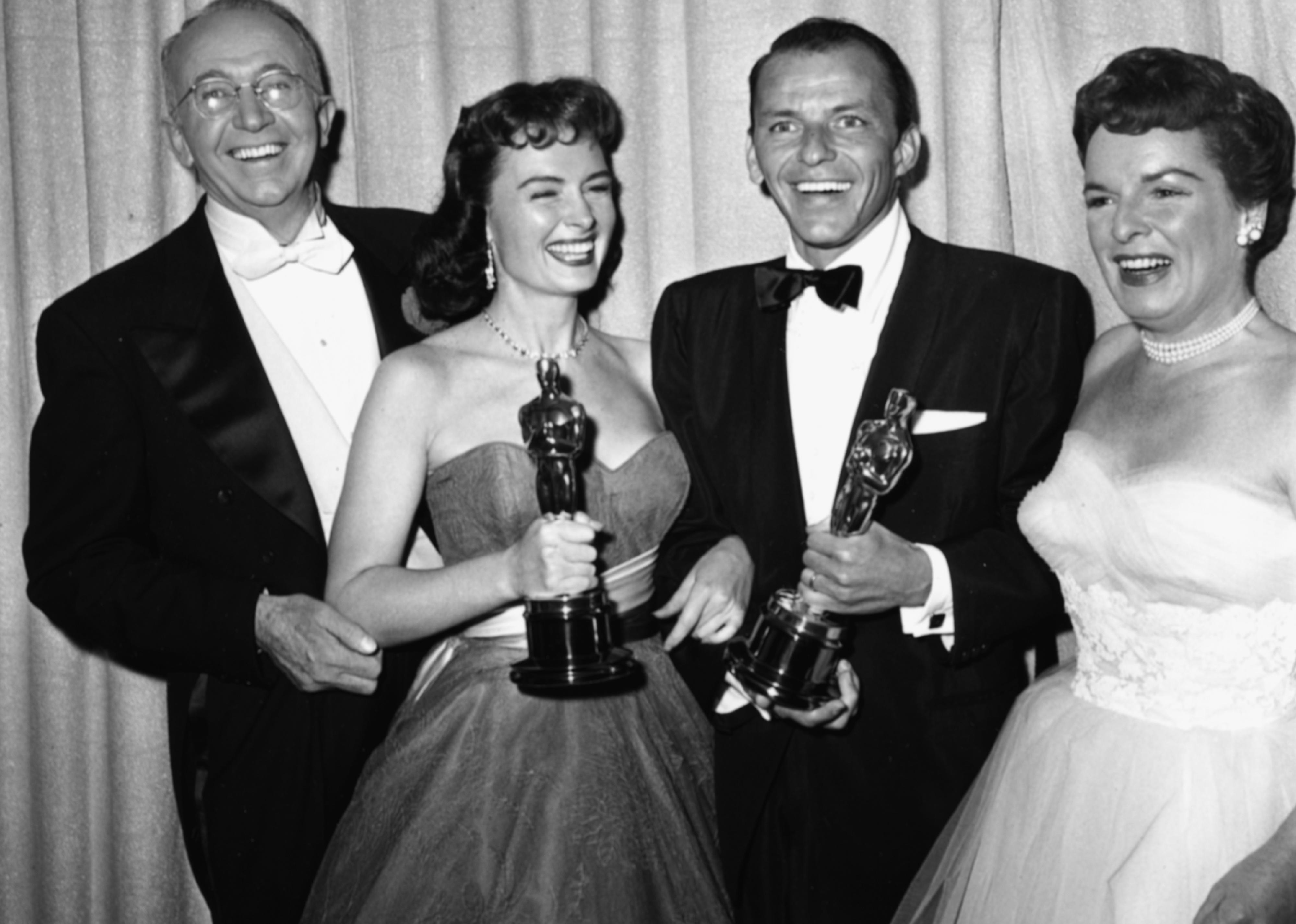
Frank Sinatra and Donna Reed holding their supporting actor Oscars.
14 / 25
Archive Photos // Getty Images

1953: Career back on track

In 1953, Sinatra began a comeback that launched him back into the spotlight. The first sign that his fortune was changing was being cast in the war drama "From Here to Eternity" alongside Montgomery Clift and Burt Lancaster. Sinatra won an Oscar and a Golden Globe for Best Supporting Actor for playing Maggio, an Italian American soldier.

His second stroke of luck happened that same year when Capitol Records signed him for a one-year contract. Once again able to sing鈥攁lbeit with a slightly different, more mature voice鈥攈e released "In the Wee Small Hours," an album that returned him into the ears (and good graces) of the public.

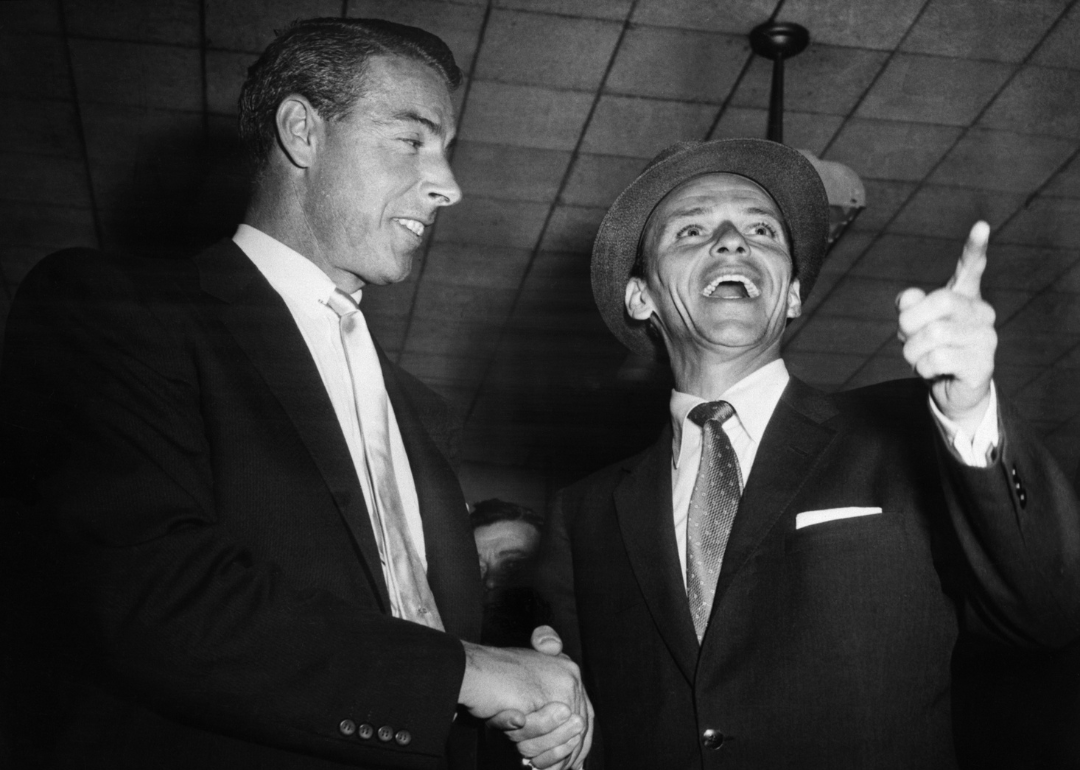
Frank Sinatra is greeted by Joe DiMaggio on his arrival at Idlewild Airport.
15 / 25
Bettmann // Getty Images

1954: The "Wrong-Door Raid"

In 1954, Sinatra and his friend, the famous Yankee Joe DiMaggio, were eating together when a report came from a private detective that Marilyn Monroe, DiMaggio's wife at the time, was with another man at an apartment nearby. Sinatra and DiMaggio abruptly left their dinner and they thought Monroe was in, only to find they had broken into the wrong one, terrifying that apartment's resident.

DiMaggio and Monroe, whose short marriage had already been rocky, got a divorce shortly after, and Sinatra and DiMaggio were sued by the victim of their break-in. Later, when rumors surfaced that Monroe and Sinatra had started a romantic relationship, DiMaggio was furious and ultimately barred him from attending Monroe's funeral in 1962.

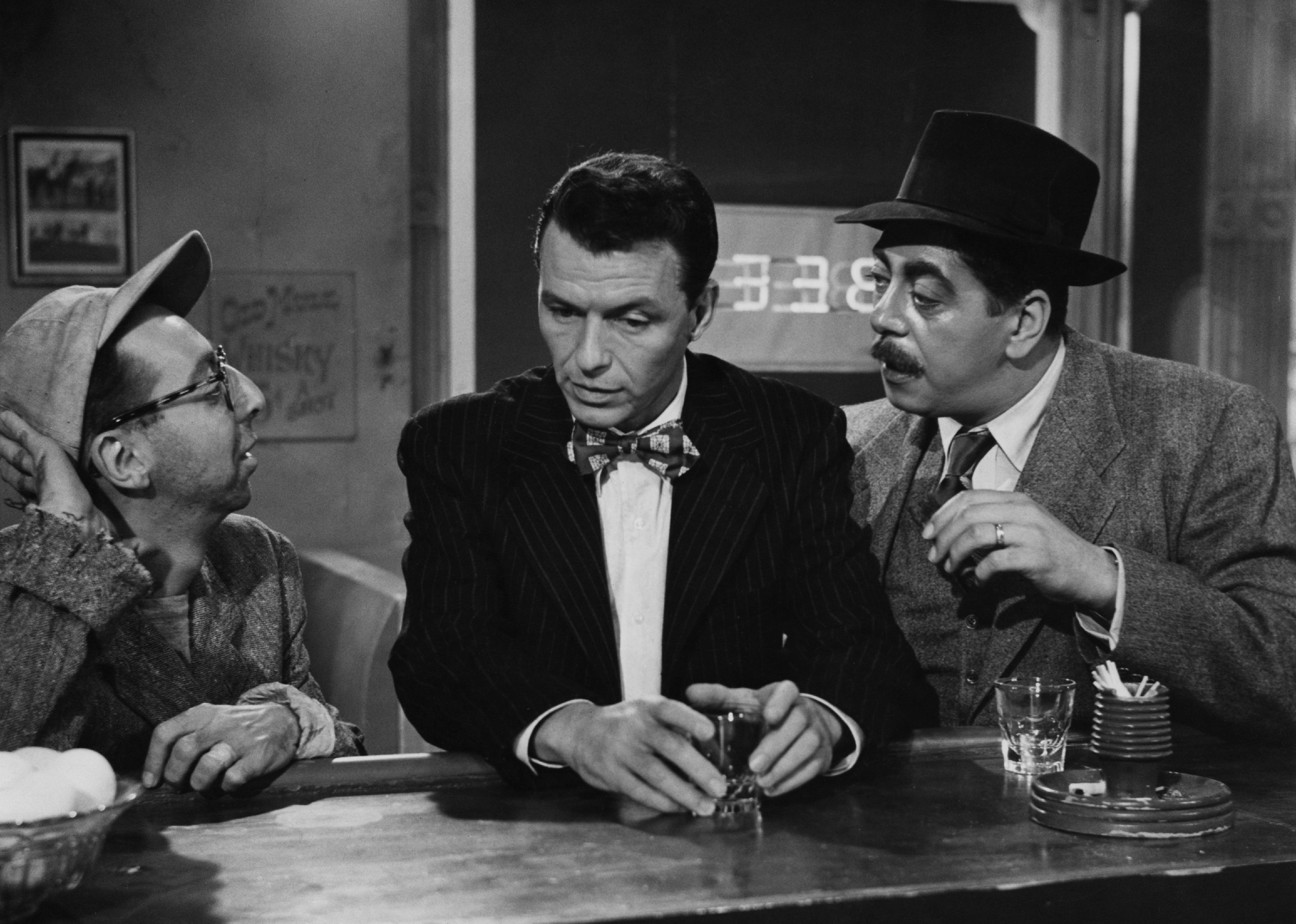
Frank Sinatra as Frankie Machine in 'The Man With The Golden Arm'.
16 / 25
Silver Screen Collection // Getty Images

1955: Personal demons

Despite hitting his stride as both a musical hitmaker and a successful actor in the mid-'50s, Sinatra's personal life was in this period. Stories have surfaced about his propensity for rage, often exacerbated by drunkenness and triggered by small slights or perceived disrespect.

He frequently lashed out at friends and romantic interests and inflicted violence鈥攅ither personally or through one of his cronies鈥攗pon strangers he felt had insulted him. Sinatra also threatened and, in some cases, attacked and assaulted journalists who reported on his ties to organized crime or printed unflattering stories about him.

Frank Sinatra stars in the film 'The Man with the Golden Arm', 1955.
17 / 25
Archive Photos // Getty Images

1959: First Grammy wins

Sinatra scored his first Grammy wins at the second annual Grammy Awards in 1959: one for Album of the Year for "Come Dance with Me," another for Best Vocal Performance. "Come Dance with Me" was just one of several from the '50s that would become Sinatra classics, in addition to "Frank Sinatra Sings for Only the Lonely" and "Songs for Young Lovers." The decade was also packed with film performances following his success in "From Here to Eternity"鈥攈e appeared in "Guys and Dolls," "The Man with the Golden Arm" (for which he received an Academy Award nomination), "Suddenly," "Some Came Running," and more.

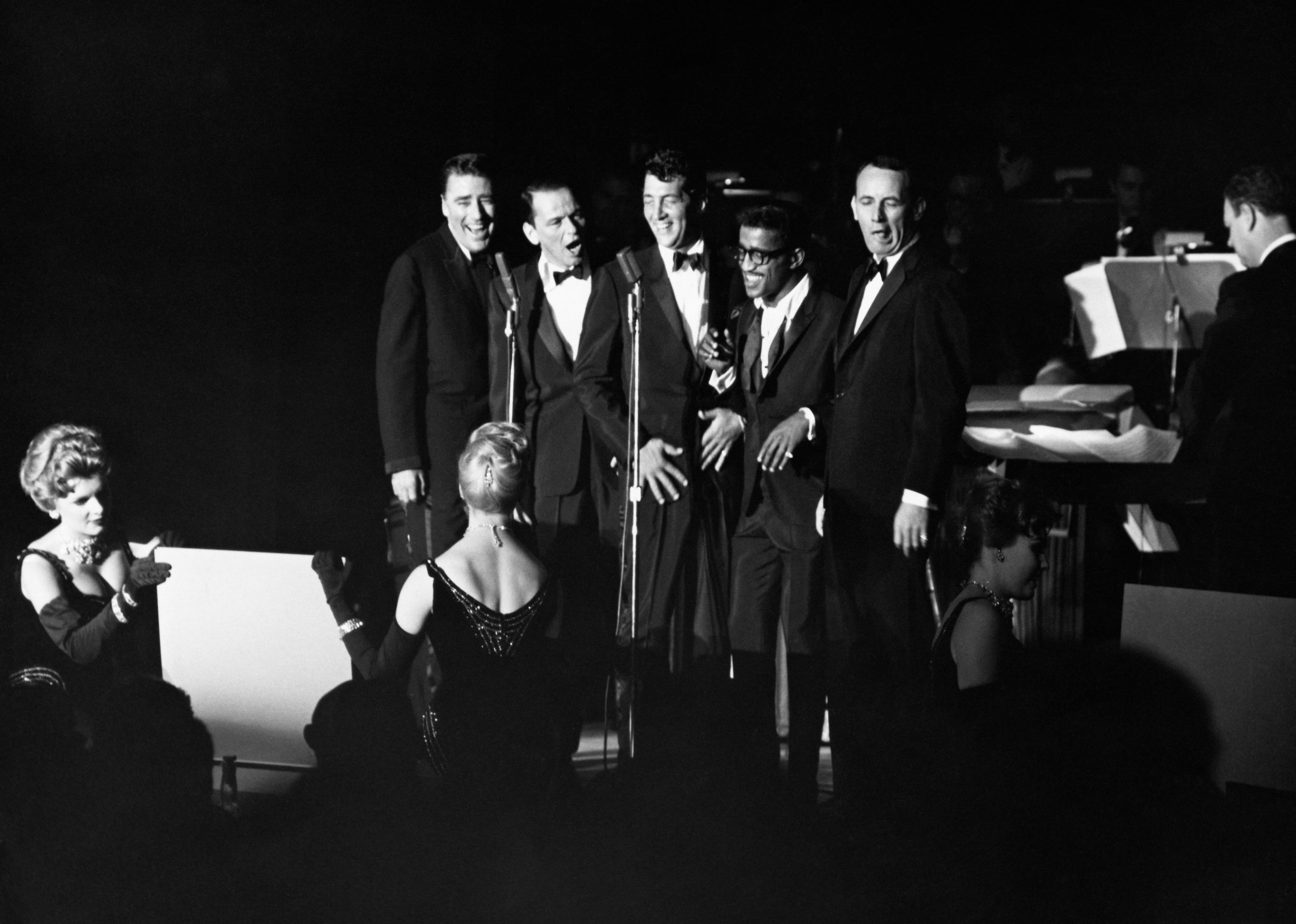
Peter Lawford, Frank Sinatra, Dean Martin, Sammy Davis Jr., and Joey Bishop performing.
18 / 25
John Springer Collection // Getty Images

1960: Ties to the mob

Throughout the '50s and into the early '60s, Sinatra comprised of fellow A-listers Dean Martin, Peter Lawford, Sammy Davis Jr., and Joey Bishop, among others. The Rat Pack, as the group was called, were famous for their Vegas exploits, various film appearances together, and high-profile connections. Among those connections was John F. Kennedy, Lawford's brother-in-law. Sinatra and fellow Rat Pack members joined forces in supporting Kennedy's presidential campaign in 1960.

In addition to lending his own fame to the campaign, he introduced Kennedy to Chicago mob boss Sam Giancana, a friend of Sinatra's, to secure union support for the soon-to-be-president. In 1963, Sinatra planned to host President Kennedy at his Palm Springs mansion, but Robert F. Kennedy . Sinatra was reportedly so betrayed that he cut ties with the Kennedys, Lawford, and eventually, the Democratic Party as a whole.

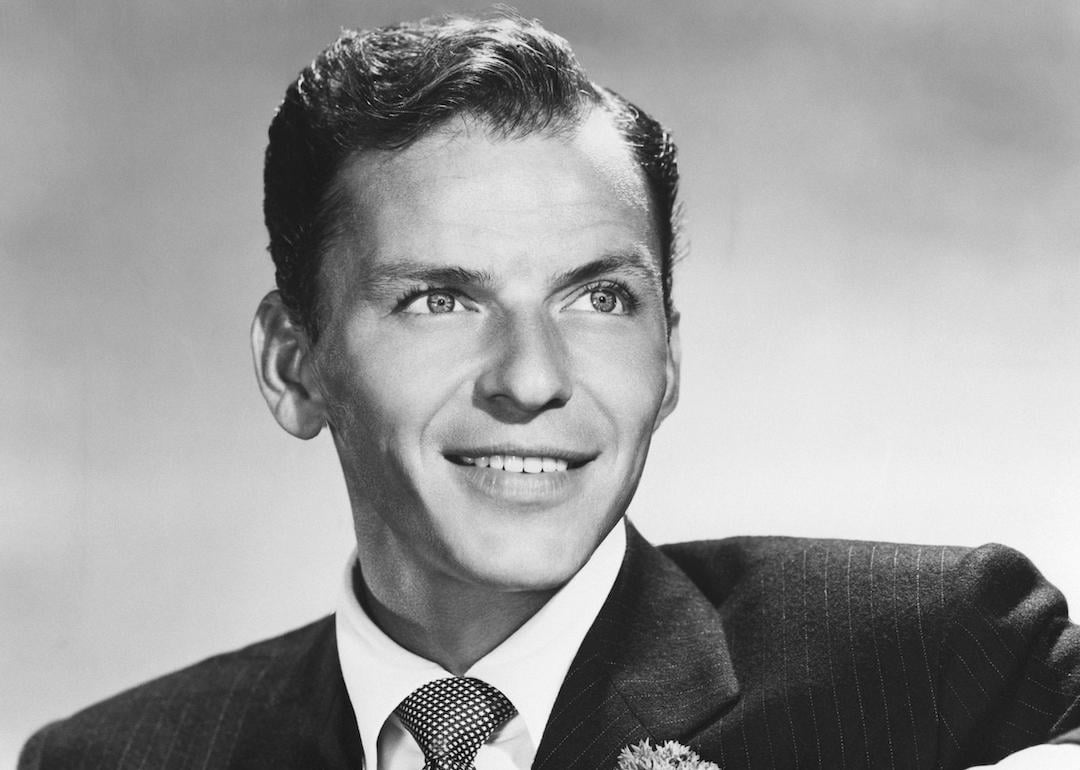
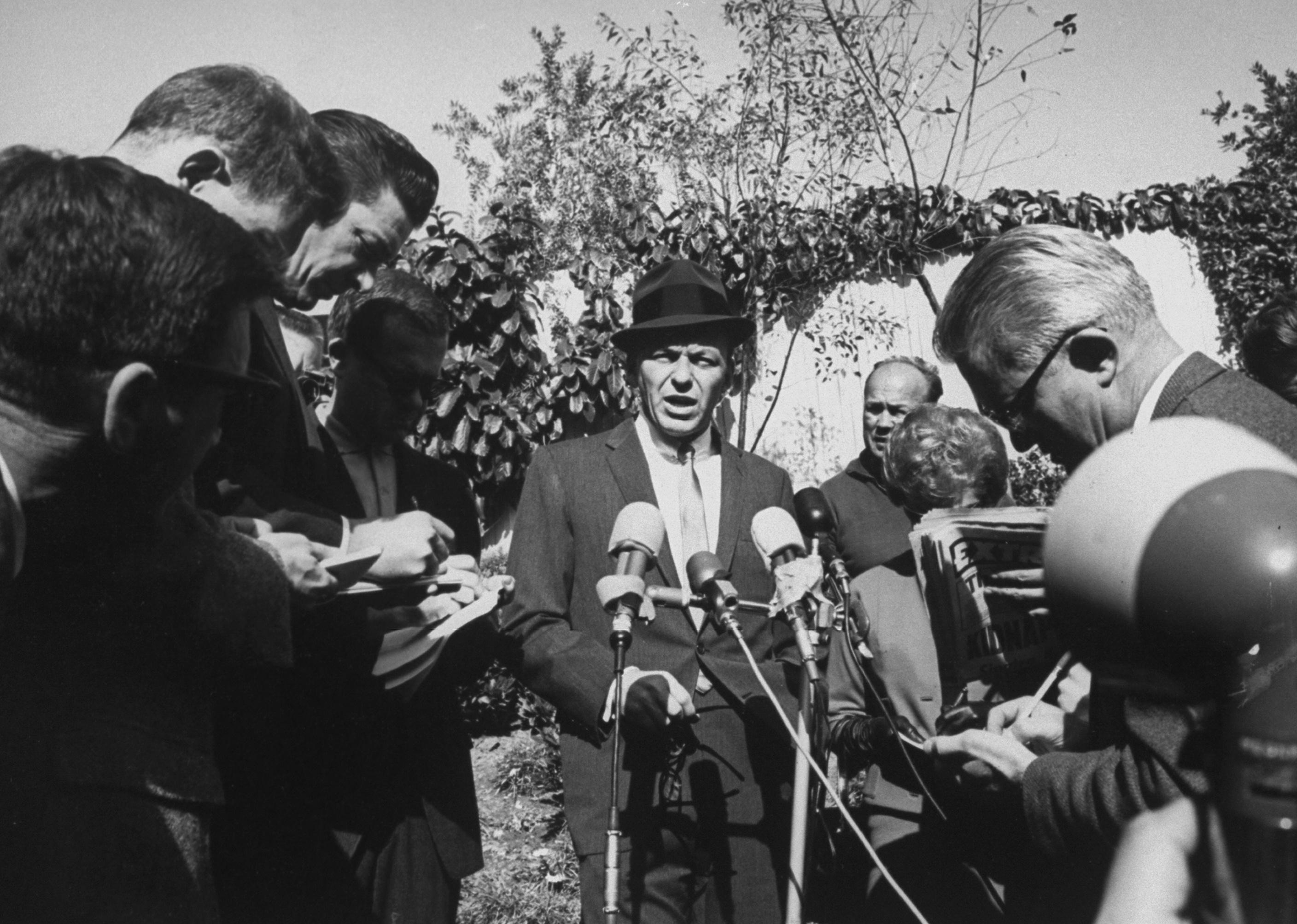
Frank Sinatra giving press conference on the kidnapping of his son Frank Jr.
19 / 25
Don Cravens // Getty Images

1963: Frank Sinatra, Jr. kidnapped

On Dec. 8, 1963, news broke that Frank Sinatra, Jr., Sinatra's 19-year-old son, had been . The perpetrators were revealed to be Frank Jr.'s former high school classmates, who had concocted the scheme to make money off the senior Sinatra. In collaboration with the FBI, Sinatra Sr. cooperated with the kidnappers, who were holding his son in a hideout in a Los Angeles suburb, and paid them $240,000 in cash.

The kidnappers released Frank Jr., who was discovered by police in Bel Air walking back to his mother's house. The perpetrators were found by the FBI shortly after. During the subsequent trial, the defense attorney argued that to get publicity for his father, a narrative that did not work in court, but it did stick in the press.

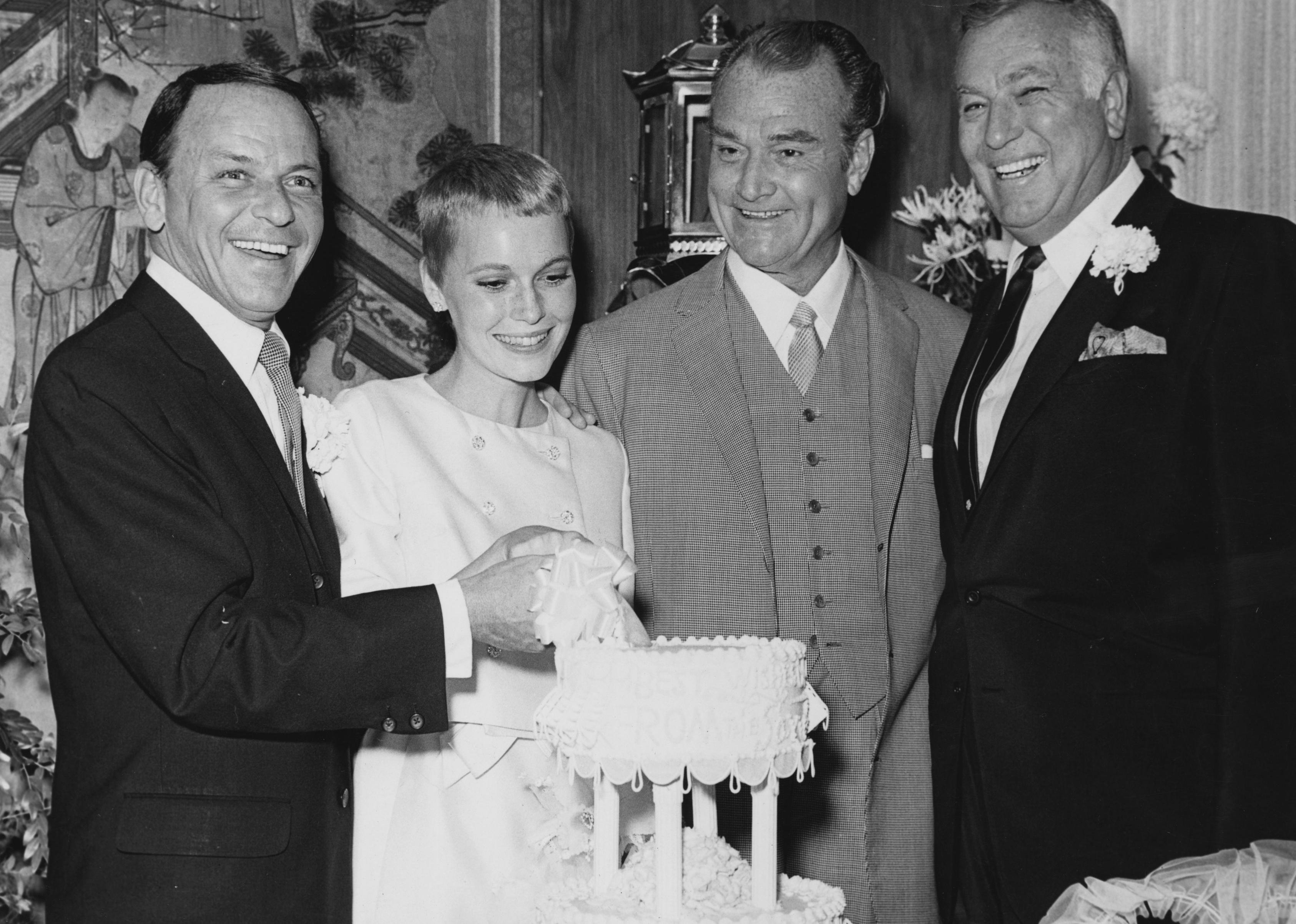
Frank Sinatra with actress Mia Farrow on their wedding day at Las Vegas with Red Skelton.
20 / 25
Avalon // Getty Images

1966: Marries Mia Farrow

Famously a womanizer, Sinatra married actor Mia Farrow when she was 21 and he was 50. The union was short-lived, lasting a mere 18 months. This marriage was not any less fraught or headline-making than his prior relationships due to their nearly 30-year age gap. Their marriage ended when Farrow opted to star in Roman Polanski's horror film "Rosemary's Baby" rather than a smaller role in a Sinatra film called "The Detective."

Farrow's role in "Rosemary's Baby" ended up being her big break, but Sinatra was reportedly so angry he served her with divorce papers while she was on set. Despite their dramatic breakup, , and that Farrow's son Ronan, who was born during her later marriage to Woody Allen, could actually be Sinatra's.

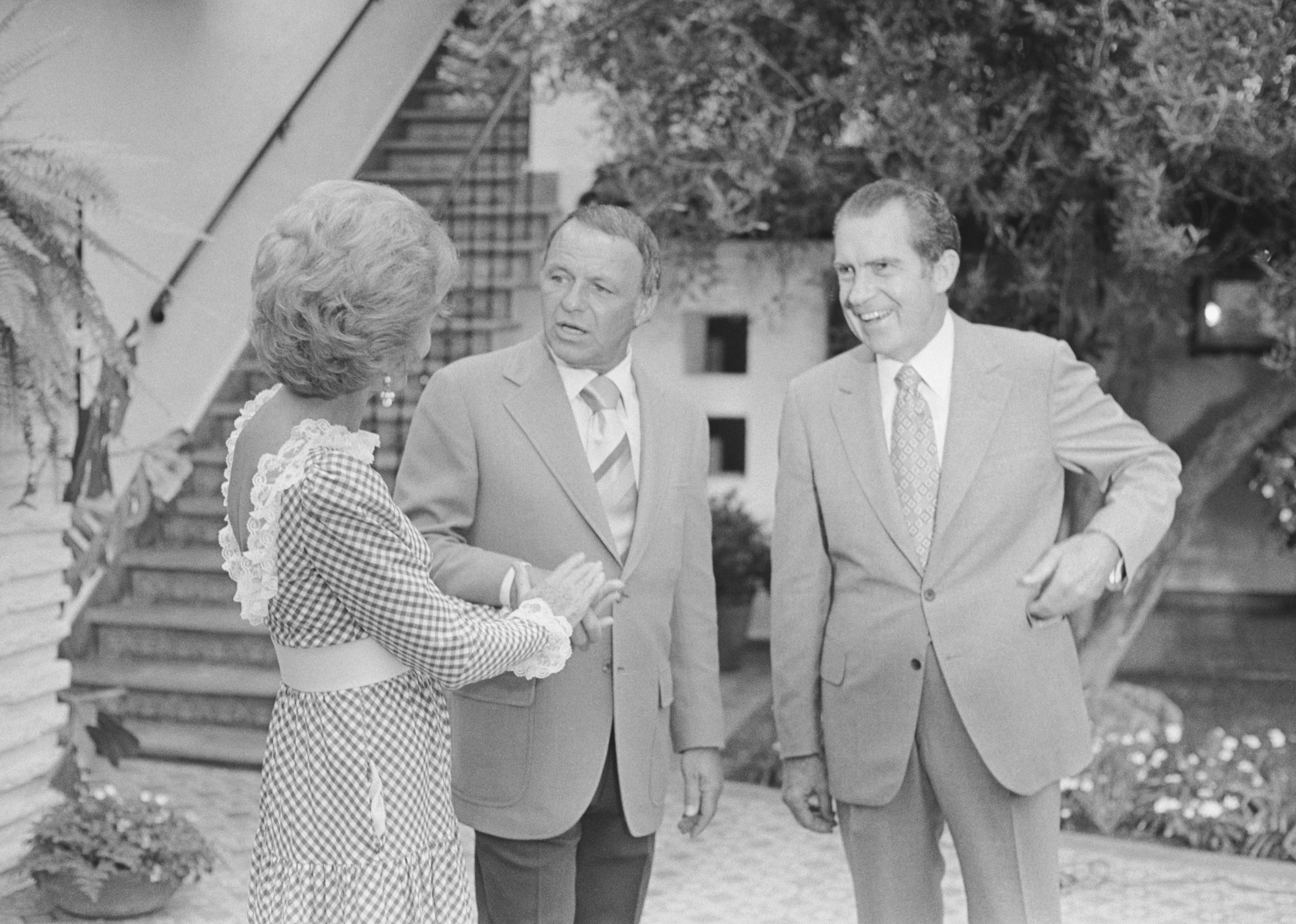
Frank Sinatra at Nixon's White House in California.
21 / 25
Bettmann // Getty Images

1971: Turns toward political conservatism

Throughout the '60s, as rock, folk, and other music genres took an increasingly strong hold of American sensibilities, Sinatra and the generation of music he represented experienced a period of un-fashionability. He attempted some covers of popular music of the time, including the Beatles and Joni Mitchell but wasn't ultimately very successful at adapting to changing tastes.

Sinatra went into a retirement phase in 1971, signaling other changes to come. As the youth culture of the late '60s rose to a fever pitch, Sinatra turned increasingly in the other direction鈥攖oward conservative politics. By the early '70s, he had and helped with his reelection campaign.

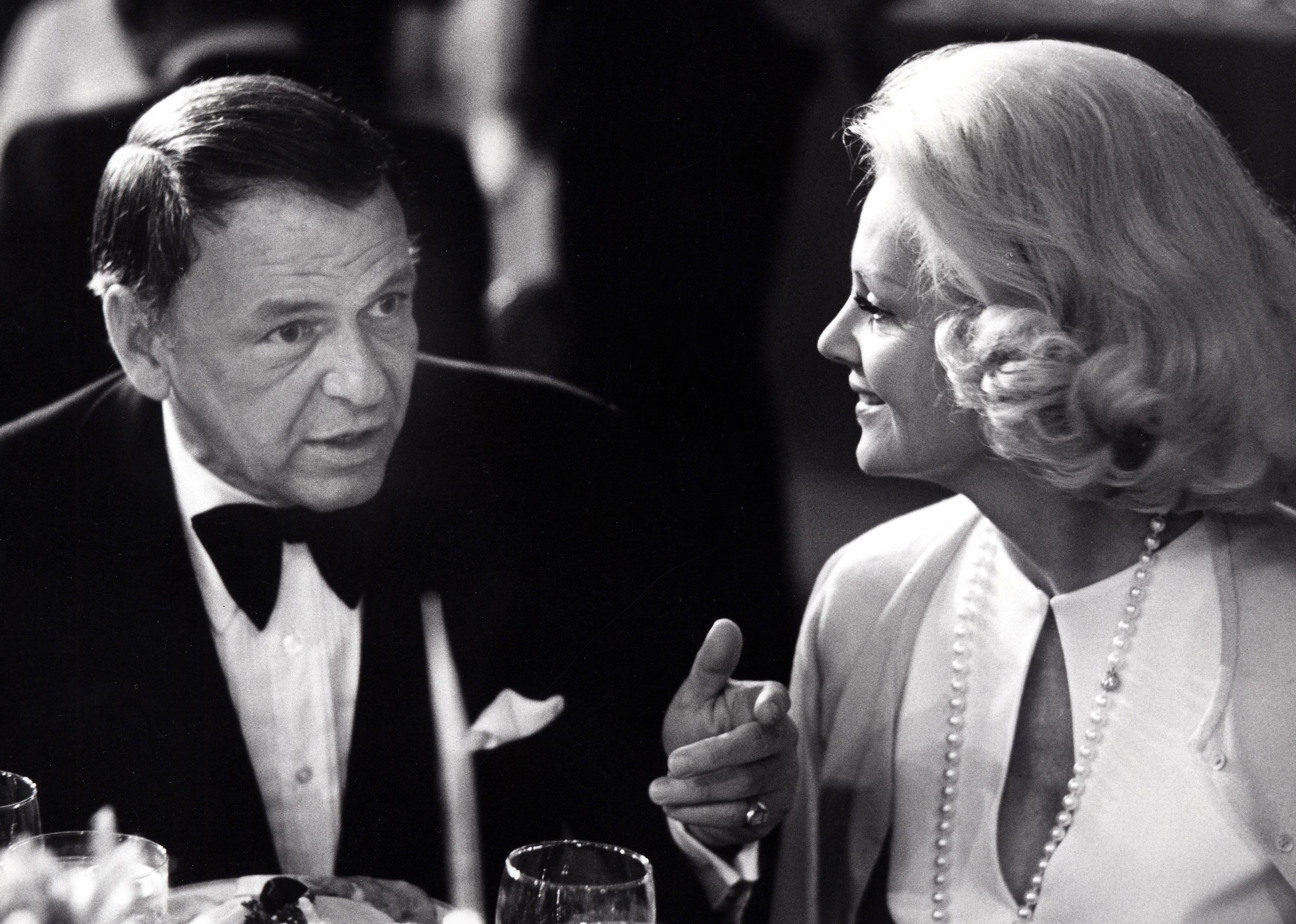
Frank Sinatra and Barbara Marx at a dinner.
22 / 25
Ron Galella // Getty Images

1976: Marries Barbara Blakely Marx

In 1976, Sinatra . The two had met decades before while Sinatra was married to Ava Gardner and Marx was married to Zeppo Marx, the youngest Marx Brother. After Zeppo and Barbara divorced in 1973, she and Sinatra kindled a relationship, resulting in a 22-year marriage that would last until Sinatra's death. By this time, Sinatra had released an album, "Ol' Blue Eyes is Back," which signaled his return from his short-lived retirement, though he was not recording or performing at the same frequency as he had before.

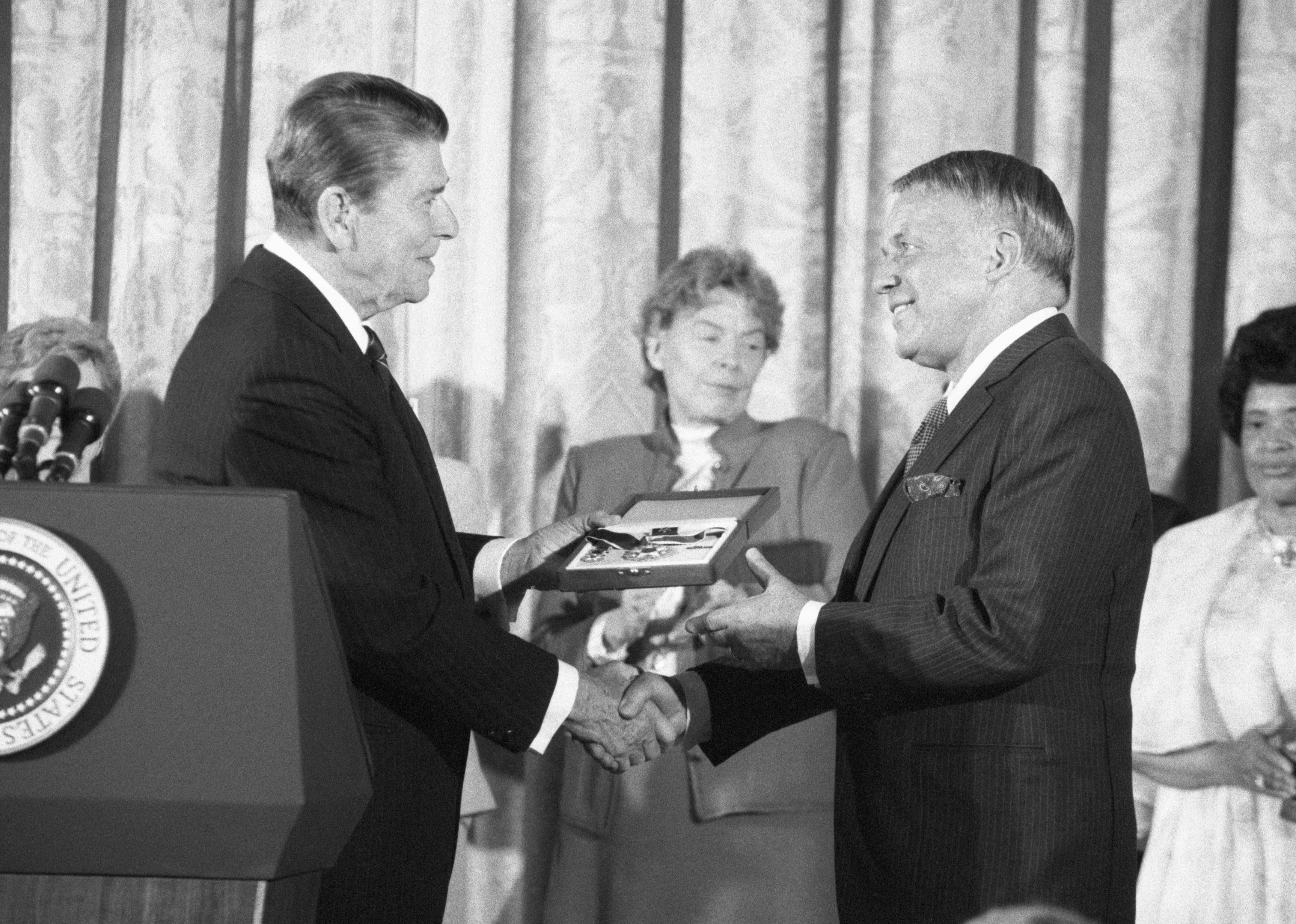
President Ronald Reagan awards the Medal of Freedom to singer Frank Sinatra.
23 / 25
Bettmann // Getty Images

1981: The Reagan Era and the Presidential Medal of Freedom

Now a Republican stalwart, as he rose to prominence in the late '70s. By the time Reagan became president, Sinatra was working closely with him. He organized Reagan's inaugural gala at the White House; in return, , including being his reference when Sinatra sought re-entry into the Vegas gambling scene, access which was revoked back in 1963 due to allegations of mob ties. In 1985, Reagan presented Sinatra with the Presidential Medal of Freedom.

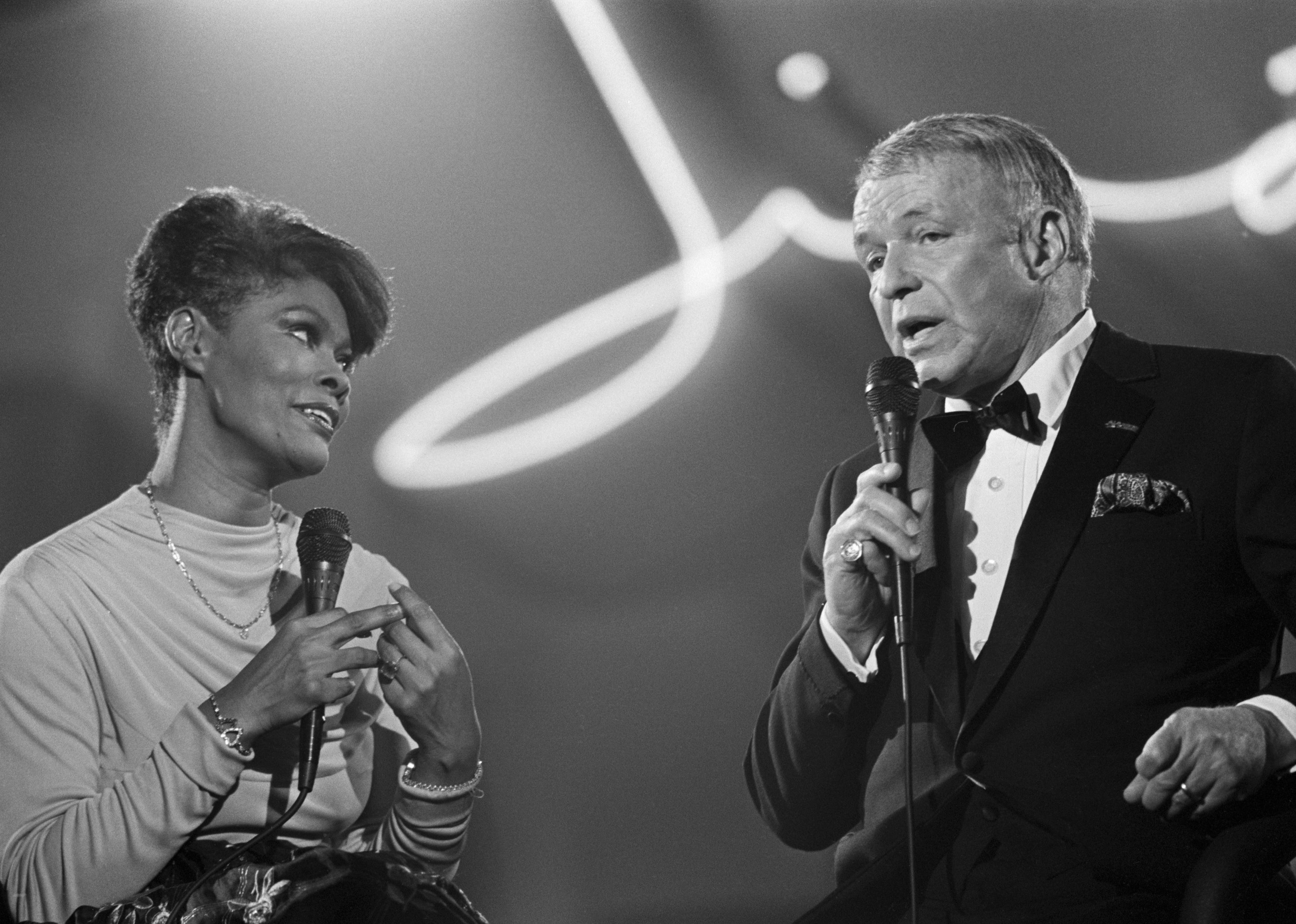
Dionne Warwick and Sinatra Singing a duet.
24 / 25
Bettmann // Getty Images

1993: A late-career comeback

In the late '80s, Sinatra began touring again, often joined by former Rat Pack member Sammy Davis Jr., as well as Liza Minnelli and Shirley MacLaine. In 1993, he made a comeback with his album "Duets," a series of duets featuring stars including Aretha Franklin, Tony Bennett, and Barbra Streisand. This comeback lasted a few years before health issues made it increasingly difficult to perform. His in Palm Springs, California.

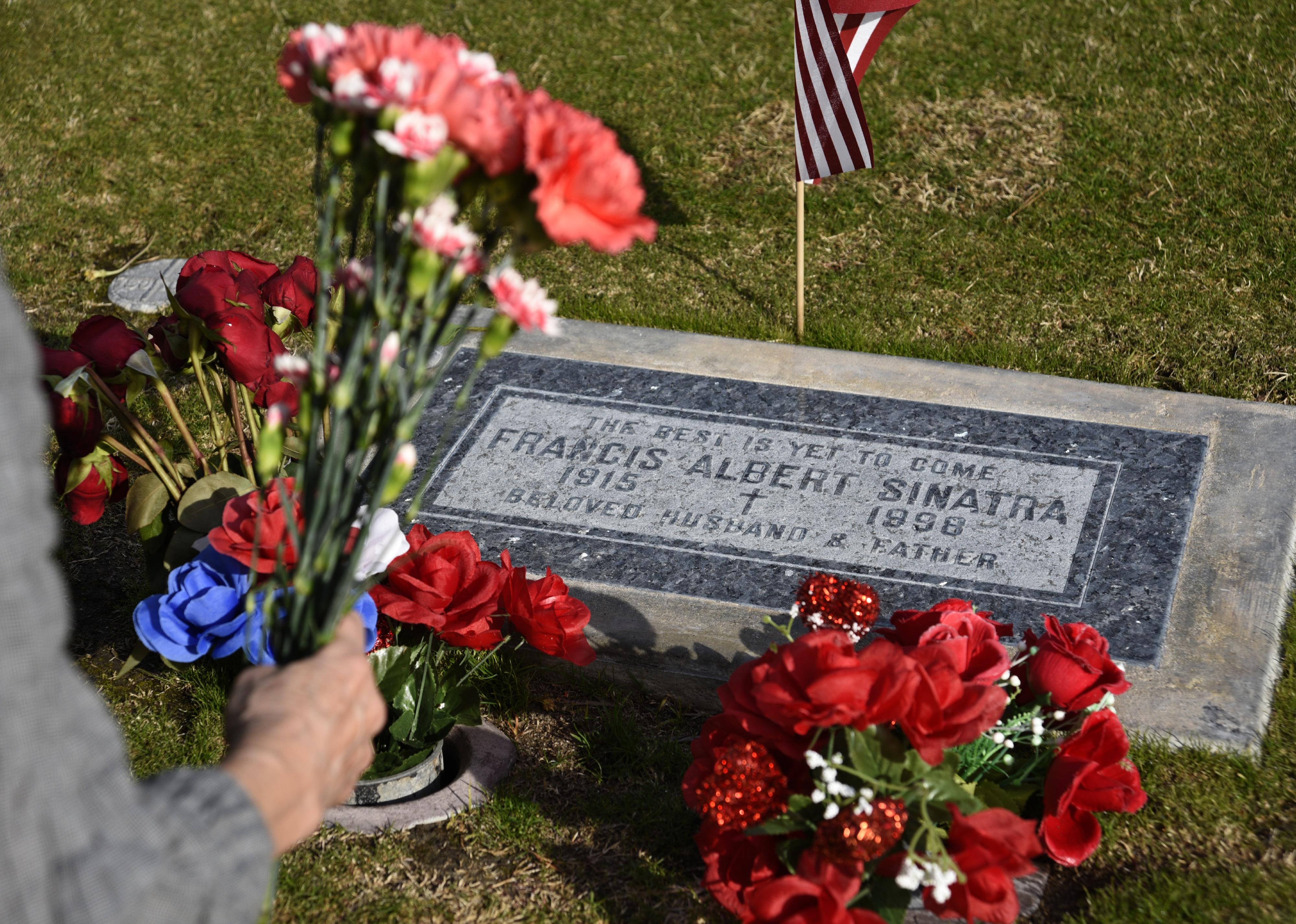
A woman places flowers on the grave of singer Frank Sinatra at Desert Memorial Park in Cathedral City.
25 / 25
Robert Alexander // Getty Images

1998: Death

Sinatra died of a heart attack on May 14, 1998, at age 82. In the company of his wife and his manager, He was buried with a bottle of Jack Daniel's, Camel cigarettes and a lighter, and candy. Sinatra's tombstone reads: "The Best is Yet to Come."

Story editing by Chris Compendio. Copy editing by Paris Close. Photo selection by Clarese Moller.

Trending Now