
15% of public school students have disabilities. Resources to support them can vary dramatically
originally appeared on and was produced and distributed in partnership with 麻豆原创 Studio.
15% of public school students have disabilities. Resources to support them can vary dramatically
When you're a kid, going to school feels like a given鈥攏o matter how much you beg to play outside instead. But for school-aged children with disabilities, going to school wasn't always a guarantee. For decades, many states , often putting them in institutions that did little to impart vital knowledge and life skills. This unequal treatment also burdened their families, who rarely had other options or access to resources to educate children at home.
That changed in 1975 when Congress enacted the law known today as the . IDEA ensures that students with disabilities can access appropriate public school education free of charge from the ages of 3 to 21. The law covers a range of disabilities, the most common being learning disabilities and speech impairments.
Nationally, IDEA covers 7.3 million students representing 15% of the public school student population. The vast majority go to regular schools, with just 5% enrolled in specialized schools, private schools, or other types of programs, according to the Department of Education. Also, 2 in 3 students with disabilities spend 80% or more of their school day in general classes鈥攁 practice that would have been unthinkable pre-IDEA.
Methods to identify students with learning disabilities are not universal, and some school districts may not be able to fully identify and support students with disabilities. A teacher shortage doesn't help鈥� reported at least one teaching vacancy in special education roles in 2022-23.
Using data from the, examined how the 7.3 million students served under the Individuals with Disabilities Education Act can have drastically varied learning experiences in different school districts.
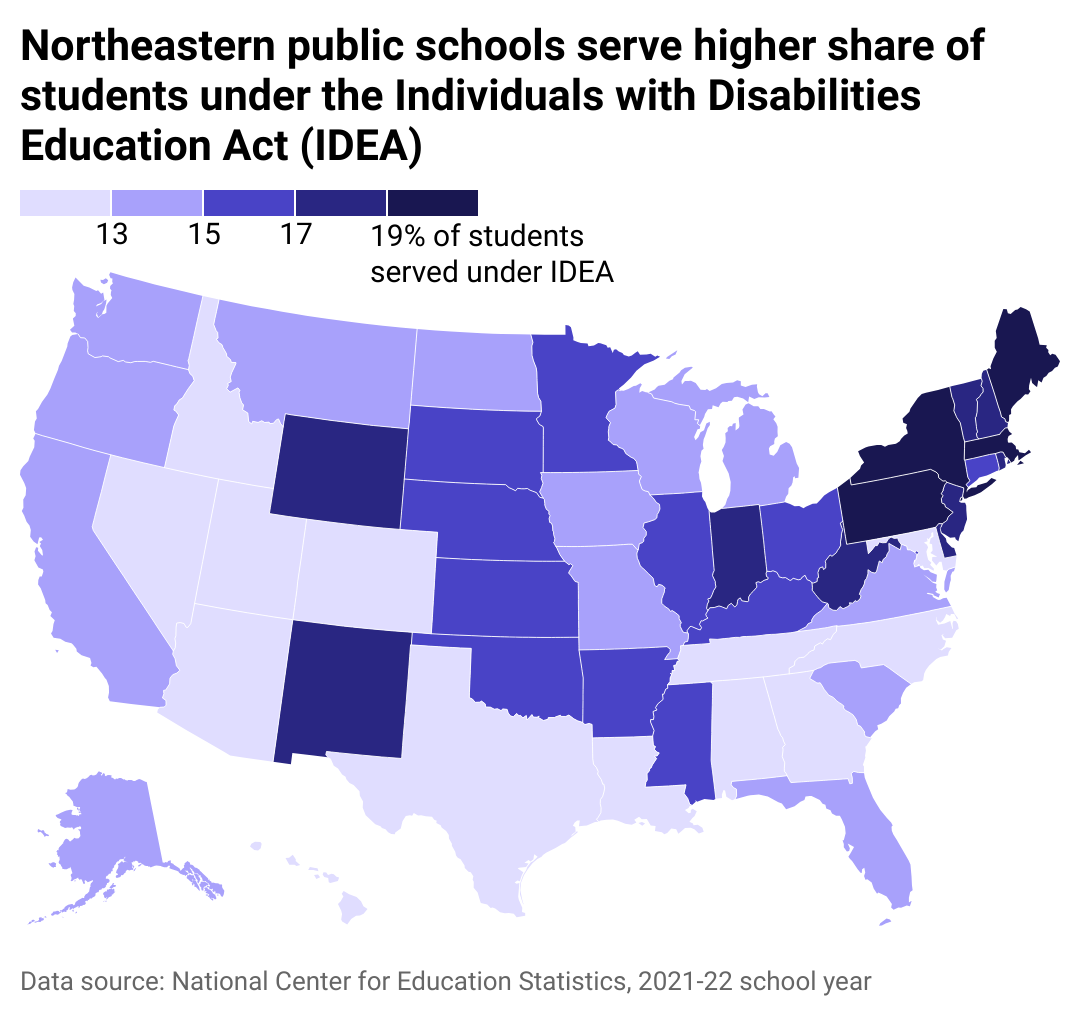
State-by-state breakdown
A found differences in state eligibility criteria for receiving special education. Variability by state doesn't necessarily show differences in population, but differences in policies for qualifying students.
Texas, for example, had a policy of of the total school population, which limited the amount of services the state provided. The state abandoned this policy in 2018 when the federal government declared it illegal. Funding is still lagging: A 2022 report from the concluded the state's school districts still need about to appropriately evaluate and serve students.
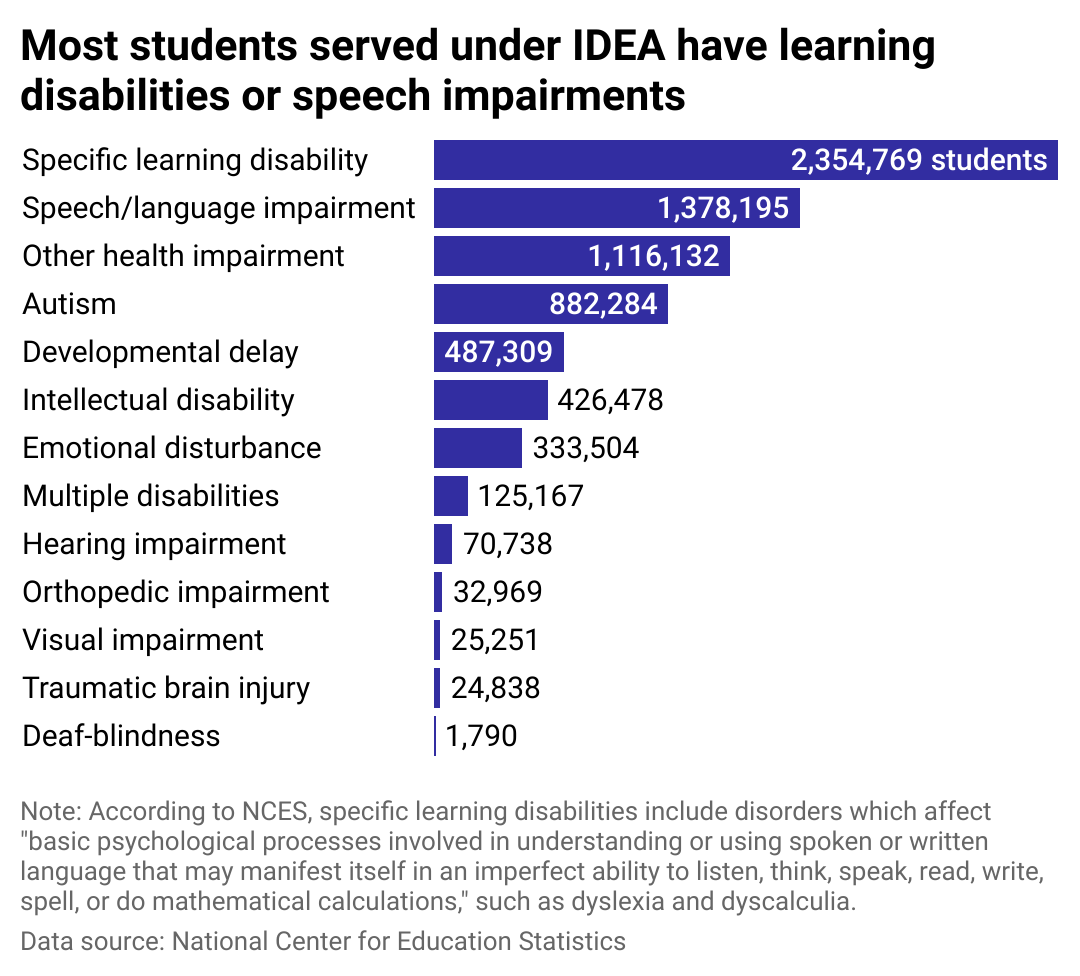
Students served under IDEA
Under IDEA, a student with a disability has an that lays out a plan for their education in the least restrictive environment. Some IEPs may include special classes, therapies, resources, and aides to meet the unique needs of each student. Educators might include curriculum adjustments and allowing extra time for tests to adopting assistive technology such as speech-to-text software, lecture recording, and AI-assisted closed captioning and translation programs.
Funding issues can be a challenge for schools. While the federal government is supposed to cover 40% of IDEA-related costs, it rarely pays its share. In the 2020-2021 school year, states and school districts had to cover in costs the federal government failed to provide, according to the National Education Association. Making up for the shortfall often comes at the expense of a school district's general education funding, which can have a detrimental effect on all students.
Story editing by Jeff Inglis. Copy editing by Tim Bruns.