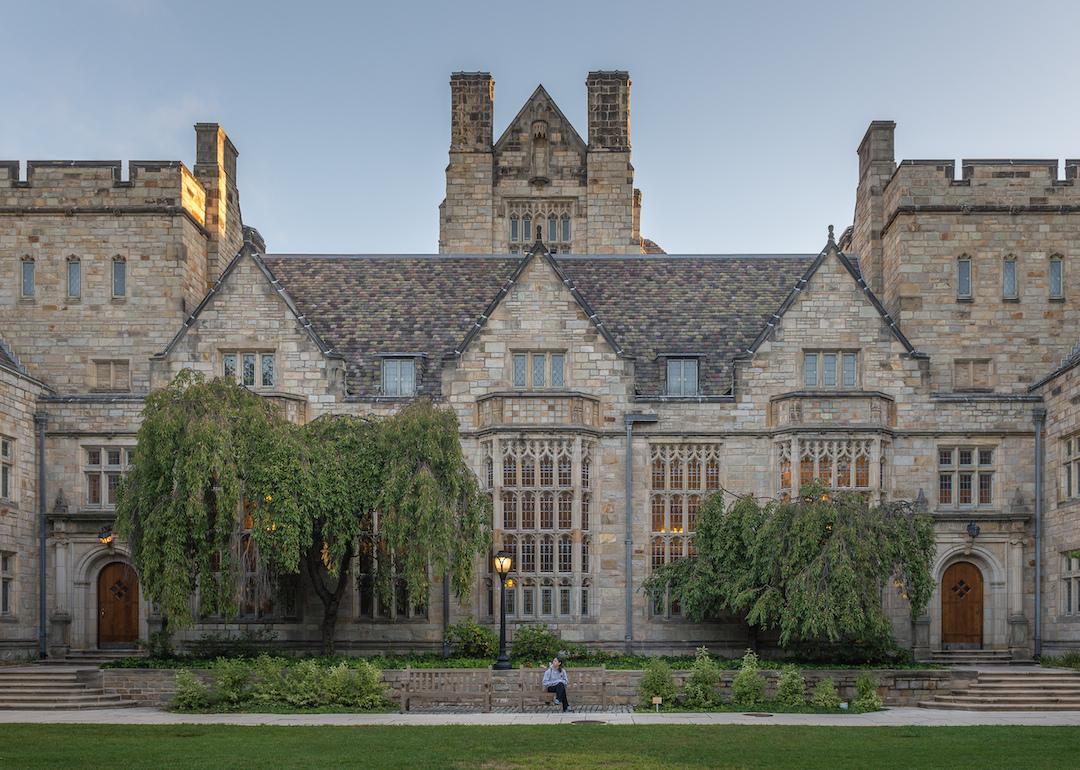
College majors where the most students go on to graduate degrees
Choosing a career path is never easy, especially when considering changes in the world economy and rising cost of education. Traditional four-year bachelor's programs offer both specialized education and a solid foundation for further studies. Some careers require high-level degrees in order to be considered as a candidate, and a number of professions offer higher salaries with more education, though the higher degree isn't necessarily a prerequisite for the position.
While college can be challenging, graduate students are . Because of the added challenges and costs, graduate programs aren't necessary for everyone, and might even cause further strain on a developed professional life. Assorted graduate master's programs can be completed in under two years, like an accelerated MBA, whereas law school can take two to five years, followed by needing to pass the bar exam in order to practice as a lawyer. Becoming a medical doctor involves training, education, and residencies that take the better part of a decade to complete.
In spite of these hurdles, many persist in pursuing specialized careers that often come with a higher paycheck, and often a greater sense of job security. There's also the benefit of expanding one's knowledge on a chosen subject. Many foreign language positions, for example, require fluency, as well as a cultural awareness of the region where the language hails from. Combined, this type of education and skill could take far more time to study than a four-year degree provides, though bachelor's programs are an ideal place to start.
The cost of an education is always a necessary consideration, but there are ways to get assistance, or pursue graduate work free of charge. Institutions can offer stipends, teaching fellowships, or further opportunities to work, in order to cover tuition costs. Most commonly, these opportunities are available in subjects like chemistry, biology, physics, astronomy, and geology, otherwise known as the hard sciences. Though top-rated graduate fine-arts programs will offer tuition remission as well.
The decision of whether or not to pursue further education can be challenging, but moving forward can have many clear benefits. 麻豆原创 compiled a list of the majors where students go on to complete graduate degrees using data from July 17, 2020 originating from the , which encompasses 2017-2018. Majors are ranked by percent of students that later earn graduate degrees, with ties broken by unemployment rate. Unemployment and underemployment statistics together encompass recent graduates from college, and others further along who are without work.
Read on to see which college majors turn out the most students who go on to get graduate degrees.
#73. Construction services
- Share with graduate degrees: 10.3%
- Median wage early career: $60,000
- Median wage mid-career: $90,000
- Unemployment rate: 2.7%
- Underemployment rate: 28.9%
The broad field of construction services encompasses a range of skilled jobs. While apprenticeship programs are one avenue to gaining knowledge of the trades, there are more technical schools and traditional college programs offering bachelor鈥檚 and graduate degrees in the field. The top 25% of workers in management are paid over .
#72. Commercial art & graphic design
- Share with graduate degrees: 11.1%
- Median wage early career: $40,000
- Median wage mid-career: $62,000
- Unemployment rate: 4.5%
- Underemployment rate: 35.8%
More of our lives are spent in digital worlds than ever before. Those who create designs to market products, sell services, and tell the branded stories of companies are well paid and highly employed overall. Some individuals take online courses, or pursue internships, while others go the academic route. Only , and there is room for job growth within the field.
#71. Marketing
- Share with graduate degrees: 17.4%
- Median wage early career: $45,000
- Median wage mid-career: $75,000
- Unemployment rate: 3.0%
- Underemployment rate: 52.1%
A bachelor's degree in marketing provides a general overview and can lead to immediate employment. Graduate degrees provide more specialized skills in management, finance, strategy, and leadership. The top 25% in the field earn, on average, over . A foundation in marketing is a great place to leap into a number of higher level careers.
#70. Miscellaneous technologies
- Share with graduate degrees: 18.0%
- Median wage early career: $44,000
- Median wage mid-career: $75,000
- Unemployment rate: 6.4%
- Underemployment rate: 55.3%
The tech field is always growing and evolving. The average age for mid-career earnings is $75,000, but top-end earners can earn substantially more. Graduate degrees offer an opportunity to explore program management or executive-level positions. Jobs in software development have , and the need for tech workers continues to grow.
#69. Mass media
- Share with graduate degrees: 18.2%
- Median wage early career: $35,000
- Median wage mid-career: $62,000
- Unemployment rate: 7.3%
- Underemployment rate: 56.2%
A degree in mass media provides the skills to work as a reporter, copywriter, social media manager, broadcast journalist, and more. Mass media studies provide students important research and communication skills, as well as an understanding of how media functions. 18.2% pursue graduate work, as the pay can rise substantially with more advanced qualifications.
#68. Advertising and public relations
- Share with graduate degrees: 18.2%
- Median wage early career: $44,000
- Median wage mid-career: $70,000
- Unemployment rate: 3.0%
- Underemployment rate: 46.8%
Communications degrees offer the opportunity to pursue any number of career paths, from politics to government to corporate work. Graduate school provides the opportunity to polish those skills and advance one鈥檚 earnings substantially, as well as providing an opportunity for a more specific avenue of study. Public relations is ranked among the .
#67. Agriculture
- Share with graduate degrees: 20.8%
- Median wage early career: $38,000
- Median wage mid-career: $70,000
- Unemployment rate: 2.5%
- Underemployment rate: 58.7%
Agriculture jobs include taking care of day-to-day farm operations, as well as working with global food systems, and everything in between. Graduate degrees in agriculture can offer further information on food and the systems that produce it. Focuses for graduate programs can include economics, engineering, nutrition, and manufacturing. A degree in agriculture can be the start of a much more expensive education in science and economics.
#66. Criminal justice
- Share with graduate degrees: 22.6%
- Median wage early career: $37,000
- Median wage mid-career: $60,000
- Unemployment rate: 4.3%
- Underemployment rate: 73.2%
Criminal justice degrees are often required for careers in law enforcement. The , and the job market is set to expand substantially over the next decade. Graduate degrees offer individuals the opportunity to specialize in fields like forensic psychology, .
#65. Communications
- Share with graduate degrees: 22.8%
- Median wage early career: $40,000
- Median wage mid-career: $72,000
- Unemployment rate: 3.6%
- Underemployment rate: 54.1%
Studying communications is important for anyone interested in working with teams, or someone who is trying to produce content for a specific audience. Students will get an education in topics like research, effective group management, and public speaking, among others. Graduate degrees are often an important step when pursuing managerial or executive-level positions, though a strong base is important before choosing a specialty.
#64. Fine arts
- Share with graduate degrees: 23.2%
- Median wage early career: $35,000
- Median wage mid-career: $56,000
- Unemployment rate: 5.1%
- Underemployment rate: 56.5%
A graduate degree in fine arts can lead to opportunities to lead a creative performance company, or be the director of a museum, or a curator of a collection. An understanding of the art world can also lead into production for television and film. , though pay can go substantially higher depending on the position.
#63. Business management
- Share with graduate degrees: 23.3%
- Median wage early career: $42,500
- Median wage mid-career: $67,000
- Unemployment rate: 3.8%
- Underemployment rate: 58.8%
Studying business management in an undergrad degree provides a leg up when moving forward in the field. A master's in business administration opens a substantial amount of new opportunities in the field. Most require one, and entrepreneurs often pursue them in order to have a more comprehensive plan when launching their own businesses. Pursuing a graduate education can lead to , which pay well into the six-figure salary range.
#62. General business
- Share with graduate degrees: 23.7%
- Median wage early career: $45,000
- Median wage mid-career: $70,000
- Unemployment rate: 4.2%
- Underemployment rate: 55.0%
Learning the functions of business is important in multiple fields, even if there鈥檚 not a goal to pursue executive level jobs. While master's in business administration degrees offer opportunities to specialize for anyone interested in the field, subjects like economics, commerce, and finance are other avenues of possible study. Salaries have a wide range, and business jobs can be competitive.
#61. Information systems & management
- Share with graduate degrees: 24.7%
- Median wage early career: $50,000
- Median wage mid-career: $80,000
- Unemployment rate: 4.9%
- Underemployment rate: 37.1%
Studying management and information systems allows easy access to the . In the growing field of data management, graduate studies can lead to top-level positions in government or the corporate world. Positions like project manager, or information analyst, are open to those with the right skills and education. .
#60. Business analytics
- Share with graduate degrees: 24.7%
- Median wage early career: $58,000
- Median wage mid-career: $90,000
- Unemployment rate: 2.9%
- Underemployment rate: 38.3%
Those who can analyze data, create sales metrics, and develop profit models are an important part of any industry. This education can lead to consulting work, and work in the broader STEM field. The ability to manage and understand data is important for any career. and opportunities in the field are projected to expand.
#59. Engineering technologies
- Share with graduate degrees: 25.4%
- Median wage early career: $50,000
- Median wage mid-career: $83,000
- Unemployment rate: 3.7%
- Underemployment rate: 40.4%
The field of engineering technologies can lead to careers as a technologist, engineer, or lead to more specialized work in applied tech. Graduate degrees in this field provide specialized skills and substantially higher wages. Studying engineering tech can lead to jobs in aerospace, manufacturing, and nuclear power, among numerous other careers in the STEM field.
#58. Medical technicians
- Share with graduate degrees: 25.6%
- Median wage early career: $45,000
- Median wage mid-career: $68,000
- Unemployment rate: 1.1%
- Underemployment rate: 52.0%
Medical technologists work everywhere from laboratories to emergency medicine to surgical operating theaters. Becoming a medical record technician, also known as a 鈥渃oder,鈥 is another way to get into the medical field in a way that is . Studies in this field are an ideal primer for pursuing graduate medical training. Med techs earn an average of $68,000 halfway through their career.
#57. Journalism
- Share with graduate degrees: 26.5%
- Median wage early career: $40,000
- Median wage mid-career: $65,000
- Unemployment rate: 3.7%
- Underemployment rate: 39.7%
Journalists work in a number of varied spaces, including reporting for local newspapers, creating stories for national or international outlets, and working in radio or television broadcasting. Degrees in journalism help students learn how to focus, research, and refine information, as well as the importance of ethical, factual presentation. Mid-career earnings can vary, and broadcast journalist .
#56. Nursing
- Share with graduate degrees: 27.1%
- Median wage early career: $50,000
- Median wage mid-career: $70,000
- Unemployment rate: 1.8%
- Underemployment rate: 12.1%
The field of nursing is expanding and hiring. Those with a bachelor鈥檚 in science in nursing (BSN) earn an average of , while those with a master鈥檚 level degree earn . The job outlook in the nursing field is good and the need for trained, skilled professionals is . Graduate programs allow for specialization in subjects like psychiatric or geriatric nursing.
#55. Liberal arts
- Share with graduate degrees: 28.4%
- Median wage early career: $35,000
- Median wage mid-career: $60,000
- Unemployment rate: 4.3%
- Underemployment rate: 59.5%
Liberal arts degrees offer a chance to study subjects like history, literature, philosophy, and psychology. Recipients of these degrees work in , among other assorted fields. Due to the expansive, generalized education one can receive, many students find it beneficial for their education, and employment prospects, to continue on for a higher-level degree.
#54. Accounting
- Share with graduate degrees: 29.6%
- Median wage early career: $50,000
- Median wage mid-career: $75,000
- Unemployment rate: 2.4%
- Underemployment rate: 24.1%
The need for qualified accountants is . The field includes tax preparers, positions in finance, and auditors for private businesses or government agencies. While the salary range for bachelor's level accountants is reasonable, pursuing further certifications, such as becoming a certified financial planner, or working through a graduate program, often leads to higher lifetime wages.
#53. Finance
- Share with graduate degrees: 30.8%
- Median wage early career: $55,000
- Median wage mid-career: $90,000
- Unemployment rate: 3.5%
- Underemployment rate: 37.6%
Studying finance is a good way to pursue various avenues in business and economics. Working in insurance, fundraising, accounting, or as a loan officer are just some of the possible career paths. Graduate degrees in finance can lead to , including C-suite executive-level jobs.
#52. Environmental studies
- Share with graduate degrees: 31.8%
- Median wage early career: $38,000
- Median wage mid-career: $65,000
- Unemployment rate: 4.3%
- Underemployment rate: 50.2%
The field of environmental sciences is growing and . As an interdisciplinary degree, individuals study many different topics, like biology, chemistry, geology, and marine sciences. After receiving a bachelor's degree, the amount of different avenues for specialized study are plentiful. Graduate programs can be competitive, but hard science master鈥檚 and doctoral programs often cover the student鈥檚 tuition.
#51. Leisure and hospitality
- Share with graduate degrees: 32.0%
- Median wage early career: $35,000
- Median wage mid-career: $60,000
- Unemployment rate: 3.7%
- Underemployment rate: 59.8%
Careers in leisure and hospitality don鈥檛 always come with the highest salaries. Working in this field, whether in hotels, restaurants, entertainment, or the arts is a good way to experience where graduate school can lead. Though the unemployment rate was substantial in this industry due to the COVID-19 pandemic, . Higher degrees are not required in many positions, but a graduate education in the field can provide the skills needed to access management positions, like resort or casino director.
#50. Family and consumer sciences
- Share with graduate degrees: 32.5%
- Median wage early career: $32,300
- Median wage mid-career: $50,000
- Unemployment rate: 4.1%
- Underemployment rate: 40.6%
Many people who go on to work in will benefit from studying family and consumer sciences. This education offers a chance to learn life and leadership skills, as well as how to teach and implement those in various situations. Opportunities to work in community leadership, project administration, and management positions are all available and easier to access with experience or a graduate education.
#49. Computer science
- Share with graduate degrees: 32.8%
- Median wage early career: $65,000
- Median wage mid-career: $96,000
- Unemployment rate: 5.2%
- Underemployment rate: 22.0%
Covered under the wider umbrella of STEM jobs, computer science is a growing and evolving field with higher pay and . Computer scientists provide many services to government, business, and private organizations. Creating algorithms, providing data analysis, and app development are all available avenues within the field.
#48. Geography
- Share with graduate degrees: 33.7%
- Median wage early career: $43,000
- Median wage mid-career: $65,000
- Unemployment rate: 5.0%
- Underemployment rate: 36.0%
Geographers with a four-year degree are often able to find , but graduate degrees are sought for higher-paying positions in private industry. Critical thinking, communication, and technical writing skills are all important for geographers working in the field. Being that it鈥檚 a specialized field, jobs are not always easy to find and .
#47. General engineering
- Share with graduate degrees: 36.4%
- Median wage early career: $60,000
- Median wage mid-career: $86,000
- Unemployment rate: 4.9%
- Underemployment rate: 30.3%
Engineering degrees offer an entrance into many careers. Specialties include mechanical, environmental, industrial, and petrochemicals. Many entry-level engineers make a substantial income, but those with graduate degrees take home an . There are many opportunities for growth within each specialized field.
#46. Animal and plant sciences
- Share with graduate degrees: 36.6%
- Median wage early career: $36,500
- Median wage mid-career: $61,000
- Unemployment rate: 2.3%
- Underemployment rate: 56.8%
A degree in animal and plant sciences is the perfect way to get into the food production, agriculture, and food sciences. Employees within this field will likely see , and higher salaries coinciding with higher levels of academic education. Individuals with graduate degrees are also able to teach the subject at a post-secondary level.
#45. Sociology
- Share with graduate degrees: 36.8%
- Median wage early career: $36,000
- Median wage mid-career: $60,000
- Unemployment rate: 5.1%
- Underemployment rate: 53.5%
Studying sociology at a bachelor鈥檚 level is a great way to get an idea of the working functions of people in groups, which can lead to any number of positions in human services or communications. Higher salaried, more specified positions in the field often . Overall, opportunities in the field are expected to progress with an average level growth rate of 4% through 2029.
#44. Interdisciplinary studies
- Share with graduate degrees: 36.8%
- Median wage early career: $38,000
- Median wage mid-career: $62,000
- Unemployment rate: 5.0%
- Underemployment rate: 49.3%
Interdisciplinary studies programs offer a chance for diverse learning and a wide range of possible career outcomes. A four-year degree can lead to opportunities to work in political sciences, human services, or retail management, while master's and doctoral degrees and jobs in quantitative analysis, philosophy, and cultural studies.
#43. General social sciences
- Share with graduate degrees: 37.3%
- Median wage early career: $34,800
- Median wage mid-career: $55,000
- Unemployment rate: 2.7%
- Underemployment rate: 50.0%
Studying the broad field of social sciences allows for entrance into fields like marketing, research, and human services work. Master鈥檚 level programs for those with a base education in social sciences . With this education, working in government, politics, law, finance, and public service are all possible.
#42. Performing arts
- Share with graduate degrees: 38.5%
- Median wage early career: $35,000
- Median wage mid-career: $57,000
- Unemployment rate: 3.8%
- Underemployment rate: 63.0%
Entry-level jobs in the performing arts field are available to anyone, regardless of degree status. Yet studying your craft might set you apart. Whether you鈥檙e a dancer, singer, comedian, or actor, an education can further your skills and opportunities. Some graduate fine arts programs provide students with stipends that cover the cost of tuition. Producers and directors in this field often earn a higher wage than performers, and there is in their specialties.
#41. Early childhood education
- Share with graduate degrees: 38.6%
- Median wage early career: $34,000
- Median wage mid-career: $40,200
- Unemployment rate: 1.4%
- Underemployment rate: 19.6%
Pursuing an education in early childhood education will provide foundational principles for educators who want to work with young people in developmental stages. Certificates and bachelor鈥檚 programs are available to get into the field at varying levels, though teacher positions often require a four-year degree and licensure. , and can lead to program management, policy, and administrative roles.
#40. Civil engineering
- Share with graduate degrees: 38.7%
- Median wage early career: $60,000
- Median wage mid-career: $90,000
- Unemployment rate: 1.5%
- Underemployment rate: 19.2%
In order to become a civil engineer, most students must from a recognized program. Experienced and trained civil engineers can work on bridge building, town planning, water systems, and more. Some civil engineers in order to better their chance at attaining an administrative position, or to enhance their skills in communication or finance.
#39. Architecture
- Share with graduate degrees: 39.2%
- Median wage early career: $47,000
- Median wage mid-career: $75,000
- Unemployment rate: 5.0%
- Underemployment rate: 29.4%
Architects develop plans, work with engineers, and consult on construction projects of all levels. from 2019鈥2029 is below average, though average wages are high compared to some of the other entry-level positions on this list. Pursuing further education in the field allows for greater job prospects, and higher pay. in order to maintain state licenses.
#38. Industrial engineering
- Share with graduate degrees: 39.6%
- Median wage early career: $63,000
- Median wage mid-career: $90,000
- Unemployment rate: 4.7%
- Underemployment rate: 21.6%
Focusing on industry production and practices comes with . Pursuing licensure in the field is needed in order to work in the private sector. Individuals seeking higher pay and more job opportunities can pursue an MBA in industrial engineering, which provides enhanced skills in , as well as a greater awareness of finance.
#37. Computer engineering
- Share with graduate degrees: 40.6%
- Median wage early career: $66,000
- Median wage mid-career: $109,000
- Unemployment rate: 2.5%
- Underemployment rate: 21.3%
Computer engineers often split into two fields, hardware and software. Creating programs and applications is important work, yet those are only possible when coupled with advanced hardware systems that can handle the growing needs of information processing. in 2019 was $117,220, and the field is expected to have some job growth in the next 10 years.
#36. Mechanical engineering
- Share with graduate degrees: 41.1%
- Median wage early career: $65,000
- Median wage mid-career: $100,000
- Unemployment rate: 3.7%
- Underemployment rate: 21.3%
Mechanical engineers deal with complex systems that handle huge tasks. Salaries start relatively high with a bachelor's degree, and grow substantially when one specializes and pursues a graduate education. Petroleum engineers and principal mechanical engineers , though those holding a degree beyond a bachelor鈥檚 are often preferred.
#35. Art history
- Share with graduate degrees: 41.3%
- Median wage early career: $43,000
- Median wage mid-career: $56,000
- Unemployment rate: 3.1%
- Underemployment rate: 56.2%
Many jobs in the field of art history, , prefer or require applicants to have graduate degrees or state certificates. Pursuing a Ph.D. is a common path in art history with varied opportunities, such as being a museum director or a university professor. are expected to see some of the largest opportunities for job growth among all positions in the art history field.
#34. Theology and religion
- Share with graduate degrees: 41.9%
- Median wage early career: $34,000
- Median wage mid-career: $50,000
- Unemployment rate: 1.5%
- Underemployment rate: 47.0%
Studying religion and theology allows the pursuit of jobs as a minister, chaplain, or priest. It also provides a base-level education that many use as a starting point to . Master's programs also allow for priests, ministers, or other assorted clergy to . While not necessary, many theologians consider continued study a necessary part of their work.
#33. Economics
- Share with graduate degrees: 42.2%
- Median wage early career: $55,000
- Median wage mid-career: $93,000
- Unemployment rate: 4.2%
- Underemployment rate: 39.5%
Economists work to understand the distribution of resources amongst varying populations. They create predictions for future movements, and analyze behaviors which cause them. Many positions in the field . The emerging field of behavioral economics provides insights into consumption and how that relates to the human experience. Job possibilities for doctoral recipients in the field include economic policy adviser, researcher, and professor.
#32. International affairs
- Share with graduate degrees: 42.8%
- Median wage early career: $47,000
- Median wage mid-career: $72,000
- Unemployment rate: 4.6%
- Underemployment rate: 53.9%
Students who pursue international affairs degrees often seek policy jobs on a global or national scale, as the subject provides information on . Master鈥檚 degrees provide better chances at government positions, as they provide a deeper understanding of the subjects needed to work in foreign relations and world issues.
#31. Public policy and law
- Share with graduate degrees: 43.1%
- Median wage early career: $38,000
- Median wage mid-career: $60,000
- Unemployment rate: 4.3%
- Underemployment rate: 57.6%
Pursuing an education in public policy and law opens up a variety of career paths. Graduate degrees in law, along with passing state required tests, allow individuals to practice as a lawyer, or work in many other administrative and corporate roles. Public policy management graduate programs allow access into .
#30. English language
- Share with graduate degrees: 45.0%
- Median wage early career: $35,000
- Median wage mid-career: $60,000
- Unemployment rate: 4.5%
- Underemployment rate: 52.5%
English studies can lead to a number of careers and is a common pathway to pursue work in the field of education. Bachelor鈥檚 level employees can achieve licensure and work in teaching jobs throughout various school systems. for post-secondary education positions, and those involved in curriculum development and student assessment. Many jobs in education offer higher pay in direct correlation to the amount of school completed.
#29. Miscellaneous engineering
- Share with graduate degrees: 45.3%
- Median wage early career: $60,000
- Median wage mid-career: $90,000
- Unemployment rate: 4.8%
- Underemployment rate: 30.1%
Providing a sturdy foundation for growth into a number of specialized fields, studying engineering will provide an understanding of complex systems and how they work. Fields of possible pursuit for graduate programs include mechanical engineering, chemical engineering, aerospace engineering, and environmental engineering, and more. Some of the hands-on options for engineers include positions.
#28. Electrical engineering
- Share with graduate degrees: 46.4%
- Median wage early career: $68,000
- Median wage mid-career: $100,000
- Unemployment rate: 3.3%
- Underemployment rate: 21.2%
There are many specialities available for those who study electrical engineering. Working with lasers, light, and fiber optics is what photonics involves. Machine learning engineers focus on algorithms which are used in areas like commerce, public safety, and entertainment. and many of the positions require a graduate level education.
#27. Treatment therapy
- Share with graduate degrees: 46.6%
- Median wage early career: $40,000
- Median wage mid-career: $65,000
- Unemployment rate: 3.3%
- Underemployment rate: 29.6%
Treatment therapies are wide ranging, and include occupational therapy, respiratory therapy, physical therapy, and more. With so many possible career avenues to pursue treatment-based therapies, there are a wide range of qualifications one can pursue. , and comes with a higher-than-average salary. Psychotherapy requires graduate studies and state licensure.
#26. Earth sciences
- Share with graduate degrees: 46.9%
- Median wage early career: $47,000
- Median wage mid-career: $66,000
- Unemployment rate: 4.7%
- Underemployment rate: 40.1%
Many careers in earth sciences require graduate degrees, thus the reason that nearly half of students pursue a more specialized education. include geologist, geophysicist, hydrologists, and atmospheric scientists, among others. Doctoral level geophysicists can specialize in subjects around , like researching volcanoes and the movement of tectonic plates.
#25. Elementary education
- Share with graduate degrees: 47.6%
- Median wage early career: $36,000
- Median wage mid-career: $44,000
- Unemployment rate: 1.7%
- Underemployment rate: 15.4%
A bachelor鈥檚 in elementary education, along with licensure, is required for most teaching jobs. creates more opportunity for administrative, policy, and curriculum positions. Many teachers pursue higher degrees as of the employee. While a teacher with a bachelor's degree earns an average of $59,420, master鈥檚 level positions earn an average of $66,290.
#24. Nutrition sciences
- Share with graduate degrees: 47.7%
- Median wage early career: $36,000
- Median wage mid-career: $56,000
- Unemployment rate: 3.3%
- Underemployment rate: 41.5%
Nutrition science programs prepare students for work in health care, research, and academic institutions. The fundamentals of the field are provided in most four-year programs, which are required in order to pursue graduate school in the field. in food chemistry, sports nutrition, and public health.
#23. Anthropology
- Share with graduate degrees: 48.0%
- Median wage early career: $33,600
- Median wage mid-career: $59,000
- Unemployment rate: 6.0%
- Underemployment rate: 54.2%
Anthropologists research human history, geography, and the earth. Typical paths include research, work in academia, or work for private organizations. While not always possible, outdoor site work in the field is available, and often a beneficial experience when pursuing graduate school. an education beyond a standard four-year degree.
#22. General education
- Share with graduate degrees: 48.1%
- Median wage early career: $36,400
- Median wage mid-career: $47,000
- Unemployment rate: 1.7%
- Underemployment rate: 22.6%
, otherwise known as a G.E.D., provide a base level of information in order to pursue further studies. Bachelor鈥檚 education programs include learning about outdoor, physical, and secondary education. Pursuing a Doctor of Education degree will provide opportunities to work in leadership roles with .
#21. Chemical engineering
- Share with graduate degrees: 48.4%
- Median wage early career: $68,000
- Median wage mid-career: $110,000
- Unemployment rate: 3.8%
- Underemployment rate: 22.7%
Chemical engineering is one of many specialties in the overall engineering field. Many jobs , and come with above average starting salaries. with further specialization in the field. Work focuses can include air pollution, biotechnology, and health and safety. Many specialties have higher than average job growth prospects.
#20. Social services
- Share with graduate degrees: 48.4%
- Median wage early career: $34,000
- Median wage mid-career: $45,200
- Unemployment rate: 3.1%
- Underemployment rate: 31.9%
Social service studies can include . Jobs in the human services field have varied requirements, though, as is with education, salaries rise with the amount of schooling the employee undergoes. Social workers have graduate degrees, and can pursue licensure. The field is predicted to have in the coming years.
#19. Ethnic studies
- Share with graduate degrees: 48.8%
- Median wage early career: $40,000
- Median wage mid-career: $65,000
- Unemployment rate: 5.9%
- Underemployment rate: 52.5%
The field of ethnic studies incorporates how aspects of race, gender, sexuality, and ethnicity impact the world. Graduate degrees are often required for positions in research methods, policy, and theory. Many graduate schools offer projects , allowing the student to focus on a particular issue or aspect of the field, and then provide a thesis about the conclusions of their research.
#18. Secondary education
- Share with graduate degrees: 49.4%
- Median wage early career: $40,000
- Median wage mid-career: $50,000
- Unemployment rate: 1.7%
- Underemployment rate: 22.7%
Teachers who pursue work in the field of secondary education work primarily with young people in the developmental teenage years. While most positions require a bachelor鈥檚 degree and licensure, . Graduate school education in this field also makes it easier to access higher paying administrator, policy, and coordinator roles.
#17. History
- Share with graduate degrees: 49.5%
- Median wage early career: $38,000
- Median wage mid-career: $65,000
- Unemployment rate: 3.8%
- Underemployment rate: 54.0%
A degree in history can lead to any number of career pursuits, from directing documentaries, to working as a museum conservator. include being a professor, an archaeologist, or a historian. Historians can work in academia, government, and private organizations and they research, analyze, and collect documents and data. Master鈥檚 degrees are usually required for these positions, which offer an average overall salary of $63,680 per year.
#16. Psychology
- Share with graduate degrees: 50.6%
- Median wage early career: $35,000
- Median wage mid-career: $58,000
- Unemployment rate: 3.9%
- Underemployment rate: 50.0%
The field of psychology revolves around the study of human behavior. While there are many positions available after earning a four-year degree, many of the higher paying jobs require advanced schooling. In order to become a practicing psychologist, bachelor鈥檚, master鈥檚, and鈥攄epending on the state鈥攄octoral , as well as experience in the field. Salaries can vary greatly depending on what specialty is pursued, and projected job growth is above average.
#15. Foreign language
- Share with graduate degrees: 50.8%
- Median wage early career: $36,000
- Median wage mid-career: $63,000
- Unemployment rate: 3.3%
- Underemployment rate: 47.4%
Foreign language degrees offer opportunities to teach, translate, or work in foreign business or political affairs, among other career pursuits. Graduate school is not needed for many positions, but having a mastery of the language, or multiple languages, is an extremely important part of the work. Pursuing work as a consultant, or as a post-secondary education level teacher . Translators and interpreters of foreign language will likely see substantial job growth over the next decade.
#14. Mathematics
- Share with graduate degrees: 51.2%
- Median wage early career: $50,000
- Median wage mid-career: $80,000
- Unemployment rate: 4.9%
- Underemployment rate: 27.6%
Foundational studies in mathematics are important for anyone seeking work as a . Math teachers at almost any level are required to have a degree and a state teaching certificate. Mathematicians most often require higher level degrees, and can command strong salaries. Work is available in government, private industry, and academia.
#13. Aerospace engineering
- Share with graduate degrees: 51.8%
- Median wage early career: $65,000
- Median wage mid-career: $102,000
- Unemployment rate: 3.8%
- Underemployment rate: 21.7%
Working with airplanes and spaceships requires a lot of school, and most students pursue graduate education because of this. Entry-level positions offer above average pay, but more specialized tasks often require a master's degree. Anyone pursuing this career should have a good understanding of subjects like . Projected job growth in the field is average, and the mid-career earnings are substantial.
#12. Health services
- Share with graduate degrees: 52.1%
- Median wage early career: $38,000
- Median wage mid-career: $56,000
- Unemployment rate: 3.9%
- Underemployment rate: 44.4%
Health service studies include ample opportunities for specializing in particular aspects of the field. Whether it鈥檚 studying epidemiology, public health policy, or medical billing, there is room for growth in education and pay. can work in public health, or long-term care coordination. Master鈥檚 level employees work in specialized areas like disease prevention, and with reimbursement systems.
#11. Political science
- Share with graduate degrees: 52.6%
- Median wage early career: $42,000
- Median wage mid-career: $78,000
- Unemployment rate: 5.2%
- Underemployment rate: 49.7%
A four-year degree in political science can lead to a number of careers. Many pursue graduate programs to become . A graduate degree is required to become a political scientist. Those jobs offer and the field is growing faster than average. Salaries for lawyers in private or corporate law are higher, though the cost of law school can be substantial.
#10. Miscellaneous education
- Share with graduate degrees: 55.4%
- Median wage early career: $36,000
- Median wage mid-career: $50,000
- Unemployment rate: 0.4%
- Underemployment rate: 21.6%
A degree in education offers numerous career paths. Positions in teaching, research, and administration are just a few of the possible pursuits. This can be a stepping stone to doctoral leadership programs in the field. Opportunities at that level can involve , along with positions as a school principal or district superintendent.
#9. Miscellaneous physical sciences
- Share with graduate degrees: 56.0%
- Median wage early career: $50,000
- Median wage mid-career: $76,000
- Unemployment rate: 2.5%
- Underemployment rate: 35.2%
Many physical science programs offer the opportunity to specialize in a particular field of study, like . Bachelor's degrees can prepare one for research and consulting roles. Graduate degrees are often a requirement when working as a chemist, forensic scientist, or pharmacist. Physicists with master's degrees are expected to see higher than average job growth, and the last recorded median annual salary was $122,850.
#8. Philosophy
- Share with graduate degrees: 57.9%
- Median wage early career: $39,000
- Median wage mid-career: $62,000
- Unemployment rate: 4.3%
- Underemployment rate: 53.6%
Philosophy majors can achieve a basic understanding of the subject through studies and analysis of the works of major philosophers. are all covered in the first four years. Master鈥檚 degrees in the field offer more specific avenues of study, and most require a final thesis, much like doctoral students have to complete a dissertation at the end of their studies. Philosophy students pursue careers as technical writers, critics, lawyers, and professors.
#7. Miscellaneous biological science
- Share with graduate degrees: 60.1%
- Median wage early career: $36,000
- Median wage mid-career: $60,000
- Unemployment rate: 2.7%
- Underemployment rate: 45.7%
Biological sciences jobs include , among others. Most entry-level positions require a four-year degree, and research and teaching positions usually seek graduates of master鈥檚 programs, or those who have completed a doctoral degree. Avenues for work include positions in .
#6. Pharmacy
- Share with graduate degrees: 60.5%
- Median wage early career: $40,000
- Median wage mid-career: $105,000
- Unemployment rate: 2.0%
- Underemployment rate: 25.6%
In order to become a pharmacist, . The degree is a four-year doctorate that is typically followed by a residency and testing for licensure. To gain entry to the pharmacy programs, a substantial amount of prerequisites in varying sciences must be completed. Currently, job openings are sparse, .
#5. Special education
- Share with graduate degrees: 62.3%
- Median wage early career: $40,000
- Median wage mid-career: $46,000
- Unemployment rate: 1.9%
- Underemployment rate: 11.2%
, and many states require specific licenses as well. Moving beyond a bachelor鈥檚 degree is common for individuals who want to specialize in the field, or pursue organizational or administrative roles. Professionals in the field can pursue art therapy, school psychology, speech-language pathology, or music therapy as well. Both bachelor鈥檚 and master鈥檚 level special education positions have above average job growth predictions.
#4. Biology
- Share with graduate degrees: 63.4%
- Median wage early career: $37,000
- Median wage mid-career: $66,000
- Unemployment rate: 4.2%
- Underemployment rate: 46.1%
Biologists study life and the organisms that comprise living systems. Working in the lab, or , natural biologists work in zoology, microbiology, and soil science. Positions like science writer or researcher are also available without an advanced degree, whereas would need to attend graduate school. Biostatisticians, biomedical engineers, and many environmental scientists also need advanced degrees.

#3. Chemistry
- Share with graduate degrees: 65.3%
- Median wage early career: $42,000
- Median wage mid-career: $75,000
- Unemployment rate: 4.0%
- Underemployment rate: 37.9%
Careers in the field of chemistry vary and can come with some high salaries if graduate degrees are pursued. Chemists can work in fields like , among others. Biochemists have . Chemistry can also be a starting point for teachers from middle school to high school. Postsecondary educators in the field need a graduate degree.
#2. Physics
- Share with graduate degrees: 69.1%
- Median wage early career: $49,000
- Median wage mid-career: $95,000
- Unemployment rate: 7.7%
- Underemployment rate: 34.3%
Studying physics is a great place to start for those seeking careers as a . Most research and teaching positions require a doctorate. Physicists are well positioned for . Some of the top positions in the field require a postdoctoral position in order to further develop their research abilities.

#1. Biochemistry

- Share with graduate degrees: 73.0%
- Median wage early career: $40,000
- Median wage mid-career: $80,000
- Unemployment rate: 1.8%
- Underemployment rate: 35.0%
Careers that begin with the study of biochemistry include becoming a . In order to become a biochemist, . With predictions for average job growth and a median annual salary of $94,490, pursuing a biochemistry education beyond a four-year degree includes a steady path for one鈥檚 career.