‘Failing our kids’: Philadelphia’s struggle highlights how young learners nationwide miss out on legally mandated support services
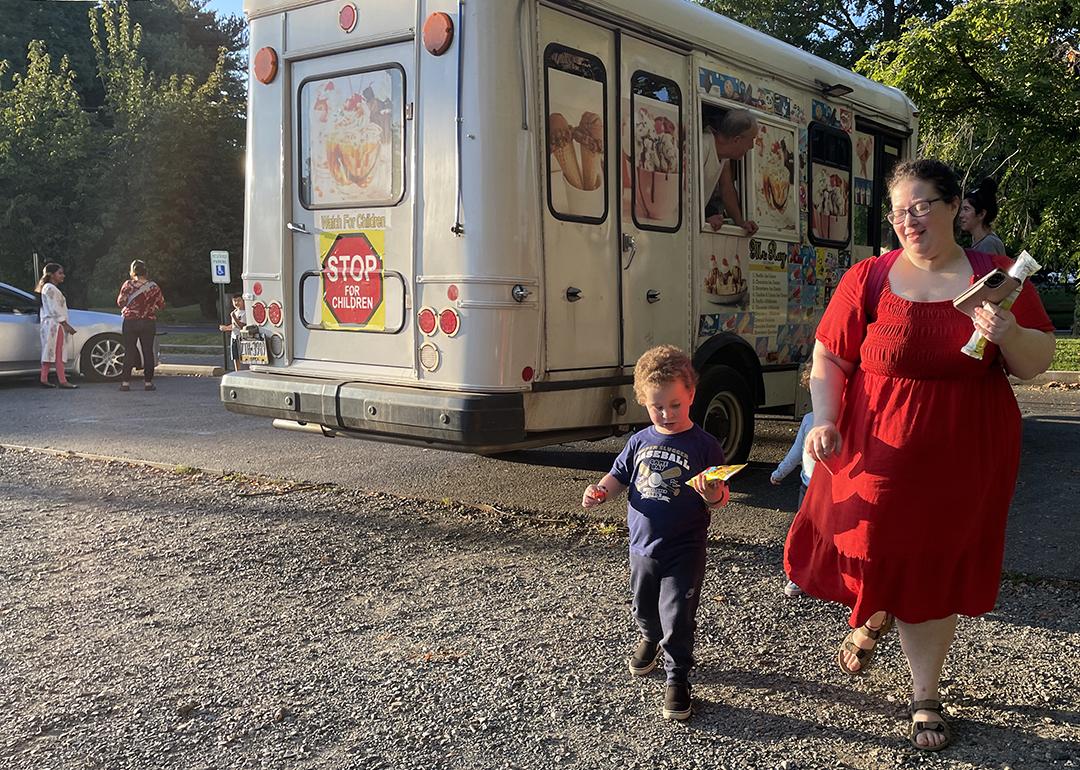
When Kimberly Halevy’s son Joshua was three, she started hearing from his preschool that he was acting out. He rarely participated in circle time and had trouble playing with other kids.
Halevy’s friend had recently opened the preschool, and she liked that someone she knew took care of her son. But eventually, the preschool said it would only allow him back if he had a one-to-one aide to address his “disruptive” behavior, Halevy said.
At first, Halevy thought getting him that aide would be straightforward. But she now describes the effort to get her kid support through Philadelphia’s federally mandated, publicly funded early intervention system as exhausting.
Though state evaluators found Joshua should receive multiple forms of therapy each week, it took months for any services to begin, Halevy said. Then, once providers contacted her, she said it became a “guessing game” whether her son would receive the home-based occupational therapy and specialized instruction he qualified for every week.
“I kept being mad at myself for not pushing,” Halevy said. “But now I realize that it’s just the program.”
Across Philadelphia, young kids like Joshua are waiting months and sometimes years for early intervention services that they are legally entitled to, according to families, therapy providers, and advocates spoke with.
Federal law states that a child must receive services as soon as possible after an evaluation team completes their Individualized Education Program, or IEP. Pennsylvania has interpreted that to mean 14 days. But one provider said the list she can access of children waiting for speech therapy — one of several early intervention services — is sometimes more than 2,000 families long.
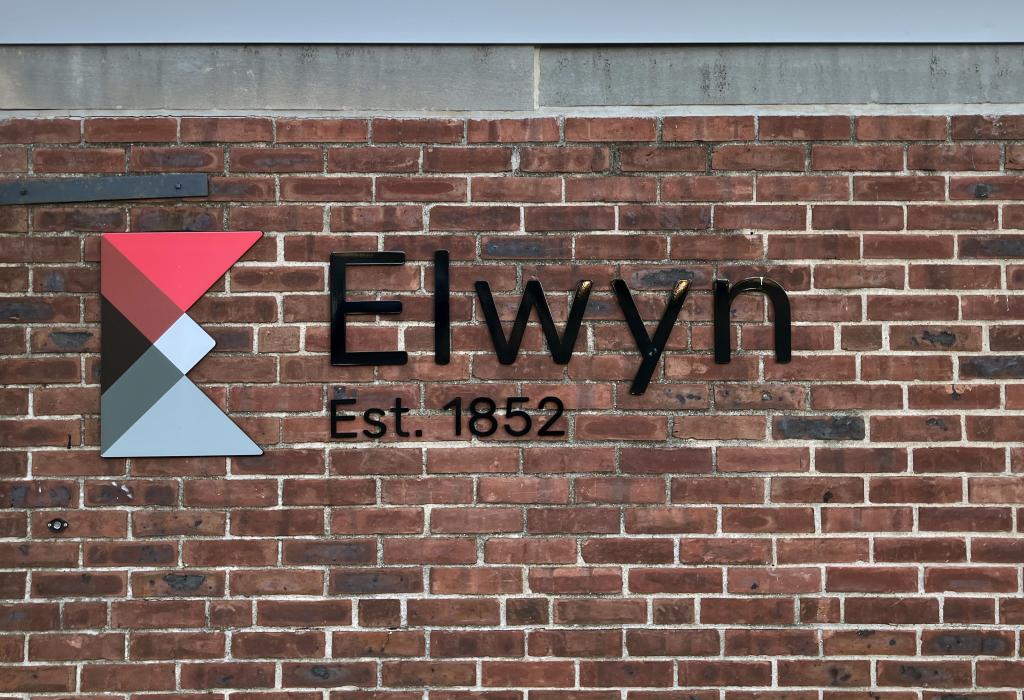
Early intervention providers are , with not enough funding or staffing to meet the need. But in Philadelphia — home to 16% of the state’s early intervention population — one player is largely responsible for the system: a 170-year-old nonprofit called Elwyn that the state pays to manage the publicly funded program.
As Philly’s early intervention system struggles to meet the needs of all kids, some providers and advocates say neither Elwyn nor the state officials who oversee the program are doing enough to ensure kids get services on time.
In response to Chalkbeat’s questions, Elwyn President and CEO Charles McLister said Elwyn does not comment on specific cases, but the organization works quickly to assess children and provide them with services. “For the vast majority of cases, services are provided within the defined window,” said McLister.
But McLister acknowledged that there can be delays due to family communication, transportation, scheduling, provider availability, and severe staffing shortages across the sector.
Erin James, press secretary at the Pennsylvania Department of Education, said in a statement that the department stays in close contact with Elwyn throughout the year “to remind them of their legal obligations.”
James did not respond to questions about service delays for Philadelphia families. However, she noted that early intervention programs often lack sufficient resources. “Current funding levels for EI [early intervention] services are not sufficient because the population of students who qualify for EI services has been increasing for years,” James said.
In Philadelphia, the program’s delays are a key reason many of the city’s most vulnerable kids fall behind before they even start kindergarten, advocates say. Data from early intervention the state publishes shows Philly children in early intervention programs lag behind their peers elsewhere in key growth areas, like developing social-emotional skills.
“The whole idea of having to wait more than the required time is really putting kids at a disadvantage,” said Inella Ray, director of parent advocacy and engagement at the advocacy organization Children First. “Because when kids don’t have the support that they need, in today’s current education or environment, they get pushed out.”
Parents face delays accessing early intervention services
Early intervention is part of the landmark Individuals with Disabilities Education Act, which dictates that all children with disabilities must have access to a free and appropriate public education. Though each state creates and manages its own program, all kids through age five who are identified as having a developmental delay or disability are eligible.
In Pennsylvania, the Department of Education oversees local early intervention programs for preschool-age kids. In almost every county, families get connected with services through an intermediary unit, a kind of regional education service agency.
But in Philadelphia, things work differently. The state pays Elwyn a combination of state and federal dollars to administer the city’s preschool early intervention program, along with a much smaller program in Chester. Last fiscal year, its contract was worth around $90 million. Elwyn is in charge of assessing children, developing their IEPs, and subcontracting with a network of providers for services they qualify for.
When Halevy’s kids’ preschool said her son needed an aide, the preschool owner gave Halevy advice: Phone Elwyn. So she did, and she was relieved when the organization told her they could fit Joshua in to begin his evaluation later that week.
That was July 2024. She hoped Joshua would have services in time to be back at preschool by the following September. But soon, Halevy said she began hitting roadblocks.
In August, she said she didn’t hear much from Elwyn. Like other early intervention programs statewide, Elwyn often takes a two-week service break at the end of summer — one of many scheduled break periods during the year.
But then, when she did hear back that September, she learned Elwyn wouldn’t consider providing a one-to-one aide without observing Joshua in his educational environment. But the preschool said he couldn’t return to class unless he had someone there to specifically support him.
At the end of September, when evaluators wrote Joshua’s initial IEP, they documented that they discussed adding an aide to assist Joshua at preschool. But they wrote that because they could not observe Joshua in his educational environment, they did not have enough information to support that recommendation. “[T]he family is in a difficult position,” the team wrote on the IEP, which Chalkbeat has reviewed.
Joshua’s IEP states that he should receive occupational therapy and specialized instruction each week. The law requires services to begin within 14 days. But more than a month after, Joshua still wasn’t receiving services, Halevy said.
At the time, Halevy was stretched thin. She was also working to get services for her two-year-old daughter, who struggled with speech, through the separate early intervention program that serves children up to age three, run by the city.
For Halevy, sorting out her daughter’s services in the birth-to-three program was simple. Service providers quickly began contacting her, and therapists started showing up for sessions. But for her son, nothing.
“One day, I’m like, ‘Oh my gosh, what’s going on with Josh?’ and I start calling every number I had at Elwyn,” said Halevy.
It wasn’t until two more months later, in November, that he finally began to receive occupational therapy, she said recently after reviewing text messages. In December, she said his special instruction began.
Early intervention IEPs not always followed
Elwyn’s Philadelphia program is the largest in the state, serving around 11,000 preschool-age children, according to the from the 2023-24 school year. The organization first won its contract for early intervention services in Philadelphia in 1998.
But its outcomes for kids are behind the rest of Pennsylvania.
The state requires early intervention programs to report data on how kids progress in certain areas, like social-emotional learning and acquiring new skills. show that for the last five years of data, children in Elwyn’s Philadelphia program have been less likely to progress in all three growth categories compared with the state average.
Margie Wakelin, a senior attorney at the Pennsylvania-based Education Law Center, said her team has assisted more than 80 Philadelphia families in the last year whose kids’ education was disrupted at least in part because they couldn’t access appropriate services from Elwyn. The vast majority of those children, she said, were Black and Brown kids affected by poverty.
Some families hire attorneys to help them access the services they’re entitled to, or get pro bono representation from organizations like the Education Law Center. Many who win their cases get compensatory education, often in the form of money the family can use to pay for services after the case is over.
But that doesn’t make up for lost time, as children quickly age out of early intervention. Research shows that than at any other time of their life. Many families, Wakelin said, have also had their children or made to only attend partial days because of their disabilities.
“It’s such a critical period for kids to have access to high-quality education,” said Wakelin. A system that identifies children as needing services but doesn’t follow through, she added, is “really failing our kids.”’
McLister, Elwyn’s CEO, said the organization has learned that, in some cases, children are suspended from their preschool programs because of learning or behavioral needs. “Elwyn is not part of this decision-making and often learns about it after the fact,” he said. He added that the organization is developing tools “that will help us understand the frequency in which this happens” and is creating additional resource materials for families.
State reports show that Elwyn’s program is successful in some areas, like evaluating 97% of kids within 60 days, the state-required timeline. But that’s just the first step in what advocates say often becomes a month-long process to get services.
Though the law is clear that kids should receive services within 14 days of their IEP being written, the state does not publish information on how long kids wait for services after an evaluation, or how many service interruptions they’ll experience when providers are no longer available.
When it comes to Elwyn’s performance, CEO McLister said that students’ growth data does not account for the unique challenges of providing services in Philadelphia. The children Elwyn serves have higher needs than the state average, he said, with higher incidences of developmental delays and a greater prevalence of multiple other challenges, such as limited English proficiency, economic disadvantages, and other social risk factors.
“For younger children, these factors produce more modest gains,” said McLister.
McLister emphasized that Elwyn has been successful in evaluating the vast majority of children on time, and said the most common reason an evaluation falls outside the 60-day window is a parent cancelling an initial evaluation appointment and needing it to be rescheduled.
He said delays in getting kids' services are often the result of scheduling challenges and staffing shortages — 95% of service issues related to speech and language services, he said, are due to a lack of staff. He said other delays occur when families move or change their child’s preschool enrollment, and when providers return kids to the “needs list,” meaning they stop service for that child, which happens “for a variety of reasons.”
For Joshua, getting a consistent special instructor, a position meant to support Joshua’s learning, has been impossible, Halevy said. Her text history, which she reviewed recently, documents the challenges: The first special instructor who contacted her never visited and stopped responding to texts, she said. The next person was more helpful and saw Joshua a few times, but then abruptly quit. Now, after more than a month of no special instruction, a new provider comes mostly regularly, Halevy said.
Access to occupational therapy has been slightly better, Halevy said. For the first several months of service, Joshua’s occupational therapist showed up inconsistently and seemed rushed, Halevy said. Now, after working out a schedule, she consistently comes around once a week.
Early childhood intervention needs more funding, some say
These and other challenges aren’t unique to Philadelphia families. But preschool operators and early intervention providers say there are particular and longstanding problems in Philly.
Two years ago, Sharon Neilson, former director of the Woodland Academy Child Development Center in West Philadelphia, was part of a group pushing to bring attention to problems in the city’s early intervention program. Council members about parents’ challenges accessing services, and Neilson and other providers met with Elwyn.
At the time, Neilson said, she was hopeful that things would improve. But since then, she said, “we’ve actually seen it get worse.”
Neilson, who now works as support staff at Woodland Academy, said of the 22 children enrolled at the preschool, about four currently receive services from Elwyn, and three more are going through the process of getting evaluated.
The preschool helps families navigate the process, in part because submitting required paperwork and scheduling evaluations can create additional barriers, she said. But even with additional help, in her experience it still usually takes months for kids to be evaluated and services to begin, she said.
“I think that’s the saddest thing for me,” Neilson said. “The families are very frustrated because they don’t know what to do — they just know that they need help for their child, but it’s just very hard to navigate.”
Officials say a lack of resources is largely to blame. Over the past decade, the number of preschool-age children in Pennsylvania receiving early intervention services has grown by a third, and funding hasn’t kept up.
Pennsylvania Department of Education spokesperson Erin James said that is why Gov. Josh Shapiro proposed increasing funding for preschool early intervention by $14.5 million in the state budget. However, months past the budget deadline, lawmakers remain at an impasse over the budget and .
One provider who contracts with Elwyn said concerning inequities exist in Elwyn’s program. (Chalkbeat is not naming the provider due to her fears of retaliation from Elwyn.) It’s an accepted norm, the provider said, that kids in nicer neighborhoods get picked up for service much faster than those in poorer neighborhoods.
“There’s an access and equity issue across the board,” said the provider. “And that’s exacerbated by the shortage of providers.”
Asked about those access and equity concerns, McLister said that to address some related challenges, this year Elwyn is implementing more targeted training for staff and plans to develop a family resource center. He said the organization has also employed internal speech language pathologists to assign to high-priority cases.
When families reach out to Elwyn, McLister said staff provide them with documentation and verbal explanations of how the process works to ensure families understand their rights, next steps, and how to give consent for evaluations.
The organization also periodically notifies providers of historically underserved ZIP codes to encourage providers to serve kids equitably across the city, and includes provisions in its contracts meant to “promote fairness and accountability.” McLister said Elwyn places subcontractors on corrective action plans if the organization “detects patterns of non-acceptance that disproportionately impacts underserved areas.”
As for Halevy, she says her family has gotten relatively lucky. They were able to get Joshua started on an evaluation quickly. And she’s been able to get new therapists when others stop showing up.
But her family’s biggest piece of luck, she said, is that her husband recently got a new job with better health insurance. She plans to use that to get some of the services her kids need. That means she no longer will completely rely on Elwyn.
She just wishes she could erase the months of waiting and worrying about why Joshua’s services took so long to start.
“Basically, what happened is we fell through the cracks,” she said.
was produced by and reviewed and distributed by Â鶹ԭ´´.