Here's how state requirements for school principals compare as the US faces a shortage of qualified educational leaders
was produced by and reviewed and distributed by 麻豆原创 Media.
Here's how state requirements for school principals compare as the US faces a shortage of qualified educational leaders
Schools in the U.S. are struggling with a looming principal shortage. by the National Association of Secondary School Principals revealed that 38% of principals are considering departure in the next three years.
This is concerning since school leadership can have a big impact on student success. shows that an effective principal could give students almost three more months of learning in a year.
Part of the problem is that . Many states require that principals hold advanced degrees, possess teacher certification, and have completed an educational preparation program. investigated to gain a better understanding of what is needed to become a principal.
Additional sources for this article include, , , ,, and .
The Emerging Shortage of School Leaders
In 2022, the second full academic year affected by the pandemic, from their positions.
Pennsylvania has been identified as one of the states experiencing unprecedented . Research conducted by the Penn State Center for Education Evaluation and Policy Analysis reveals a 15.4% turnover rate among principals from 2021-22 to the 2022-23 school years, a significant uptick of 4.2 percentage points.
On the other hand,Texas is witnessing a . From 2016 to 2022, the number of newly certified principals in the states was reduced by half, from 3,662 to 1,837.
On top of this, data from 2022 shows that 38% of principals are planning to exit the profession in the next three years and another 24% are planning to leave within the next two to three years.
This indicates a looming crisis in the availability of school leaders, which could severely impact the quality and sustainability of educational leadership.
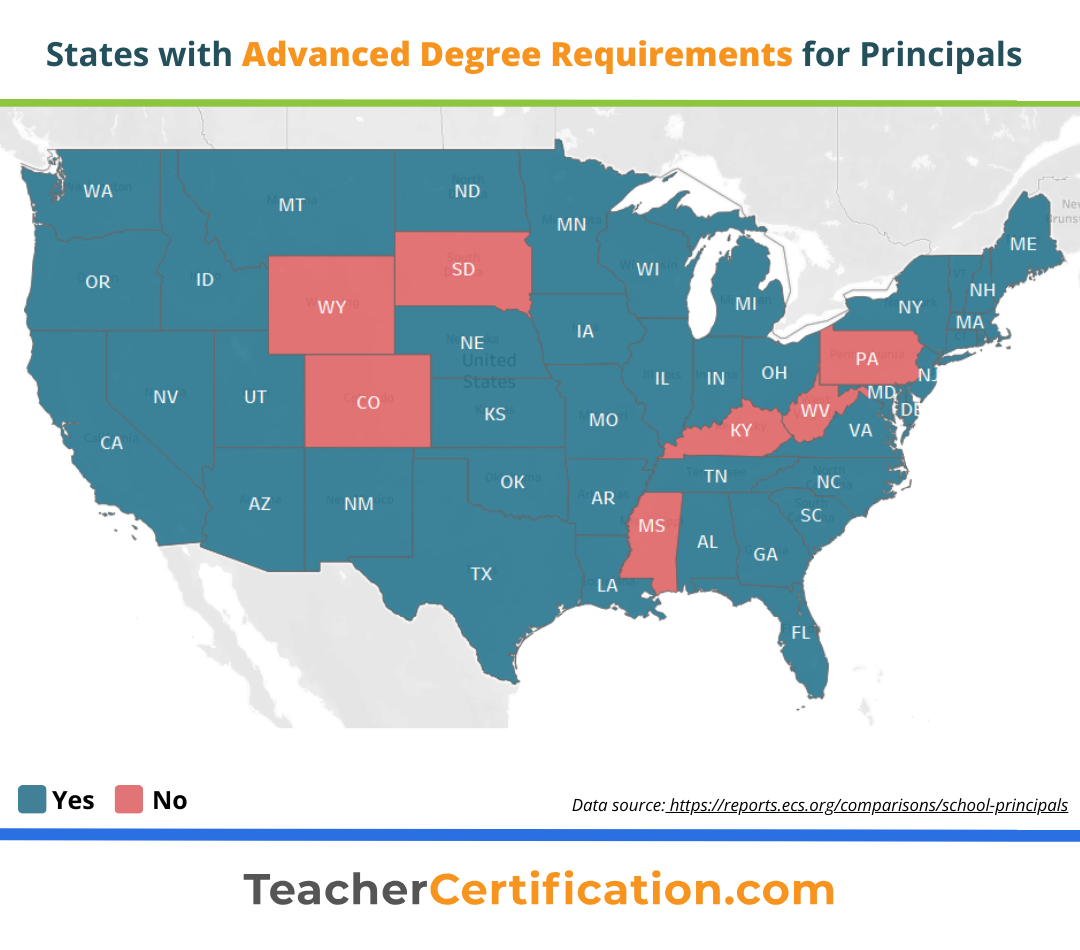
Most States Require Advanced Degrees for Principals
In 2023, the landscape for principal requirements strongly emphasized . A majority of states 鈥� 44 out of 50 鈥� mandate an advanced degree for principals. This requirement is seen as a baseline for ensuring that principals possess enough of an understanding of educational leadership and pedagogical practices to be effective.
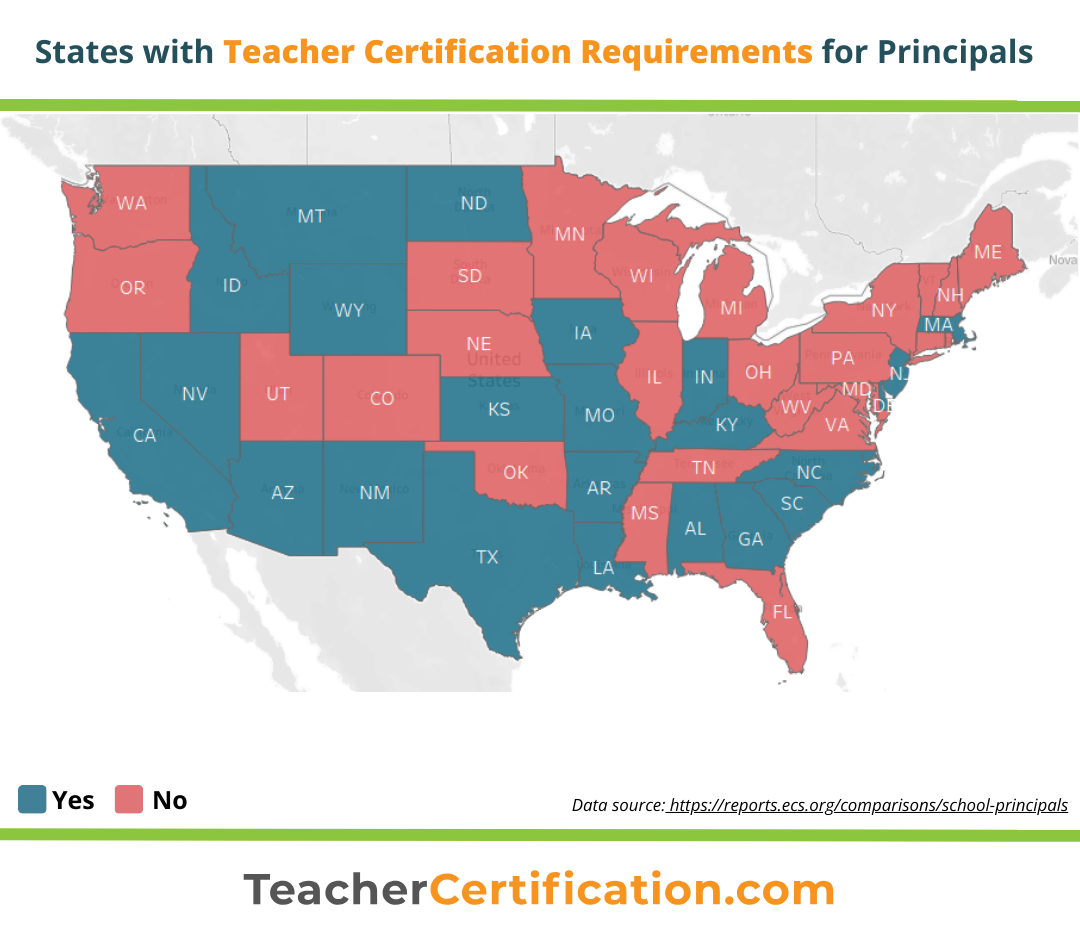
Principals in Just Over 50% of the Nation Need Teaching Certificates
Teaching certificates are also quite common, with 26 states insisting on it.
States like Alabama, Arizona, and Arkansas reflect the common trend of requiring both an advanced degree and a teaching certificate.
Colorado and Kentucky stand out by not requiring either. Specifically, Colorado's prerequisites include an Assessment, a Bachelor's degree, Education Preparation Completion, and Work Experience, while Kentucky's criteria encompass an Assessment, Education Preparation Completion, Field Experience, a Teaching Certificate, and Work Experience.
Across the board, leadership standards have become a cornerstone of principal certification, with at least 47 states and the District of Columbia formalizing these criteria. These standards often emphasize core educational pillars such as academics and curriculum, cited by 42 states, and the foundational mission and vision, noted by 38 states.
The path to principalship is also diversifying. At least 16 states have embraced alternative certification routes, offering dynamic entry points into the profession, and acknowledging that effective leaders may come from varied backgrounds. Moreover, 12 states empower specific entities to develop these alternative pathways, indicating a trend toward localized and specialized leadership training programs.
Impact of Effective Principals
highlights the importance of effective principals in student outcomes. The report found that a principal from the top quarter of effectiveness could lead to nearly three extra months of math and reading learning over a year. The impact of effective principals goes beyond student success. A good principal can also help.
"We're in need of good leaders," Ryan Wade 鈥� teacher at the Marvin E. Robinson School of Business and Management at Yvonne A. Ewell Townview Center 鈥� said to "I've seen what great leadership can do for our campuses as far as setting academic expectations, as well as creating healthy environments for students and faculty, increasing morale."