How microschools are giving rural families more educational options
How microschools are giving rural families more educational options
A new network of charter east of Indianapolis hopes to give rural families separated by acres of farms and woods a choice of schools similar to what鈥檚 available to urban families, reports.
Starting this fall, the new Indiana Microschool Collaborative will create several small schools of 30 to 75 students around the Eastern Hancock school corporation, a rural district about 30 miles from the state capitol.
The schools will add to the , which has the third-most in the country after Arizona and Florida, according to the , a Las Vegas-based advocacy group.
The charter microschools in East Hancock won鈥檛 be the first in Indiana: The well-regarded Purdue Polytechnic High School has a microschool spinoff in Indianapolis. Charter networks and school districts have also created microschools in other states, but the mix of factors in the collaborative鈥檚 plan 鈥� a public school district starting a network of charter microschools 鈥� is rare.
Eastern Hancock Superintendent George Philhower, creator of the collaborative, said parents in Indiana increasingly want to be able to
鈥淥ur vision is that every kid should get to go to a school that feels like it was designed just for them,鈥� Philhower said. 鈥淲e think we can create that.鈥�
Most of the estimated 140 microschools in Indiana are private, but the new collaborative will start all its schools as charters that will qualify for about $7,000 per student in state funding each year. Students will take state tests with the school鈥檚 results open to the public.
While cities like Indianapolis have many charter and private schools, there are few in rural areas. Rural students can go to other districts or online schools, but students are too scattered to support many charter or private schools.
Many parents choose to homeschool instead to give their children personalized teaching they want, he said.
Indiana state school board member Scott Bess, who will also serve on the collaborative鈥檚 school board, called the collaborative 鈥渁 way to get school choice and options for students into areas where there isn鈥檛 one today.鈥�
鈥淚n a rural area, the population is such that you can鈥檛 say, 鈥楬ey, we鈥檙e going to open up a 400 student elementary school鈥�, but you could open a 40 student school,鈥� said Bess, founder of the Indiana Charter Innovation Center and board member of the National Association of Charter School Authorizers. 鈥淲e think there鈥檚 a huge amount of potential for this across the state of Indiana.鈥�
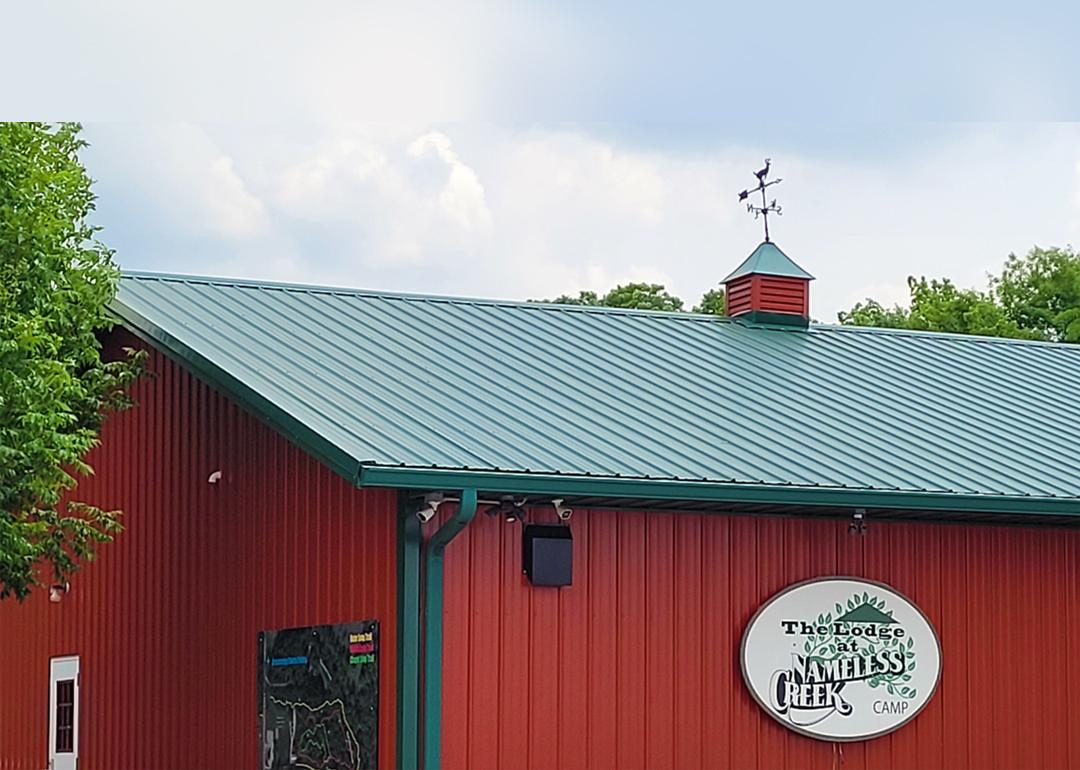
Several families have already said they are interested in the first school, which will launch at a youth camp about 10 miles from district headquarters, Philhower said. Others will start nearby soon, though likely in 2026 and after, with the sites and academic model still to be determined.
He said that all the schools, small enough for personal attention, will use some form of a mastery- or competency-based approach in which students learn lessons at their own speed until they master them, rather than moving ahead to new material at a scheduled time. It鈥檚 a plan that Indiana鈥檚 state school board and legislature are encouraging schools to try out while
Philhower envisions the collaborative eventually growing by 1,000 students or more each year as his plan lowers two big 鈥� finding revenue and managing administrative tasks. The collaborative offers help from the Eastern Hancock school district鈥檚 human resources and other administrative staff to handle those tasks for a fee well below what it would cost a school to do on its own.
The 鈥渟hared services鈥� model saves microschools money, while also helping the school district pay its administrative staff.
There鈥檚 no consensus definition of microschools, which sprung out of both homeschooling and the learning pods families formed during the pandemic.
While some look like homeschooling shared by a few families, others have separate buildings or rented storefronts as schools. Some have only a handful of students, but some have more than 100. Some are private schools, while others are charter schools 鈥� a form of public school operating independently.
The chair of the Indiana Charter School Board called the plan an innovation for the state as the board voted to authorize the schools in May.
鈥淢icroschools are growing rapidly, but primarily through private school choice, through things like education savings accounts,鈥� said Beth Bray. 鈥淭his is the first charter sort of structure that I鈥檝e seen, and so I think this is incredibly creative and really has the potential to be a model for the country.鈥�
was produced by and reviewed and distributed by 麻豆原创.