States with the highest pass rates on the nursing licensure exam
This story originally appeared on NursingEducation and was produced and distributed in partnership with Â鶹ԭ´´ Studio.
States with the highest pass rates on the nursing licensure exam
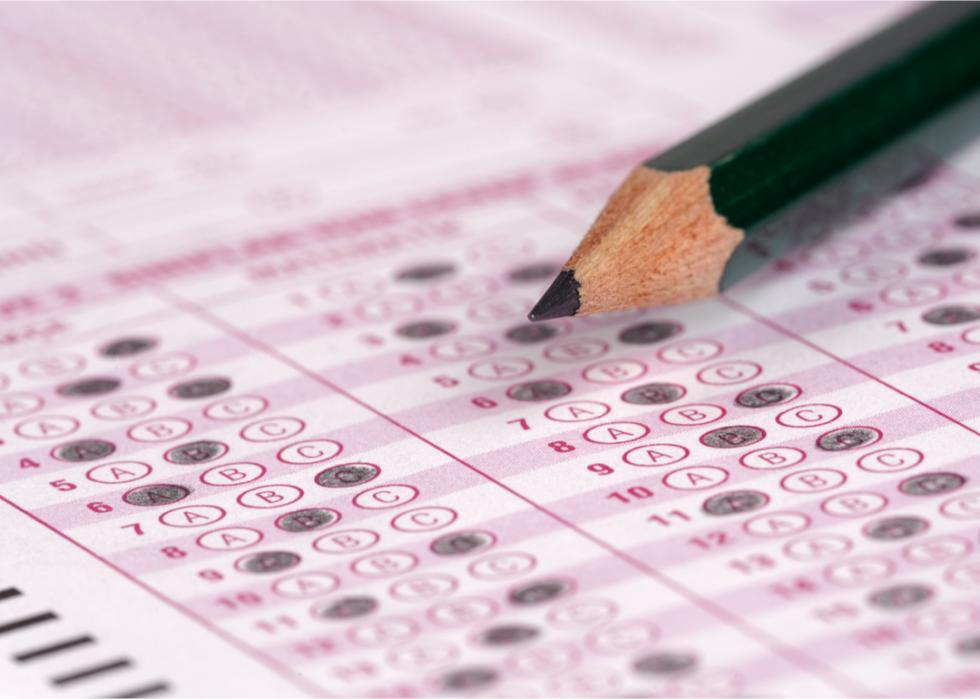
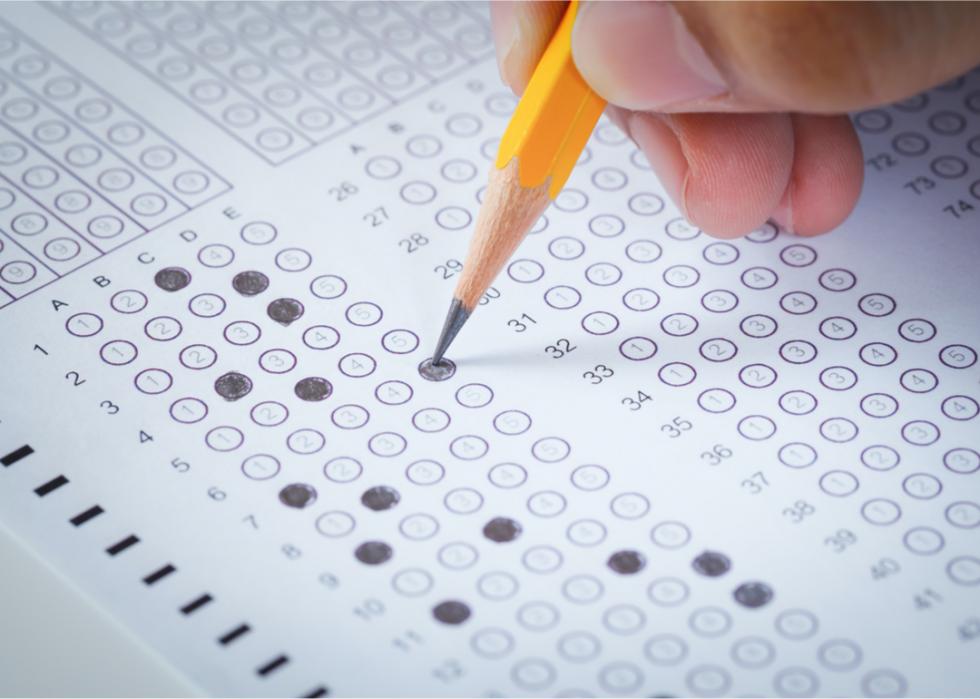
Before nurses can work in the United States, they must pass an exam to become licensed. The National Council Licensure Examination—more commonly referred to as the NCLEX—is a standardized test specifically designed to ensure nurses are ready to start practicing. There are two versions of the test based on education level: Those who have earned a diploma in practical nursing take the NCLEX-PN, while those who have earned an associate or bachelor’s degree take the NCLEX-RN. Both consist of questions that test nursing knowledge as well as presenting scenarios to test a potential nurse’s ability to effectively make decisions, critically parse a complex process, and navigate the kinds of tricky situations nurses will face in future workplaces.
Each state has its own board of nursing under the umbrella of the (NCSBN). While nurse hopefuls in all states must gain their license before practicing nursing in their state, the protocol can vary in different places. Some states combine registration for the exam with the license application, while others require candidates to apply for licensure with the state board before being allowed to register for the exam. The test can be taken in any state, even if it’s a different one from where the nurse will end up practicing. (Other requirements to gain licensure, like clinical hours and temporary practice permits, vary across states.)
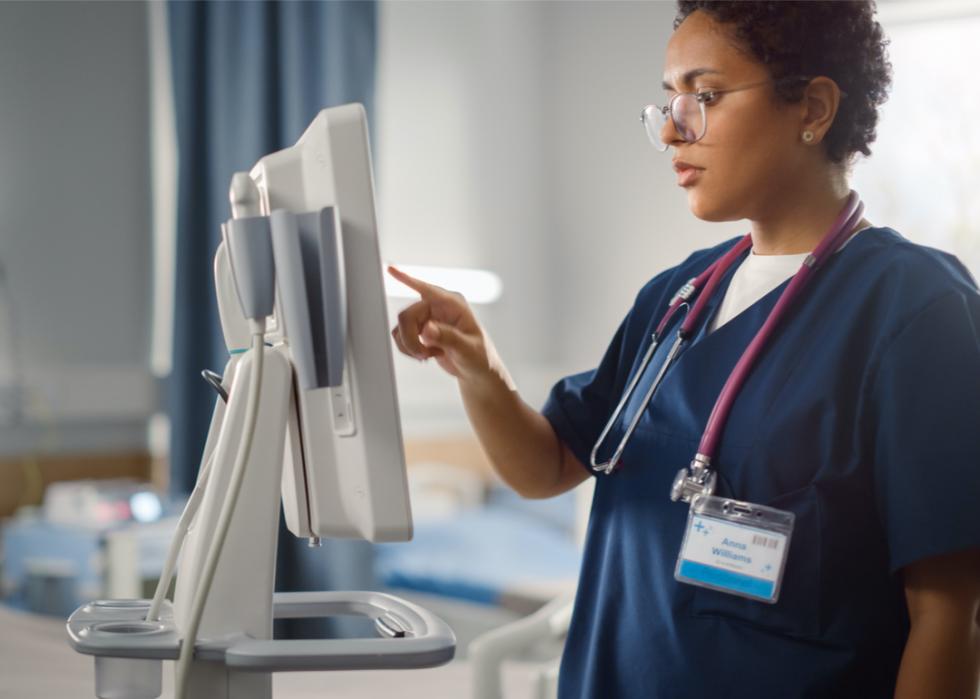
The COVID-19 pandemic has resulted in shocks to the nursing industry and upheaval for nurses themselves. With COVID-19 cases once more increasing, hospitals are facing a , with too few nurses to care for the deluge of patients. This comes after more than a year of similar shortages, and burnout and trauma as a result of working in high-stress environments where staffing shortages combine with the devastating death rates of COVID-19 into a perfect storm of an untenable situation.
Yet the current nursing shortage has been looming for a long time. Many factors contribute, including the nation’s —a demographic than previous generations thanks to improved medical care, which translates to a large number of medical professionals dedicated to managing the health of the elderly. Meanwhile, the nursing workforce , resulting in a significant number of nurses retiring or set to retire in conjunction with the increased need for nurses to care for America’s elderly. Perhaps one of the biggest hurdles to providing enough nurses to meet demand is a lack of nursing faculty in university nursing programs, leading to limited capacity in nursing schools, even as many qualified would-be nursing students are turned away.
For more than a decade, 30,000 applicants who meet requirements are rejected from studying nursing, and in 2019, that number was 80,000, according to the. Master’s and doctoral programs in nursing are not turning out enough nursing instructors to fill the pipeline of educators, and even for those who do complete the graduate-level education necessary to teach at a university setting, they are lured away to more lucrative jobs because university positions .
Even in pre-pandemic times, nurses have been the beating heart of the medical care industry. At 59% of the total health care professionals, nurses make up the , and their importance will only grow in the future. Overall demand for registered nurses (RNs) is projected to increase by 12% from 2018 to 2028, from the U.S. Bureau of Labor Statistics (BLS)—a percentage nearly double the expected growth across all occupations.
Interest in nursing has increased with the heightened visibility of the critical role nurses play during the pandemic, with enrollment in four-year nursing programs going up by nearly 6% in 2020, according to the . In 2022, there will be more RN jobs than any other profession in the United States, according to the . Even with that growth, the near future will see grow.
Given the necessary and life-saving role nurses play, the projected shortage, and the job security nurses can expect in the future, now is a good time to get into the field. Nursing is and the pandemic resulted . Future nurses can enter the profession with an associate or a bachelor’s degree. All candidates must pass the NCLEX in order to gain their license to become a practicing nurse.
From Jan. 1 to Dec. 31, 2020, in the U.S., 86,508 candidates with RN associate degrees sat the exam, with 82.8% passing. That number goes up for RN bachelor’s degrees, with a total of 88,635 candidates taking the exam and 90.3% passing. But not all states are equal when it comes to nursing hopefuls passing their exams.
used from the National Council of State Boards of Nursing to compare pass rates on the National Council Licensure Examination (NCLEX) in 2020, the most recent year available. States are ranked by the overall pass rates of first-time candidates taking the test.

#20. Missouri
- Pass rate, overall: 90.0%
--- Pass rate, associate degree students: 88.9%
--- Pass rate, bachelor's degree students: 90.7%
Missouri's 2020 projects the number of RNs could grow by a whopping 16.2% from 2018 to 2028. The Missouri Board of Nursing requires RN hopefuls to earn an associate or bachelor's degree in nursing and pass the NCLEX-RN. Earning a bachelor's of science in nursing (BSN) will result in than those with associate degrees in registered nurses (ADN).
Avila University, a small Catholic college, boasts an impressive average on the NCLEX-RN over the past three years. State schools like Southeast Missouri State University and the University of Missouri tout similar pass rates. Southeast Missouri State University’s well-respected program and offers an online RN-BSN degree, while the University of Missouri is a top research institution that offers bachelor's, master's, and doctoral degrees through the .

#19. Oregon
- Pass rate, overall: 90.1%
--- Pass rate, associate degree students: 90.9%
--- Pass rate, bachelor's degree students: 89.5%
Oregon is the fourth-highest paying state for RNs in the nation, according to the , with an annual mean wage of $96,230 per year. Several high-quality nursing programs may be found in Oregon. Two private schools boast high pass rates on the NCLEX: Walla Walla University School of Nursing, part of a private Adventist university, consistently reports pass rates , as does . The latter offers an accelerated 16-month for students or graduates looking to move quickly into nursing. Another good option is Portland Community College’s (ASN). Students who earn this degree can choose between becoming an RN or transferring to nearby colleges that offer a BSN after completion of the associate degree. Portland Community College’s was an impressive 98% in 2019, and 95% in both 2018 and 2017.

#18. Nebraska
- Pass rate, overall: 90.1%
--- Pass rate, associate degree students: 77.6%
--- Pass rate, bachelor's degree students: 94.1%
Nebraska, like many other states, is experiencing a that is expected to grow. The Northwest Nebraska nonmetropolitan area is among the highest of nonmetropolitan areas in the country with the highest concentration of jobs and location quotients in registered nurses, . Roughly 10% of Nebraska’s nurses have left the profession after the stress of working during the COVID-19 pandemic, according to data from the , signaling a need for nurses in the state.
Union College-Nebraska’s nursing program is an exceptional one. In 2020, the an astonishing 100% NCLEX pass rate, and its graduates are in such high demand that 100% of them land a job within three months of graduation, with an out-of-state hospital system in Ohio . Bryan Health College is another option, offering a deep bench of majors tailored to students looking to enter the healthcare industry, and its nursing program includes an RN-BSN master's of science in nursing (MSN), an RN-MSN, a Ph.D., and a doctor of nursing practice (DNP). For Nebraska nurses who already have their RN license, is a highly regarded option for nurses to earn their RN-BSN, which expands qualifications and leads to .

#17. West Virginia
- Pass rate, overall: 90.2%
--- Pass rate, associate degree students: 89.0%
--- Pass rate, bachelor's degree students: 92.7%
West Virginia has a high concentration of nurses, numbering 30 out of every 1,000 jobs, according to the , with an annual . West Virginia’s RNs also feed into the high employment level for nurses in and around the metropolitan area. Still, the COVID-19 pandemic exacerbated a nursing shortage. To grapple with the dearth of RNs, earlier this year the West Virginia Center for Nursing announced to “develop solutions to the key issues affecting nurses in the state.”
West Virginia is home to a number of religious schools that offer nursing programs, including West Virginia Wesleyan College, which has an impressive reputation and very small class sizes that make admissions difficult. West Virginia University, on the other hand, is a large public institution that boasts a of 98% and a good job placement rate for students postgraduation.

#16. South Carolina
- Pass rate, overall: 90.4%
--- Pass rate, associate degree students: 87.9%
--- Pass rate, bachelor's degree students: 93.4%
South Carolina is ranked #4 among states with the by 2030. State lawmakers have of the state budget to funnel into technical colleges so they can expand their nursing offerings in an attempt to draw more students into nursing.
University of South Carolina Aiken offers a public school option with a high NCLEX pass rate—96.5% in 2019—making it an attractive option to South Carolina residents. A private option is Anderson University, which not only has but also offers the only cadaver lab in the U.S. made specifically for nursing students. It’s part of a that mimics the look and feel of a hospital, turning the nursing classroom into the most real-world setting possible outside of an actual hospital.

#15. Washington
- Pass rate, overall: 90.6%
--- Pass rate, associate degree students: 90.3%
--- Pass rate, bachelor's degree students: 91.2%
Washington, along with its fellow West Coast states, falls into the highest bracket of the annual mean wage for RNs in the country, according to the . That , according to 2020 data—roughly $10,000 more than the . Yet the nursing shortage poses a problem. Darcy Jaffe, the vice president of safety and quality at the Washington State Hospital Association, , “We do expect the shortage to continue to grow and be more substantial over the coming future.” She added that nursing in the COVID-19 pandemic is “like you're in a war zone.”
Those looking to earn their associate degree in nursing should consider Big Bend Community College, where 100% of the small class has passed their NCLEX exams . Gonzaga University, a highly rated nursing school, , saw 98% of its Bachelor in Nursing Science degree holders pass the NCLEX. Finally, in addition a bachelor of science nursing degree, Seattle University’s is a four-year graduate study where those who have a bachelor’s degree in a non-nursing field can earn a Doctor of Nursing Practice. The program has an of 93.6% from 2016 to 2020.

#14. Texas
- Pass rate, overall: 90.7%
--- Pass rate, associate degree students: 87.9%
--- Pass rate, bachelor's degree students: 93.2%
Texas is ranked #2 among states with the by 2030. By that time there will be an estimated 88,800 new nursing positions in the Lone Star State. Houston is the metropolitan area for the number of employed RNs. According to , “Texas is lower on the cost of living spectrum (90.4) and gives nursing professionals the opportunity to bring home $70,390 each year in terms of annual mean wage.”
Texas A&M University’s well-regarded nursing program consistently sees , and of the graduating class in December 2019, . The University of Texas at Austin’s Bachelor of Science in Nursing also has a good reputation in the state, ranks , and touts a . The program itself states admission is highly competitive.

#13. Colorado
- Pass rate, overall: 90.7%
--- Pass rate, associate degree students: 89.2%
--- Pass rate, bachelor's degree students: 91.5%
Colorado’s nursing shortage is partly due to , according to . On top of that, 35% are 55-64 years old, and 7% are 65 and older, , and will be retiring in the next 10 years. According to a 2005 study by the Institute, 60% of the registered nurses in the state received their education outside of Colorado, leading the Center for Nursing Excellence to call on the state to “develop sufficient internal capacity” for training nurses to meet Colorado’s increasing demand.
Programs meeting that demand include several high-quality options, like the Denver College of Nursing, which posted a on the NCLEX exam in 2020. The college offers both associate and bachelor’s degrees in nursing, as well as on-campus and , giving students a diverse array of options under one roof.

#12. California
- Pass rate, overall: 90.9%
--- Pass rate, associate degree students: 91.0%
--- Pass rate, bachelor's degree students: 90.8%
California is home to many schools that offer competitive nursing programs, many of which are state schools. Several tout impressive 100% pass rates on the NCLEX-RN exam, with even more falling in the 95-99% range. It’s a good thing so many high-quality programs exist in the Golden State because California is ranked #1 among states with the by 2030. There will be 110,500 new positions in the state in nine years, creating a big demand and opportunity for new nurses to be sure of job security in the state. That’s on top of the 200,000+ nurses already working in the state, which makes California the state with the highest employment rates for nurses in the country, . California nurses also make top dollar, according to the same study, bringing in a $48.92 hourly mean wage and a $101,850 annual mean wage.
#11. Hawaii
- Pass rate, overall: 91.3%
--- Pass rate, associate degree students: 91.5%
--- Pass rate, bachelor's degree students: 92.1%
RNs in Hawaii enjoy competitive pay, as the state is the second-highest paying in the nation, , with an annual mean wage of $104,830 per year. Hawaii’s nursing shortage is due in part to too few programs and faculty to teach students. Hawaii Pacific University BSN Chair Dr. Michelle Higgins-Mahe the school is turning away students. And even when the state turns out nurses, for working in intensive care units, which is where the most need is because of the COVID-19 pandemic.
The state is still focusing on educating future nurses, and a number of programs exist. The University of Hawaii at Manoa can boast a , small class sizes, and a that aids veterans in becoming nurses. The offers a Bachelor in Nursing Science and offers an associate degree in Nursing Science, and each has .

#10. Arizona
- Pass rate, overall: 91.4%
--- Pass rate, associate degree students: 90.1%
--- Pass rate, bachelor's degree students: 93.1%
Phoenix is a well-paying state to be a nurse, with the falling at $74,930 per year. Arizona will need a large number of new nurses, with a . Arizona's largest health care system was in August 2021, and like many hospitals with huge demand, are only making it up by persuading nurses from out of state by paying double or triple typical salaries.
Arizona State University offers to becoming a nurse, including an online RN to BSN, a community college to ASU path, and an accelerated BSN for those who already have a bachelor’s degree. Students who earn their BSN have garnered a on the NCLEX for the past three years running. Arizona College, meanwhile, offers a BSN that can, in some cases, be completed . Their NCLEX was 97% in 2020, and 100% in 2019 and 2018.

#9. North Dakota
- Pass rate, overall: 91.6%
--- Pass rate, associate degree students: 90.2%
--- Pass rate, bachelor's degree students: 92.0%
The nurse shortage is so dire in North Dakota that a bill to create the Statewide Nurse Staffing Clearinghouse by the North Dakota Center for Nursing is currently in the works. A number of items in the bill seek to , like improving workplace culture, while also focusing on recruiting nurses from out of state and even internationally. Nearly of North Dakota’s nursing programs plan to work outside the state after graduation.
Well-regarded across many disciplines and offering one of the largest nursing programs in the state, North Dakota State University serves full-time, part-time, and working students, both in-person and online. Its was 92% in 2020 and 96% in 2019. The University of Mary is a Christian school of note for its lower-than-average tuition costs for a private school and its for BSN grads—96% in 2020 and 100% in 2019.

#8. Pennsylvania
- Pass rate, overall: 91.7%
--- Pass rate, associate degree students: 90.8%
--- Pass rate, bachelor's degree students: 92.5%
The state of Pennsylvania employs the fifth-highest level of RNs in the U.S., , due to its proximity to densely populated cities within the state and just outside state lines. That fact helps explain why Pennsylvania is a in need of nurses; the COVID-19 pandemic only made it worse, and some hospitals are offering nurses .
Drexel University, one of the largest private colleges in the nation, offers a nursing program at its campus in Philadelphia, where nursing students can practice in the simulated clinical setting of the Center for Interprofessional Clinical Simulation and Practice. The pass rate is 96%, for the last two years, and the program offers master’s and —a necessary program to increase the faculty pipeline in nursing, which many nursing programs highlight as they can’t accept more students eager to become nurses.

#7. Tennessee
- Pass rate, overall: 91.7%
--- Pass rate, associate degree students: 91.6%
--- Pass rate, bachelor's degree students: 91.7%
Tennessee has started to address the expense of a college education with programs like and , though that without more funds allocated to increase faculty and pay them competitive rates, programs that increase the general student population won’t translate to more nursing students. Tennessee’s nursing shortage is especially severe in its rural hospitals, but even the in Nashville was trying to fill 100 nursing positions across five hospitals and clinics as of June 2021.
The University of Tennessee at Chattanooga is one such school that offers , a necessary step toward addressing the faculty shortage. Its undergrad program is a respected one, with NCLEX pass rates that across its various degrees. This is just one of many nursing programs that boast high NCLEX pass rates—in fact, into the high 80 and 90 percentages.
#6. North Carolina
- Pass rate, overall: 92.0%
--- Pass rate, associate degree students: 90.8%
--- Pass rate, bachelor's degree students: 93.6%
In , two healthcare systems in North Carolina had more than 700 nurse openings each. The Piedmont area is home to concentrations of nurses in nonmetropolitan areas in the U.S. The UNC hospitals are hoping with up to $25,000 in loan forgiveness and up to $10,000 to relocate.
The bucolic Appalachian State University offers a BSN program with online and accelerated options, in addition to an and . Its 98% three-year average for passing the NCLEX includes . Duke University, East Carolina University, and Wingate University can also show off a 98% three-year average for passing the NCLEX among RNs, and Western Carolina University, which regularly falls at the top of undergrad program lists, has a .

#5. South Dakota
- Pass rate, overall: 92.4%
--- Pass rate, associate degree students: 86.2%
--- Pass rate, bachelor's degree students: 93.2%
South Dakota is ranked #7 among states with the by 2030. It’s also the state with the highest concentration of jobs and location quotients for RNs in the whole nation, with 31.93 RNs per thousand jobs in the state, , and the most concentrated area of RNs in the state is in Sioux Falls.
A number of nursing programs are in or near Sioux Falls as well. The University of Sioux Falls offers small class sizes for its nursing programs, which include a traditional BSN and an accelerated BSN for those who already have their bachelor’s degree in another field. That accelerated program boasts especially strong —100% in 2019 and 2017, and 96% in 2018. The standard BSN rate is also impressive at 95% in 2019, 100% in 2018, and 92% in 2017.

#4. Louisiana
- Pass rate, overall: 92.8%
--- Pass rate, associate degree students: 88.9%
--- Pass rate, bachelor's degree students: 95.1%
Louisiana hospitals were already dealing with one of the highest COVID-19 case rates in the country before to the workload of already-overburdened hospital staff. The spike comes amid an ongoing nursing shortage: More than 6,000 open nursing positions . Yet the problem isn’t a lack of interest, of a nursing school in New Orleans. Rather, like many other states, nursing schools don’t have enough faculty, a result of low pay, and state nursing schools reject around 1,400 qualified nursing applicants every year.
The University of Louisiana at Lafayette is one of the most in the state, with multiple options for pathways to nursing and a very impressive in 2020. offers a BSN as well as graduate and doctoral programs and touts a .

#3. Nevada
- Pass rate, overall: 93.2%
--- Pass rate, associate degree students: 91.2%
--- Pass rate, bachelor's degree students: 94.4%
Nevada ranks 48th in the United States for nurses per capita, according to , and the COVID-19 pandemic has strained nurses to the point that hospitals at capacity may have to . Nevada’s low cost of living and annual mean wage per year makes the state an attractive one for nurses to work in.
Nevada State College offers a with an online and part-time option for a BSN and had a . Arizona College’s is a three-year BSN degree, meaning students can potentially save money by shaving off a year of tuition and emerge with the same science degree as their four-year counterparts. That program had a in 2020.
#2. Delaware
- Pass rate, overall: 93.6%
--- Pass rate, associate degree students: 91.2%
--- Pass rate, bachelor's degree students: 95.6%
Delaware has a high concentration and quotient of RNs, with 26 nurses per 1,000 people, . The Philadelphia-Camden-Wilmington statistical area, which encompasses Delaware, is the fourth-highest metropolitan area in the U.S. when it comes to the employment level of RNs. In response to the nursing shortage, in August 2021, the Delaware governor signed a allowing nurse practitioners to practice independently, without the typical supervision by a physician.
The storied University of Delaware as well as master’s programs and doctoral programs. The pass rate on the NCLEX for BSN holders was . The only program to do better is the Beebe Medical Center, a facility that also runs a . Of the 29 students to sit the NCLEX in 2020, .
#1. New Hampshire
- Pass rate, overall: 96.2%
--- Pass rate, associate degree students: 95.3%
--- Pass rate, bachelor's degree students: 97.1%
New Hampshire is ranked #10 among states with the by 2030. The West Central-Southwest New Hampshire nonmetropolitan area is the second-highest nonmetropolitan area for a concentration of RN jobs, with 30 RNs for every 1,000 people, . Hospitals, and , face the same shortage of nurses as elsewhere in the U.S.
Many of the nursing programs in New Hampshire have very high NCLEX pass rates, contributing to the rank of #1 for pass rates nationwide. With an overall NCLEX pass rate of 96%, new nurses in New Hampshire perform a full 10% better than the national pass averages. Two programs offering bachelor’s degrees—St. Anselm College and Keene State College—both posted , while the associate degree programs of White Mountain, River Valley, and Lakes Region community colleges also posted . And most of the other programs still fell in the 90s for percentage passed. The makes the most of its location near the renowned medical community in Boston, offering high-quality bachelor’s and master’s programs in nursing with a stellar reputation.