Trump gave the Labor Department more control over career-technical education. Will students benefit?
Trump gave the Labor Department more control over career-technical education. Will students benefit?
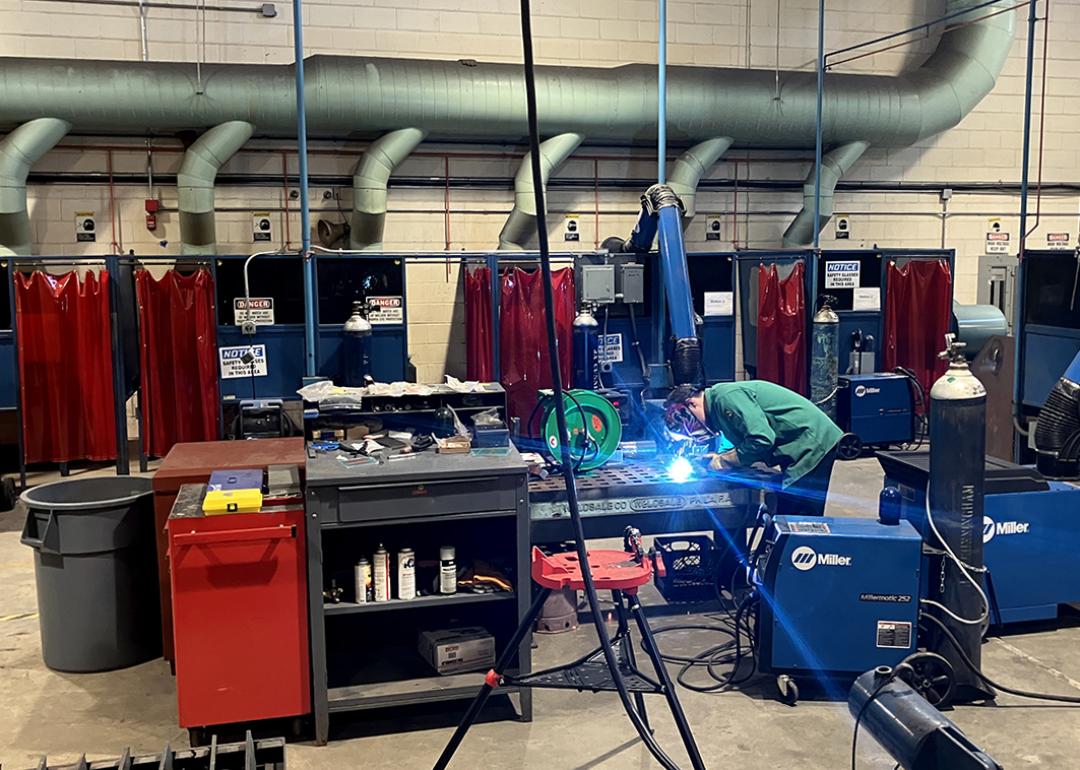
Career and technical education is a lot more than learning to weld or draw blood.
It can expose kids to jobs they didn’t even know existed and help them figure out what they want to do with their lives.
It can also teach students concrete skills they can use on the job right after they graduate high school. But high school programs haven’t always lined up well with what employers are looking for, or prepared students for jobs available in their communities, reports.
The Trump administration wants to see career and technical education, or CTE, focus more on preparing students for jobs. To do that, that have been under the Education Department’s purview for decades and moved them to the Labor Department, which has historically focused on short-term job training for unemployed adults.
Trump officials say the end goal is to boost participation in the labor force, especially for the millions of young adults . The change, they say, will reduce the administrative burden on states and make it easier for states to centralize their own workforce development programs.
Jason Tyszko, a senior vice president for the U.S. Chamber of Commerce Foundation, said there could be some short-term disruption, as well as some hard questions to work through. But if the end result is more accountability for programs and more young people in jobs, that would be a “win for families and learners.”
“We think the more alignment, the better,” Tyszko said.
But many career-technical education advocates, as well as Democrats in Congress, say this move is another step toward dismantling the Education Department. They fear there are simply too few staff in both the Education and Labor Departments to manage the transition, and they worry the change will end up steering kids toward short-term job training with fewer paths to advancement.
High school CTE programs can help create “a springboard for lifelong opportunity,” said Amy Loyd, who served as the assistant secretary over career and technical education during the Biden administration.
For example, students who take advanced manufacturing classes in high school can set themselves up for admission to a trade school, while teens who take college-level health care classes can often earn credit toward an associate or bachelor’s degree.
“One of the challenges that we in the career and technical education community have been working to combat is the still-pervasive stigma of career and technical education being for ‘those kids,’” she said. “I think by focusing on the shorter-term credentials we are again rebuilding this narrative that CTE is for kids who are not college material.”
Two agencies in charge of career-technical education
The Education Department says this change is in line with the calling for the consolidation of “fragmented Federal workforce development programs that are too disconnected from propelling workers into secure, well-paying, and high-need American jobs.”
In May, Trump officials that maintains the Education Department’s oversight authority for career-technical education, but hands over the day-to-day operations to the Labor Department. That includes distributing over $1 billion to states in Perkins funding, which pays for CTE programs in K-12 schools and community colleges, making compliance monitoring visits, and helping states and schools with technical questions.
this transfer of funds and responsibilities is illegal, and the proposal should have gone to Congress. Others in the career and technical education field say the Education and Labor Departments already work closely together and this move isn’t necessary to improve collaboration.
Anna Chappelle, the executive director of the Alabama Workforce Board, hopes what happens at the federal level resembles the transformation happening in her state. The share of young people who were not working or in school in Alabama was the highest in the nation in 2019, according to a .
In recent years, Alabama has , and has . In June, , who led that work under Alabama Gov. Kay Ivey, as the second-in-command for CTE at the Education Department.
Alabama launched a state apprenticeship agency that . The state also for identifying which job credentials and career pathways are most valuable in different parts of the state — whether that’s the space industry in the north or the maritime industry in the south.
“When we have this separation, that keeps states siloed,” Chappelle said. “Being able to have credentials of value and workforce pathways in Labor, that is going to help people get the education and training that they need.”
She thinks the federal change will lead to more money for training and education programs, “rather than the bureaucratic red tape.”
But Loyd, who is now the CEO of All4Ed, a nonprofit that advocates for equity in education, worries there aren’t enough federal staffers left to provide the kind of “personalized and intensive” guidance her team of 80 once did.
The office “was really leaning into helping states think differently, to not just rubber stamp what always has been,” Loyd said. “I worry that all of that capacity-building, all of that partnership with the field, is ultimately hindered and gutted.”
to the Labor Department, but how many is unclear. The Education Department did not respond to questions. Chalkbeat received out-of-office automatic replies from multiple spokespeople due to the government shutdown.
Some advocates fear states and schools won’t get clear answers to questions about whether new ideas are allowable under the law or how to make sure CTE programs serve all students.
“If we had a question about kids with disabilities and CTE, we knew where to go,” said Braden Goetz, who served in the CTE office during the Biden administration and is now a senior policy advisor at the Center on Education and Labor at New America, a left-leaning think tank. “I’m concerned that in the Department of Labor they won’t have those resources.”
Some fear overemphasis on short-term job training
The Education Department has said its agreement with the Labor Department will integrate education and job training programs “with an employment first perspective, which places employers at the forefront of workforce development programs.” The document mentions “upskilling” students — a term that’s typically used to refer to retraining adults in the workforce, not kids in K-12 schools.
Some education advocates worry that sends the wrong messages to students about the purpose of career-technical education programs, and .
Loyd, the former Biden official, worries that folding CTE into the Labor Department’s work will lead to an overemphasis on helping students earn industry credentials that .
CTE programs to prepare students for jobs that are “high-skill, high-wage, or in-demand.” A heavier focus on short-term job outcomes could steer more students toward in-demand jobs that don’t pay very well, Loyd said, such as certified nursing assistants or home health care aides.
“I love programs like phlebotomy programs in high schools where students can earn meaningful certificates that can get them a job,” Loyd said. “But again, this should be a stepping stone,” she said, not the end game.
Tyszko, of the Commerce Foundation, says time will tell if kids get steered like that. He notes that the Labor Department does have experience connecting young people with apprenticeships, which .
“They’re very capable of supporting a set of activities in the field that promote career awareness and aren’t directly tied to job placement,” Tyszko said, adding it would be wrong to assume the Labor Department’s focus on short-term job training “would entirely consume” career-technical education.
The Labor Department also may be better positioned to hold CTE programs accountable for their outcomes in the workforce, and whether they actually match what employers want and need, he said.
Chappelle in Alabama says what programs kids have access to also affects whether they can make an informed decision about their path. The kind and quality of CTE programs offered at schools varies a lot depending on where kids live, and states and businesses share in the responsibility of closing any gaps.
“We are all working together to make sure we have what’s available for our students and our citizens to go up in life,” she said. “We’re not trying to keep people down. That doesn’t serve anybody.”
was produced by and reviewed and distributed by Â鶹ԭ´´.