Who's counting? A glimpse into the world of math teachers
Who's counting? A glimpse into the world of math teachers
Math teachers are currently among the most in-demand educators in the US, as reported. Math teacher shortages are concerning given the impact teacher shortages have on student outcomes. Erica Jones, president of the Mississippi Association of Educators, highlighted to the consequences of teacher shortages: schools struggle to offer a diverse array of classes, often eliminating advanced subjects like upper-level math.
"And students who can't take those classes can't demonstrate those skills to scholarships and colleges, putting them at a disadvantage for future prospects, compared to their peers whose schools offer those classes," Jones said.
The potential impact of math teacher shortages on student achievement is a concern, especially as math scores have been on a decline for 13-year-old students in the. Compared to previous assessments in 2019-20, scores dropped from an average of 280 out of 500 points to 271.
In this article, examines the demographics of math teachers today and what may be driving this shortage.
Complementary data comes from the,, the, the, and the.
Math teacher salary demographics
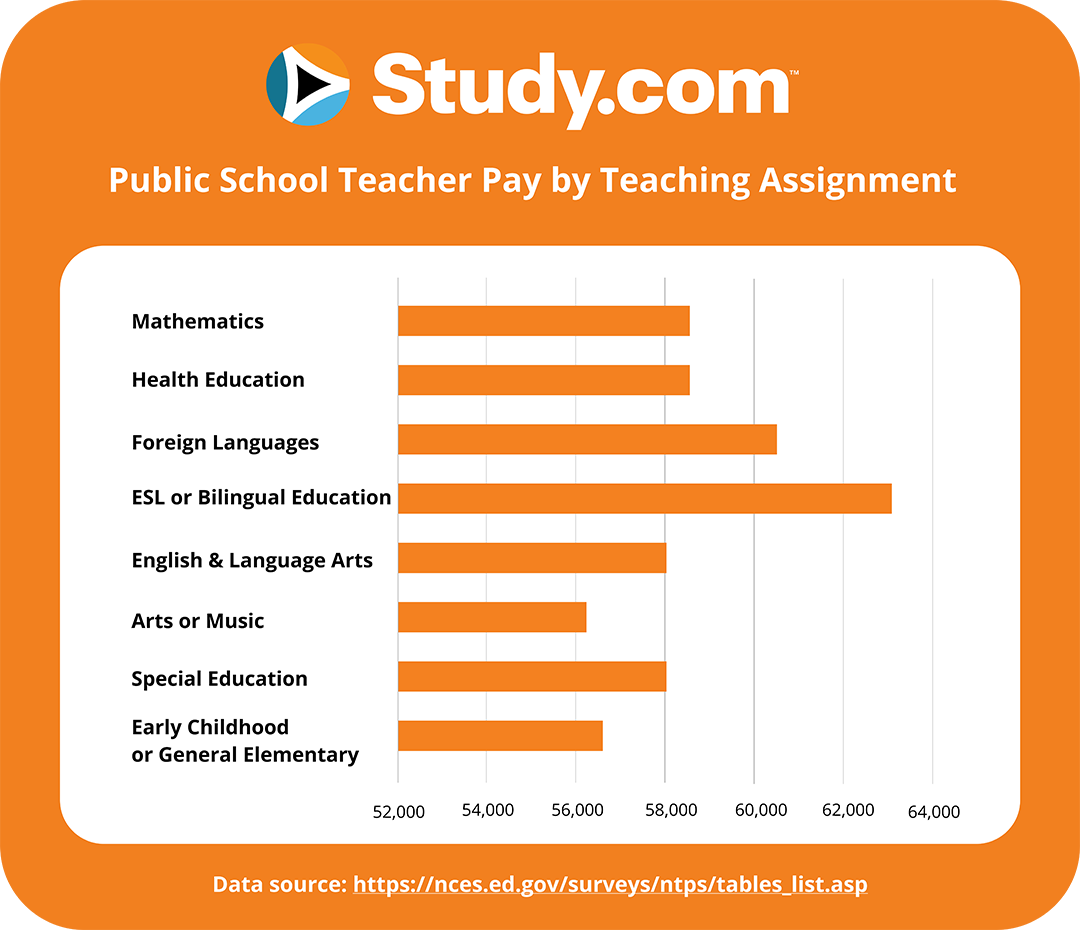
The average math teacher in the 2020-2021 school year. This is higher than the average for all teachers, ~$57,900, but lower than the salary of the average English as a Second Language (ESL) or foreign languages teachers, ~$62,800 and ~$60,600, respectively.
Math teacher racial demographics
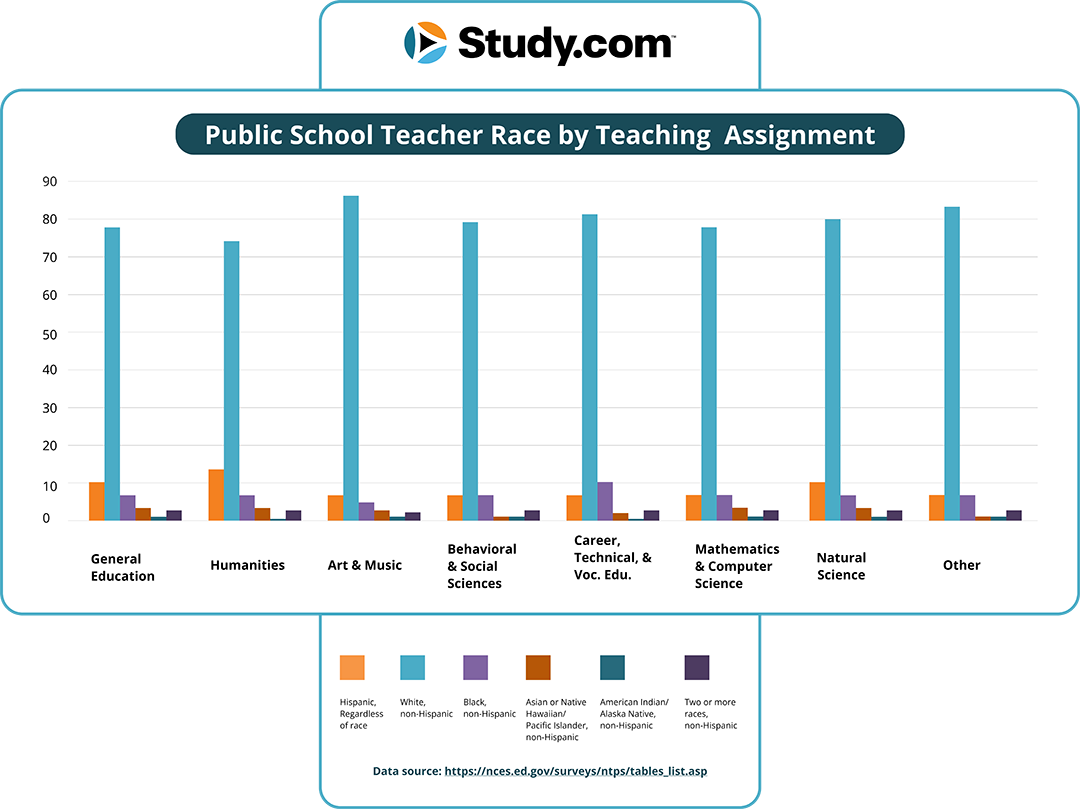
. 7.5% of math teachers identify as Hispanic and 7.2% identify as Black. 3.7% of math teachers identify as Asian or Native Hawaiian/Pacific Islander, non-Hispanic, while 1.9% identify as two or more races, non-Hispanic, and 0.6% identify as American Indian/Native Alaskan, non-Hispanic.
, 9.4% identify as Hispanic, 6.8% identify as Black, 2.4% identify as Asian or Native Hawaiian/Pacific Islander, non-Hispanic, while 1.8% of math teachers identify as two or more races, non-Hispanic, and 0.5% identify as American Indian/Native Alaskan, non-Hispanic.
The differences in racial demographics between math teachers and other teachers are relatively minor. However, there are fewer Black and Hispanic math teachers compared to teachers in other subjects, and slightly more Asian teachers than in other teaching fields.
Math teacher age demographics
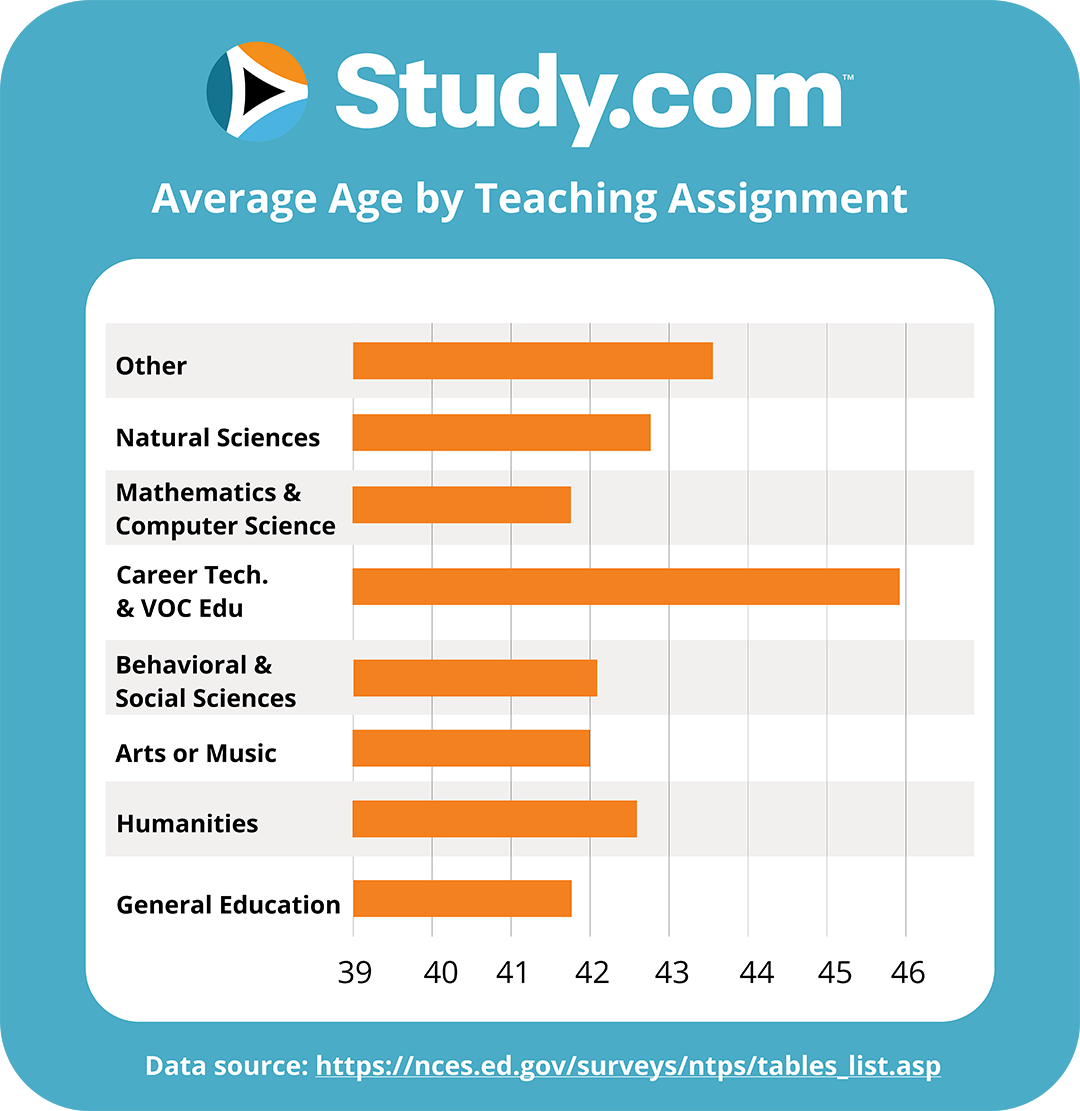
The was 41 in the 2020-2021 school year. This is slightly lower than the ages of teachers in other subjects. For example, the average age of teachers in career, technical, and vocational education is just under 46, while the average of teachers in natural sciences and arts and music is 42.
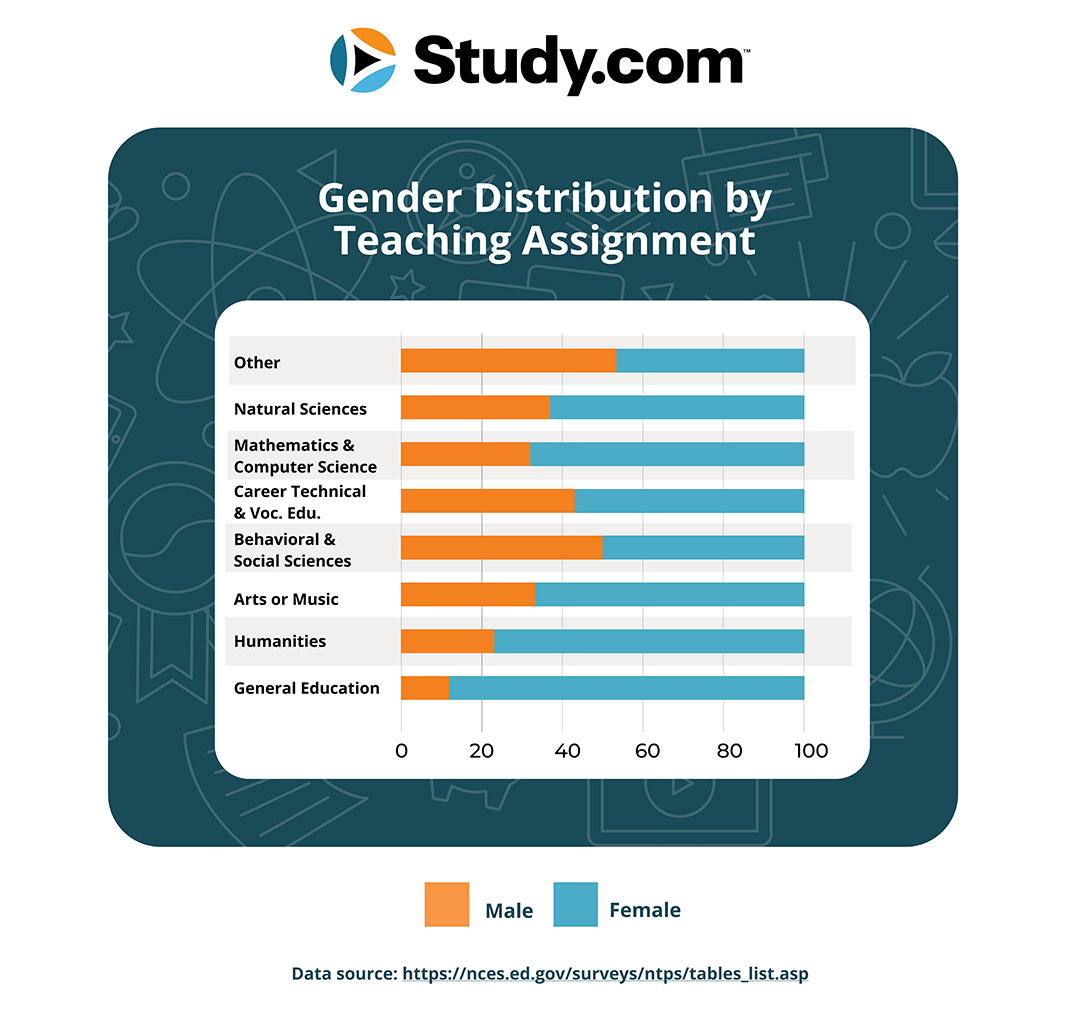
Math teacher gender demographics
The ratio of female and male teachers varies depending on the subject. For example, 10.4% of general education teachers are male, 89.6% are female. On the other hand, behavioral and social sciences teachers are more even in terms of gender, where 49.2% are male and 50.8% are female.
The two subjects with differences most similar to the ones found in math are arts, music, and natural sciences. 32.5% of arts and music teachers are male, compared to the 67.5% of teachers who are female. Meanwhile, 37.0% of natural sciences teachers are male and 63.0% are female.
The rising demand for math teachers
According to the, 69 million teachers will be needed to provide quality universal primary and secondary education by 2030. This need is highlighted in school districts like the West Bolivar Consolidated School District in the Mississippi Delta, where. Schools in this district are experiencing such a significant teacher shortage that they are sharing teachers for multiple subjects. That is, a teacher may teach at one school on one day and another school the next.
The primary reasons for teacher shortages in the U.S. include retirements, and. There has also been .
Adding to these challenges,. Research shows that math and science teachers encounter more issues with student discipline and experience a sense of imbalance between effort and reward, which can lead to teacher burnout.
As Mississippi Association of Educators' president Erica Jones said, students suffer when districts can't find teachers. Teacher shortages put schools in the position of having to offer a smaller variety of classes and sometimes even having to cut advanced subjects, like upper-level math. This puts students in a disadvantaged position where they may not be able to qualify for the same scholarships or be at the same academic level as their peers whose schools do not experience this kind of shortage. These consequences of teacher shortages are more likely to occur in schools where more students belong to communities of color.
was produced by and reviewed and distributed by 麻豆原创 Media.