Is New York City getting its composting program right?
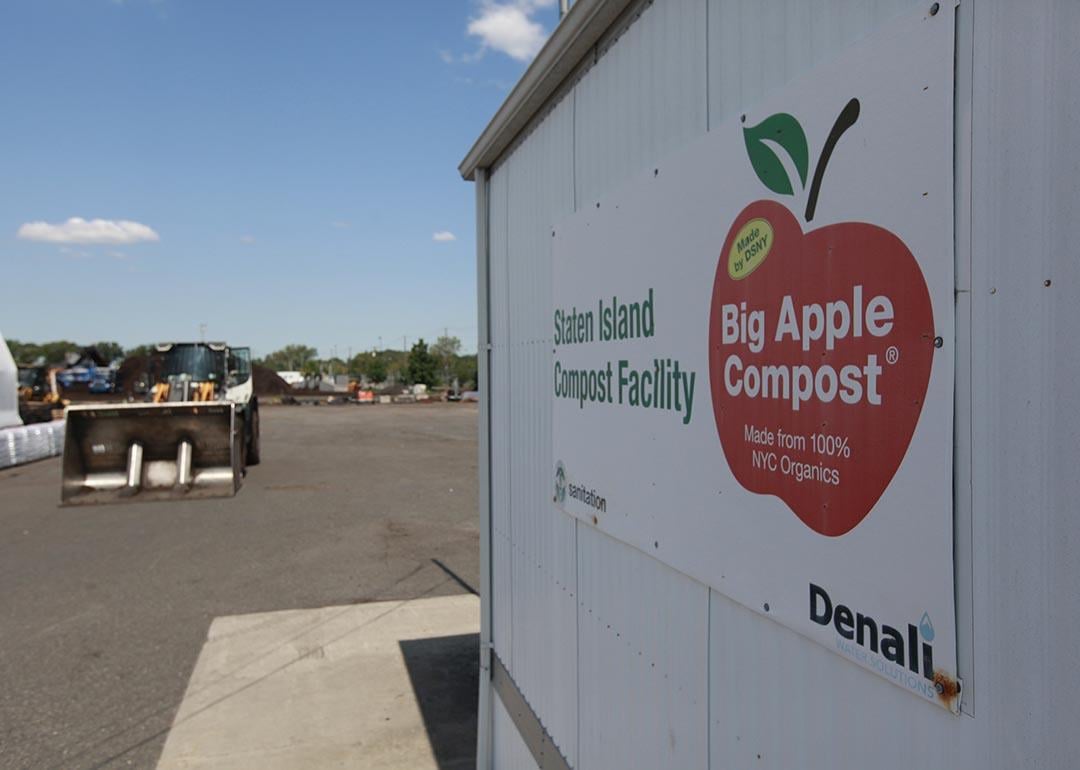
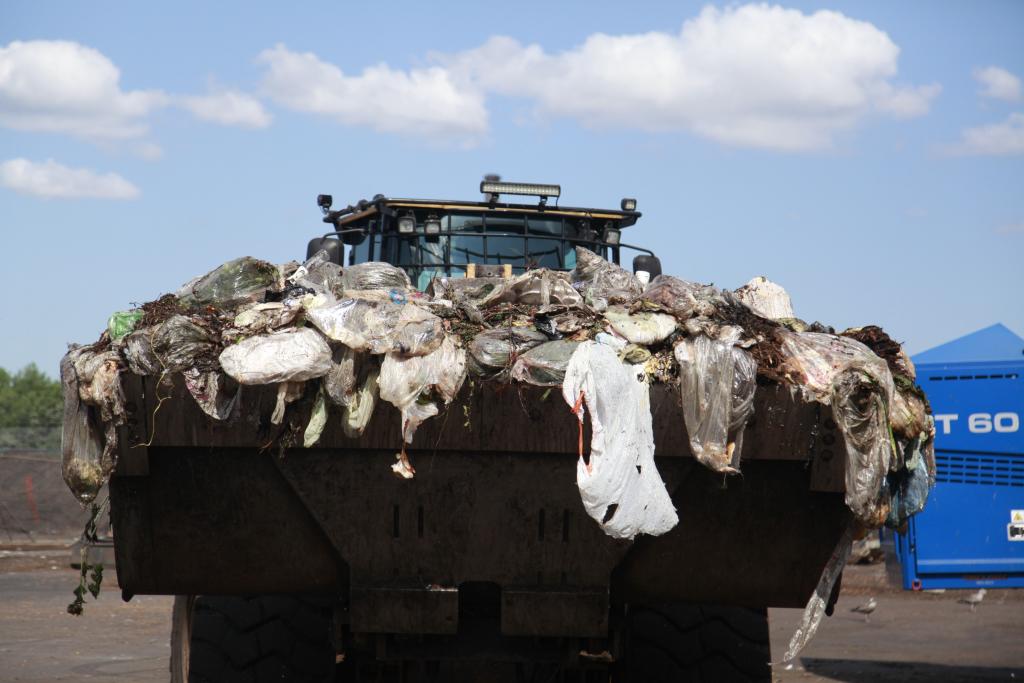
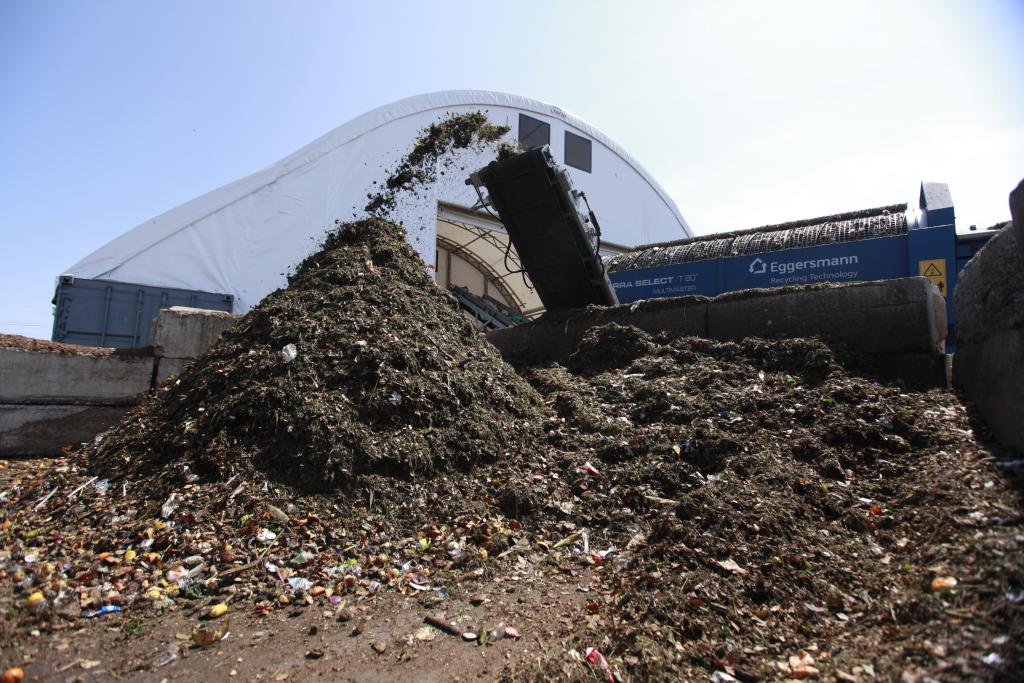
On ground that was once the Fresh Kills landfill on Staten Island, trucks unload food scraps and yard waste, filling the air with the sharp tang of decaying garbage. Machines hum as they separate plastics and other contaminants from fruit and vegetable peels, leftovers and leaves, while speakers play fake bird sounds to keep scavengers away. Still, seagulls perch atop the slowly transforming compost, now resting in concrete bunkers. Nearby, heaps of dark, rich finished compost sit ready for gardens and parks. This is where organic waste from the country’s largest city gets a second life.
Opened in 1991 to process yard trimmings, the Staten Island Composting Facility has become a pillar of the city’s composting efforts. It recently , boosting its capacity by nearly 2,000% to accommodate a growing volume of food scraps and yard waste collected from neighborhoods across the city.
In October 2024, New York City took a major step in tackling its trash problem by making curbside composting mandatory. Residents are asked to separate peels, leftovers and leaves and place them in a lidded brown bin on their recycling day, when sanitation workers collect them.
There should be a steady supply of organic waste. About a stream is compostable, and composting offers many benefits. The initiative aims to keep food scraps and yard waste out of landfills, cut planet-warming emissions and even help curb the city’s rat problem. (The sanitation department says that when the lids are consistently kept closed.)
When organic materials decompose in landfills, they release methane — a greenhouse gas about 80 times more potent than carbon dioxide over a 20-year period. Composting would also save on the estimated exporting solid waste to landfills and incinerators.
The city’s Department of Sanitation has hailed the expansion as a success. For instance, between Nov. 16 and 22, it collected more than , surpassing records set earlier this past spring. But and have found that researchers and advocates are not convinced the program is working as well as it could. An examination of the data reveals that inconsistent enforcement and inadequate education and outreach have contributed to lower participation than would be needed for the program’s long-term sustainability.
Tackling the city’s participation problem
Since enforcement began in April 2025, the city says it has collected an average of about 5 million pounds of compostable materials per week. But in April, May and June, New Yorkers still sent to landfills or incinerators, according to an analysis done by Samantha MacBride, a professor at Baruch College in Manhattan who researches urban waste.
The city’s curbside composting program still captures only a small share of food scraps and yard waste. The capture rate for organic waste — which indicates how much of the city’s organic waste is actually collected — was by spring of this year. This was far behind Seattle’s 60% capture rate.
“When you have empty trucks, you have wasted money, wasted wages. You have wasted emissions,” MacBride, who used to work as the sanitation department’s director of research and operations, tells Sentient. The Department of Sanitation counters that the capture rate “can be imprecise,” as the volume of compostable materials varies by neighborhood and season, according to an email from Vincent Gragnani, the agency’s press secretary.
For the program to become viable, MacBride argues, the city needs to reach at least a 30% capture rate within five years. By comparison, the city’s curbside recycling reached 40% in just a year, she says. Organics tend to be trickier than recyclables. Unlike bottles or papers, organic waste like food scraps can smell, attract pests and get messy, making people reluctant to separate them properly, MacBride explains.
Suburban neighborhoods like Staten Island and eastern Queens do better when it comes to capture rates because there are more homes with yards to generate waste like leaves and grass clippings — materials that are generally less gross than food waste. But dense areas like Manhattan, southern Bronx and much of Brooklyn lag behind since most residents live in apartments with little yard waste. Most of their organics come from food scraps, which can be more unpleasant to handle and collect, especially in small apartments.
Even when apartment residents do their part, building staff must ensure the scraps and other waste are set up for delivery. Building superintendents must put the bins out on collection day and clean them thoroughly — on top of their regular duties without extra pay — which can further limit participation, says MacBride.
There was another major setback on April 19 — less than three weeks after enforcement began — when the city paused fines for small residential buildings that failed to follow composting rules. The reversal came following complaints from New Yorkers who found the system confusing and were unsure of which bins to use. The pause in enforcement will remain in place through the end of the year, though the sanitation department said it will continue to issue warnings and will fine large residential buildings that have already received four notices.
Putting fines on hold has created even more confusion, City Council member Shahana Hanif, who introduced the composting bill, tells Sentient. “This stop-and-start timeline and mixed messaging from our administration isn’t how New Yorkers will be able to adopt new behaviors and build muscle memory like the way we’ve done with recycling,” she says.
That brief period of enforcement — during which nearly 4,000 tickets were issued — did make a difference. It led to a “significant and sustained improvement” in the organics capture rate, according to MacBride’s analysis. Still, she cautions that relying on penalties is not a sustainable strategy. “What is indeed needed is trust and continuity” between the city government and residents, she says. Building that trust may take time. Since New York City first piloted curbside composting in 2012, the program has expanded, been scaled back and relaunched in different forms under different administrations, she notes.
These challenges highlight the importance of consistent and well-funded community outreach to help New Yorkers embrace a system that requires them to change how they deal with waste.
For the city’s composting outreach to become truly effective, the government should go beyond simply distributing flyers or mailing notices, MacBride argues. She says a more hands-on approach is needed: City personnel should visit buildings in person to meet superintendents and staff and maintain ongoing relations so people can ask questions and get help over time.
“That’s very labor intensive and involves having a lot of boots on the ground,” MacBride says, noting that the city must increase its outreach budget to make that possible. The sanitation department did not provide a specific outreach budget to Sentient, saying that the same team responsible for education also handles other duties.
So far, Department of Sanitation teams have knocked on 740,000 doors, participated in more than 1,000 outreach events, and sent multiple pamphlets to every New Yorker, alongside press conferences and community discussions, Gragnani said.
More outreach is needed, MacBride says, and such efforts should include immigrant households and Black and brown neighborhoods near landfills or other sources of environmental pollution — communities that face greater barriers to participation, Hanif adds.
The city government should also expand the presence of community composters — small-scale, neighborhood-based organizations that turn organics into compost locally, MacBride says. In November 2023, the administration of Mayor Eric Adams cut funding for community composting programs amounting to $7.1 million, but the City Council .
Even though community compost programs do not process huge volumes, they are highly effective at education and engagement, showing residents the tangible benefits of turning food scraps into compost, MacBride says. “This is an excellent method to show what composting is to get over some of the disgust and fear around it.”
Neighborhood programs like these complement the city’s larger-scale operations, which handle the bulk of organic waste.
On Staten Island, the upgrade of the facility sped up decomposition of organics, allowing the site to turn food scraps and yard waste into finished compost in just three to four months — down from six to eight months.
Before the expansion, the facility could handle about 3 million pounds of food waste a year. Now, it can process up to 62.4 million pounds annually, along with 147 million pounds of yard waste. City officials the improvements could prevent roughly 2 million tons of greenhouse gas emissions each year by diverting more organic waste from landfills.
But even with its expanded role, the Staten Island facility currently processes only about — mostly from Staten Island and parts of Brooklyn and the Bronx, local media outlet The City reported. Other organic waste goes to the Newtown Creek Wastewater Resource Recovery Facility in Brooklyn to be turned into biogas, while the rest is sent to facilities outside the city.
In 2024, Council member Sandy Nurse introduced a bill that would require the city to maintain at least 180,000 tons of annual composting capacity in each borough. The legislation has been stalled, however, since the summer of 2024. A report released in October by the found that Brooklyn, the Bronx and Queens have more than enough space to meet that capacity target, but Manhattan does not. Staten Island was not included in the site analysis because the borough already has substantial capacity and scope for expansion at the city-run composting facility.
The sanitation department opposes the proposal, arguing it would require building hundreds of small composting facilities. Still, the agency does plan to establish eight new composting sites and upgrade its 17 existing facilities, according to a , which will guide the city’s sanitation policy for the next decade. A city ordinance also mandates composting facilities at five parks in each borough by 2028, though implementation will depend on available funding.
At the Staten Island compost facility, processed materials are screened by machines and divided into three piles: fines, mid-grade and overs. The fines are the good stuff — finished compost product ready to be bagged and distributed to residents and city agencies like the parks department and sold to landscapers. The mid-grade material — still mostly organic — is sent back through the composting process to achieve a finer texture. The overs — which have larger bits of contaminants like plastic mixed in with organics — are sent to the landfill.
The contamination rate for compost was low, around 4%, back when curbside composting was still in its early stages. Now that the program is citywide, the sanitation department is seeing much higher contamination in material collected from schools — about 25%, Gragnani said. MacBride attributes the high contamination in school organics to both a lack of education and institutional challenges: Students often are not taught proper composting practices, and schools lack coordinated support among principals, custodians and cafeteria staff to ensure proper sorting and participation.
As the city’s composting program grows, the sanitation department has no plans to further expand the Staten Island facility’s footprint, says Jennifer McDonnell, the agency’s deputy commissioner for solid waste management. The facility could bolster its current practices here and there. For instance, it could process some landscaping waste into mulch — material spread over soil to retain moisture and suppress weeds — instead of compost. That, McDonnell says, helps free up more capacity for food scraps and other materials that require full composting.
The expansion of the largest facility in the city is impressive — expanding food waste capacity by about 2,000% — but it alone cannot solve New York City’s trash problem. Without cooperation from city officials, building staff and residents, much of the city’s organic waste will continue to rot where it shouldn’t.
This story is a partnership between and , with visual reporting by Floodlight’s Evan Simon.
was produced by and , and reviewed and distributed by Â鶹ԭ´´.