5 everyday ways to teach kids about money
5 everyday ways to teach kids about money
Being thrust into the world of adulthood is hard enough on its own, so teaching your kids how to manage money, pay bills, use debit and credit cards and more can be extremely helpful in the transition from dependent kids to independent adults.
But where do you start, and when should you start? You can start today. shares five ways to weave money talks into your everyday life.
1. Open a kids鈥� bank account
Safer than handing a young kid a debit or credit card, a to banking without any real risk.
Savings accounts provide kids with a safe place to deposit allowance or birthday money. Plus, they get to watch their balance grow and learn how interest works. Taking your child to a branch to open their first account also helps them understand the basics of banking (and maybe they鈥檒l get a lollipop).
If your kid is starting their first job, it might be time to get them a checking account. A with a debit card can let them practice spending within limits since they can only use the money they actually have. Also, most kids鈥� debit cards come with strong parental controls and require an adult co-owner on the account, so they鈥檙e still a controlled environment with guardrails in place.
2. Take your kids grocery shopping
The question 鈥淐an I get this?鈥� is all too familiar when you鈥檙e shopping with your kids. Instead of brushing off the request to get a random toy with a quick 鈥渘o,鈥� use it as a teachable moment.
鈥淭his toy isn鈥檛 on our list, see? Our family has a grocery budget, and if we buy that toy, that means we won鈥檛 be able to get everything we need.鈥�
It鈥檚 a simple way to explain the tradeoffs that come with . If your kids are old enough to read, you can also involve them in making the list. And while you鈥檙e shopping, hand them a calculator (or your phone) and let them tally up as you go. They鈥檒l see firsthand how fast costs add up and why budgets and lists matter, and these are lessons they鈥檒l use their entire lives.
3. Counting cash
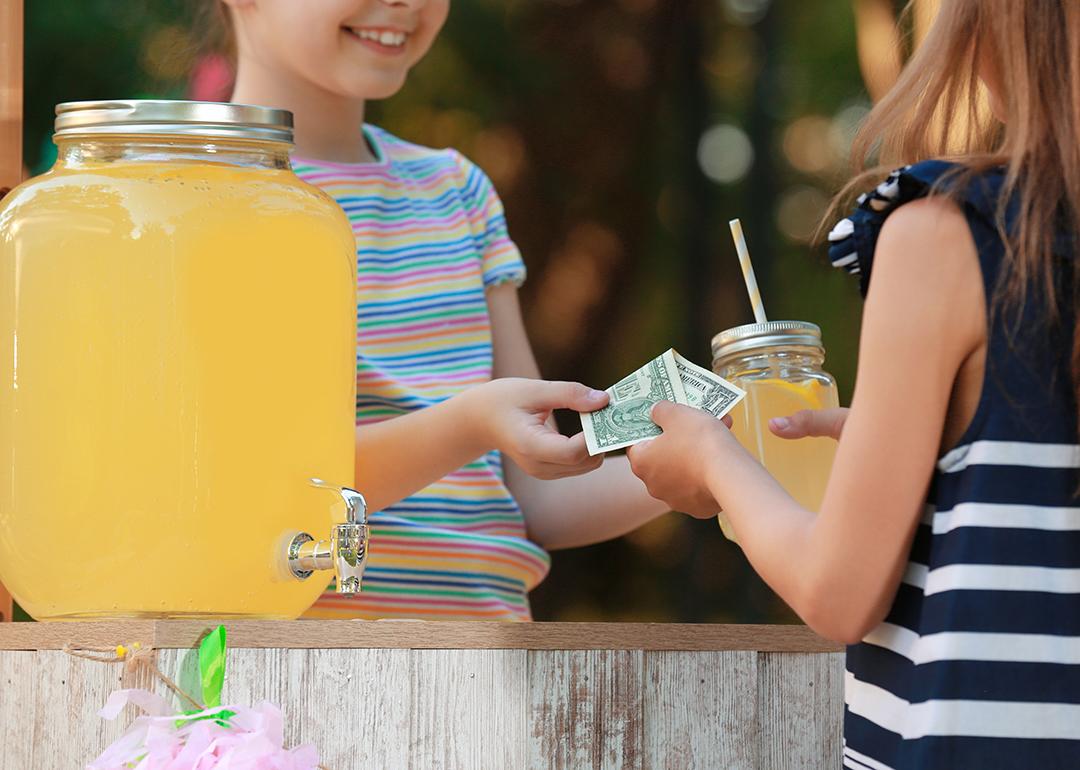
We might use our phones and plastic to buy a lot of things these days, but cash is still very important. It can also be difficult to explain how 鈥渄igital鈥� payment methods actually work, since the money isn鈥檛 something a kid can hold in their hands. Physical dollars and coins are concrete, so they can be an easier way to introduce cash at the jump.
Kids will still need to know how to count physical cash and learn the denominations of our currency: quarters, nickels, dimes and so on. It鈥檚 mostly a math exercise for sure, but more importantly, it lays the groundwork for managing digital money later.
On top of that, knowing the denominations of money is one of those things that everyone should know well before they .
4. Piggy banks and jars
Similar to what we said about physical cash, the jar or piggy bank system has stuck around for so long because it works. Stuffing cash in a piggy bank lets kids put away money so it鈥檚 not loose around the house, and your kid can physically see their piggy bank getting fuller with each deposit.
You can take the piggy bank one step further and use the jar method, labeling the jars for different goals or future purchases. Whenever your child gets money, like birthdays, holidays or allowance, they can divide that cash into their jars, such as:
- Spend. Toys, clothing, games, apps and anything small that your kid wants to purchase with their earned money.
- Save. Reserved for bigger goals, like a new phone or pricey shoes.
If you don鈥檛 want to use jars, you can also use , which are common with the envelope budgeting method. While the 鈥渏ar鈥� and 鈥渆nvelope鈥� methods are often talked about as different tactics, they are the same thing, just a different medium.
5. Mock bill pay
Definitely reserved for kids with reading and writing skills, mock bill pay can be a long-term exercise or a one-time exercise, depending on how you want to do it.
- One-time exercise. Sit down with your kid and talk about the average cost of rent, utilities, car insurance, bank account fees, streaming subscriptions and so on. This exercise will quickly showcase the cost of living and how much money the typical household needs to keep things afloat.
- Ongoing exercise. If you give your kids an allowance, you can also create mock 鈥渂ills鈥� for things like rent, internet and utilities. Using their allowance as the base, you can have them 鈥減ay鈥� for these monthly bills and then simply save the money for them. This routine bill payment can show them how to budget, how to anticipate expenses and you鈥檙e saving some of their money for them.
Keep in mind, don鈥檛 do this to stress your kids out or try to 鈥減rove鈥� that the real world is hard. These are exercises to teach them how to budget, handle cash and help them anticipate the types of bills they鈥檒l be responsible for in adulthood.
Bottom line
You don鈥檛 have to take your kid to a financial advisor to teach them how money or banking works, but it will take a little bit of effort on your end.
Take kids shopping to show them how to make a list and stay within a budget, with them so they can learn the process with your supervision, and talk about the cost of living in realistic terms so they鈥檙e not blindsided when they leave for college.
Learning financial literacy as a kid means they鈥檒l be better prepared as adults. As they get older, talk about credit cards, mortgages and other types of complex topics to keep up with their age and keep the learning train rolling. Hopefully, by the time they move out, they鈥檒l have a good grasp on most things money to set themselves up for success.
was produced by and reviewed and distributed by 麻豆原创.