Back to school, back to the bus. Why that yellow ride still defines childhood
Back to school, back to the bus. Why that yellow ride still defines childhood
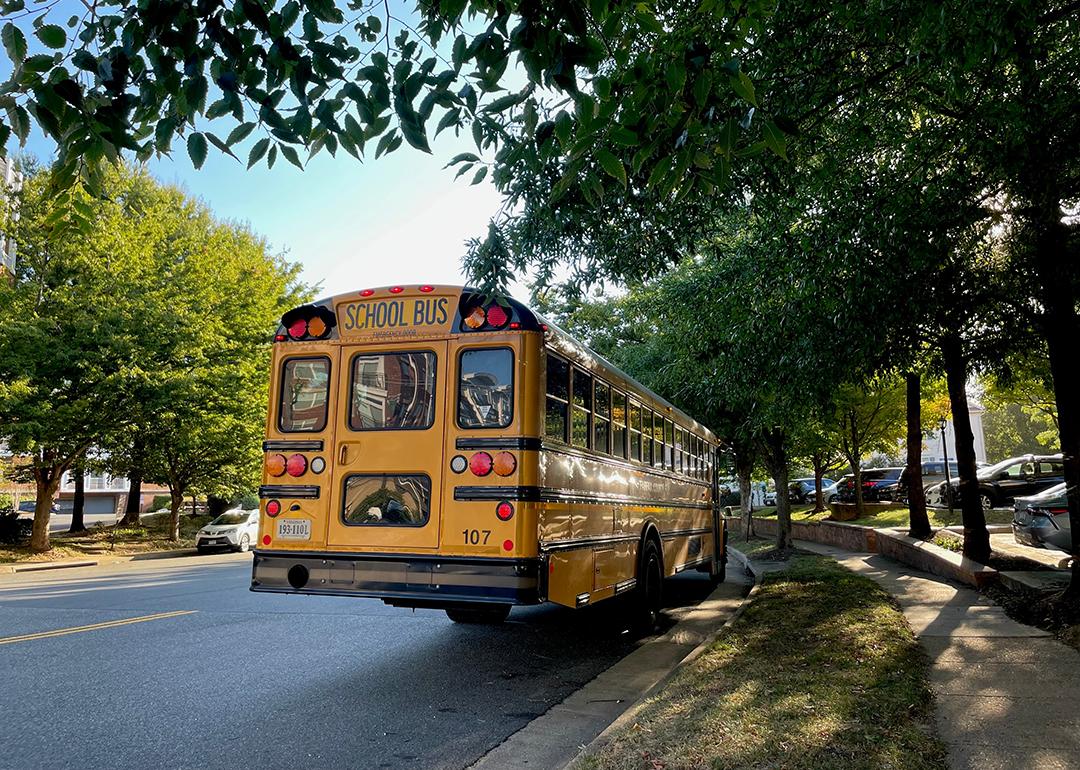
You didn鈥檛 need an alarm clock. You had the school bus. And its arrival was unmistakable 鈥� the low diesel growl echoing down the block, the squeal of brakes, the faint smell of exhaust mixing with morning dew. Step inside and you were hit with the same sensory cocktail every kid knows: cracked Naugahyde seats sticky in summer, rattling windows that never quite shut, and the odd mystery gum fused under the bench since the Nixon administration.
And here鈥檚 the thing: It鈥檚 still happening.
Every morning, more than , which is more than the combined total of all public transit systems in the country. In terms of reach, it鈥檚 the largest mass transportation network in the U.S. by far. These buses log around 12,000 miles per year, replacing car trips and .
reminds us that it鈥檚 a system so embedded in American life that we barely notice it until we smell that diesel or hear that first hiss of the doors opening each September.
Unlike smartphones and fashion trends, the sensory blueprint of a school bus hasn鈥檛 changed significantly in decades. And that鈥檚 kind of the point. In a world of touchscreen everything and ephemeral TikTok trends, the school bus remains tactile, analog, and stubbornly real. They鈥檙e built like rolling tanks, and most of us rode the same ones our older siblings did. And a few are probably still out there today, .
Designed to Be Remembered
You can鈥檛 miss it, literally. 鈥淣ational School Bus Glossy Yellow鈥� was chosen in the 1930s because our eyes are most sensitive to its particular shade of retina-searing brightness. It鈥檚 a color engineered not for style, but for visibility at dawn, in fog, or behind a curtain of rain. Safety, yes, but also permanence. You saw that yellow coming before you knew what school even was.
The shape, too, is deliberate. Tall. Boxy. Functional. No spoilers. No swooping LED trim or coupe-like curves. And because school buses aren鈥檛 subject to the same relentless design refreshes as sedans or SUVs, the bus you rode in 1997 probably looked a lot like the one your kid rides today or the one your mom rode in 1962.
This near-total resistance to change is precisely what makes the school bus unforgettable. Its design doesn鈥檛 try to reinvent itself every model year because it doesn鈥檛 need to. It鈥檚 the cockroach of transportation design: utterly unsinkable, instantly recognizable, and unchanged by trend.
A Social Classroom on Wheels
Before you ever learned how to find the square root of anything or diagram a sentence, you learned something more important: how to survive the school bus.
It was an unsupervised jungle with vinyl seats. The back of the bus was home to the loudest kids, the tallest tales, and sometimes the earliest exposure to music your parents didn鈥檛 approve of. The front was reserved for the motion sick, the perpetually grounded, or that one kid who liked to sit near the driver and ask about horsepower.
In between was a dynamic shifting zone where friendships formed, alliances wobbled, and social pecking orders were challenged daily. You learned diplomacy when negotiating seat space. You learned patience when someone forgot deodorant or just didn鈥檛 want to bathe that morning. You learned courage when it was your turn to walk the aisle past the older kids, which was a rite of passage tougher than anything on a standardized test.
There were first crushes and awkward silences. Bus games made up on the spot. Metal superhero lunch boxes were wielded like shields. And above all, the universal understanding that no matter what happened on board, once you stepped off, it didn鈥檛 count. The bus was its own world, its own Las Vegas. And it came complete with rules, rituals, and a weird kind of magic. What happened on the bus stayed on the bus.
Pop Culture鈥檚 Favorite Passenger
The yellow bus is a character actor. Pop culture has cast it in every role imaginable: comedic sidekick, nostalgic backdrop, even horror movie prop.
Take 鈥淭he Simpsons,鈥� where Otto, the slacker-rocker bus driver, became as iconic as the bus itself. Or 鈥淭he Magic School Bus,鈥� which turned the vehicle into a psychedelic educational rocket ship piloted by a red-haired science teacher with zero regard for liability waivers. Even in horror, the bus shows up: abandoned in cornfields, haunted in Halloween specials, or stranded on a deserted road where you definitely shouldn鈥檛 split up.
Why does it work so well on screen? Because it鈥檚 universal. Whether you grew up in Spokane, Washington, or South Florida, you knew that smell, that sound, that sense of barely managed chaos. The school bus is cinematic because it鈥檚 already dramatic. 40 kids, one adult, bad shocks, and no seatbelts. What could possibly go wrong?
It鈥檚 also a kind of emotional shorthand. In a single frame, it can conjure childhood innocence, adolescent rebellion, or the weird purgatory between the two. Few vehicles carry that kind of cultural weight. No one waxes nostalgic about a 2005 Dodge Caravan.
Why It Still Rules the Road
For all the talk of electric this and autonomous that, the school bus remains the undisputed champion of getting kids from point A to point B. And it does it with safety, efficiency, and in massive daily quantities.
According to the , children are far safer on a bus than in a car. Less than 1 percent of all traffic fatalities involve children on a bus. It also saves fuel and traffic. A single bus consolidates dozens of family vehicles, and the fleet as a whole is more efficient per passenger per-mile than cars.
It鈥檚 no surprise that 480,000+ buses are still active in the U.S. 鈥� many logging well over 200,000 miles before retirement, and a few reborn as coffee shops or Skoolie homes.
Yes, electric school buses are coming fairly slowly from longtime manufacturers like Thomas Built. A fully loaded electric vehicle (EV) model can cost $400,000 or more, compared to $110,000鈥�$130,000 for a new diesel, or around $55,000 for a pre-owned version like that 84-passenger Thomas still chugging away.
And while nearly has helped districts commit to 12,000 electric school buses, the EV total still accounts for less than 1% of the national fleet as of late 2024.
So for now, the vast majority of American kids still climb aboard a good old diesel beast every morning.
The school bus doesn鈥檛 win by being flashy. It wins by not breaking. By starting up at 6:15 a.m. in January. By knowing every pothole on the route. By showing up every day without needing to reinvent itself to stay relevant.
Last Stop
So, for millions of kids, that consistency became something deeper: a sound, a smell, a memory that stuck. And still, every fall, the ritual repeats. The hiss of the doors. The slap of sneakers on steel steps. The smell of diesel and last year鈥檚 crayons.
In an era where everything is updated, upgraded, or optimized, the school bus remains defiantly analog. It still defines childhood. Not because it changed with the times, but because it never really had to. That big yellow ride doesn鈥檛 chase relevance. It just shows up.
was produced by and reviewed and distributed by 麻豆原创.