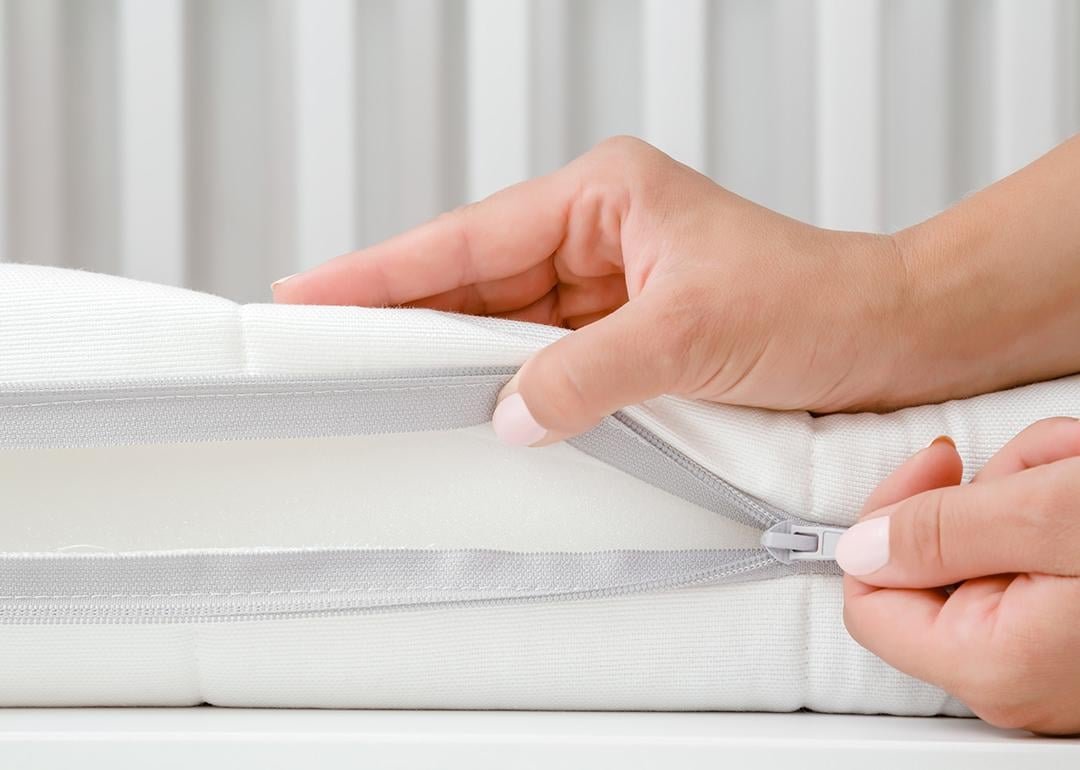
Is your baby's crib mattress off-gassing toxins?
Is your baby's crib mattress off-gassing toxins?
What’s something that’s invisible to the eye but can wreak havoc on our health—and the health of our children? No, this isn’t a riddle, it’s reality. And the answer is toxic chemicals.
From food packaging to cleaning products, personal care items and even crib mattresses, harmful chemicals have quietly worked their way into everyday life. And according to a 2025 CNN report, they’re not just present—they’re polluting the very air babies breathe while they sleep.
“We measured chemicals in the air of 25 children's bedrooms between the ages of 6 months and 4 years and found ,” said senior study author Miriam Diamond, a professor in the Earth Sciences Department at the University of Toronto.
With babies sleeping up to 16 hours a day, their crib mattress becomes one of the most important nursery items to scrutinize. , which has previously highlighted , shares what parents need to know about crib mattresses and the chemicals they may be releasing.
What is off-gassing in crib mattresses?
If you’ve ever opened a new product and been hit with a strong chemical smell, you’ve experienced off-gassing. In simple terms, off-gassing is the release of , airborne chemicals emitted as vapors from synthetic materials. That “new” smell is often a sign that your baby’s mattress (or any number of household items) is emitting potentially harmful toxins into the air.
And it doesn’t stop once the smell fades. Many materials continue to off-gas for weeks, months or even longer, releasing odorless fumes that can still impact indoor air quality. According to the recent CNN report, body heat and pressure—like your baby’s weight during sleep—can actually accelerate the release of these toxic gases.
Some VOCs are relatively harmless. But others, like those found in common crib mattress additives like , and formaldehyde, , especially in children whose developing systems are more vulnerable to chemical exposure.
3 harmful chemicals that off-gas from crib mattresses
Conventional crib mattresses are one of the biggest sources of for babies. And even low-cost, widely available crib mattresses can emit dozens of harmful chemicals, regardless of brand or .
Below are three of the most concerning materials linked to off-gassing in crib mattresses, along with what the latest research says about their potential health risks.
1. Phthalates
Phthalates (pronounced THAL-ates) are chemicals used to soften , especially vinyl, and they’re often added to crib mattresses with waterproof surfaces. While some phthalates are restricted in children’s toys, they’re not fully banned in crib mattresses, leaving a major regulatory gap.
found phthalates to be one of the most widespread and concerning chemicals detected in children’s sleeping environments. Researchers measured elevated levels in the air surrounding the beds of babies and toddlers, with many samples exceeding what’s allowed in toys.
As highlighted in CNN's report, the warns, “Even small hormonal disruptions can have lasting developmental and biological effects” in children. Phthalates are known endocrine disruptors, meaning they can interfere with hormone production and regulation. They've been such as:
- Genital defects in baby boys
- Lower testosterone and sperm counts
- Early puberty
- Reproductive challenges
- Increased risk of obesity and asthma
To avoid phthalates, parents should avoid waterproof crib mattresses with vinyl covers and look for options that use GOTS-approved materials instead, such as TPU (thermoplastic polyurethane) or certain plant-based polyethylene options.
2. Flame retardant chemicals
Flame retardants are added to crib mattresses to meet flammability standards, but that doesn’t mean they’re safe. Many of these chemicals, especially PBDEs (polybrominated diphenyl ethers) and newer replacements like organophosphate esters (OPFRs), are known to interfere with , especially in children. Some are even .
Moreover, despite their intended purpose, many flame retardants offer little real-world fire protection, especially when used in thin layers or treated fabrics. When they're linked to permanent and devastating long-term health risks ranging from behavioral problems to cancer, both the makers and consumers of crib mattresses have to question whether flame retardants are worth the risk.
Luckily, there are ways for manufacturers to pass federal flammability requirements without the use of flame retardant chemicals, like avoiding highly flammabile materials such as memory foam in favor of natural materials like and sugarcane-derived PLA. The prohibits the use of brominated and chlorinated flame retardants, so for parents looking to avoid flame retardants in their children's spaces, looking for the GOTS logo is a good place to start.
3. Formaldehyde
If this story hasn’t shocked you yet, the mention of formaldehyde in connection to a baby’s crib mattress ought to get your attention. It surprises a lot of people to learn that formaldehyde is a chemical used in many household products, including as a binding agent in adhesives and glues. In crib mattresses, it may be present in the glue used to hold layers together, particularly in foam- or fiber-filled models.
The problem? Formaldehyde is , and babies are especially vulnerable, as they breathe more air per pound of body weight and spend long hours with their faces just inches from the mattress surface. Long-term or repeated exposure has been linked to cancers of the respiratory tract and leukemia. Even at lower levels, inhaling formaldehyde can cause:
- Eye, nose and throat irritation
- Coughing and wheezing
- Asthma flare-ups and respiratory inflammation
For parents looking to avoid formaldehyde in crib mattresses, there's an easy guarantee: the UL Formaldehyde Free Validation. This standard validates that a product does not contain formaldehyde or formaldehyde precursors.
How to vet crib mattresses for harmful off-gassing
Shopping for a crib mattress shouldn’t feel like navigating a chemistry lab. But with so many hidden toxins in conventional options, it’s important to know what to look for and what to avoid. Start by reviewing the materials list, if it’s available. If a brand isn’t transparent about what’s inside, that’s a red flag. Watch out for common off-gassing culprits like polyurethane foam, vinyl and other synthetic materials.
If you’re not a materials expert, don’t worry. These independent standards help you verify that a product is truly safer for your baby. Here are a few to prioritize:
- GOTS (Global Organic Textile Standard) Certified: The leading organic certification for fiber-based consumer products, GOTS ensures that materials are at least 95% certified organic and that every stage of production, from processing to labeling, meets rigorous criteria for human and environmental health.
- EWG Verified®: The Environmental Working Group (EWG) is a trusted nonprofit focused on reducing toxic exposure in everyday products. Their EWG Verified program for mattresses sets a high bar for ingredient transparency and chemical safety. Products must meet strict internal criteria and avoid substances the EWG has identified as concerning, including many known off-gassing chemicals.
- MADE SAFE® Certified: This certification screens for more than 6,500 harmful substances, including VOCs, flame retardants and other toxic chemicals linked to human health concerns. If a crib mattress carries the MADE SAFE® seal, it’s been vetted for both safety and sustainability.
- GREENGUARD® Gold Certified: This standard focuses specifically on low chemical emissions. A GREENGUARD Gold certified crib mattress has been tested in environmental chambers and verified to emit only minimal levels of VOCs.
- UL Formaldehyde Free: This validation confirms that a product contains no added formaldehyde or formaldehyde precursors.
There’s no way to eliminate every chemical from your baby’s environment. They're all around us. But that doesn't make parents powerless. CNN's article bringing this topic into the mainstream highlights a positive trend: More people are waking up to the reality of toxic chemicals in consumer products and demanding better.
Every dollar you spend on certified, transparent products instead of conventional and fast furnishings supports companies pushing for stronger regulations and cleaner supply chains. And as more families demand safer options, manufacturers will be forced to evolve, not just because it’s good PR, but because it becomes the expectation.
We may not be able to control every exposure, but we can control what we normalize. Why not start where it matters most? Where your baby rests their head.
was produced by and reviewed and distributed by Â鶹ԭ´´.