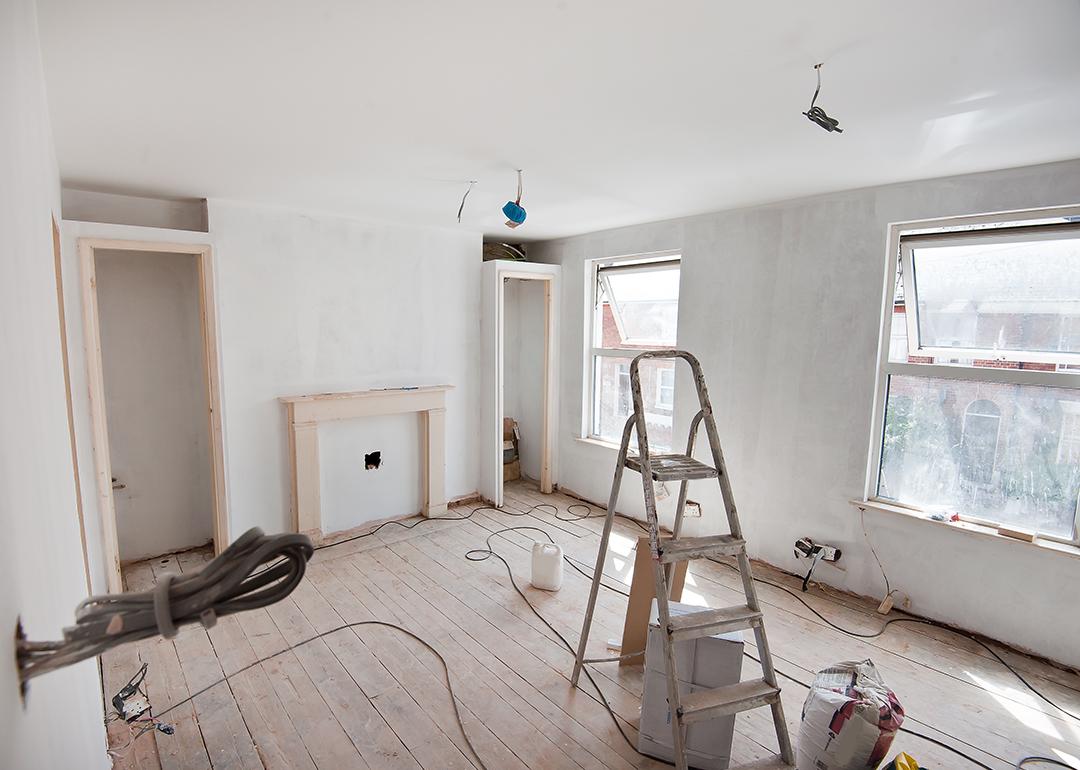
Why home insurance claim payouts can feel disappointing
Why home insurance claim payouts can feel disappointing
Why the Payout Isn't What You Might Expect
Imagine you discover a serious leak from your ceiling that causes major floor and drywall damage. No problem, you think: I’ll just with my insurance company and the repairs will be covered. But then the insurance estimate arrives, and it’s thousands less than the contractor’s repair quote.
Welcome to a common homeowner reality check. Especially during , homeowners are often surprised that claims result in a smaller check from your insurer than you expected. Truth is, your carrier likely didn’t cheat or shortchange you. Instead, you may have overlooked coverage limits or exclusions, depreciation, scope disagreements or a deductible that wasn’t met.
Here, takes a closer look at why home insurance claims often result in less-than-desirable payouts, , and what you can do if you’re still not satisfied.
Why Your Insurance Payout Can Be Lower Than the Repair Bill
Janet Ruiz, director of strategic communication for the Insurance Information Institute, explains that your repair bill can exceed your claim payout because insurance policies pay according to the policy’s defined valuation methods, coverage limits, depreciation and ; not simply the contractor’s invoice.
“For example, if storm damage causes $25,000 in roof repairs, but your insurer determines the roof had depreciated to an actual cash value of $16,000 while you had a $2,500 deductible, the initial payout may be only $13,500,” she says.
Realize that an insurer’s first estimate is typically based on the damage they can actually see and confirm right away. This initial estimate may be less than what they end up paying in total.
“If, say, your roof suffers storm damage, your insurer may later pay even more if a code-required upgrade is covered and actually completed and you furnish proof of the repair,” notes , insurance analyst for The Zebra.
Actual Cash Value vs Replacement Cost
Insurance policies use either , which pays what your used item or materials are currently worth minus age and wear, or replacement cost (RCV), which covers the price of replacing them brand new. If your policy covers ACV, you can expect a lower claim check.
“If a 10-year-old roof that originally cost $15,000 to replace has depreciated by 50%, an ACV policy will only pay you $7,500 versus an RCV policy that pays closer to the full replacement cost,” says Irena Martincevic, an industry analyst with Fixr.com. “Many homeowners don’t discover which type they have until they are already filing a claim, and that’s a costly moment to find out.”
Be aware that many policies will initially pay ACV but release the remaining replacement cost after repairs are completed and documented.
Why Roof Claims Often Feel Especially Frustrating
Now that spring is here, we can expect a lot more extreme weather, including storms, hail and . It’s a time of year when roofs are particularly vulnerable. claims are where homeowners most often run into depreciation surprises, wind or hail deductibles that need to be met, age-related limitations, and disputes over whether the full roof needs replacement or just repair.
“Insurers will factor in the roof’s age and wear heavily. Fixr research shows that roofs less than 10 years old are generally more likely to receive fuller coverage, while older ones are subject to significant depreciation deductions,” adds Martincevic.
“Also, insurers draw careful lines between storm damage and and they will only pay for what they can attribute to a specific covered event. And partial damage doesn’t automatically mean a full replacement, either. If only one section of the roof was damaged, the company may only cover patching the roof, even if the materials don’t match perfectly.”
Attorney K.C. Williams points out that, in recent years, carriers have been given more flexibility to limit recovery on older roofs through policy changes and endorsements that reduce benefits to ACV, regardless of what the rest of the policy may say.
“What policyholders rarely understand is that the insurer’s adjuster and the independent engineer they hire are both working toward the same conclusion,” he says. “Getting a different result may require an independent roofing expert who can document storm causation, establish the date of loss, and support a scope of repair that reflects what the damage actually requires.”
Why Water Damage Claims Are Often Partial Payouts
Let’s say your dishwasher line suddenly bursts and damages the kitchen floor and cabinets. The good news is your policy may cover sudden and accidental . The bad news is that it likely won’t cover long-term leaks, seepage, poor maintenance or damage. So one part of your claim may be covered while another part is denied or limited.
“Everything comes down to two questions: Where did the water come from, and when did the damage actually occur? Policies don’t cover damage that builds up over time, a slow leak behind the drywall, seepage through the foundation, or moisture that has accumulated over months,” continues Williams. “If the insurer decides the damage looks long-standing, the claim gets cut or closed.”
Even when the water loss is covered, your payout may still be lower than expected for several other reasons.
“There may be a specific limit in for hidden leaks, seepage or mold, tear-out and remediation costs may be treated differently and some damage may be considered maintenance-related,” Swanson says.
The Deductible Can Take a Bigger Bite Than People Expect
Your deductible can minimize your claim settlement more than you anticipate because the deductible applies per claim, not per damaged item, and it must be subtracted from the total covered loss. Also, some weather-related deductibles are percentage-based rather than flat-dollar.
“If you have a separate , for example, it can be calculated as a percentage of your home’s insured value. That means a 2% deductible on a $400,000 home would require you to absorb $8,000 before your insurance pays anything,” Ruiz cautions.
Why You May Not Get All the Money at Once
As mentioned earlier, your insurer may issue an initial payment based on ACV, then release additional funds (recoverable depreciation) after repairs are completed and documented.
“Assume your covered kitchen floor damage would cost $10,000 to replace. The estimated depreciation is $5,000, and your deductible is $1000. That means your first payment might be just $4,000,” says Swanson. “But if the repairs are completed and the policy allows it, your insurer may later release $5,000 in recoverable .”
Also, be aware that, if you have a mortgage loan, the payout check can also be made payable to both you and your mortgage company, especially if it’s a major claim. Your mortgage lender may also send their own inspector to ensure repairs have been completed.
Why Your Contractor’s Quote and the Insurer’s Estimate May Not Match
Insurers and contractors often calculate repair estimates differently. They may disagree on labor rates, materials, code upgrades, waste removal, matching issues or how much damage the covered event actually caused. But a disparity between their estimates doesn’t automatically mean one side is acting dishonestly.
“Contractor quotes and insurance estimates often differ because they rely on different assumptions, scopes of work and pricing standards,” Ruiz explains. “Insurers typically use standardized estimating software and may exclude upgrades or non-covered items, while contractors may include code upgrades, overhead, profit or materials outside the policy’s scope.”
If your contractor offers an itemized estimate and documentation showing that something was missed or underpriced by the insurer, your insurer may adjust the claim via a supplemental payment process.
Filing a Dispute
Again, what you may regard as lowball compensation from your carrier doesn’t necessarily mean they’re in the wrong. It’s important to carefully review the cause of the loss, valuation method, line-item scope, exclusions and deductibles.
Also, be sure to:
- Compare line items, not just totals.
- Check whether depreciation was withheld.
- Confirm whether the claim was settled at ACV or replacement cost.
- Ask whether additional damage can be submitted as a supplement.
When a Disappointing Payout Is Normal vs Worth Disputing
After doing your homework, you may determine that it’s worth challenging your insurer’s numbers.
“Insurers can miss damage. Adjusters work quickly, often in the immediate aftermath of a storm when conditions make a thorough inspection difficult. What gets documented on day 3 is not always what a careful inspection reveals on day 30,” Williams says. “What I look closely at is whether the evaluation behind the payment was accurate and whether the policy was applied as written.”
Ruiz agrees.
“It may be worth pushing back if the insurer overlooked documented damage, misapplied coverage, or failed to consider local building requirements. You can request a detailed explanation, provide photos that back up your dispute, or seek a reinspection,” she recommends. “You can also send a complaint to your state’s department of insurance if you are unable to get a satisfactory answer from your insurer.”
Remember: A disappointing payout can still be a legitimate payout.
Take the time to understand how your claim was calculated, where any adjustor and contractor gaps came from and whether there is room to dispute the scope, provide more documentation or recover withheld depreciation.
While you’re at it, carefully review your current coverage and consider changing coverage levels to better suit your current needs. And don’t be afraid to ask your agent or insurer questions about anything in the policy you don’t understand.
FAQs
Still have questions? Here’s a deeper dive to answer some common remaining queries.
Why is my deductible so high after a storm?
Deductibles are often higher after storms because many policies apply special wind or hail deductibles that are percentage based rather than flat-dollar amounts. These provisions shift more of the financial burden to the homeowner, especially during or following widespread catastrophic events.
Why did my insurance only pay actual cash value?
Your carrier may only pay actual cash value – which is what your used item or materials are currently worth minus depreciation for age and wear – if your policy does not include replacement cost coverage for that item or if repairs have not yet been completed.
Why would a claims payout check be made out to both my mortgage company and me?
If your home is being financed by a mortgage company, your lender has a financial interest in your property. That means your claim check from the insurer can be made payable to both you and the mortgage company, particularly if it’s a major claim.
was produced by and reviewed and distributed by Â鶹ԭ´´.