79% of Americans doubt convenience store food safety. Are they right?
In recent years, convenience stores have evolved from quick pit stops into full-fledged food destinations. Coffee bars, fresh sandwiches, and hot meals are replacing the reputation of c-store grub. But one thing hasn’t kept pace with the menu: earning the trust of everyday consumers.
According to new research from , a workforce management solutions provider, 79% of Americans worry about food contamination or spoilage at convenience stores. That perception gap could determine whether the industry’s big investment in fresh food programs pays off—or stalls at the pump.
Despite real improvements in quality and operations, skepticism runs deep. The , based on a survey of 1,000 U.S. adults conducted in April 2025, reveals that consumers are torn between curiosity and caution. They recognize that food quality is improving, but they’re not entirely convinced it’s safe to eat.
The ‘Think Twice’ List
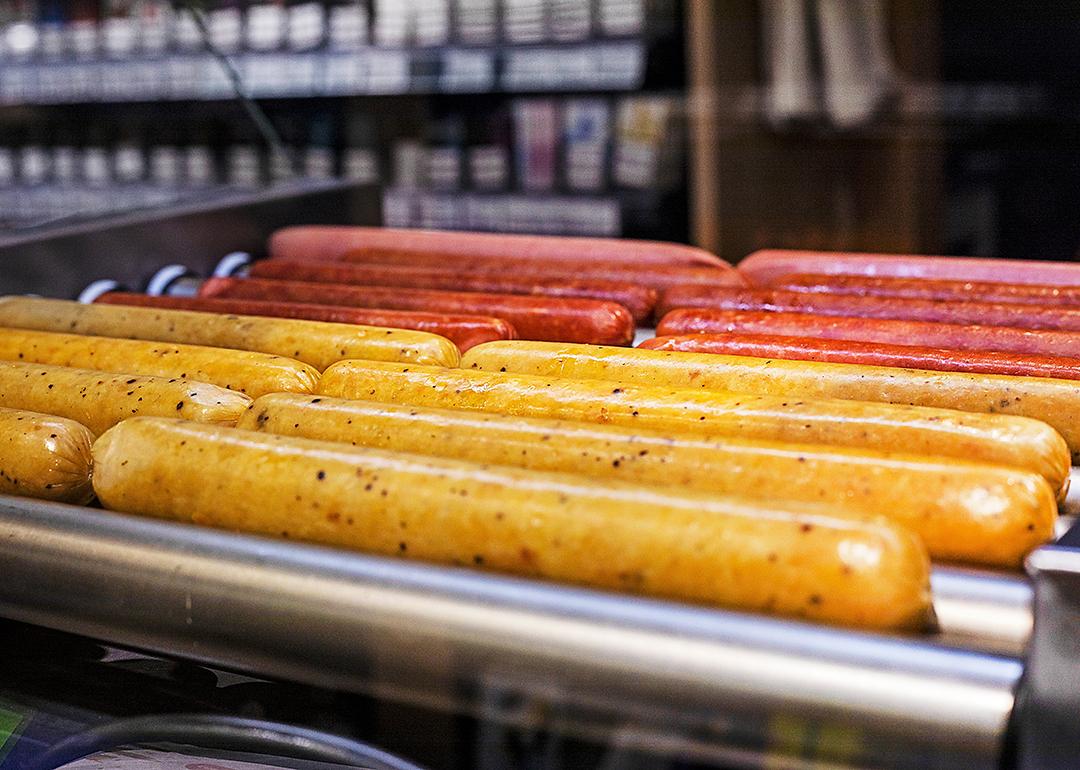
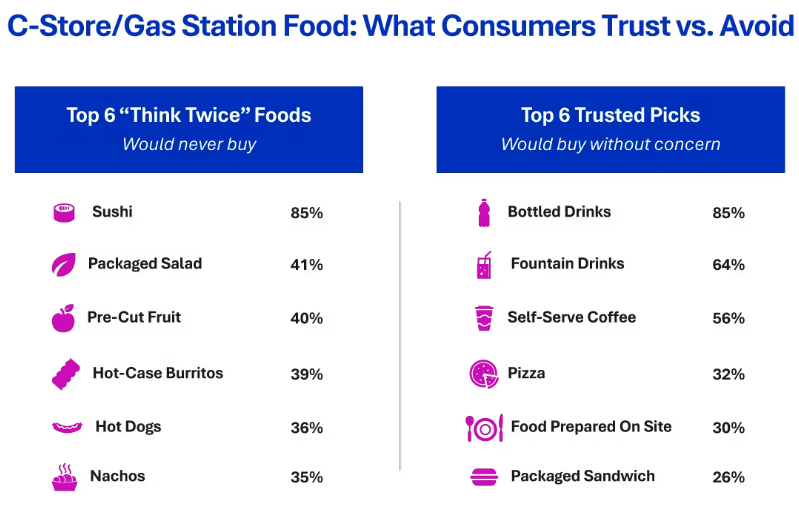
Certain foods remain a hard sell. Eighty-five percent of respondents said they wouldn’t buy sushi from a gas station or convenience store. Packaged salads (41%), pre-cut fruit (40%), hot-case burritos (39%), and roller-grill hot dogs (36%) also make the “think twice” list.
The reasons are familiar: 66% fear spoiled food, 59% worry about cleanliness, and nearly half—48%—fear food poisoning. Visual cues drive most of those decisions. Dirty prep stations, food that looks like it’s been sitting too long, or machines that seem neglected all serve as instant red flags.
Even when foods are cold or sealed, shoppers are skeptical if freshness isn’t obvious. The appearance of neglect—whether it’s an aging hot dog or an unkempt condiment bar—creates the impression that safety might be optional.
The ‘Comfort Zone’ List
Other foods earn consumers’ confidence. Bottled drinks top the list, with 85% saying they’d buy them without hesitation. Fountain drinks (64%) and self-serve coffee (56%) also rank high on the trust index.
When it comes to food, pizza (32%) and freshly made sandwiches or bowls (30%) perform best—especially when customers can see food being prepared. Even prepackaged sandwiches earn moderate trust from a quarter of shoppers. For these items, freshness and familiarity seem to make the difference.
Cleanliness is the Deciding Factor
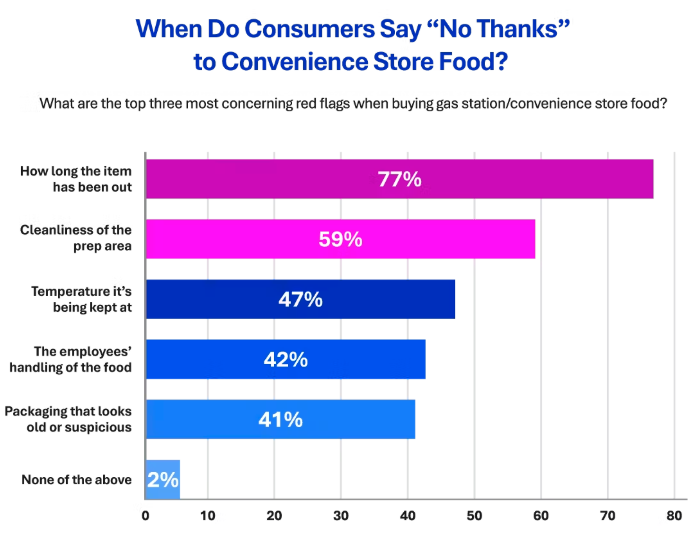
Perception and purchase are directly linked to how clean a store looks and feels. Seventy-seven percent of consumers say food that’s been sitting out too long is a dealbreaker, and 59% won’t buy from a store if the prep area looks dirty. More than half (56%) have walked away from a purchase after seeing an unclean machine or service area.
It’s not just about food safety. It’s about visible proof of standards. A crusted soda nozzle or grimy microwave can undo thousands of dollars in marketing spend. And while the industry has made big strides, the trust gap remains wide: 74% of respondents trust convenience store food safety less than restaurant food safety.
C-Store Food’s Reputation Offers Hot Dog Hope
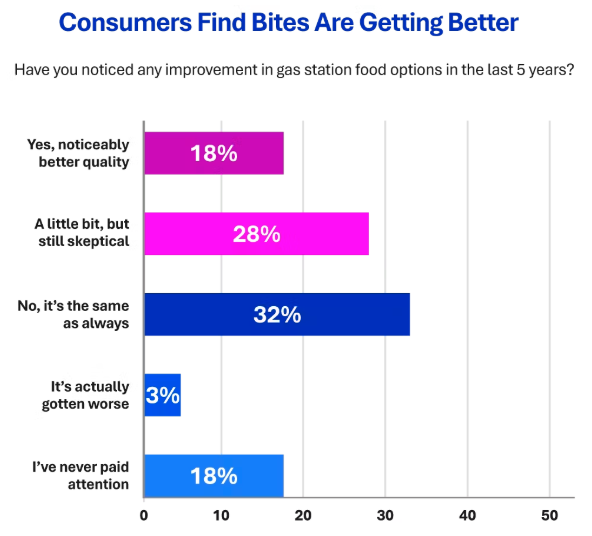
There is some momentum in the right direction. Fifty-three percent of consumers say gas station food safety has improved over time, and nearly 1 in 5 (18%) say the quality is “noticeably better.” That’s a signal that investments in food quality, packaging, and employee protocols are being noticed.
Still, only 9% of consumers say they have high confidence in gas station or convenience store food safety. Most (71%) describe their trust level as “moderate,” and nearly 20% admit they have little or none. The inconsistency is striking: 48% of people have had a positive food experience at a convenience store, but just 10% say those experiences are consistent.
For an industry that depends on repeat customers, inconsistency may be the biggest barrier to growth.
The Trust Triggers That Nudge Shoppers to Nosh
The good news? Shoppers know exactly what makes them feel confident. Sixty-seven percent look for signs that food is freshly made, 62% check overall cleanliness, and 54% inspect packaging for freshness or prep-time labels.
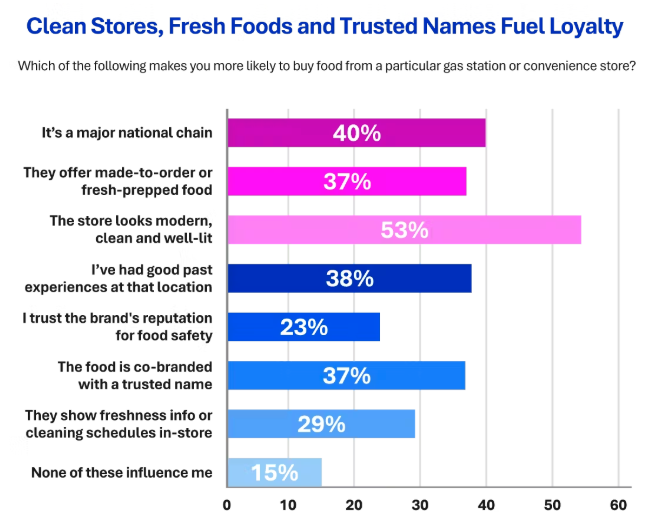
Brand familiarity also plays a role: 40% say they’re more likely to buy food from a major chain, and 37% are more inclined to purchase co-branded items. More than half (53%) say they’re swayed by a modern, well-lit store, while 38% are influenced by past positive experiences and 23% by a store’s reputation for food safety.
Technology could bridge the gap between perception and proof. One in three consumers (33%) say they’d be more likely to buy if cleaning or food rotation schedules were visible in-store. Another 40% say tech-enabled safety systems would boost their trust—but only if they can see that procedures are being followed.
The Road Ahead
Convenience stores are standing at a crossroads. The industry has invested heavily in food quality, branding, and design, but perception still lags behind progress. The next phase of growth won’t come from adding new menu items; it will come from closing the trust gap.
That means showing, not telling. Shoppers don’t just want promises about freshness and safety; they want to see it in action. Clean counters, labeled packaging, visible prep, and consistent staff routines speak louder than any marketing message. In a business built on speed and accessibility, credibility may be the most powerful differentiator.
Frontline c-store workers are a crucial partner in building long-term trust and loyalty. That’s why it’s critical to equip associates with the processes and systems they need to maintain rigorous food safety protocols, consistent delivery of quality fresh foods, and a clean, well-maintained environment. With convenience store food safety solutions like automated temperature monitoring, real-time task alerts, cleaning checklists and fresh item inventory insights, associates become the driving force behind a safer, smarter and superior in-store experience.
C-stores that can make food safety as visible as their fuel prices will be the ones that redefine the market. The opportunity isn’t just to sell more food; it’s to make convenience synonymous with trust, one fresh meal at a time.
was produced by and reviewed and distributed by Â鶹ԭ´´.