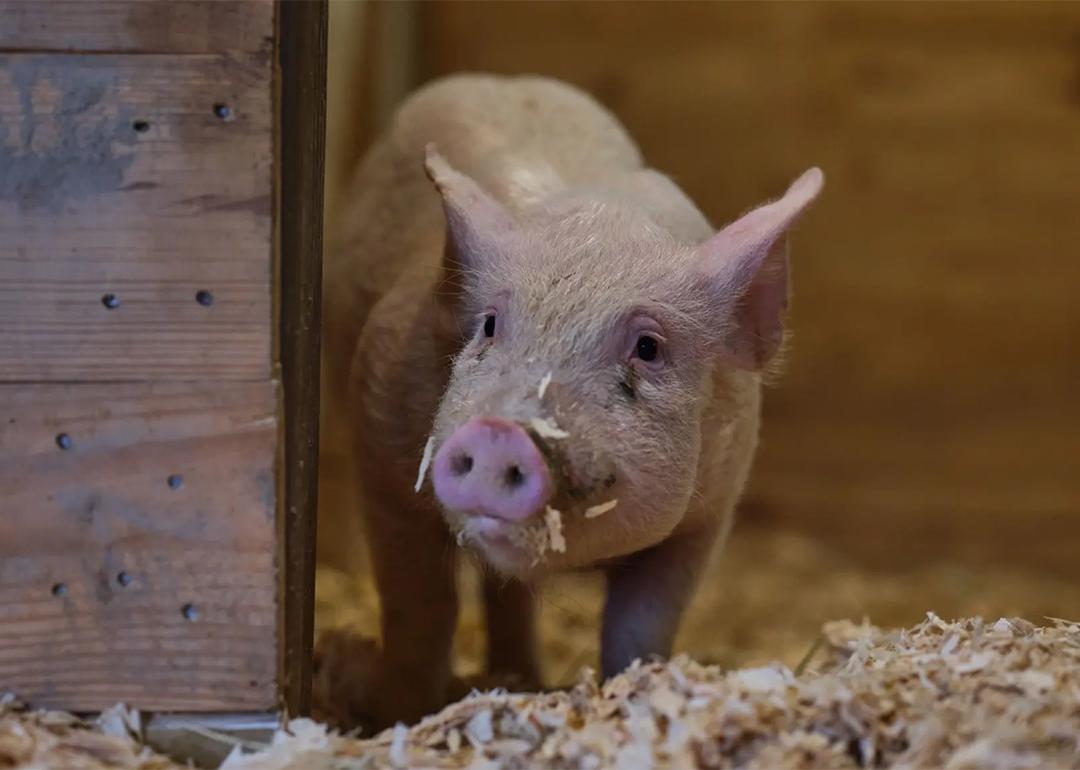
This pig’s bacon was delicious. But she’s alive and well.
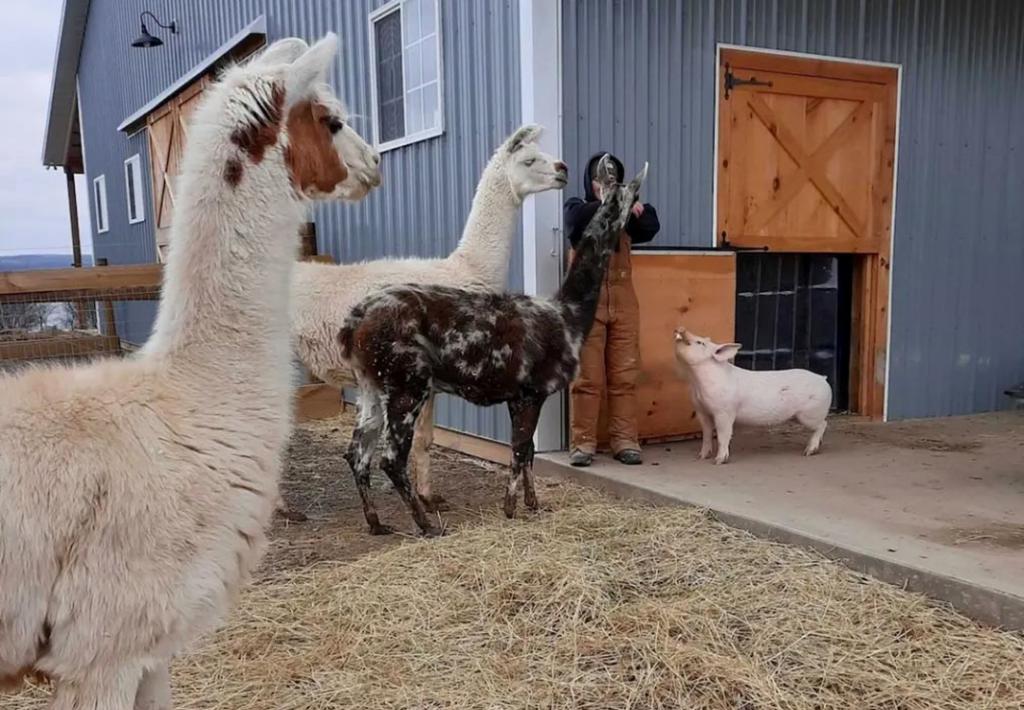
Dawn, the Yorkshire pig, is quite tasty. But don’t worry. She’s doing perfectly fine, traipsing around a sanctuary in upstate New York. (Word is that she appreciates belly rubs and sunshine.)
Across the country in San Francisco, at an Italian joint just south of Golden Gate Park, diners are enjoying meatballs and bacon not made of meat in the traditional sense but of plants mixed with “cultivated” pork fat. Dawn, you see, donated a small sample of fat, which a company called Mission Barns got to proliferate in devices called bioreactors by providing nutrients like carbohydrates, amino acids, and vitamins — essentially replicating the conditions in her body. Because so much of the flavor of pork and other meats comes from the animal’s fat, Mission Barns can create products like sausages and salami with plants but make them taste darn near like sausages and salami.
It’s like diet meat. Just as Diet Coke is an approximation of the real thing, so too are cultivated meatballs. Some say they simply taste a bit less meaty, which is understandable, as the only animal product in this food is the bioreactor-grown fat.
This story from examines the newest entrant in the effort to rethink meat: cultivated pork. For years, plant-based offerings have been mimicking burgers, chicken, and fish with evermore convincing blends of proteins and fats. Mission Barns is one of a handful of startups taking the next step: growing real animal fat outside the animal, then marrying it with plants to create hybrids that look, cook, and taste more like what consumers have always eaten, easing the environmental and ethical costs of industrial livestock. The company says it’s starting with pork because it’s a large market and products like bacon are fat-rich, but its technology is “cell-agnostic,” meaning it could create beef and chicken, too.
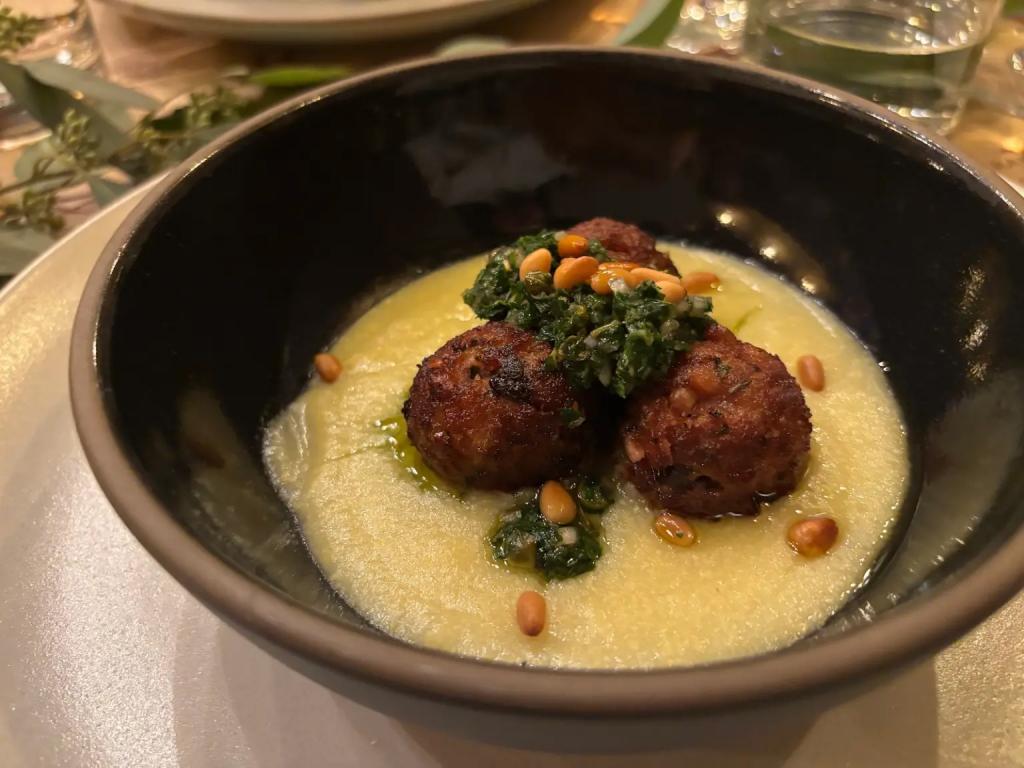
Honestly, Mission Barns’ creations taste great, in part because they’re “unstructured,” in the parlance of the industry. A pork loin is a complicated tangle of fat, muscle cells, and connective tissues that is very difficult — and expensive — to replicate, but a meatball, salami, or sausage incorporates other ingredients. That allows Mission Barns to experiment with what plant to use as a base, to which they add spices to accentuate the flavors. It’s a technology that they can iterate, basically, crafting ever-better meats by toying with ingredients in different ratios.
The bacon tasted for the purpose of this story, for instance, had a nice applewood smoke to it. The meatballs had the springiness you’d expect. A later visit to Mission Barns’ headquarters across town revealed two prototypes of its salami as well — both were spiced as you’d expect but less elastic, so they chewed a bit more easily than what you’d find on a charcuterie board. (The sensation of food in the mouth is as “mouthfeel,” and nailing it is essential to the success of alt meats.) The salami slices even left grease stains on the paper they were served on — Dawn’s own little mark on the world.
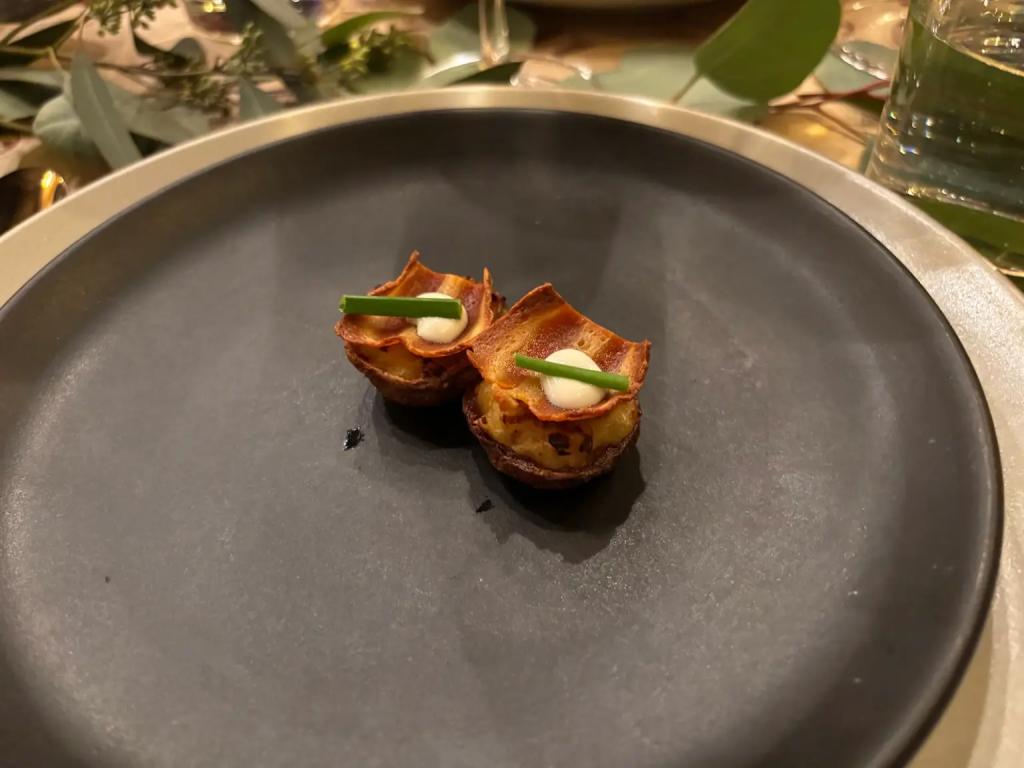
While Mission Barns has so far only and, for a limited time, at a grocery store in Berkeley, California — $13.99 for a pack of eight meatballs, similar to higher-end products from organic and regenerative farms — it is fixing to scale up production and sell the technology to other companies to produce more cultivated foods. (It is assessing how big the bioreactors will have to be to reach price parity with traditional meat products.) The idea is to provide an alternative to animal agriculture, which uses a whole lot of land, water, and energy to raise creatures and ship their flesh around the world. Livestock are responsible for between 10% and 20% of humanity’s greenhouse gas emissions — depending on who’s estimating it — and that’s to say nothing of the cruelty involved in keeping pigs and chickens and cows in unsavory, sometimes inhumane, conditions.
Getting animal cells to grow outside of an animal, though, ain’t easy. For one, if cells don’t have anything to attach to, they die. So Mission Barns’ cultivator uses a spongelike structure, full of nooks and crannies that provides lots of surface area for the cells to grow. “We have our media, which is just the nutrient solution that we give to these cells,” said Saam Shahrokhi, chief technology officer at Mission Barns. “We’re essentially recapitulating all of the environmental cues that make cells inside the body grow fat, [but] outside the body.” While Dawn’s fat is that of a Yorkshire pig, Shahrokhi said they could easily produce fat from other breeds like the Mangalitsa, known as . (In June, the company from the U.S. Department of Agriculture to bring its cultivated fat to market.)
Fat in hand, Mission Barns can mix it with plant proteins. If you’re familiar with Impossible Foods, it uses soy to replicate the feel and look of ground beef and adds soy leghemoglobin, which is similar to the heme that gives meat its meaty flavor. Depending on the flavor and texture it’s trying to copy, Mission Barns uses pea protein for the meatballs and sausages, wheat for the bacon, and fava beans for the salami. “The plant-based meat industry has done pretty well with texture,” said Bianca Lê, head of special projects at Mission Barns. “I think what they’re really missing is flavor and juiciness, which obviously is where the fat comes in.”
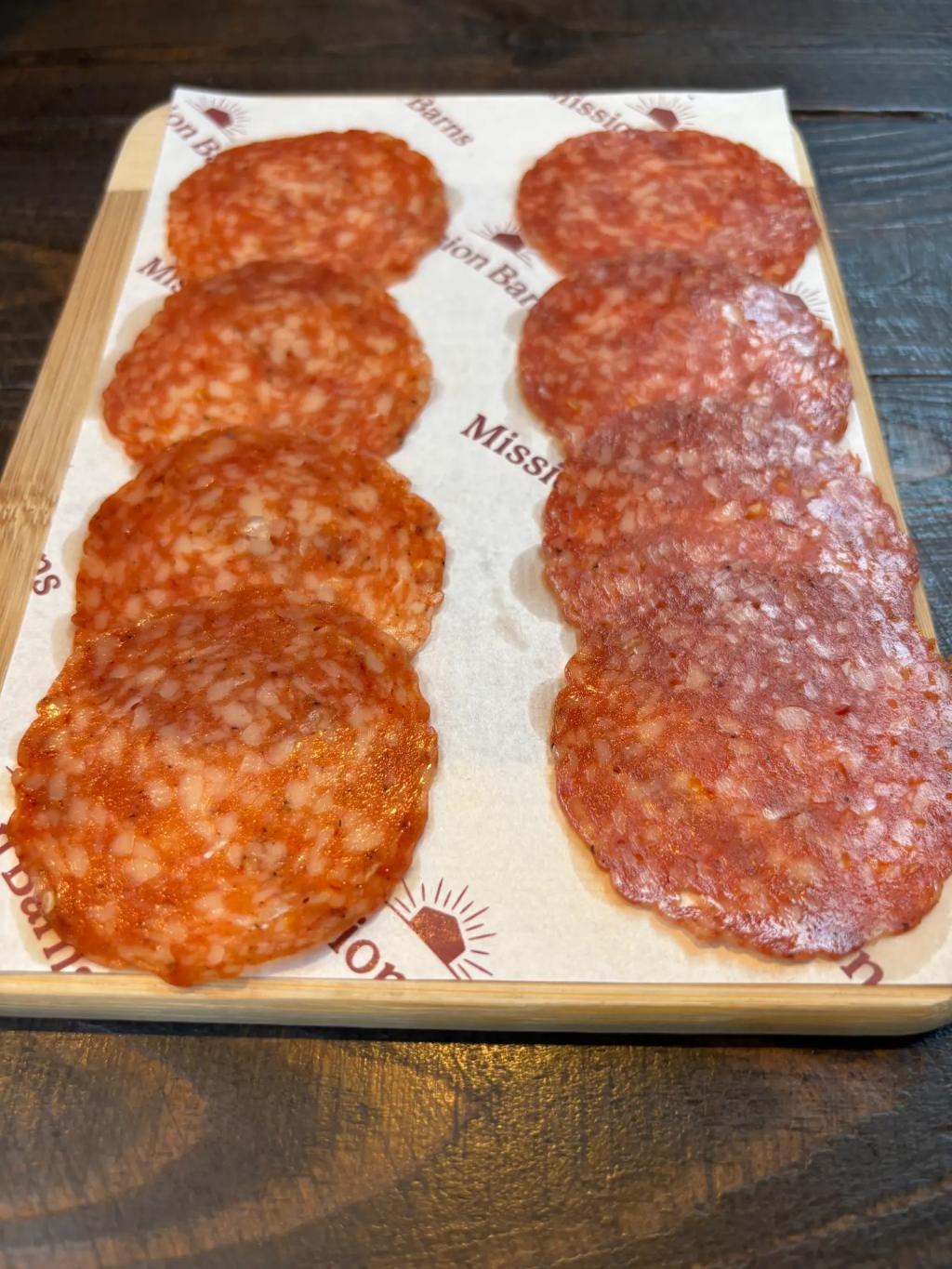
But the fat is just the beginning. Mission Barns’ offerings not only have to taste good, but also can’t have an off-putting smell when they’re coming out of the package and when they’re cooking. The designers have to dial in the pH, which could degrade the proteins if not balanced. How the products behave on the stove or in the oven has to be familiar, too. “If someone has to relearn how to cook a piece of bacon or a meatball, then it’s never going to work,” said Zach Tyndall, the product development and culinary manager at Mission Barns.
When you pick up that piece of salami, it has to feel like the real thing, in more ways than one. Indeed, it’s greasy in the hand and has that tang of cured meat. It’s even been through a dry-aging process to reduce its moisture. “We treat this like we would a conventional piece of salami,” Tyndall said.
Cultivated meat companies may also go more unconventional. “I also love the idea of taking their pork fat and putting it in a beef burger — what would happen if you did that?” said Barb Stuckey, chief new product strategy officer at Mattson, a food developer that has worked with many cultivated meat companies. “Mixing species, it’s not something we typically do. But with this technology, we can.”
Of course, in this new frontier of food, the big question is: Who exactly is this for? Would a vegetarian or vegan eat cultured pork fat if it’s divorced from the cruelty of factory farming? Would meat-eaters be willing to give up the real thing for a facsimile? Mission Barns’ market research, Lê said, found that its early adopters are actually flexitarians — people who eat mostly plant-based but partake in the occasional animal product. But Lê adds that their first limited sale to the public in Berkeley included some people who called themselves vegetarians and vegans.
There’s also the matter of quantifying how much of an environmental improvement cultivated fat might offer over industrial pork production. If scaled up, one benefit of cultivated food might be that companies can produce the stuff in more places — that is, instead of sprawling pig farms and slaughterhouses being relegated to rural areas, bioreactors could be run in cities, cutting down on the costs and emissions associated with shipping. Still, those factories would need energy to grow fat cells, though they could be run on renewable electricity. “We modeled our process at the large commercial scale, and then compared it to U.S. bacon production,” Lê said. (The company would not offer specific details, saying it is in the process of patenting its technique.) “And we found that with renewable energy, we do significantly better in terms of greenhouse gas emissions.”
Whether or not consumers bite, though, remains to be seen. The market for meat alternatives in the U.S. : Beyond Meat, which makes plant-based products like burgers and sausages, has seen , in part because of consumers’ turn away from processed foods. But by licensing its technology elsewhere, Mission Barns’ strategy is to break into new markets beyond the U.S.
The challenges of cultivated meat go beyond the engineering once you get to the messaging and branding — telegraphing to consumers that they’re buying something that may in fact be partially meat. “When you buy chicken, you get 100% chicken,” Stuckey said. “I think a lot of people go into cultivated meat thinking what’s going to come onto the market is 100% cultivated chicken, and it’s not going to be that. It’s going to be something else.”
Regardless of the trajectory of cultivated fat products, Dawn will continue mingling with llamas, soaking up the sunshine, and getting belly rubs in upstate New York — even as she makes plants taste more like pork.
was produced by and reviewed and distributed by Â鶹ԭ´´.