Floods are swallowing their village. But for them and others, the EPA has cut the lifeline.
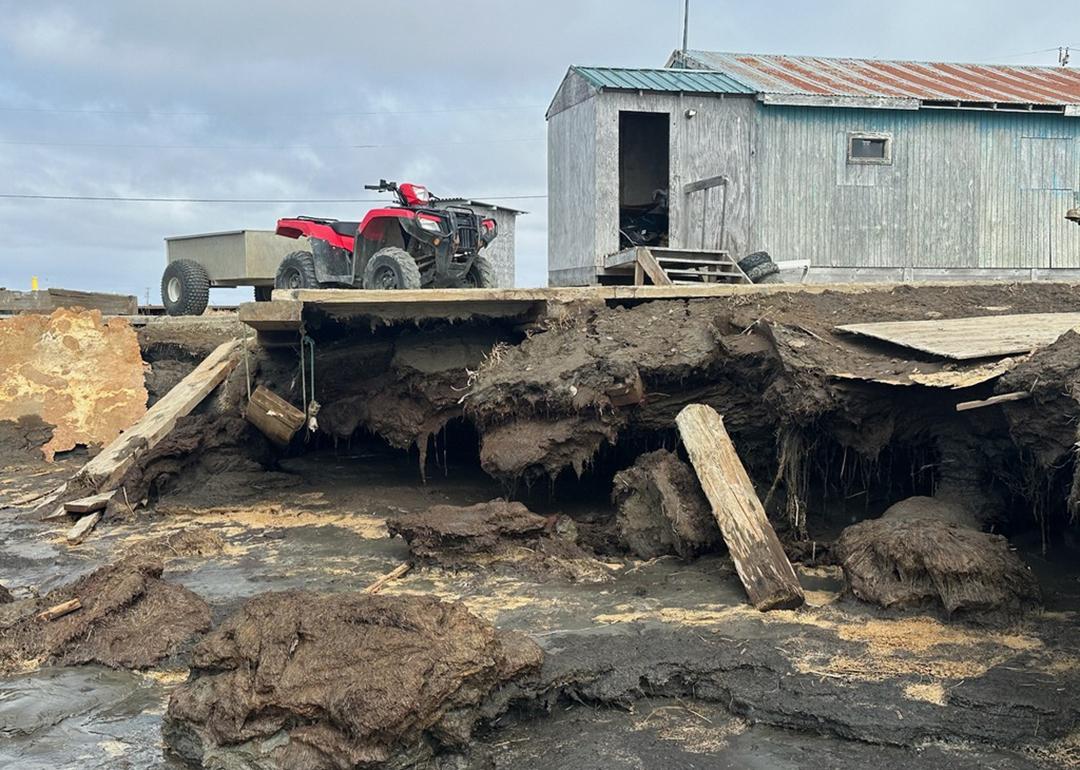
Acre by acre, the village of Kipnuk is falling into the river.
The small Alaskan tribal village sits on permafrost, which is thawing fast as global temperatures rise. That鈥檚 left the banks of the Kugkaktlik River unstable 鈥� and more likely to collapse when floods hit, as they often do. Buildings, boardwalks, wind turbines and other critical infrastructure are at risk, according to Rayna Paul, the village鈥檚 environmental director.
So when the village learned late last year that it had been awarded a $20 million federal grant to protect the riverbank, tribal members breathed a sigh of relief.
But that relief was short-lived. On May 2, the U.S. Environmental Protection Agency canceled the grant. Without that help, Paul said, residents may be forced to relocate their village.
鈥淚n the future, so much land will be in the river,鈥� Paul said.
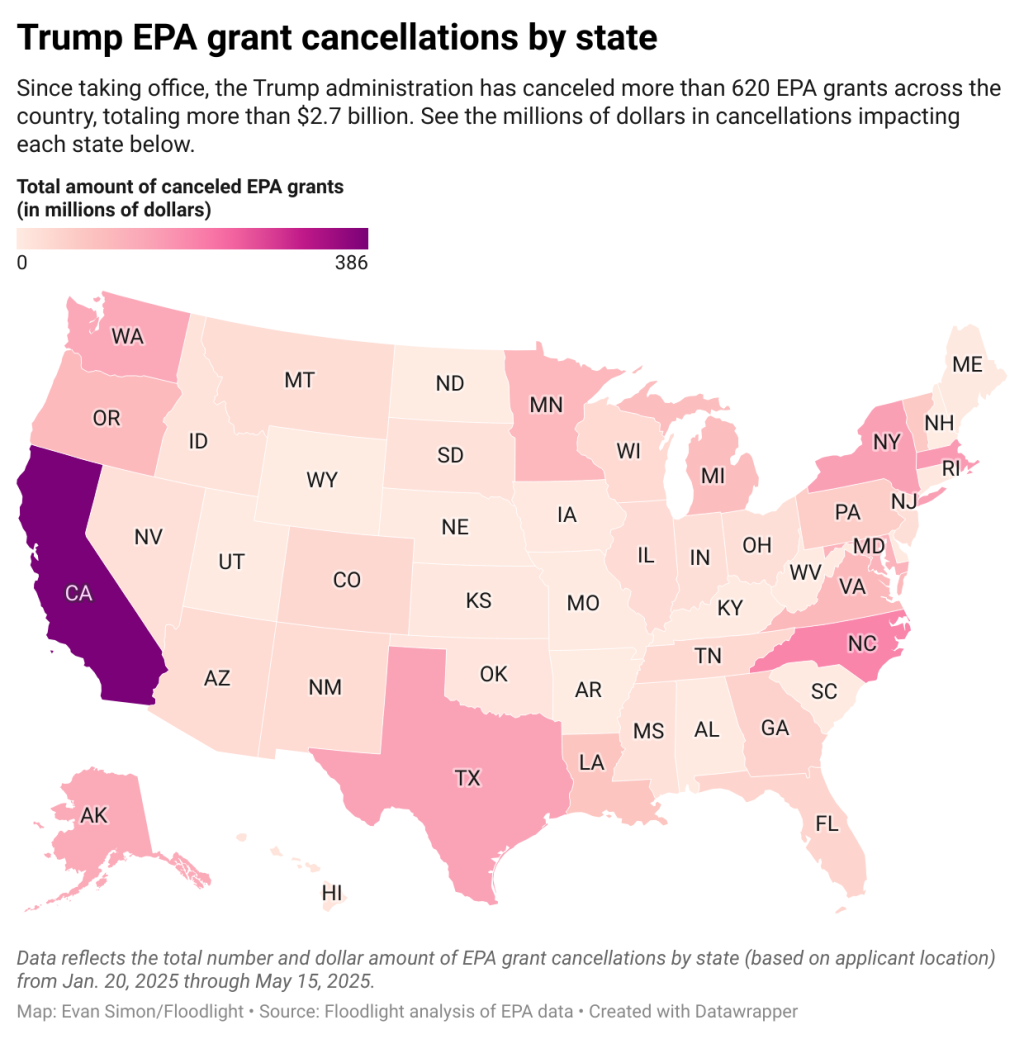
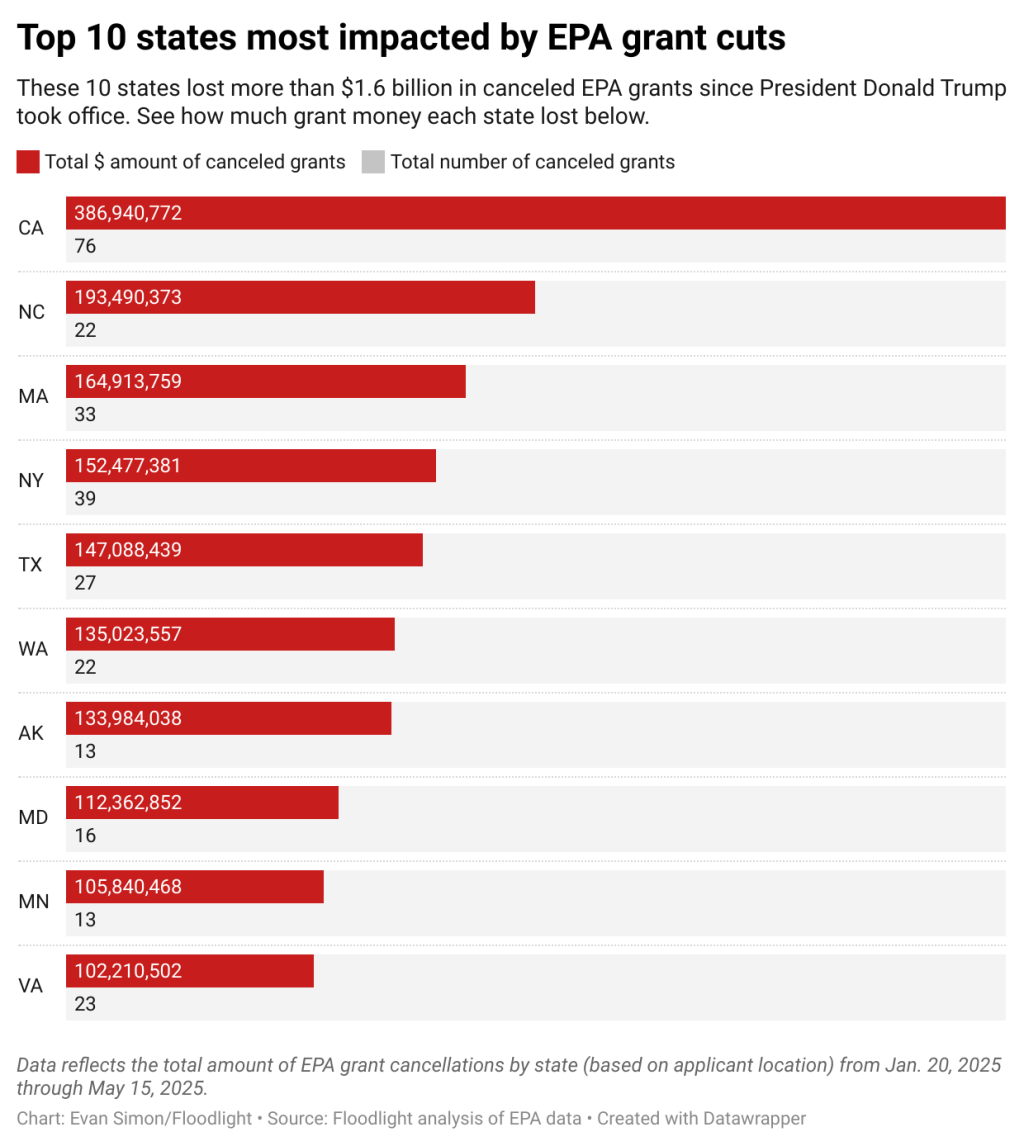
Kipnuk鈥檚 grant was one of more than 600 that the EPA has canceled since President Donald Trump took office, according to data obtained by through a Freedom of Information Act request. Through May 15, the cuts totaled more than $2.7 billion.
Floodlight鈥檚 analysis of the data shows:
- took by far the biggest hit, with more than $2.4 billion in funding wiped out.
- The EPA has also canceled more than $120 million in grants aimed at reducing the carbon footprint of cement, concrete and other construction materials. in April that the cement industry鈥檚 carbon emissions rival those of some major countries 鈥� and that efforts to decarbonize the industry have lost momentum under the Trump administration.
- Blue states bore the brunt. Those states lost nearly $1.6 billion in grant money 鈥� or about 57% of the funding cuts.
- The single largest grant canceled: A $95 million award to the Research Triangle Institute, a North Carolina-based scientific research organization that had planned to distribute the money to underserved communities. RTI also lost five other EPA grants, totaling more than $36 million.
More cuts could be coming. The in late April on a court filing that showed the EPA had targeted 781 grants issued under Biden. The data obtained by Floodlight shows the majority of those grants have already been canceled.
Lawsuit challenges grant cancellations
At the end of June, a coalition of nonprofits, tribes and local governments , alleging the Trump administration broke the law by canceling environmental and climate justice grants that Congress had already funded.
鈥淭erminating these grant programs caused widespread harm and disruption to on-the-ground projects that reduce pollution, increase community climate resilience and build community capacity to tackle environmental harms,鈥� said Hana Vizcarra, a senior attorney at Earthjustice, one of the nonprofits that filed the lawsuit. 鈥淲e won鈥檛 let this stand.鈥�
The EPA declined to comment on the lawsuit. But in a written response to Floodlight, the agency said this about the grant cancellations:
鈥淭he Biden-Harris Administration shouldn鈥檛 have forced their radical agenda of wasteful DEI programs and 鈥榚nvironmental justice鈥� preferencing on the EPA鈥檚 core mission. The Trump EPA will continue to work with states, tribes, and communities to support projects that advance the agency鈥檚 core mission of protecting human health and the environment.鈥�
Congress created the Environmental and Climate Justice Block Grant program in 2022 when it enacted the Inflation Reduction Act (IRA), President Joe Biden鈥檚 landmark climate bill. The program was designed to help the disadvantaged communities that are often hit hardest by pollution and climate change.
But on Jan. 20, Trump鈥檚 first day back in office, he signed halting funding under the IRA, including money for environmental justice, and canceling a Biden-era executive order that . Separately, in his orders on diversity, equity and inclusion, Trump called for in the federal government.
Underserved communities are often the most vulnerable to climate impacts such as heat waves and flooding because they have fewer resources to prepare or recover, according to a 2021 .
Inside the agency, not everyone agrees with the new direction. In a more than 200 current and former EPA employees spoke out against Trump administration policies, including the decision to dismantle the agency鈥檚 environmental justice program.
鈥淐anceling environmental justice programs is not cutting waste; it is failing to serve the American people,鈥� they wrote.
On July 3, the EPA put 139 of the employees who signed the petition on administrative leave, .
From hope to heartbreak in Texas
The people at Downwinders at Risk, a small Texas nonprofit that helps communities harmed by air pollution, thought they were finally getting a break.
Last year, they learned that the EPA had awarded them a $500,000 grant 鈥� enough to install nine new air quality monitors in working-class neighborhoods near asphalt shingle plants, a gas well and a fracking operation in the Dallas-Fort Worth area. The data would have helped residents avoid the worst air and plan their days around pollution spikes.
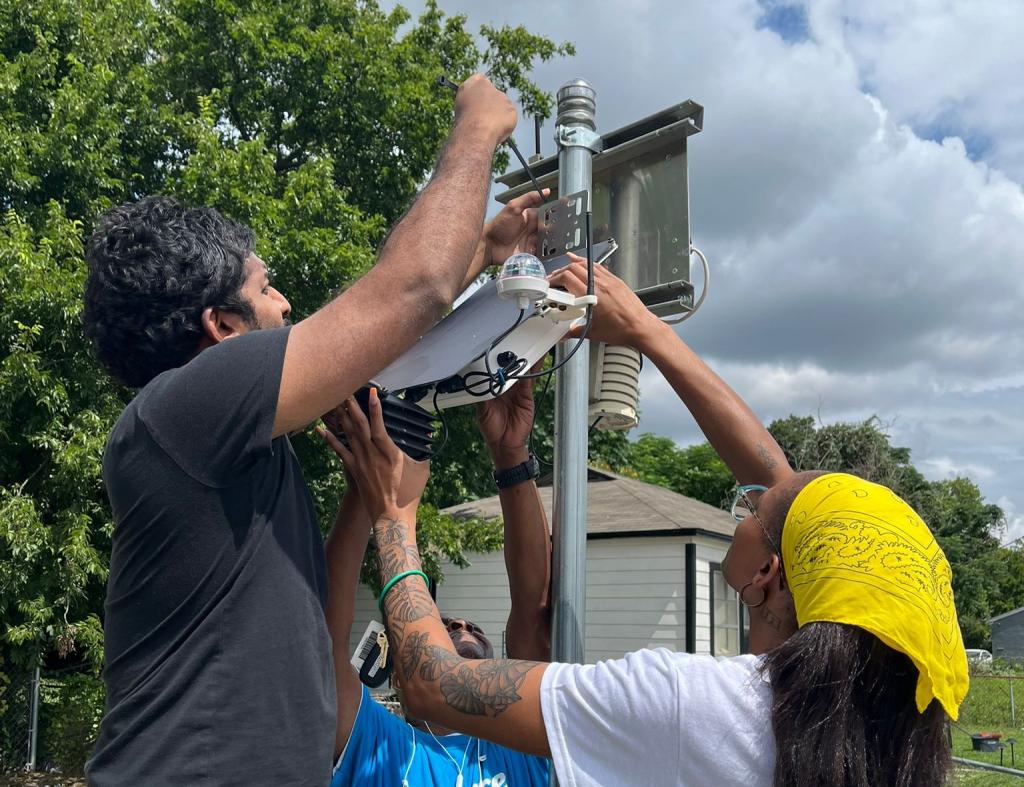
But on May 1, the group鈥檚 three employees received the news they鈥檇 been dreading: Their grant had been canceled.
鈥淚t was a very bitter pill to swallow,鈥� said Caleb Roberts, the group鈥檚 executive director.
He and his team had devoted more than 100 hours to the application and compliance process.
The nonprofit鈥檚 annual budget is just over $250,000, and the federal funding would have allowed the group to expand its reach after years of scraping by. They鈥檇 even paused fundraising for six months, confident the federal money was on the way.
鈥淲e feel like we're at ground zero again,鈥� Roberts said. 鈥淎nd that's just very unfortunate.鈥�
was produced by and reviewed and distributed by 麻豆原创.