Freshman lawmakers see increased donations from industries under their purview
Freshman lawmakers see increased donations from industries under their purview
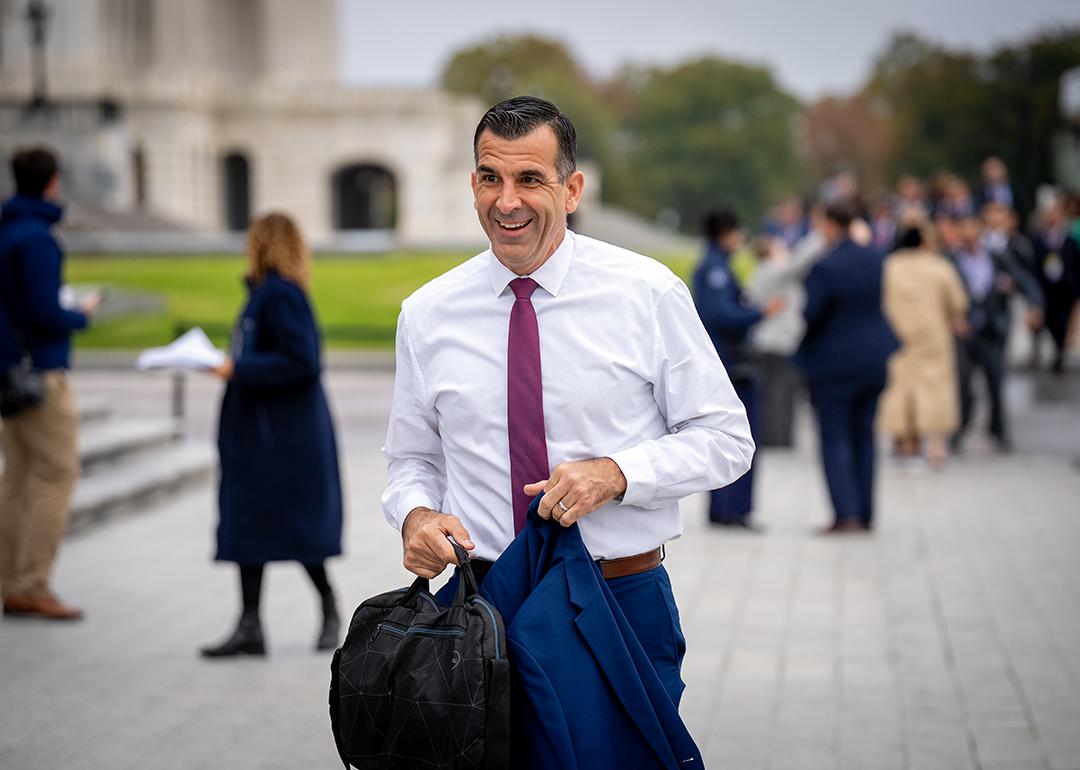
When California Democrat Sam Liccardo ran for the U.S. House of Representatives last year, 13% of his political action committee contributions came from finance companies, insurers, and real estate agents, .
Liccardo won, and received a coveted appointment to the Financial Services Committee. During the first three months of 2025, as he began raising money for his re-election, more than half of his political action committee donations 鈥� 57% 鈥� came from the industries under his panel鈥檚 jurisdiction, according to .
Citigroup contributed $1,000 to Liccardo鈥檚 re-election campaign after keeping its checkbooks closed during his first campaign.
Liccardo, who did not respond to requests for comment, is not alone.
First-quarter FEC reports found plenty of other first-term lawmakers now filling their re-election campaign coffers with PAC money from industries that fall under the jurisdiction of the committees the lawmakers now sit on.
Take Rep. Rob Bresnahan (R-Pa.) for example. When he first ran in 2024, to his campaign. During the first three months of 2025, he took in from the sector鈥檚 PACs.
Among his new PAC donors was the Owner-Operator Independent Drivers Association, which represents truckers.
鈥淥OIDA supports candidates and elected officials who are engaged on the policy issues that matter most to the 150,000 truckers we proudly represent,鈥� spokesman George O鈥機onnor said. 鈥淐ontributions are made based on a demonstrated interest in and commitment to transportation policies that improve roadway safety and the livelihood of truckers across America.鈥�
Bresnahan did not respond to requests for comment.
Rep. Mark Messmer (R-Ind.) received from a defense company PAC when he ran for the House last year. As a newly minted member of the Armed Services Committee, he took in , including $1,000 apiece from the PACs associated with Boeing, Lockheed Martin, and Textron.
鈥淥ur employee PAC program continues to observe long-standing principles of non-partisan political engagement in support of our business interests,鈥� Lockheed said in a statement.
Messmer did not respond to requests for comment.
鈥淭he system is fundamentally broken,鈥� said Bawadden Sayed, a spokesman for End Citizens United, which supports overhauling campaign finance laws. 鈥淭he moment lawmakers receive committee assignments, special interests see an opportunity 鈥� and the money follows. This is a defining feature of how Washington works.鈥�
The pattern is bipartisan. Consider:
- Rep. Nick Begich III (R-Alaska) raised after landing a seat on the Natural Resources Committee in January. When he ran last year, he took in only from those PACs.
- Rep. Janelle Bynum (D-Ore.) received from one financial sector PAC as a candidate for office. As a member of the Financial Services Committee, she received during the first three months of 2025.
- Rep. Jeff Crank (R-Colo.), now a member of the Armed Services Committee, raised from the defense sector during his first successful campaign. From January to March of this year, that sector accounted for .
- Rep. Julie Fedorchak (R-N.D.) a member of the Energy and Commerce Committee, saw PAC donations from the health sector grow to during the first three months of 2025 from in 2024. The sector accounted for 11 percent of PAC donations, up from 2 percent last year.
- Rep. Josh Riley (D-N.Y.) from agriculture PACs when he ran for Congress last year. Now a member of the Agriculture Committee, he collected from that sector鈥檚 PACs through March 31.
- Rep. George Whitesides (D-Calif.) joined the Science, Space and Technology Committee, and subsequently saw space industry PACs give his campaign committee during the first three months of 2025 after 鈥� even though he is a former NASA chief of staff. Among the new donors were Jeff Bezos鈥� Blue Origin, whose PAC contributed $2,000.
鈥淭he American people are told their interests come first, but that鈥檚 a hard sell when lawmakers are cashing checks from the industries they鈥檙e supposed to regulate,鈥� Sayed said. 鈥淧eople see this transactional relationship for what it is, and it鈥檚 why they don鈥檛 have any trust in Congress.鈥�
was produced by and reviewed and distributed by 麻豆原创.