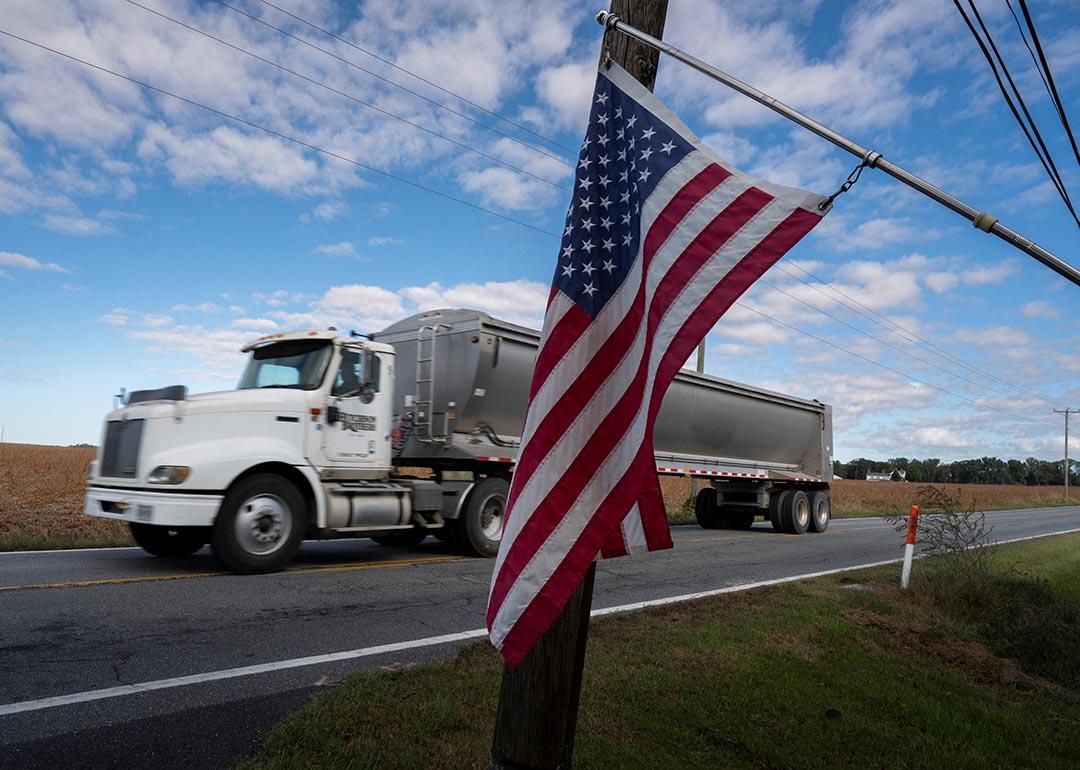
Government shutdown, trade wars hit farmersā€™ bottom line hard
Government shutdown, trade wars hit farmersā€™ bottom line hard
For Wendy Johnson, a livestock and organic grain farmer in Charles City, Iowa, October is usually the time she visits her local Natural Resources Conservation Service (NRCS) office.
There, she sits down with one of their employees and goes over the practices she implemented on her farm over the past year, along with documentation that proves she met the requirements of whichever U.S. Department of Agriculture (USDA) contract she was operating under. Once thatā€™s done, she gets paid for the work she did.
But this October was no normal year for Johnson and thousands of other farmers who rely on USDA contracts to operate their farms.
Thatā€™s because of the longest government shutdown in U.S. history, which started on Oct. 1 and didnā€™t end until Nov. 12. Throughout the shutdown, federal offices were closed, and most government employees were furloughed, including the people who help farmers like Johnson access USDA grants.
ā€œI canā€™t even ask questions to my local NRCS office for planning for 2026 because theyā€™re not open,ā€ Johnson told the before the shutdown ended. ā€œI am starting to think, ā€˜are they just going to close forever?ā€™ That would be awful.ā€
The shutdown came as a double-whammy to farmers who were already dealing with the fallout of tariffs that went into effect earlier this year. Prices for soybeans plummeted because China, once the largest buyer of U.S. soybeans, stopped purchasing them in response to high U.S. tariffs, shrinking the soybean market for farmers. On Oct. 30, China at 25 million metric tons per year, settling some of the issues soybean farmers have faced throughout 2025.
But input costs like fertilizer prices remain high due to retaliatory tariffs from countries like Canada, where most of the potash fertilizer American farmers rely on is imported from. That means the cost to farm is rising while commodity prices are diminishing.
High interest rates on loans mean farmers might accumulate more debt to make ends meet, especially if payments on USDA contracts continue to be delayed.
All of this, in combination with a government shutdown, could create a lethal storm for American farmers.
ā€œWhen youā€™re removing those cost-share opportunities while simultaneously putting tariffs into placeā€¦ theyā€™re asking for an explosion,ā€ Johnson said.
Other farmers fear the impacts of this ā€œexplosionā€ on the future of agriculture.
Gene Stehly, a soybean, corn, and wheat farmer who lives near Mitchell, South Dakota, has been farming for 46 years. He started farming during the 1980s farm crisis when hundreds of thousands of farmers defaulted on loans and just as many left the business completely, gutting large swaths of rural America that had been built by small and midsize producers.
Stehly said that while heā€™s always been concerned about the state of agriculture, heā€™s more worried now than ever before as the value of commodities diminishes.
ā€œI worry about younger people that are trying to get started that have borrowed a lot of money and are trying to get through next year, and they love to farm,ā€ Stehly said. ā€œI just hate to see the younger generation have a tremendous setback in the next five years or so.ā€
Farming has become almost unviable for small and midsize producers because of how tight the profit margins can be. The Biden administration was attempting to improve this by increasing staff at USDA offices and allocating more funds to conservation programs via the Inflation Reduction Act, but much of this work has been paused or totally reversed by the Trump administration. Earlier this year, more than 2,000 USDA staff were , many of whom worked for NRCS, implementing Biden-era conservation programs.
ā€œWe donā€™t have folks in county offices that can help design the kind of conservation practices that would help farmers save money,ā€ said Jesse Womack, a policy specialist at the National Sustainable Agriculture Coalition. ā€œGood conservation helps farmers reduce reliance on inputs [like fertilizer], and that can make you more profitable per acre.ā€
Making farmers more self-reliant can make it easier for them to stay in business during times like a government shutdown or a tariff war. But with mass layoffs and the reversal of conservation funding, many farmersā€™ wheels are now left spinning in place.
ā€œWe are watching a lot of our leaders in this country totally ignore how difficult producers have it right now and really neglect their duty to make tools and services readily available and easy to use for producers,ā€ Womack said.
was produced by and reviewed and distributed by Ā鶹Ō““.