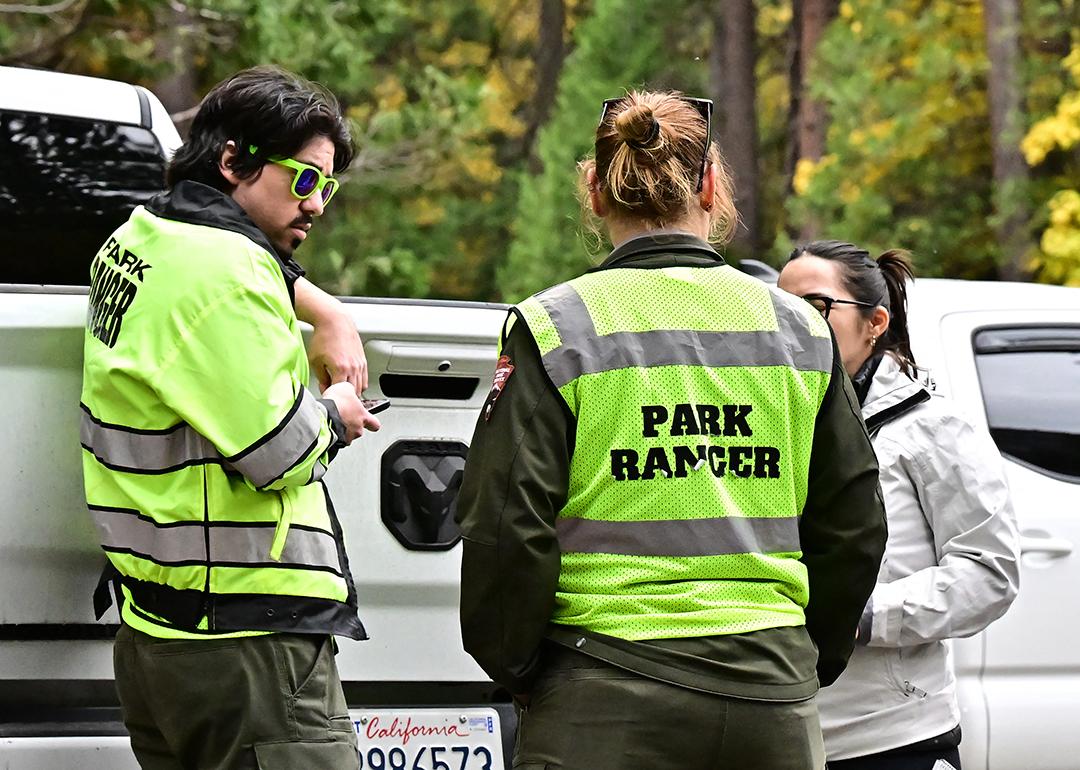
How budget cuts are affecting National Park Service rangers
It’s a perfect fall afternoon in Colorado’s Rocky Mountain National Park and a guided hike of 15 strangers just a few miles beyond the park’s eastern entrance is under way. As the hikers click away with their iPhone cameras, the leader, a bearded 32-year-old named Adam Auerbach, regales them with the park’s history: In 1915, president Woodrow Wilson officially created it with the stroke of his pen. Lobbyists from mining and logging companies urged the federal government to rethink the decision, Auerbach says, setting up a century-long fight between the park and the extraction industry.
“People need to realize that the fight to protect places like this doesn’t end with the founding of a national park,” Auerbach says. “The fight will always be there, and every generation will have to fight.”
This hike, Auerbach tells them, is his way of continuing the battle. Since June 2025, he has led a series of what he calls “advocacy hikes” for anyone who wants to show up. During the outings, which he promotes on social media, Auerbach discusses the Trump Administration’s staffing and budget cuts to the National Park Service and other public lands agencies, and how those cuts are impacting Rocky Mountain National Park (RMNP) and the people who work there.
Auerbach worked as a seasonal ranger at RMNP from 2016 until 2019, and his social circle includes full-time NPS rangers who still work in the park. But these staffers have been strictly forbidden from speaking publicly about the cuts. The administration has posted so-called ” at NPS sites, urging the public to blow the whistle on rangers who are critical of the administration, the NPS, and even U.S. history.
Amid this information crackdown, Auerbach has become a rare leak. Nobody from the RMNP has told Auerbach to stop these hikes, or to apply for a permit, he tells . He shares details about the cuts, as well as the feelings of rangers, with anyone who will listen. “I don’t envy my former colleagues,” Auerbach says. “For them, it’s a management of risk-tolerance. They know they can lose their jobs if they are too outspoken.”
Among the group are several students from the University of Colorado’s Masters of the Environment graduate program—Auerbach is a recent grad, and he is now working with a public lands advocacy group called Next Interior. There are also a handful of out-of-state hikers who saw the message online and were intrigued. The rest are locals from Boulder, Fort Collins, and the surrounding areas who wanted to learn more about the shutdown and its impact on RMNP.
In the weeks after the cuts, additional rangers took buyouts or retired. A federal hiring freeze prevented the NPS from replacing the open positions, leaving anywhere from 30 to 40 unfilled full-time jobs at RMNP. The park employs approximately 150 full-time rangers throughout the year, a former RMNP official says, and its staff increases to about 350 in the summer with the addition of seasonal and part-time workers. Auerbach shares anecdotes of park employees having to work two or three different positions in addition to their specialty job. “If you lose that much staff, you have to divert people to those positions,” he says. “There’s this veneer that parks are still operating and doing well after the cuts. They aren’t.”
And Auerbach shares his gravest concern for RMNP amid the staffing cuts. While daily life inside the park may appear hunky dory to visitors, the NPS’s intense focus on superficial tasks like toilets and trash may leave it vulnerable to more existential threats: climate change, wildfire, or invasive plants and animals. “My fear is that Rocky will stumble through a year or two and still appear functional,” he says. “But it’s going to fail in its mission of protecting its natural wonders for future generations.”
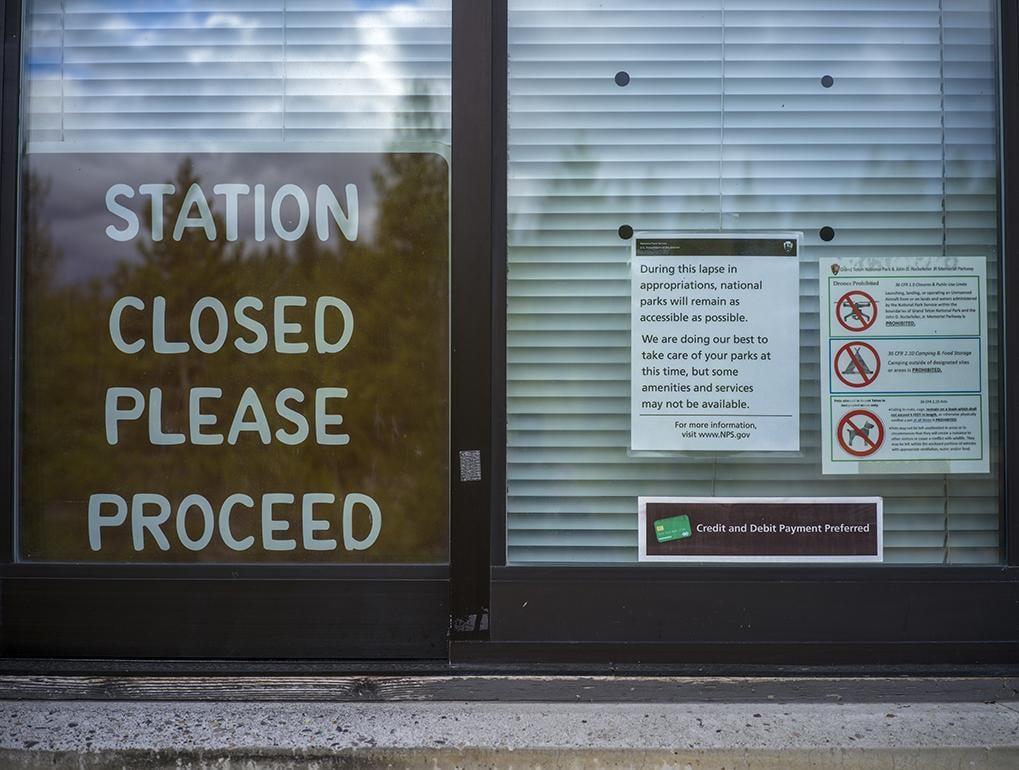
Auerbach’s fears became heightened in early October when the federal government shut down. The Interior Department ordered all NPS sites to remain open, even as the overwhelming majority of full and part-time staff were either furloughed or let go. During previous shutdowns, national park sites have endured a long list of environmental harm: overflowing trash cans, damaged conservation sites, and hikers venturing way off trail.
This cut was severe enough to impact even the communications team with the park. Upon reaching out to the NPS to comment on this story, Outside and RE:PUBLIC initially received a bounce-back email.
“Due to the lapse in appropriations, I am out of the office and not authorized to work during this time,” read the message. “I will respond to your messages when I return.”
The NPS eventually responded to Outside and RE:PUBLIC for the story.
“Rocky Mountain National Park remains committed to protecting park resources and supporting employees,” an NPS spokesperson said. “Park leadership has encouraged open communication and use of available employee assistance resources. The NPS values constructive feedback and does not tolerate retaliation for staff who raise workplace concerns through appropriate channels.”
But Outside and RE:PUBLIC spoke to full-time employees at RMNP and other sources for this story, and the information and perspective shared not only supported Auerbach’s opinions, but presented a stark picture of life inside the park.
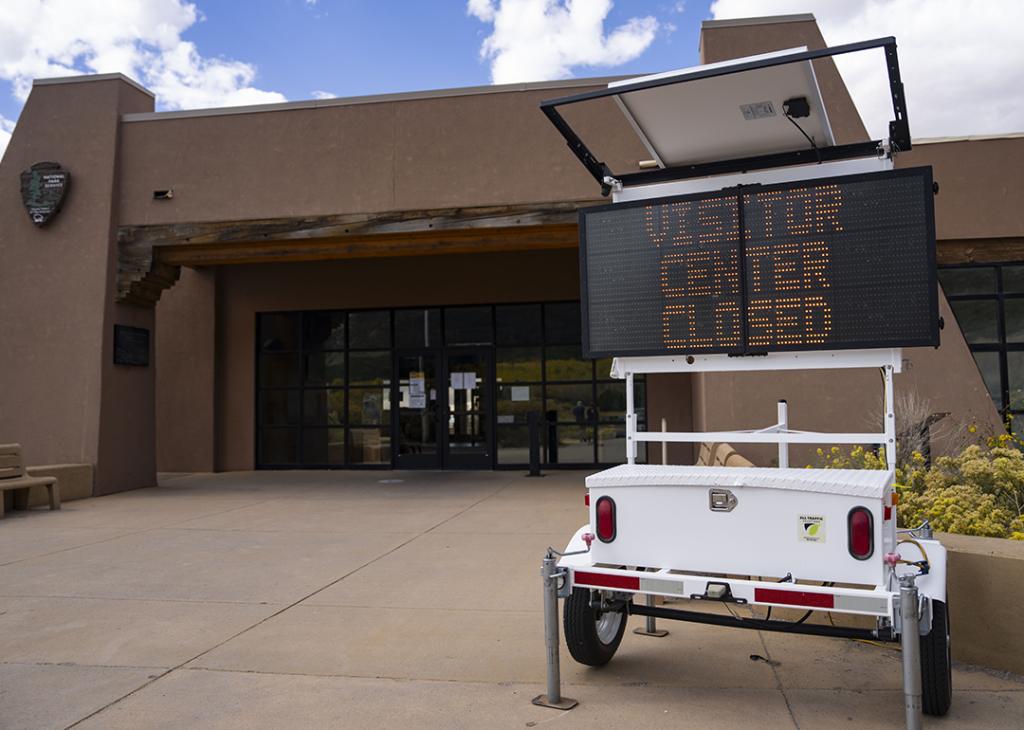
The firing of thousands of probationary NPS workers on February 14—the so-called “Valentine’s Day Massacre”—drew considerable media attention. And in the months afterward, local and national outlets sought out former and current NPS employees to shed light on the state of America’s parks. What jobs were lost, and how would the culling impact visitors’ experience during the busy summer?
Amid the media crush, workers at Rocky Mountain National Park were oddly silent. In August, Politico published an investigative piece that quoted unnamed sources at Yosemite about dysfunction inside the park. In its sweeping September 8 report, The New York Times obtained information from NPS sources at more than 30 parks. But no such reports came out about RMNP.
“Everyone still working is relieved to still be working” Larry Frederick, the park’s former chief of interpretation and education, told me. “That’s probably why they’re not talking.”
Frederick, who retired in 2013, still lives in Estes Park, near the park entrance. He says that NPS jobs at RMNP are highly sought-after, due to the park’s proximity to the greater Denver area. Landing a full-time position is a dream come true for many NPS lifers—and not something to be gambled with. The 1939 Hatch Act expressly forbids federal employees from voicing their political opinions while on duty—a requirement that some NPS workers take very seriously.
“The Park Service attracts outstanding people who develop a love for the mission of the agency and want to do a good job,” Frederick said. “Even if things are chaotic behind the scenes.”
The silence amidst the rangers has given the impression of normalcy. And that perspective was bolstered by an August 22 story titled in a local online newspaper called The Denver Gazette. For the story, the reporter traveled to the park, interviewed a handful of visitors and business owners, and peered into toilets and trash cans before declaring: “a park system that could accomplish the job with less … thereby saving tax dollars.”
Mention of the story elicited groans and chuckles. “No, you’re not going to see blatant signs of employee burnout in the field,” says Estee Rivera Murdock, the executive director of the Rocky Mountain Conservancy, the non-profit organization that operates inside of the park. “You’re going to see rangers who are bright-eyed and bushy-tailed.”
Murdock, a nine-year NPS veteran, echoed Frederick’s sentiments that park employees would do their jobs without any sign of public complaint, no matter the dysfunction going on behind the scenes. But in private, NPS employees sometimes let their guards down. Mudrock said she had spoken to several young NPS workers who’d had their new jobs rescinded amid the February cuts. Many of these budding rangers, she said, sought jobs elsewhere and moved on with their lives.
Cuts to the AmerCorps program, she added, placed further obstacles in the traditional career path for young NPS workers. “I worry a lot about future generations of young people who have said ‘when I grow up, I want to be a park ranger,’” Murdock said. “Now, they are coming out of college and they are the best and the brightest students, and they’re having the door closed in their faces.”
During his three seasons working in RMNP, Auerbach had to occasionally do tasks that weren’t part of his official job description. “I had to clean the bathrooms a few times,” he said. “We all stepped up when we had to. These parks are held together by people who care.”
But the need to “step up” in 2025 has surpassed what should be rationally expected of NPS workers, Auerbach and others told me. In the weeks after the layoffs and buyouts, Interior Secretary Douglas Burgum issued Secretarial Order 3426, requiring the NPS to keep all parks open and accessible. That meant no closures to trails, visitor centers, or other areas, even with the shortage of staff. “The way things are being run at the present moment is not sustainable,” a ranger who works inside Rocky Mountain National Park says about the order’s impact on the park’s workers. “This summer has been unlike any other, and not in a good way.”
Throughout August and September, Outside and RE:PUBLIC communicated with this NPS ranger, who works full-time inside the park. The ranger, who will be referred to as Sandy, requested anonymity, which Outside granted due to the NPS crackdown on leaking information.
Sandy described an unpleasant working environment inside of the park, marked by worsening morale, long hours with few days off, and the “passion tax” that NPS workers are now paying in order to keep their dream jobs. “Everything is NOT fine, we just don’t want to compromise the visitor experience and services,” they told me. “Services are and processes are still running at pretty much full capacity, just at the cost of employees’ mental and physical wellbeing.”
Park workers aren’t being forced by management to pick up the slack, Sandy said. Rather, they are taking on extra shifts willingly, because they don’t want RMNP to falter. This means working past the end of a shift, doing extra jobs around the park, and going long stretches without meaningful time off.
Some rangers earn overtime pay for doing these extra shifts, but not all jobs are eligible for this perk. Many rangers are simply accruing extra days of paid leave, which they hope to someday use. “I’ve seen people working crazy hours,” Sandy said. “Nine to 12-hour days.”
But the added work has had a major impact on employees. Sandy described seeing fellow staffers break into tears while on the job. The teams that man fee stations at campgrounds and checkpoints are painfully short-staffed, they said, as is the custodial staff and the department of interpretive rangers—those who give talks and guided hikes. “Staff has to pick up overtime shifts consistently just to make sure things still run,” Sandy said. “We are stretched very thin, but most of our front-facing employees are awesome, so it doesn’t show.”
The areas that constantly need extra manpower: bathroom duty, fee stations, and the checkpoint to Bear Lake on the park’s east side. The long weeks and little rest have created a culture of anxiety and distrust, according to Sandy. “People speak in hush tones about it or away from the people they don’t trust or know where they stand,” they said. “People are very dissatisfied. They have been talking about leaving the park and even quitting the NPS altogether.”
The ranger said that staffers do not always feel comfortable sharing their concerns with park management. Rocky Mountain National Park’s superintendent, Gary Ingram, and other top-level officials are all “acting” supervisitors—temporary or recently appointed positions, the ranger said.
A rare case of public discontent occurred in early August, however, after Ingram sent a park-wide email asking rangers to “slow down, work more safely, and watch out for each other.” A park employee penned a response to Ingram’s note, and the email was sent to the entire network. Sandy shared the email with Outside and RE:PUBLIC.
“I have worked as an employee for NPS 12 seasons, 11 at Rocky. I have also worked for the BLM, USFS, USF&W and as a state park ranger for several seasons. In other words, I’ve been around the block a few times. In all this time I have never worked in an agency or situation that was so understaffed as Rocky is this season.
I believe because of this staffing shortage, safety (visitor and employee) resource protection, and customer service has been greatly compromised. The park is operating at full capacity with a skeleton crew. I don’t think it is right or fair to put this burden on low level staff and volunteers. I don’t understand why more seasonal staff have not been hired.”
Despite the criticism, park management has not stepped in to alleviate the problems with morale and burnout, Sandy said. NPS managers occasionally recommend the two-page Mental Health Resources document, which includes a series of websites, phone numbers, and the Employee Assistance Program hotline.
But since NPS employees are, as Sandy described, “mission-driven and willing to take on more,” the problems have not been addressed. “We really care about our coworkers and our park and our mission,” they said.
The group walks through a hillside of lodgepole pines, down a ridgeline, and into a valley filled with aspen trees, quickly yellowing amid the late September chill. It’s not the only change that is afoot at the park, Auerbach says. He talks about the looming government shutdown, how thousands of NPS workers will soon be given furloughs or potentially laid off. He shares the fears of his RMNP friends that the Trump administration will use the shutdown to justify the firing of thousands of additional federal employees, further crippling the NPS and other public lands agencies. “Another reason I wanted to do the hike today is that these may be the final few days to experience Rocky the way we’re seeing it,” he says.
Indeed, on October 1, four days after the hike, the government shuts down. Thousands of workers for the NPS, Forest Service, and other land management agencies are kept from work, furloughed, or laid off. But the Trump Administration decides to keep the national parks open.
At Rocky Mountain National Park, a steady stream of cars now drives past unmanned checkpoints. Essential employees like dispatchers and law enforcement are still working, Sandy says, but all staffers who do most other jobs in RMNP are furloughed. Some employees—those who remove snow, attend to sick or dying animals, or fix essential park automobiles—are also sent home, but kept on high alert to return, should there be an emergency.
“To be honest, I was so burned out from being understaffed and overworked that the shutdown was actually a much-needed break,” they tell me. “I worry for the seasonals who are paid less than me. I am lucky to have my family to fall back on temporarily in an emergency, but few people I know have that luxury.”
But as the days become weeks, the ranger says that morale amongst furloughed workers is dire. Sandy says that, within the circle of park employees, people have recommended a local Christian charity for needy families to help cover costs of rent and food. “People have bills—medical bills, student loans, car payments, rent, groceries and food, so missing even one paycheck is enough to put some seasonal workers on the street,” the ranger says.
Amid the doom and gloom of the impending shutdown, Auerbach stops his trailside lecture to offer a glint of hope. He repeats the phrase that’s become familiar to anyone who has spent much time in the outdoor industry in 2025: National parks enjoy bipartisan support. People want national parks to thrive.
He points out ways that anyone can join the battle to protect public lands, by writing letters to elected officials, submitting comments prior to legislation being enacted, and of course, by voting.
He gives another RMNP history lesson, this one about Moraine Park, a lush valley at the foot of 14,259-foot Longs Peak. The headwaters of the Big Thompson River snake across an emerald plain, past beaver dams and aspen groves and toward the highest peaks of the Front Range. “People think a national park represents a scene frozen in time,” Auerbach says, “That’s not the case.”
More than a century ago, Auerbach says, the area had been the site of a privately owned lodge and resort, which featured horse stables, a swimming pool, and a rodeo. Tourists arrived each week in the summer to play on the resort’s nine-hole golf course.
After Rocky Mountain National Park was established in 1915, the structures were torn down, the golf course plowed under. The natural grasses returned first, then the trees, then the elk and moose. After a few decades, the valley had returned to the way it had always been.
was produced by and reviewed and distributed by Â鶹ԭ´´.