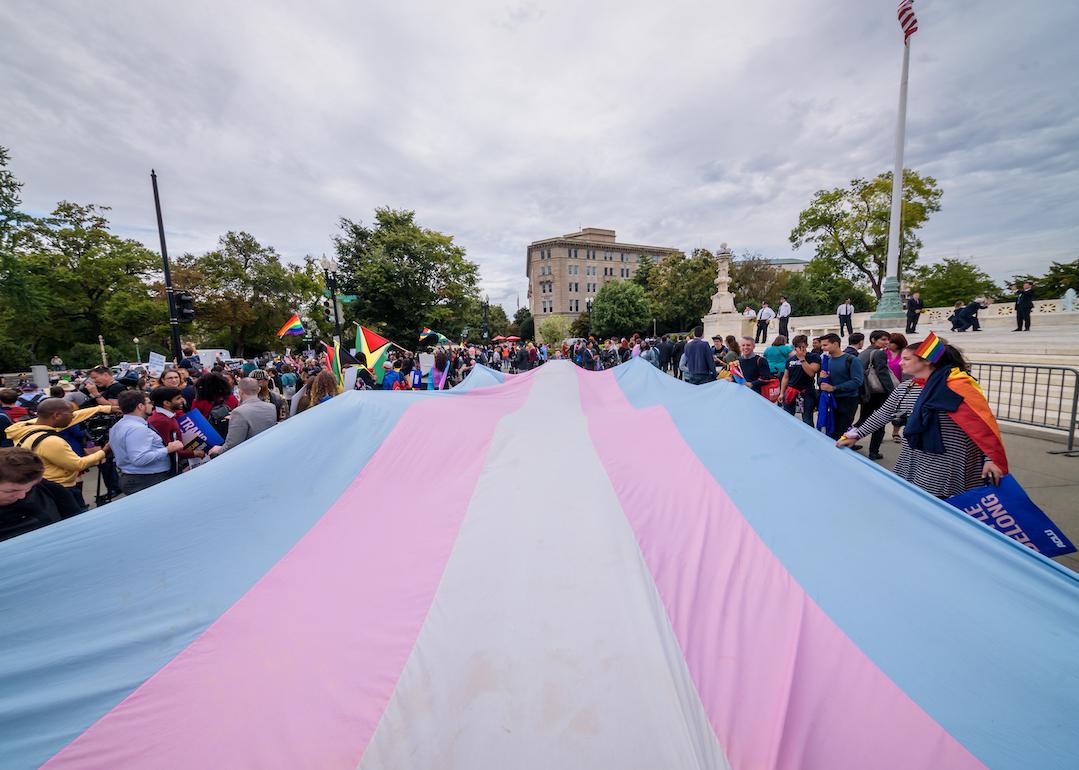
How transgender protection laws differ by state
How transgender protection laws differ by state
The American consciousness is evolving. Slowly, laws are following suit, providing more inclusive and protective policies as previously assumed gender norms are uncovered as restrictive and incorrect. Recent Gallup polls show that , and that support is growing. A similarly sized majority of Americans who support basic protections for LGBTQ rights supports transgender people who want to . However, there are still prevalent divides on the rights of transgender individuals to do something as simple and necessary as .
Gender identity protections are often lumped in with sexual orientation, yet transgender individuals align with a gender other than what was assigned at birth, which has nothing to do with sexual orientation. Transgender individuals can be gay, bisexual, lesbian, queer, heterosexual, or something else.
Much in the same way homosexuality was once considered a psychological disorder, transgender individuals have faced a similar stigma. It wasn't until 2019 that the World Health Organization . At the federal level, laws protecting an individual's gender identity in the workplace make . Before the , there were few national protections for the LGBTQ community. Yet within this same-sex marriage law there is little for transgender individuals in particular, and there are many other areas, including housing, the right to adoption, and medical care, where states have failed to add provisions to protect the welfare of transgender individuals.
State laws vary widely, and a number of states have few or no protections in place. Many have not passed laws that actively discriminate against LGBTQ individuals, but they lack laws specifically designed to protect the rights of transgender people. Some states even have laws that further facilitate discrimination, including 39 states that allow for the use of a . The "panic defense" is a set of legal strategies that, , "seek to partially or completely excuse crimes such as murder and assault on the grounds that the victim's sexual orientation or gender identity is to blame for the defendant's violent reaction." So-called "conversion therapy," a scientifically discredited and controversial practice that seeks to "convert" LGBTQ people to heterosexuality or traditional gender expectations, is still legal in 30 states.
麻豆原创 compiled a list of transgender protection laws in each state, primarily using data from , a nonprofit research program that gathers various resources to further expand equitable treatment for all people.
Alabama
While employment protections exist for Alabama鈥檚 transgender residents under federal law, there are no such protections at the state level for the 147,000 residents of the LGBTQ population. According to the MAP, Alabama also has laws in place banning transgender issues from being discussed in schools, and transgender individuals can be banned from playing on sporting teams related to their gender identity.
Alaska
Alaska has an but few laws in place to protect them. While LGBTQ "conversion therapy" is banned statewide, there are no protections in place for transgender youths in state care. However, there are laws within the state protecting an individual鈥檚 right to change their identified gender on formal documents, such as birth certificates and driver's licenses.
Arizona
Arizona has some laws and policies at the local and state level that protect for transgender people, yet there are numerous religious exemption laws for companies that decide that conforming to these rules harms their religious beliefs. The state does not have any hate crime laws for acts committed against transgender individuals, thus providing less overall protection.
Arkansas
Arkansas has protections in place for its transgender student population , but there is not much else done on a state or local level to provide further safety from a legal standpoint. Arkansas has a ban on educators discussing LGBTQ issues in school.
California
California is one of only 11 states that bans the use of the in court, and overall it's one of the more progressive states in the country for LGBTQ rights. The MAP considers with the current laws in place, but the state does currently criminalize infection and transmission of HIV. Laws of this nature are not uncommon and have been shown to have .
Colorado
Colorado has few negative laws against transgender people, but there are many areas where protective laws could be passed to ensure ethical, equal treatment. The lack of a law protecting an individual does not necessarily equate to a bias in the system, though it may allow room for discrimination. Legal protections are still not comprehensive for .
Connecticut
Connecticut is limited to laws , but the vast majority of legislative movements have been for the benefit of LGBTQ people as a whole. Transgender individuals are protected as students, state employees, and from discrimination by medical providers and insurance companies. The MAP considers all residents of the state legally protected.
Delaware
With an LGBTQ population of 40,000, Delaware has "Conversion therapy" is banned, but there are no laws strictly protecting transgender students. While hate crime laws do cover transgender individuals, there isn鈥檛 a ban on using the 鈥済ay/trans panic defense鈥� in court.
Florida
Florida has some local laws and policies in place protecting transgender individuals from employment and housing discrimination, but there are , unless they鈥檙e under state care. There are no specific hate crime laws that protect transgender people in Florida.
Georgia
While Georgia considers violence against transgender individuals a hate crime, there are currently . There are no state medical protections for transgender people, as well, nor are there laws protecting the right to change gender identity on official documents.
Hawaii
on transgender protection laws, yet there are areas for forward movement. Currently, there are no laws protecting transgender people from credit or lending discrimination. Laws are in place to ensure an individual鈥檚 right to change official documents to their identified gender.
Idaho
Idaho doesn鈥檛 have laws in place to protect , though laws do exist to protect children in the welfare system. The state ranks relatively low on the protection spectrum, leaving an LGBTQ population numbering 48,000 at risk.
Illinois
Illinois has protection laws in place so transgender individuals can adopt children and provide foster homes for youth.There are also . While there are no laws that allow discrimination against young transgender people participating in school sports, there are no laws specifically to protect this right, either.
Indiana
Indiana has an . While same-sex couples have laws protecting their right to adopt children, transgender parents do not. A similar situation appears in laws that regard some crimes against same-sex couples as hate crimes but don鈥檛 extend that protection to transgender people.
Iowa
Iowa verges on the more , with the MAP considering all individuals legally protected. Still, there are no laws in place to ensure an individual's ability to update official documents, and hate crime laws in the state do not protect transgender people.
Kansas
Kansas has , yet there are strong religious exemption laws for other industries. The state鈥檚 LGBTQ youth are not protected, and there are no laws protecting individuals from discrimination by health care companies.
Kentucky
Kentucky does protect the rights of , regardless of gender or sexual orientation, yet transgender children in the state do not have specific protections in place. Conversion therapy is allowed, and transgender individuals are not covered under state hate crime laws.
Louisiana
With an LGBTQ population of 169,000, Louisiana has few protections in place. There are currently no laws that protect transgender youth in the state, and none protecting the right for anyone on the LGBTQ spectrum to adopt or foster a child. Only when it comes to employment, accommodation, and housing discrimination, according to MAP.
Maine
Maine has an LGBTQ population of 60,000 people and a wide array of laws protecting them. The MAP considers , though there are still areas where the state can move forward with further legislative measures. There are currently no transgender-inclusive laws prohibiting state employees from being deprived of needed health benefits.
Maryland
According to the MAP, is on the LGBTQ spectrum. While protection laws exist for adults hoping to adopt children, there are no statewide laws protecting transgender youth. Maryland also doesn't have a ban on the "gay/trans panic defense," leaving all individuals on this spectrum at risk.
Massachusetts
In Massachusetts, all public and state employees, individuals seeking housing or public accommodation, and those who want fair lending practices . Legal protections for health care policies offer equal protections, as well. Transgender individuals, along with anyone else who identifies under the LGBTQ umbrella, are protected by state hate crime laws.
Michigan
The state of Michigan has legal protections in place to , yet laws protecting those same individuals when in need of housing and employment are not statewide. There are no laws against LGBTQ "conversion therapy," nor are there laws in place that protect transgender students from bullying in school.
Minnesota
Minnesota has in place to protect the rights of individuals who are transgender. From health care to employment or parenting, the 210,000 LGBTQ individuals in the state are legally provided equal rights. However, "conversion therapy" is still legal in the state.
Mississippi
Mississippi has no laws . There are no laws or policies in place to protect transgender youth, and educators are not allowed to discuss LGBTQ issues in school. According to the MAP, only 6% of the population is protected from anti-discrimination laws.
Missouri
Same-sex couples can adopt children in Missouri, but the same can't be said for individuals who are transgender. The state has strong religious exemption laws and no major protections for LGBTQ youth. The MAP notes that , while 8% is partially protected.
Montana
Montana has who work for the state, but not for those in private industry. There are no transgender laws protecting young people in the state, though there are some health care policies in place that ban Medicaid from denying medical coverage to transgender people.
Nebraska
Nebraska to protect the rights of LGBTQ individuals looking to adopt or foster children. Employment and housing laws to stop discrimination do exist in some local jurisdictions, but not statewide. Transgender youth have no laws protecting them, and there is no legislation in place to prevent health care companies from discriminating against transgender individuals.
Nevada
The MAP says that . Parents of any gender identity are protected, and so are the youth in the state. Laws are in place to ensure transgender individuals can aquire birth certificates and driver鈥檚 licenses without having to name their genders, instead using an 鈥淴.鈥�
New Hampshire
New Hampshire has in place that protect transgender individuals, though the state has no laws in place to protect the right to change one鈥檚 gender on a birth certificate. Transgender individuals in the state are covered under hate crime laws, but there is no current ban on the "panic defense."
New Jersey
New Jersey has passed a substantial amount of anti-discrimination legislation to . Though state employees do not have laws in place to ensure that they receive transgender-inclusive medical treatment, individuals are legally allowed a birth certificate without a named gender.
New Mexico
New Mexico allows parents of any gender to adopt and foster children, while there are no protective laws in place to make discrimination against transgender children illegal. The state medical policies are lacking as well, leaving both to receive appropriate care.
New York
New York has an LGBTQ population of 913,000 people and a wide range of laws in place that provide protections. There are still areas for forward movement, as there are currently no laws in place .
North Carolina
North Carolina is a state with so few transgender protection laws that the MAP . Transgender individuals are not protected under hate crime laws, there is no ban on the "panic defense," and the state makes exposure and transmission of HIV a crime鈥攁 legislative decision with previously noted negative side effects for general health.
North Dakota
With an LGBTQ population of 20,000 people, North Dakota has some localized policies and laws protecting transgender individuals from discrimination, but none are statewide. There are currently to protect transgender students from bullying, nor any protections for transgender youth in the state welfare system.
Ohio
There are currently no laws in place to protect transgender individuals in Ohio from discrimination when . Similarly, there are no anti-discrimination laws in place to protect the rights of transgender youth. The MAP considers only 30% of the population fully protected.
Oklahoma
Oklahoma has an LGBTQ population of 138,000, for transgender adults and youth. The MAP says the state has a negative rating, with only 3% of the population being fully protected from discrimination.
Oregon
Oregon has a in place to protect transgender individuals, yet it is one of 39 states without a ban on the "panic defense." Still, statewide laws are in place to protect the rights of transgender individuals to adopt and foster children and keep transgender youth legally protected from discrimination and bullying.
Pennsylvania
Pennsylvania has an LGBTQ population of 490,000 people. The MAP reports that with state or local policies in place to prevent discrimination, though there are no laws in place to ensure the rights of transgender parents looking to adopt. There are also no statewide or local laws protecting transgender youth in state custody.
Rhode Island
Rhode Island has many statewide in place to protect transgender rights. However, while laws exist to protect transgender children from bullying statewide, there are no specific laws or policies banning discrimination against LGBTQ students.
South Carolina
South Carolina offers few protections for transgender individuals. With only , no criminal justice laws in place to protect LGBTQ people, and broad religious exemptions laws, South Carolina has an overall negative MAP rating for transgender rights.
South Dakota
South Dakota has laws in place to protect transgender individuals seeking to adopt children, but the state ranks very low in terms of overall protection. According to the MAP, .
Tennessee
Tennessee has that prevents statewide anti-discrimination legislation from being passed. Moreover, the MAP does not consider any part of the population fully or even partially protected by laws that prevent individuals from discrimination on the basis of gender identity.
Texas
Texas . Though crimes against individuals with varying sexual orientation can be prosecuted as hate crimes, those same protections do not exist for transgender people.
Utah
Utah has in place that protect the rights of transgender adults when seeking housing or employment through the state or private businesses. Laws protecting LBGTQ youth are localized, not statewide, but "conversion therapy" is banned across the state. Gender-neutral markers are allowed on both driver鈥檚 licenses and birth certificates.
Vermont
Vermont's 30,000 LGBTQ residents are considered by the MAP. The state has laws in place to protect the rights of all people when it comes to employment, housing, and adoption. In November 2020, Vermont residents elected Taylor Small, .
Virginia
Virginia has to protect transgender adults when seeking housing, employment, and public accommodation, but LGBTQ parents hoping to adpot or foster children are not protected by state law. Transgender students are protected by statewide nondiscrimination laws, and though nondiscrimination laws are not comprehensive and statewide, the MAP considers the entire population legally protected.
Washington
The MAP considers Washington to be a . All necessary laws are in place that allow transgender individuals to change official documents. Statewide, there are protections for transgender people seeking housing, public accommodation, and employment.
Washington D.C.
There are many in Washington D.C. LGBTQ youth are legally safe from discrimination, bullying, and "conversion therapy." The "panic defense," however, is not banned in the District.
West Virginia
West Virginia has a , according to the MAP. There are protections in place to prevent LGBTQ parents from discrimination in the adoption process, but no statewide laws to protect those individuals when it comes to housing or employment.
Wisconsin
Wisconsin has passed state laws ensuring nondiscriminatory practices in health care for all individuals, regardless of sexual orientation or gender identity, but there are no . There are no laws in place to protect transgender students from bullying or discrimination, either.
Wyoming
Wyoming has few laws in place to protect LGBTQ people. The MAP reports that at a local level. There are no laws protecting transgender adults or children from discrimination in work, at school, or when seeking housing.