Latinas hold more state legislature seats than ever before
Latinas hold more state legislature seats than ever before
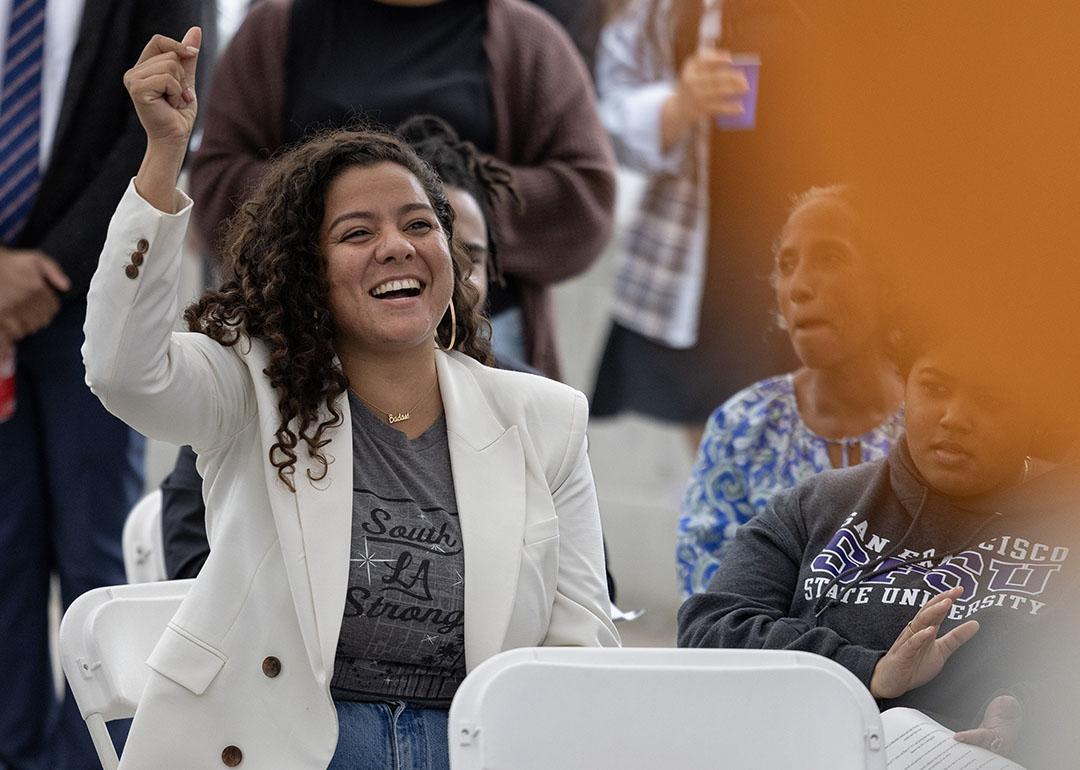
The number of Latinas serving in state legislatures this year marks a for Latinas in this level of government. In all, 214 Latinas hold seats in state legislatures nationwide, up from 192 in 2024, according to the Center for American Women and Politics (CAWP).
Latinas weren鈥檛 the only ones to set records in last year鈥檚 elections, though. Black, Asian American and Pacific Islander women, as well as women of Native backgrounds, also broke new ground in state legislative elections.
鈥淎cross the board, we actually did see a net gain in women鈥檚 representation at the state legislative level, which was notable because we did not see that at the congressional level or at the statewide executive level,鈥� Kelly Dittmar, the director of research at CAWP, told . 鈥淲hen we鈥檙e seeing these gains, they鈥檙e coming among racially and ethnically diverse women.鈥�
Only White women hold fewer legislative seats this year in 2025 than they did in 2024.
The rise in the number of Latinas serving in state houses, in particular, follows an important political trend in the United States: Latinx voters accounted for nearly half of newly eligible voters in 2024 and at higher rates than Latinx voters overall.
Dittmar noted that early data on the 2024 electorate indicates that the Latinx voting population went up 12 percent last year鈥攎irroring the rate of gains Latinas made in state legislatures.
鈥淭he more Latinos we have who are politically both eligible and engaged, the more likely it is that we鈥檙e going to see greater representation,鈥� Dittmar said.
Of the 214 Latinas serving in a state house, 182 are Democrats, 31 are Republicans and one identifies as nonpartisan. Latinas now hold 2.9 percent of state legislative seats nationwide and make up 9.6 percent of the population.
The gains by Black and Asian American and Pacific Islander (AAPI) women in state legislatures this year were largely for Democratic women legislators. Latinas, on the other hand, saw gains among Democrats and Republicans.
鈥淲hen you think about opportunities, especially in a year where Republican women actually did fare better, if you look at the net gains among state legislators who are women, Republican women really account for most of the net gain,鈥� Dittmar explained鈥攕omething particularly pronounced among newly elected Latinas at this level of government. 鈥淎mong Latinas, we鈥檙e seeing at least slightly more partisan diversity. That allows for them to see success in this overall racial and ethnic group, inclusive of both parties doing well.鈥�
Native American, Alaska Native and Native Hawaiian women also saw a significant increase in their numbers in state legislatures, .
Forty-four women of Native backgrounds currently hold seats in state legislatures, up from 36 in 2023, when they set their record. That amounts to 0.6 percent of state legislative seats; Native women comprise 1.1 percent of the U.S. population.
There are now 107 AAPI women serving in these roles; the previous record, from 2023, was 100.
Black women, who have made the largest gains in politics among women from historically marginalized groups, amount to 399 members in state legislatures, 13 more than last year.
鈥淲e鈥檙e seeing more and more diversity in terms of race and ethnicity and, in my mind, that is a good thing鈥攊t brings more perspectives and lived experiences to the table,鈥� Dittmar said. 鈥淚t means we鈥檙e just moving closer to the representativeness of these bodies that is supposedly promised in a representative democracy.鈥�
was produced by and reviewed and distributed by 麻豆原创.