11 proven ways women can lower cholesterol after 40
You expect certain hormone-driven symptoms in your 40s and 50s. Hot flashes, mood swings, a lack of sex drive. But high cholesterol? That one tends to fly under the radar until your doctor flags it during a routine blood test.
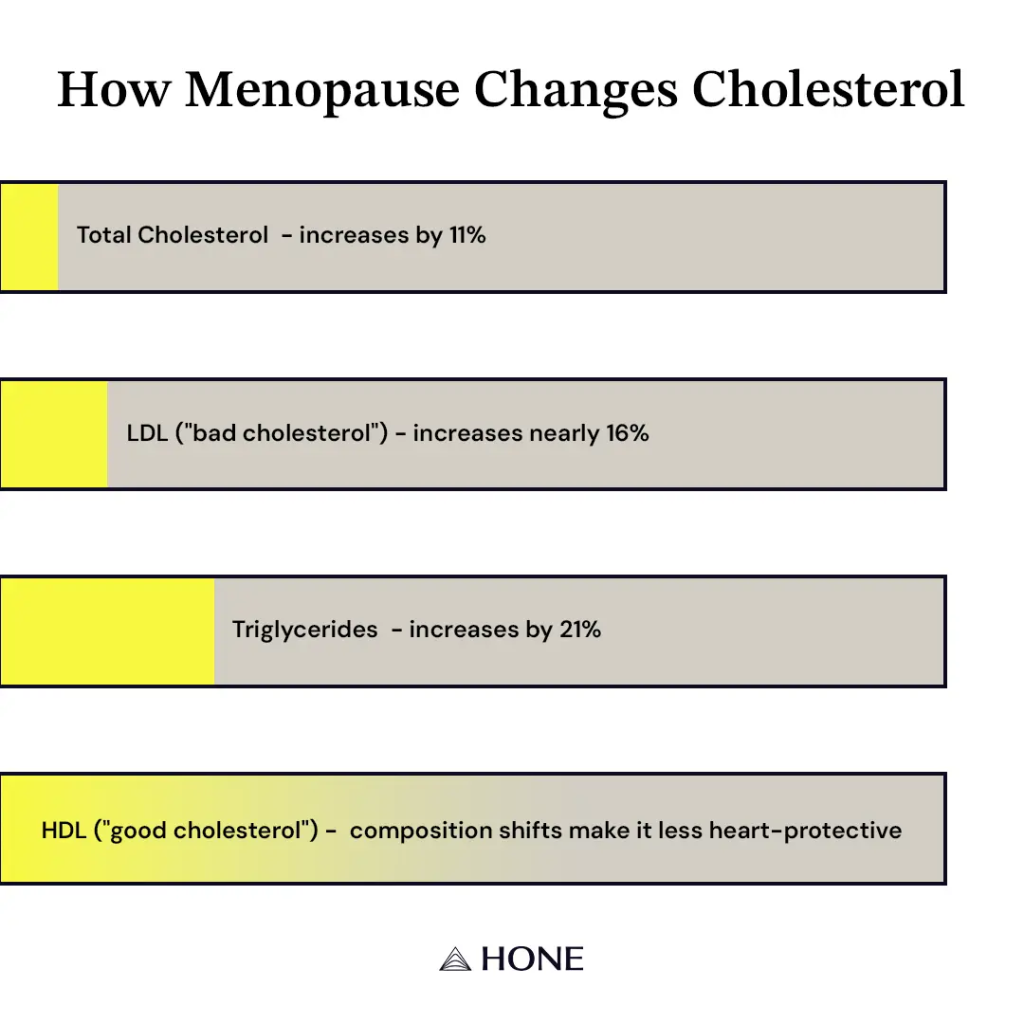
Yet shifts in cholesterol are common as women age. One found total cholesterol rises, on average, by around 11% during the menopause transition.
Estrogen鈥檚 decline is part of the equation. But aging, , and also play a role. Together, these changes can drive up cholesterol and increase the risk of .
The good news? You can lower cholesterol in your 40s and 50s through targeted lifestyle changes, a , and鈥攊n some cases鈥攎edication or . compiled several research-backed strategies women over 40 can take to reduce their cholesterol levels.
Why cholesterol increases in women
As women age low-density lipoprotein cholesterol tends to rise, while high-density lipoprotein cholesterol may undergo shifts in composition, even if the level stays the same.
- LDL has historically been referred to as 鈥渂ad鈥� cholesterol because it contributes to cholesterol buildup and blockages in the arteries. One found that on average, LDL rises by 15.5%, and triglycerides鈥攆ats circulating in the blood鈥攋ump by 21% during menopause. published in 2023 found that before menopause, women tend to have healthier cholesterol levels than men, but after it, their LDL levels can become just as high鈥攐r even higher鈥攖han men of the same age.
- HDL is commonly known as 鈥済ood鈥� cholesterol because it helps transport excess cholesterol away from the arteries, and it can become less effective as women age. The composition of their HDL tends to change, even if the total amount stays the same. According to the , this period is linked to an increase in smaller, triglyceride-rich HDL particles and a decrease in larger, cholesterol-rich ones, which could make HDL less effective at protecting the heart.
Many women also accumulate . 鈥淰isceral fat鈥攆at around the belly and waistline鈥攁lso works to increase cholesterol levels,鈥� adds cardiologist Jayne Morgan, M.D.
How estrogen and FSH affect cholesterol
Estrogen plays a role in regulating cholesterol , says Laura Wyness, Ph.D., a registered nutritionist. Declining estrogen levels can raise cholesterol by affecting the liver鈥檚 ability to process it.
Estrogen also helps keep your blood vessels flexible and smooth, making it easier for blood to flow and protecting against plaque buildup and artery stiffness.
New research suggests that estrogen may not be the only hormone that impacts cholesterol as women age. , and higher FSH is linked to more LDL and total cholesterol, even when estrogen levels are similar. FSH may signal the liver to make more cholesterol, while the loss of estrogen makes it harder for the body to clear extra LDL from the blood.
What are healthy cholesterol numbers?
The optimal cholesterol numbers for adult women who don鈥檛 have an increased risk of cardiovascular disease are:
- Total cholesterol: Less than 200 mg/dL
- LDL: Less than 100 mg/dL
- HDL: More than 60 mg/dL
If your LDL is too high, your doctor may prescribe a cholesterol-lowering medication like a statin. 鈥淕enerally, statins should be strongly considered in any perimenopausal or menopausal woman with an LDL greater than 70 mg/dl, regardless of risk,鈥� says Morgan.
Dietary changes to lower cholesterol
Simple can help lower cholesterol in your 40s and beyond.
Increase fiber and whole grains
can help lower cholesterol. Found in food including beans, barley, and sweet potatoes, soluble fiber binds to cholesterol in the gut to eliminate it. eating 5 to 10 grams per day can help lower total and LDL cholesterol by 5 to 11 points.
One found that replacing refined grains with whole grains improved LDL and total cholesterol levels.
Minimize processed foods
鈥攖hink chips, sweetened yogurt, frozen meals鈥攃an harm your lipid profile. found people who ate more ultra-processed foods had lower HDL and smaller, denser LDL particles, which are more likely to clog arteries. They also had more small HDL particles instead of the larger, heart-protective ones.
Favor unsaturated fats
Saturated fats can raise total cholesterol and LDL, so it鈥檚 wise to limit them. Women in midlife can potentially lower cholesterol levels by like butter for heart-healthy options like olive oil.
In of nearly 5,000 middle-aged women, those who ate a low in animal fat had lower triglycerides and higher HDL during the menopausal transition, while women eating a more Western diet () showed higher triglycerides and lower HDL.
A published in Nutrients advises keeping saturated fat under 10% of daily energy; others suggest as low as 7% for those with high cholesterol.
Heap on the vegetables
A suggests the more produce you eat, the . Experts who conducted a recent review of studies about people with high triglyceride levels suspect this is because fruits and vegetables contain fiber and phytochemicals that can improve cholesterol by reducing triglycerides.
According to the USDA, most adult women should eat between 1.5 and 2 cups of fruit and 2 to 3 cups of vegetables daily. And more is better.
Include plant sterols
Phytosterols鈥攚hich include sterols and stanols鈥攁re compounds found in . Because their chemical structure resembles that of cholesterol, they trick your body鈥檚 intestinal lining into prioritizing their absorption over harmful LDL cholesterol.
According to a , adding 2 grams of sterols to your daily diet in the form of fortified foods can lower LDL cholesterol by 10%.
Lean into plant protein
About two-thirds of protein in most Americans鈥� diets comes from animals. Shifting to more is linked with reductions in LDL cholesterol, non-HDL cholesterol, and .
Women can lower their cholesterol by incorporating more legumes, lentils, tofu, tempeh, and nuts. 鈥淎lthough nuts are relatively high in calories, they provide beneficial unsaturated fats that help lower cholesterol, as well as and 鈥攙itamin E, , and potassium鈥攖hat benefit heart health,鈥� says Wyness. 鈥淥ne portion [about 1 ounce] of nuts daily has been shown to help reduce total cholesterol and LDL cholesterol without impacting weight gain.鈥�
Be mindful about alcohol
even moderate alcohol use might increase cholesterol and raise triglycerides. To make things worse, women in menopause or perimenopause can experience when drinking.
Lifestyle changes to lower cholesterol
Lifestyle changes are just as important as dietary changes when it comes to improving cholesterol for women as they age, say Morgan and Wyness. Emphasize these :
Exercise
like jogging, swimming, and biking can help lower LDL cholesterol and triglyceride levels while increasing HDL cholesterol and improving how well it works in your body. A of exercise in pre- and post-menopausal women found that cardio was actually more effective at improving cholesterol among the latter.
has also been shown to lower total cholesterol, triglycerides, and LDL in post-menopausal women.
Quit smoking
Smoking not only raises LDL but also makes it more likely to oxidize and stick to artery walls. It also lowers HDL and damages your body鈥檚 ability to clear cholesterol. What鈥檚 more, for women over 44, smoking is associated with a 25% greater risk of coronary artery disease than it is for men of the same age. The good news is that once you quit, your HDL may function more effectively again.
Maintain healthy blood pressure
Nearly over the age of 60 have high blood pressure. While and high cholesterol are technically independent risk factors for cardiovascular disease, together they act synergistically to increase your risk level.
of 73,916 Asian men and women, which described the increased risk as 鈥渄ramatic,鈥� suggests that this may be because the pounding of high blood pressure damages artery walls, making it easier for cholesterol plaque to form on them. Healthy blood pressure is typically below 120/80 mmHg. Morgan recommends monitoring your levels at home. Data reveals that those who used home health devices lowered cholesterol by 67 mg/dl and lost up to 12 pounds in two years.
HRT to lower cholesterol levels
Hormone replacement therapy, also called , that includes estrogen may help lower cholesterol.
One of 73 studies suggests transdermal HRT (like and cream) may be safest for women in menopause with elevated cholesterol. Oral therapy reduced LDL more but also tended to increase triglyceride levels.
While HRT shouldn鈥檛 be prescribed just to lower cholesterol, it may be a helpful bonus if you鈥檙e taking it for like , and . And it appears safe to use alongside statins, per a .
was produced by and reviewed and distributed by 麻豆原创.