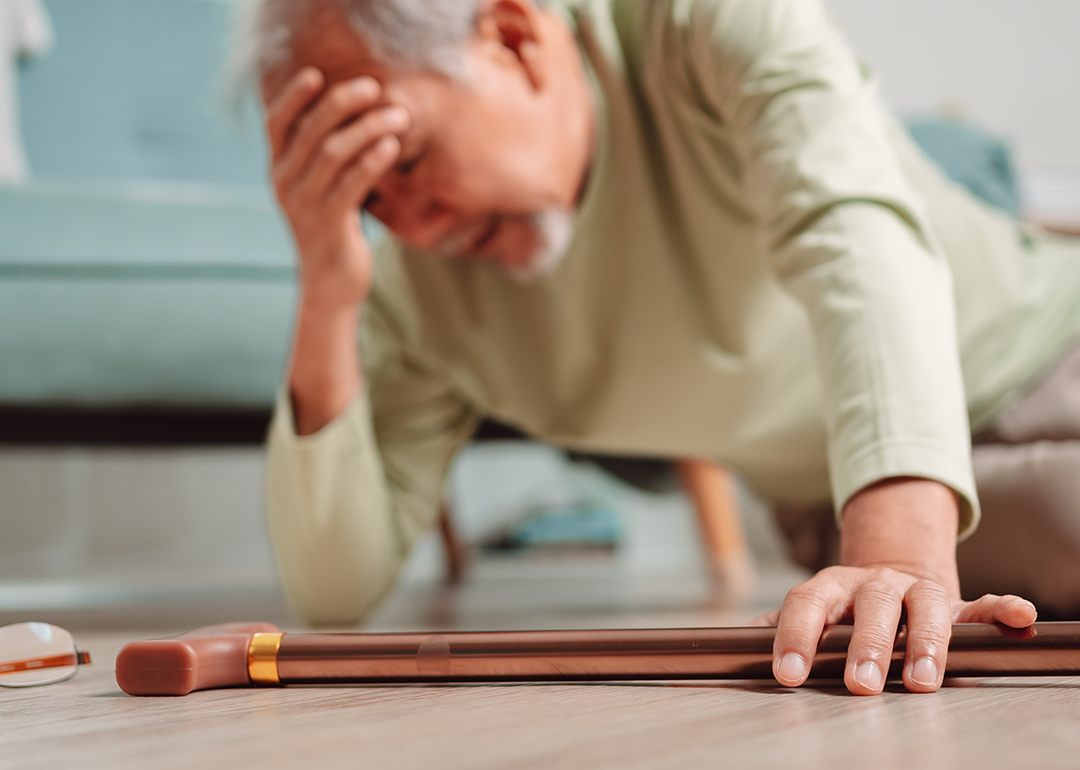
Accidental falls are a leading cause of injury or even fatality for seniors. Here's how to take preventative action.
This story originally appeared on Northwell Health and was produced and distributed in partnership with 麻豆原创 Studio.
Accidental falls are a leading cause of injury or even fatality for seniors. Here's how to take preventative action.
Fall-related injuries are common among senior citizens鈥攂ut they don't have to be. Though an older adult visits an emergency facility in the U.S. to be treated for these injuries, according to the National Council on Aging, there are tangible steps that can be taken to mitigate the risk of falling.
In 2021, were injured from unintentional falls, about 2 in 5 (41%) of whom were 65 or older, according to the Centers for Disease Control and Prevention. Per the CDC, in that age group, or 1 in 4 seniors, report experiencing falls each year. The from falls increased in 2021 to 78 per 100,000 older adults, up from 55.3 per 100,000 in 2012.
Although the CDC reports falls result in injury, even if initial breaks and bruises heal, these wounds can result in or exacerbate more long-term illnesses.
The U.S. population is aging, and the public health effects of falls will likely expand as more baby boomers age over 65. In 1920, around 1 in 20 U.S. citizens were aged 65 and older; a century later, this proportion , per Census data. From 2010 to 2020 alone, this age group experienced its fastest growth rate since 1880. If falls continue occurring at the same rate among seniors, this doesn't just mean more falls. It means more of , including higher instances of anxiety and depression, decreased mobility, and shorter life expectancy.
That means economic effects too: Falls are costly. In 2015, fatal and nonfatal falls rang up medical costs estimated at around . Of this, around $12 billion was not covered by Medicare or Medicaid, and instead fell to private insurance or for patients to pay out of their own pockets.
partnered with 麻豆原创 to explore data on fall-related injuries for seniors and how they can stay safe both in and out of the home. Read on to find out who is most at risk of falling and what preventative action seniors and their families can take to avoid injury.
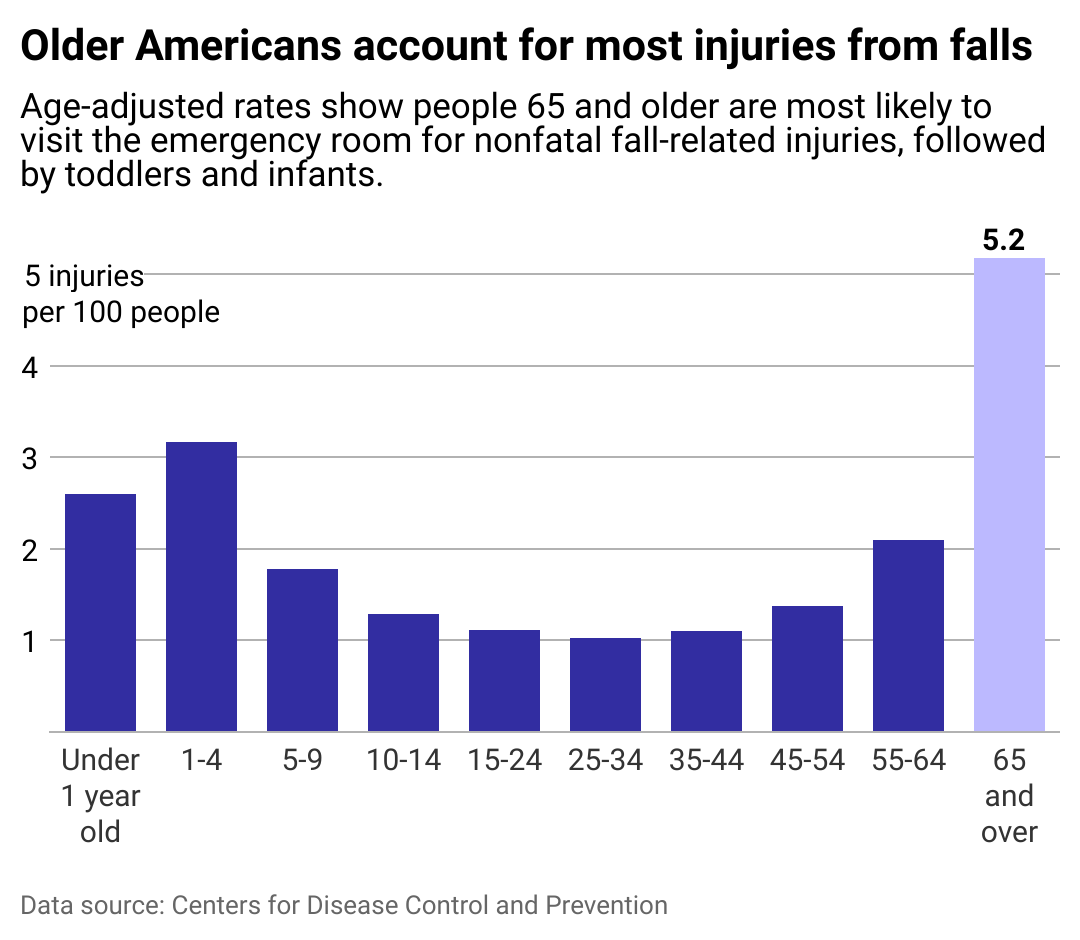
People 65 and over experience injuries from falls most frequently
People 65 and over accounted for 2 in 5 (41%) nonfatal fall-related emergency department visits in 2021. When the rates are adjusted for age, fall-related injuries for older adults are even more common than for other age groups.
, of seniors who fall, nearly 2 in 5 (37%) described their injuries as severe enough to warrant medical attention and interfere with daily life, totaling roughly 5 million fall-related injuries. Common fall-related injuries include broken bones, head injuries, and hip fractures. The CDC reports older women fall more often than men of the same age, , which usually result from falling sideways rather than forward or backward.

Preventative steps to take
Although falls are common among older people, they are preventable. There are many steps people can take to mitigate the risk of serious falls and injury, including:
- Review medications with your doctor to anticipate if any may cause lightheadedness or dizziness.
- Have your eyes and feet checked annually to ensure your vision and footwear are up to date.
- Keep floors at home free of clutter to trip on and install handrails in bathrooms and along staircases.
- Stay physically active to strengthen muscles and promote good balance.
- Speak openly with family members and medical providers about your fear of falling to ensure they are cognizant and equally cautious.
Story editing by Jeff Inglis. Copy editing by Paris Close.