For better therapy, just add mushrooms
For better therapy, just add mushrooms
One day, psychologist Brian Pilecki watched one of his patients travel back in time.
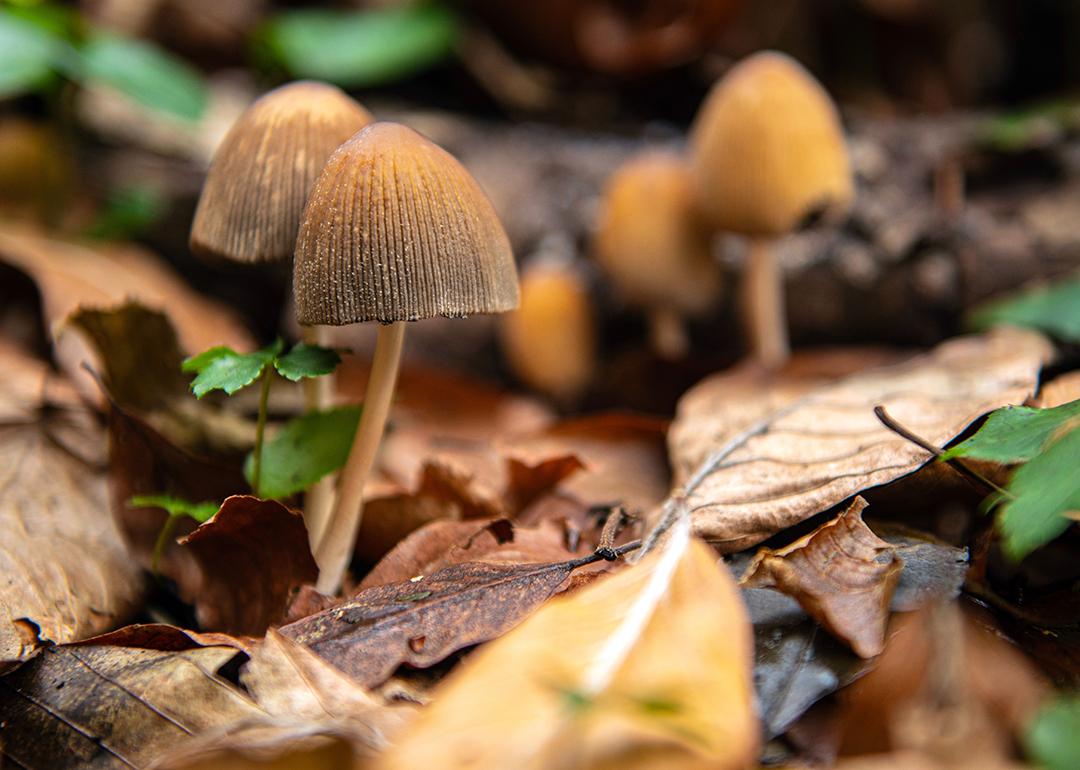
Pilecki, a clinical mental health provider in Portland, Oregon, is licensed in the state to facilitate sessions where people take a dose of psilocybin, the psychedelic compound found in more than 200 species of mushrooms. His time-traveling client was haunted by trauma from his youth and had struggled with depression throughout his life.
What psilocybin enabled the patient to do, says Pilecki, is inhabit his childhood memories. Over the course of six hours, the man revisited distressing moments from his childhood and had conversations with adults who had shaped his early years, people he’d never been able to speak with in that way before — all without ever leaving the treatment facility.
“He was experiencing all of this as a child, but at the same time he brought with him his adult consciousness,” says Pilecki. “It helped him to have a lot of compassion for his younger self and then, indirectly, for himself today.”
reports that Pilecki is among a growing body of practitioners and researchers exploring psilocybin as part of mental health treatment. The psychedelic compound has already been shown to provide for some forms of depression. Now the field is rapidly expanding, with hopes that psilocybin may also offer an alternative treatment for conditions ranging from anxiety and obsessive compulsive disorder to .
So far, clinical researchers and practitioners in states that have recently legalized psychedelics — Oregon and Colorado — are finding promising results.
The use of mushrooms with psychedelic properties . Psilocybin and other compounds were incorporated into the cultural practices of many Indigenous peoples. In the mid-20th century, scientific research began to explore psychedelics, but that was largely abandoned by the 1970s. More recently, the potential of psilocybin and similar substances to address mental health has come back into the spotlight, not least with Michael Pollan’s 2022 Netflix series “,” based on his book of the same name.
Psilocybin works on serotonin receptors, the same neurotransmitters targeted by medications that treat conditions like depression and anxiety. Those medications tend to work by blunting emotions. Psilocybin, on the other hand, “throws us into our emotions,” according to Pilecki.
The compound creates “a bit of chaos” that removes some of the filters that are usually at work in our brains, Pilecki goes on to explain. Parts of the brain that don’t usually communicate much talk to each other. Some people say they hear colors, or see sounds. These novel connections can also help people of thinking common to many mental health conditions.
For those undertaking psilocybin therapy, the hours-long experience of actually taking the drug is just the beginning. In the weeks and months after, the brain is fertile to form new neural pathways. This means that people may find it easier to start or stop specific habits — including developing new patterns of thinking that can relieve mental health symptoms. “That is an opportunity right then to get some momentum in a chosen direction that a client wants to go in,” Pilecki says.
To date, most studies have focused on the impacts of psilocybin in relation to depression. One study looking at severe depression, which is characterized by rumination, found that a third of participants experienced a in depression three weeks after a single 25 mg dose of psilocybin, coupled with therapy sessions, although adverse effects were also noted. Another study tracked people after two psilocybin therapy sessions, finding that depressive symptoms a full year after the treatment.
While there isn’t yet the same kind of concrete data when it comes to the impacts of psilocybin on other mental health conditions, a significant amount of work is currently underway to get to that point. As of September, there were looking at psilocybin for OCD, clinician burnout, complicated grief, even neurological disorders.
So far, no psychedelics have federal approval for mental health treatment. But, the findings on depression have prompted excitement and a desire to understand the potential of psilocybin when it comes to treating mental health conditions beyond depression, says Cody Wenthur, a pharmacologist leading research into psychedelics at the University of Wisconsin–Madison.
Wenthur is particularly interested in how psilocybin works with stress. Many mental health conditions, including anxiety and PTSD, are connected with stress, so better understanding how psilocybin interacts with stress could help extend treatment options for more mental health conditions.
Wenthur’s lab has found mice that showed highest levels of anxiety early after a dose were the least anxious four hours later. The findings indicate that in order to see mental health benefits from psilocybin, says Wenthur, people might need to take enough of the compound that they have a “significant experience.” In other words, can someone benefit from psilocybin without tripping? Wenthur’s mice — as well as other research — suggest not.
While research into psychedelics is in early phases, Wenthur believes psilocybin could soon offer a new path for mental health treatment. “Psilocybin, it’s not actually new,” he says. “It’s just a new way of engaging with it. And I think that’s exciting because we know there’s a lot of people out there who need help.”
While clinical trials are ongoing, some people — like Pilecki’s time traveling patient — are already seeking out psilocybin for mental wellness in states that have opened up legal systems, like Oregon in 2023 and Colorado earlier this year.
In contrast to clinical trials, which are limited to small numbers of people and restrict participants — people who take other mental health medications, for example, are often barred from trials — licensed psilocybin facilitators in these states have much more flexibility to take on clients.
An ongoing study led by the (OPEN) follows more than 160 clients and roughly 50 practitioners. While it doesn’t track participants based on clinical diagnoses, it does screen for self-reported symptoms of anxiety, depression and PTSD, both before and after a psychedelic experience. The results suggest that up to three months after a session, mental wellbeing is improved. “If you’re coming in with anxiety and depression scores, then pretty consistently across people, those scores are reducing,” says OPEN co-director Adie Rae Wilson-Poe.
In Bend, Oregon, Bendable Therapy — which was among the first organizations to be licensed in providing psilocybin services in 2023 — incorporates the psychedelic alongside other forms of therapy. A typical course of treatment takes about a month, including preparatory conversations, a day-long psilocybin session and follow-up therapy called “integration” where clients process and build off their experience.
While the psilocybin experience is often emotional and dramatic, Bendable co-founder and practitioner Amanda Gow says she sees it as just 10% of the total work. To start gauging longer-term impacts, the organization has been tracking patients to understand the impact of psilocybin. Self-reported symptoms suggest a positive impact. Thirty days after a session, says Gow, clients show a statistically significant improvement in anxiety, depression and overall well-being. “A psilocybin session can often feel like it opens the door to that other side that people were looking for,” she says.
Gow worked with one woman who had struggled with trauma related to her childhood and military service. After a course of psilocybin therapy, the woman said she felt like she’d put down a bag of rocks she’d been carrying for years. The bad memories weren’t gone, Gow explains, but the psilocybin session helped her find a new perspective and relieved her of symptoms of PTSD.
“When we see rigid patterns of thinking, or when our brains get locked into certain patterns, this is where psilocybin really shines,” says Gow.
Not all mental health conditions respond well to psychedelics. People with mental illnesses that involve psychosis, like bipolar disorder or severe personality disorders, are generally not candidates because psilocybin could be a trigger.
Even people struggling with conditions that have had promising results, like depression or PTSD, may not respond well to psychedelics. Negative experiences tend to be rare, but there are people who find that the treatment doesn’t play out as they expected. Experts caution that, for all the promise of psychedelics, they’re just one step in a larger process.
Anecdotally, as a psilocybin facilitator, Pilecki has seen a mix of outcomes in patients with OCD and says people with more severe cases haven’t had strong results. When people have very high expectations, he says, clients may not see the outcomes they desire. But people with mild or medium symptoms have experienced improvements.
One of the biggest hurdles is cost. In Oregon, psychedelic-assisted therapy can range between $1,000 and $3,000. While some organizations offer discounted rates, the treatment remains inaccessible for many.
The OPEN study is looking not only at licensed facilitators who have a background in mental health, but also legacy practitioners who have long histories with psychedelics. Beyond the typical Western definitions of mental health, these substances — and practices around them — can bring insights for more holistic views of wellbeing, says Wilson-Poe.
“Psilocybin and psychedelics in particular are very good at showing us how little we know,” she says. “Through an understanding of how little we know, we can have humility and the possibility of approaching things from a different perspective.
was produced by and reviewed and distributed by Â鶹ԭ´´.