
The connection between age and chronic pain鈥攁nd how to manage it
This story originally appeared on Hydragun and was produced and distributed in partnership with 麻豆原创 Studio.
The connection between age and chronic pain鈥攁nd how to manage it
Chronic pain is a widespread issue affecting millions of Americans each year.
To better understand the impact of chronic pain among different age groups and how to manage it, consulted 2019 data (released in 2020) by the . To gather the data, the health organization conducted a study that surveyed how chronic pain affects adults by age group. Participants were asked if they experienced chronic pain and chronic pain that limited daily activities within the past three months. Although there are children younger than 18 who live with chronic pain, the survey did not include minors.
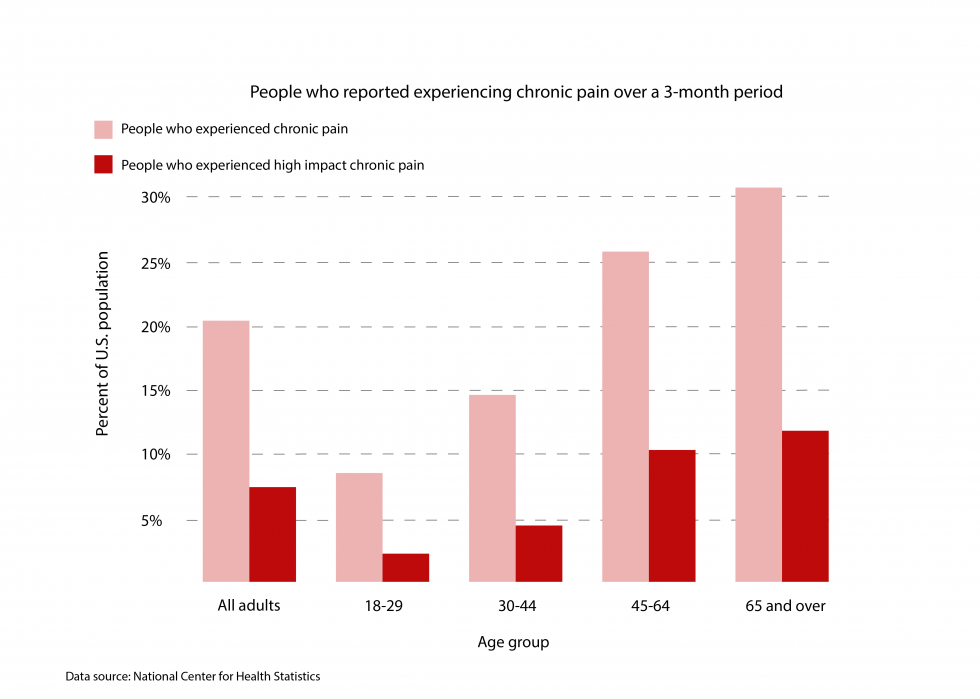
The CDC defines a person as having chronic pain when they answer 鈥渕ost days鈥� or 鈥渆very day鈥� to the following survey question: 鈥淚n the past three months, how often did you have pain? Would you say never, some days, most days, or every day?鈥� Many things can contribute to chronic pain, whether an injury, break, or sprain, repeated stress on a particular area of the body, anxiety or depression, or other reasons. Of the 20.4% of American adults living with chronic pain, 7.4% said it prevents them from doing certain work or life activities. This can, among other things, cause isolation and depression.
Fortunately, there are a variety of ways to address chronic pain for people of all age groups. These options may include physical activities such as exercise, physical therapy, yoga, or stretching, as well as mindfulness activities like meditation, breathwork, and even hypnosis. Therapy can be very useful for pain associated with anxiety or depression, as can acupuncture, sessions with a professional masseuse, or even the use of at-home massage, massage guns, heating pads, or ice can help ease chronic pain. There are even strong pharmaceutical options such as opioids, but these can be dangerously addictive and researchers recommend these only as a . Always be sure to consult with your doctor on which treatment plan is best for you.
Continue reading to learn the connection between age and chronic pain between all age groups.
All adults
Chronic pain is a common issue for people of all ages: 20.4% of all adults by the CDC reported experiencing chronic pain, with 7.4% experiencing pain serious enough that it limited their daily activities. Women were more likely to have chronic pain than men: 21.7% as compared to 19% (nonbinary genders were not accounted for in the poll). Of the people who do experience chronic pain, older age groups experience more chronic pain than others. Another important finding from the CDC study was the percentage of adults with chronic pain increased in .
Adults 18鈥�29
Among people ages 18鈥�29, chronic pain is , with only 8.5% of the age group experiencing it and only 2.2% experiencing pain strong enough to limit daily activities. Because not many younger adults experience chronic pain, they often face the added challenge that their to others, as they have no visible injury and people assume they are too young to experience this pain.

Adults 30鈥�44
Chronic pain becomes more common the more people age. Among adults between the ages of 30 and 44, experience chronic pain, and 4.4% experience pain bad enough that they are unable to do all their daily activities. The causes of this pain are varied. Chronic pain among adults can come from past injuries, such as a sprain or break, and from psychological conditions, such as anxiety or depression. However, the cause is not always known. When possible, physical therapy and exercise can be good ways to manage pain among this group.

Adults 45鈥�64
Adults between the ages of 45 and 64 have an amount of chronic pain鈥�25.8% among adults 45-64, as opposed to 20.4% among all adults. Of those adults, 10.3% have high impact chronic pain that prevents them from doing certain activities. In addition, pharmaceutical treatment is usually among older adults and comes with its own risks, making it important to find other methods of pain reduction, such as physical activity, , and using to set up one鈥檚 workspace for office workers.

Adults 65 and over
Adults 65 and over experience the most chronic pain鈥� of this demographic has some sort of chronic pain, and 11.8% has pain strong enough that it limits their participation in daily activities. Chronic pain can be especially dire for this age group, as this group can be socially isolated and are underrepresented in clinical trials for pain treatment. And as older adults have a higher themselves from physical exercise, low-impact activities such as or can be beneficial for managing chronic pain in this group.